We found 171 posts about Comparison Guides from DO Supply, a global automation parts
reseller focused on hard-to-find and obsolete industrial automation products.
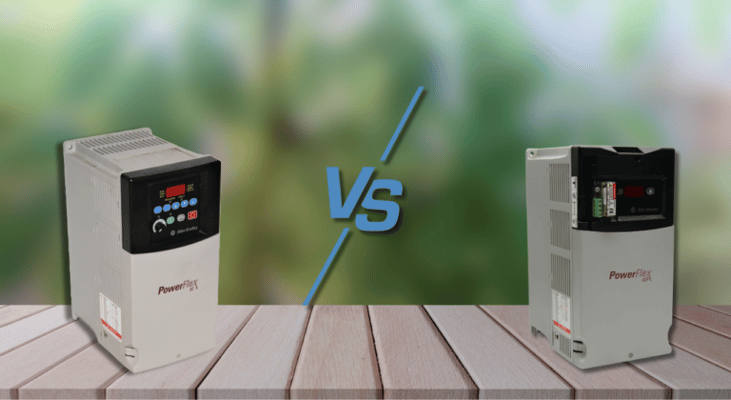
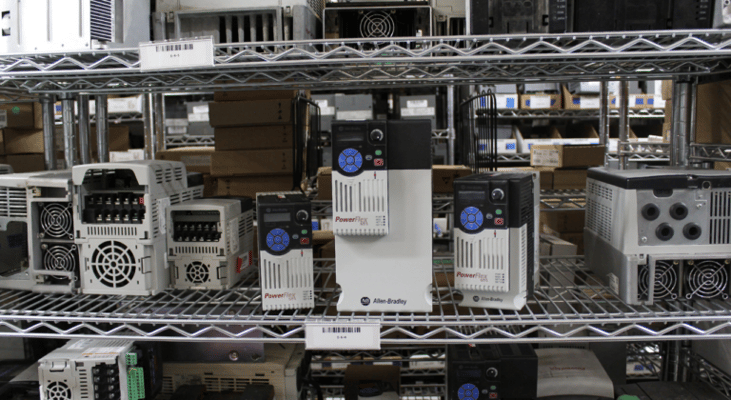
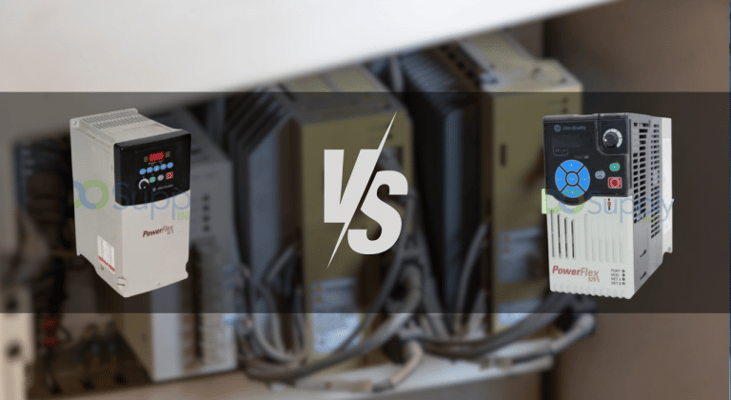
The Allen-Bradley PowerFlex drives from Rockwell Automation have become a mainstay in industrial automation for flexible and powerful motor control solutions. PowerFlex 40 and PowerFlex 40P series are two distinct options among its Compact-class AC drives. Today, we will give a head-to-head comparison with in-depth insights into the features and control capabilities of the two drives. Buy PowerFlex 40 Series Drives Here For an overview, both Powerflex 40 and PowerFlex 40P are compact and cost-effective choices for standalone machine control. Both drives are designed for easy integration with industrial automation systems and machinery. The Powerflex 40 series is similar to the PowerFlex 4 series but has extended power ratings and Sensorless Vector Control. The PowerFlex 40P is more advanced than the PowerFlex 40 regarding control and safety with closed-control and Safe Torque-Off functionality. There are other differences in I/Os and drive configurations. Let’s dig into the details of...
Smart motor controllers are revolutionizing industrial automation by combining advanced features with energy efficiency and system reliability. These controllers seamlessly integrate with industrial networks, providing real-time monitoring, adaptive control, and diagnostic capabilities to optimize motor performance and energy utilization. Equipped with features like fault logging, voltage protection, and precise electrical parameter measurement, they enhance operational transparency, reduce downtime, and extend equipment life. Innovations like remote firmware updates and user-friendly LCD interfaces ensure accessibility and continuous improvements. With examples such as Allen-Bradley PowerFlex and Schneider Electric Altivar, smart motor controllers are indispensable for achieving operational excellence and fostering sustainable manufacturing practices. Smart motor controllers use cutting-edge communication capabilities to improve system health and energy economy. They make it possible...
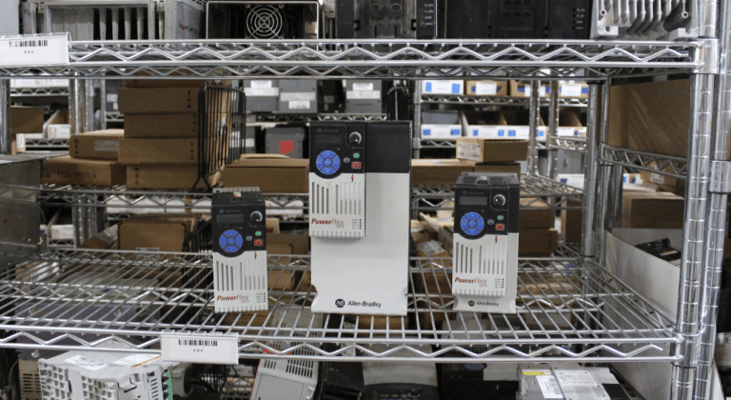
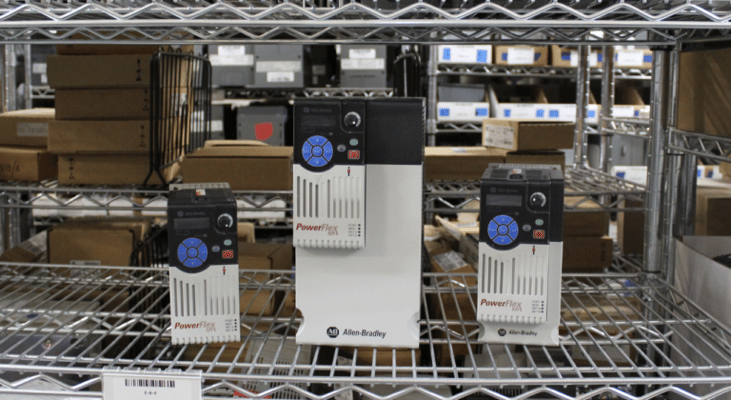
The PowerFlex Series offers a comprehensive range of drives to meet diverse industrial automation needs. With advanced features and flexible configurations, these drives cater to applications across various sectors, from manufacturing to energy production. This article explores key features of the PowerFlex Series, including power capability, operating voltage and current ranges, predictive maintenance, communication protocols, control options, environmental resilience, and safety measures. By understanding the unique strengths of each drive model, you can make informed decisions to select the most suitable solution for your specific automation requirements, ensuring optimal performance, reliability, and efficiency in your operations. Shop for PowerFlex 520 Series Drives Here The PowerFlex Series’ vast Power Capabilities handle a range of industrial power requirements. For example, the PowerFlex 525 is perfect for low- to mid-range applications because it supports up to 30 HP. With...
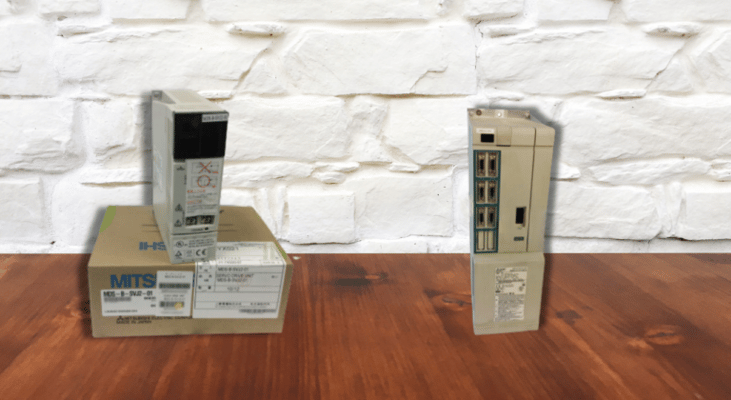
The Mitsubishi’s MDS-C1 and MDS-B servo drive series could be compared to identify important improvements that enhance contemporary industrial automation systems. With its increased power capacity, broader voltage range, sophisticated communication protocols, and better safety features, the MDS-C1 series is designed for high-performance and demanding applications. The MDS-B series, on the other hand, is made for easier, lower-power jobs that require the minimum connection and safety requirements. To assist industries in selecting the ideal drive for their unique needs, this article examines the key distinctions between these two servo drive lines, emphasizing application appropriateness, output current, compact design, and integration. Compared to the earlier MDS-B series , the MDS-C1 series provides more flexibility and adaptability in the context of voltage range. A wider range of voltages may be supported by the MDS-C1, which can normally handle input voltages between 200 and 400...
Allen-Bradley drives are available in three categories: Servo drives are electronic amplifiers designed to provide high-precision control over linear and rotary servo motors’ speed, torque, and position. Allen-BradleyKinetix servo drives are built to simplify machine designs, enhance overall drive system performance, and increase system flexibility. With seamless integration into the Allen-Bradley Logix controller platform, the Kinetix servo drives help extend machine capabilities, simplify and improve control architectures, and reduce development times. These versatile servo drives deliver optimized operation in a vast array of multi-axis industrial processes requiring high-speed, high-performance, coordinated motion control. They include: High-performanceAllen-Bradley servo drives designed for industrial machines with high-power requirements and large axis counts. They provide a wide power range of 1.6 to 122 kW. They also include dual Ethernet ports that support EtherNet/IP...
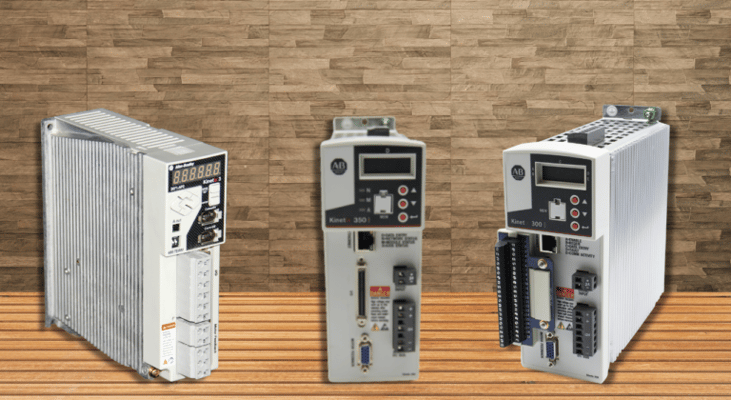
When choosing a servo drive for your automation system, it is essential to understand the key differences between available options. In this article, we compare the Allen Bradley Kinetix 3 , 300 , and 350 series , three popular choices known for their reliability and versatility. Each series caters to different industrial needs, from general-purpose applications to advanced, high-speed automation. We’ll break down their features, such as power range, safety capabilities, motor compatibility, and phase support, to help you determine which servo drive is best suited for your project’s specific requirements and operational demands. The Kinetix 3, 300, and 350 series include a diverse spectrum of power outputs, providing customers with a choice that caters to their specific application requirements. At 50 to 1500 Watts of output power and 0.6 to 9.9 Amps RMS of current capacity, the Kinetix 3 series can handle lower power needs. Smaller machines and light-duty activities are among the...
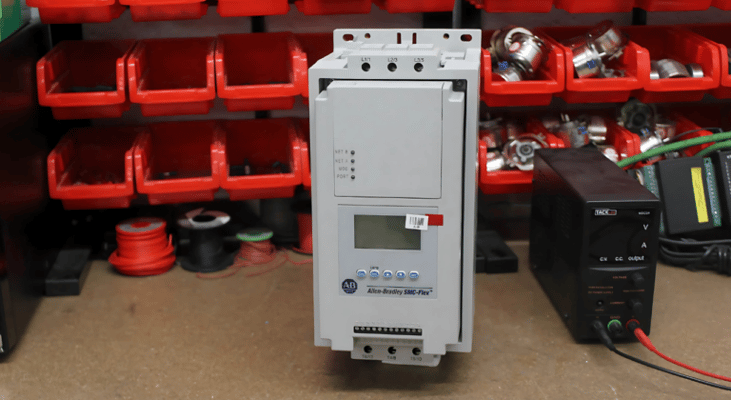
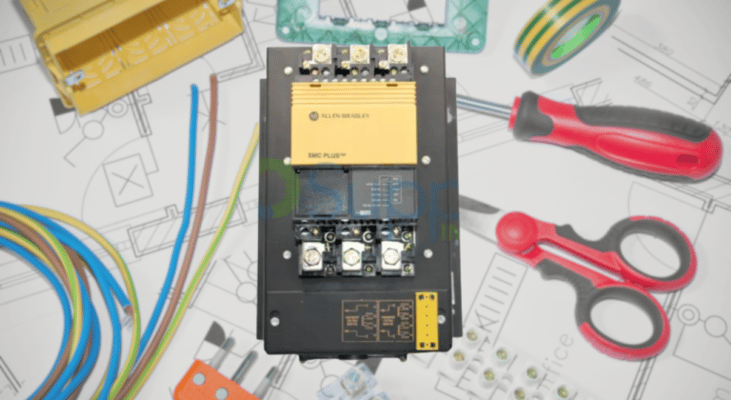
Allen-Bradley Smart Motor Controllers (SMCs) are designed to streamline the acceleration and deceleration of three-phase AC induction motors. By managing motor starts and stops with precision, they minimize mechanical stress and optimize efficiency. These solid-state, microprocessor-controlled soft starters excel in industrial environments, handling demanding applications like pumps, mills, compressors, and conveyors. This article provides a detailed comparison of two major Allen-Bradley SMC controller offerings, the SMC-2 and SMC PLUS controller series. The Allen-BradleySMC-2 controller line offers a range of compact, versatile, and multi-functional solid-state controllers designed to provide high-performance control for standard 3-phase squirrel cage AC induction motors and resistive loads such as electric furnaces, ovens, and heaters. These controllers are also easy to install and configure. Buy Allen Bradley SMC 2 Products SMC-2 motor controllers are available in eight ampere...
The global industry acknowledges the pivotal function that electric drives, namely PowerFlex AC and DC drives, perform in maximizing motor control and guaranteeing operational effectiveness. The need for these drives has increased significantly as new developments in industrial automation continue to emerge. PowerFlex DC and AC drives are necessary for controlling control signals, but they are not the same in a few important ways. To assist you in selecting the PowerFlex AC or DC drive that best meets your needs, this article examines the differences between the two types of drives. It also covers the advantages, composition, operation, prices, and usability of each drive. Allen Bradley PowerFlex 525 Series AC Drives Each PowerFlex AC and DC drive has distinct performance qualities that make them suitable for a variety of uses. With a maximum speed of 10,000 RPM and accurate 1% speed control together with fast dynamic reaction rates, PowerFlex AC drives perform well. Because of the...
Picture this: It’s a Monday morning, and your alarm screams to life at full volume to slap you awake instantly. Rather than starting your morning abruptly and off to a bad start, gradually increasing the volume of that alarm clock will mitigate that sudden jolt of stress. This same principle works with soft starters, though instead of waking up for work, it’s protecting a motor from a sudden surge of power. This not only extends the life of your equipment but also enhances operational efficiency. Though soft starters are not a one-trick pony, they offer quite a lot of benefits that can improve your automation processes. Here are the top 4 reasons why you need a soft starter for your industrial application. Before diving head first into why you should consider purchasing one of these devices, it’s best to know what they are and how they operate. A soft starter is an electrical device used with AC motors to reduce the load and torque during startup. It is essentially a controller that...
Allen Bradley, a renowned name in industrial automation, offers a range of Smart Motor Controllers (SMCs) designed to meet diverse industrial needs. Among their popular offerings are the SMC Plus and the SMC 2 controllers. These controllers are engineered to provide smooth motor starting and stopping, enhancing performance and reducing mechanical stress. While Allen Bradley offers many solutions for motor configurations and automation needs, this article will focus on the SMC 2 and the SMC Plus to clarify their differences and suggest what might work best for your needs. Allen Bradley SMC 2 Allen Bradley has been a leader in industrial automation for decades. Introducing soft starters like the SMC 2 and SMC Plus marked significant advancements in motor control technology. The SMC 2, released first, set the standard for soft starters with its reliable performance and robust design. Building on this foundation, Allen Bradley introduced the SMC Plus, incorporating enhanced features and...
Choosing a network switch for your industrial operation is a bit like picking the right tool for a DIY project. You know what needs to be done, but grabbing a hammer when you really need a screwdriver isn’t going to get you very far. The key is finding the right tool for the job, and with the Stratix series, Rockwell Automation has built a toolbox that’s hard to ignore. Whether you’re looking for the straightforward reliability of the Stratix 5700 or the security-first approach of the Stratix 5900, each switch has a role to play. The question is, how do these tools compare to others in the hardware store? And, more importantly, which one will help you get the job done? Before you start building, let’s dive in and see which tool fits your industrial network best. If you had to pick a go-to switch for handling most industrial network challenges, the Stratix 5700 would be that trusted multi-tool you always keep within reach. Designed for small to medium-sized networks, this switch is all...
Known for their user-friendliness, versatility, and high-class performance, PowerFlex 755 AC Drives excel in motor control applications. They are designed for a broad spectrum of tasks including pumps, fans, and conveyors, these drives boast a variety of control and hardware options, along with the ability to integrate safety features, making them highly adaptable and reliable. The PowerFlex 755 AC Drives come in many sizes to handle different power needs for your factory. Available in configurations suited for different voltage ranges including 200-240V, 380-480V, 600V, and 690V, these drives provides ratings from 0.37 kW to 1500 kW of power. PowerFlex 755 AC Drives connect easily to other machines. Dual-port EtherNet/IP Option Module: This module minimizes the number of managed switches and eliminates the requirement for cabling when utilizing Device Level Ring (DLR) networks for EtherNet/IP networks. Automatic Device Configuration (ADC): Allows Logix controllers to detect a...
Before you select a variable-frequency drive for your system, you need to consider factors like control capabilities, power and voltage ratings, environmental specifications, and communication options. Both PowerFlex 525 drives and PowerFlex 40 drives are equipped with features that make them more suitable for industrial needs than other VFDs. This article is a technical guide for your selection. Power Range: 0.4-22 kW (0.5-30 Hp) Voltage Classes: 100-600V Power Range: 1Ø: 0.4-1.5 kW (0.5-2 Hp)3Ø: 0.4-7.5 kW (0.5-10 Hp) Voltage Classes: 1Ø: 100-2003Ø: 200-600V The PowerFlex 525 is more suitable for high-power applications with its 22 kW power range. The maximum power output of the PowerFlex 40 drives is lower than that of the PowerFlex 525 drives, which makes these drives more suitable for smaller- and medium-sized applications. Control Methods: Volts/Hertz, Sensorless Vector Control, Closed Loop Velocity Vector Control, Permanent Magnet Motor Control (with and without encoder)...
In today’s fast-paced industrial environment, optimizing motor control can make all the difference in efficiency and performance. Whether upgrading existing equipment or designing a new system, adding an appropriate variable frequency drive (VFD) is crucial for performance optimization and efficiency enhancements. Rockwell Automation’s PowerFlex 4 and PowerFlex 40 are excellent choices for powerful motor speed control in a compact design. This article dives into the nitty-gritty of these two models, comparing their strengths and differences to help you make an informed decision. Let’s discover which VFD will give your operations the edge they need. Both drives share similar input specifications for single-phase voltage inputs of 100…120V and 200…240V and three-phase voltage inputs of 200…240V and 380…480V. However, the PowerFlex 40 has an additional class of three-phase voltage input of 480…600V. Aside from this difference, the input frequency range for both drives is between 47 Hz...
Efficient motor management is critical for enhancing automation, and the SMC-2 series of smart motor controllers excel in this domain. These solid-state controllers are made to start 3-phase squirrel-cage induction motors and provide dependable and flexible operation. Three common beginning modes are supported by the SMC-2 series: full-voltage start, gentle start, and current-limit start. With an extra interface module, soft halting is also possible. The SMC-2 controllers are an important part of modern automation systems since they can be used in both series and motor controller configurations, guaranteeing smooth and effective motor operation. In this article, we will look at some of the features that enable efficient motor management, and then we will discuss a competitive analysis of SMC-2 and other soft starters. Finally, we will look at some of the example modules of this series. The SMC-2 controllers comply with strict requirements, such as UL, CSA, and CE. Eight current...