We found 171 posts about Comparison Guides from DO Supply, a global automation parts
reseller focused on hard-to-find and obsolete industrial automation products.
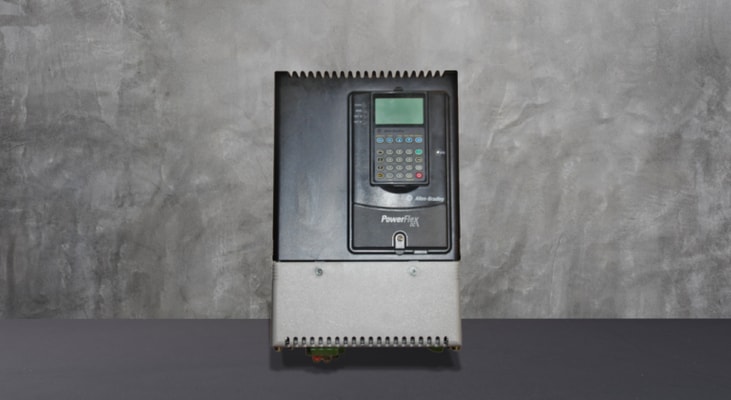
Choosing the right DC drive in industrial automation can significantly impact performance, efficiency, and long-term scalability. This article explores how Rockwell Automation’s PowerFlex DC Drives stand out against leading competitors—Siemens SINAMICS DCM, Schneider Electric’s Altivar DC, and ABB’s DCS800. While all offer robust capabilities and wide application ranges, PowerFlex DC Drives distinguish themselves with their broad voltage compatibility, advanced DPI connectivity, flexible I/O options, and seamless integration with Allen-Bradley’s Logix platform. Designed for both retrofits and new installations, they provide unmatched scalability, intelligent control, and global compliance. Read on to discover what truly sets PowerFlex apart in a highly competitive landscape. Buy PowerFlex DC Drives Here PowerFlex DC Drives are engineered to support a wide range of power and voltage requirements, making them ideal for both standard and heavy-duty industrial applications. These drives...
There’s a very important rule of thumb when dealing with equipment, or really anything: If it isn’t broken, don’t fix it. In the case of the Kinetix 6000 , they’re built like tanks and just keep working. In fact, no one would be surprised if you find them humming away in plants that haven’t touched a firmware update since flip phones were a thing. Shop for Kinetix 6000 Drives Here But as technology progresses, whether it be for tighter safety regulations, smarter diagnostics, the shift to Ethernet/IP, or touch screens in the case of flip phones, it’s not a bad idea to start asking: should we just expand what we’ve got, or is it time to move on? This is where the Kinetix 6200 and 6500 come into play. While they aren’t flashy replacements, they’re more of a logical step forward. With it, you retain the SERCOS backbone and power rail, but add modularity and safety where it matters. The 6500 represents a definitive step forward, offering full EtherNet/IP motion control and integrated...
As a wise person once said, “Communication is key.” While you may have heard that this is the case for various reasons, it rings true when discussing automation equipment, specifically the fieldbus. Some plants speak EtherNet/IP while others may stick with Profibus. Some even still shout in DeviceNet, as if it were 2004. The PowerFlex 750, being the multilingual powerhouse that it is, will listen, translate, and keep everything running smoothly. With a lineup of swappable communication modules and native Ethernet/IP on board, it fits in whether your plant is state-of-the-art or still catching up. Let’s take a look at just what the 750 series can do. Shop for PowerFlex 750 Series Drive Accessories Here The 755 includes an Ethernet port out of the box, providing native support for topologies such as Device Level Ring (DLR) and CIP protocol. This makes Ethernet/IP the easiest way to get a 755 talking to a Logix controller. It handles everything from speed reference to status monitoring...
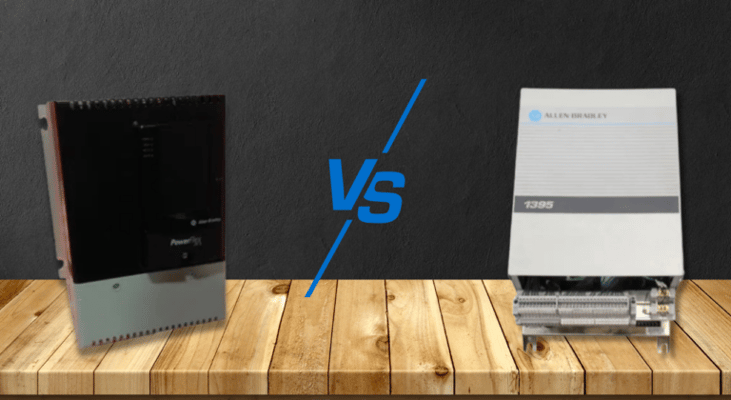
If you’ve spent any time around industrial DC motor systems, chances are you’ve crossed paths with the Bulletin 1395. Big, rugged, and almost deceptively simple, these drives were the workhorses of their day, handling anything from steel rolling lines to hoists and winders with little more than a hum and the occasional fan whine. The 1395 was the standard for years, not because it had bells and whistles, but because it didn’t need them. It worked, and it kept working. But time moves on, and so does technology. Allen-Bradley’s PowerFlex DC drive lineup is the natural successor to the 1395, designed not just to replace it, but to rethink what a DC drive can offer in terms of performance, integration, and long-term reliability. That’s not just about throwing in a few extra features or making the packaging smaller. It’s about re-engineering the entire control experience while still serving the same heavy-duty applications. Of course, it’s one thing to say something is “modernized” or...
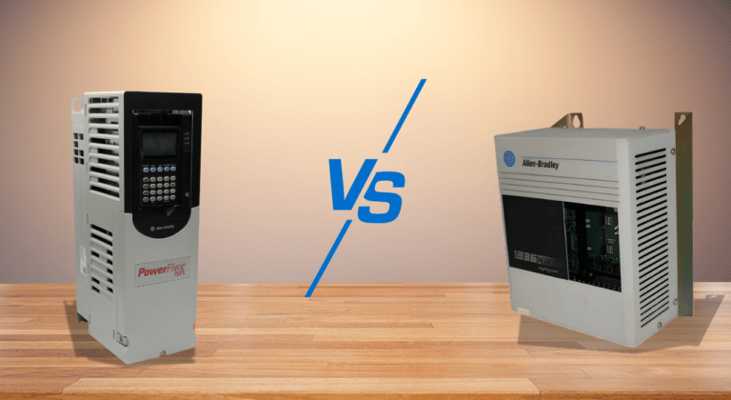
As time goes on, the drives that were originally new and modern soon become outdated and obsolete. New safety standards are being rolled out, different communication protocols have proven to be much more effective, and better software and hardware technology are ushering in a new era of smart factories. The question then becomes whether it is worth upgrading to a new, modern system, trying to retrofit modern equipment, or sticking with the old and keeping it running for as long as possible. Such could be the case for the 1336 Plus II. Today, we would like to provide some thought-provoking insight into a tough question that may need to be answered sooner rather than later: Should you keep or replace your 1336 Plus II system? When a factory decides to keep its 1336 Plus II drives, it’s usually not because it doesn’t know what a modern drive can offer but because its current system works in a way that’s tough (or expensive) to replace. However, there is usually a bit more to it than...
The argument between DC and AC drives is still being debated in motor control and industrial automation. Although AC drives are now the norm in many applications because of their cost-effectiveness, efficiency, and reduced maintenance requirements, DC drives—especially Rockwell Automation’s PowerFlex DC drives—still perform better in some situations. This article examines those particular use cases, emphasizing PowerFlex DC drives’ special benefits and why they are essential to several industrial settings. Shop for PowerFlex DC Drives and Parts Here It’s critical to understand the basic distinctions between AC and DC drives before delving into the application cases: By altering the frequency and voltage applied to the motor, AC drives regulate the speed of an AC motor. By modifying the armature voltage and, occasionally, the field current, DC drives regulate the speed of a DC motor. DC drives provide greater torque control, easier speed regulation, and better performance at low...
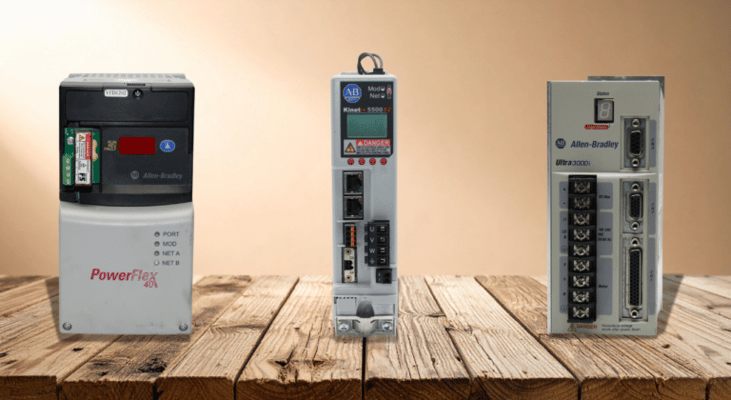
Selecting the optimal drive for your application is an all-important task that impacts your motion control system’s overall cost of ownership, performance, and efficiency. Allen-Bradley’s Kinetix, PowerFlex, and Ultra drives are cutting-edge motion control solutions designed for specific applications. Each drive series offers distinct levels of control, precision, and cost-effectiveness. As such, understanding the differences between the three Allen-Bradley drive families is critical when determining which drive series is the best match for your application needs. Kinetix Servo Drives: These drives provide precise position, torque, and speed control using closed-loop technology. They feature advanced features that offer complex motion control capabilities, high performance, rapid deceleration and acceleration, and high precision. Such features include adaptive auto-tuning, CIP Motion instructions for multi-axis cams and gearing, virtual torque sensing, and notch filtering (to reduce...
Allen-Bradley, a prominent brand under Rockwell Automation, stands as a global leader in industrial automation and control technologies. Among its vast suite of offerings, variable frequency drives (VFDs) are a cornerstone product, enabling precise and efficient motor control across a multitude of industries. These drives are systematically organized into several families designed to support diverse operational requirements. Whether a facility demands basic motor control or a high-performance solution for complex applications, Allen-Bradley provides a robust selection that caters to low, medium, and high voltage needs. This article explores the full spectrum of Allen-Bradley drive systems, categorizing them by power range and application to help engineers, integrators, and plant managers choose the most suitable drive for their specific demands. Allen-Bradley drives are strategically grouped into three principal voltage categories to support a wide range of industrial automation...
Choosing the correct motor control drive in industrial automation is crucial as it affects system performance and operational safety. From simple motor control tasks to sophisticated high-performance systems, the Rockwell Automation PowerFlex family of AC drives is made to meet a wide range of application demands. The increasing characteristics of PowerFlex drives are examined in this article, which also advises customers on when to upgrade from entry-level versions like the 523 to more expensive models like the 755. Industries can guarantee smooth scaling, preserve system safety, and optimize operational efficiency by comprehending the distinct capabilities of each model. This technical knowledge will assist you in pinpointing the precise moment at which upgrading to a more sophisticated PowerFlex drive is necessary for your application. Let’s look into different series one by one. The PowerFlex 523 is the entry-level model of the PowerFlex 520 series, designed for users requiring...
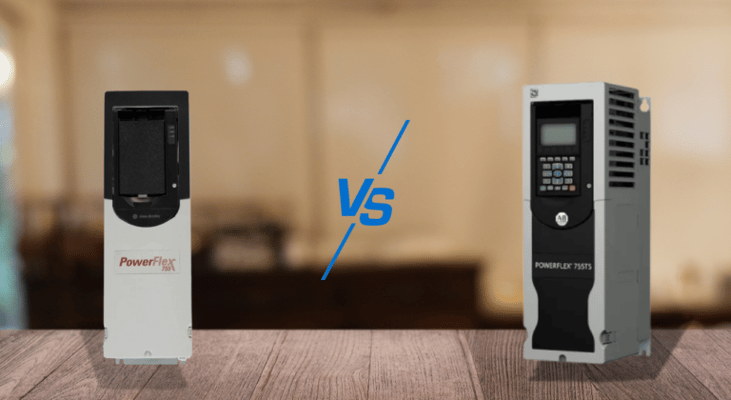
When spec’ing out a new automation system with a PowerFlex 755 drive, you will notice a few variations. You have the standard 755 with FORCE technology, or the 755TS with TotalFORCE tech. While it initially sounds very similar, the TotalFORCE tech provides a generational leap in performance, all while utilizing the same hardware that we all know and love. But that brings us to the main question: Do you need TotalFORCE? Buy Allen-Bradley PowerFlex 755 Drives Here Let’s take a moment to go over the offerings we have before answering that question. The PowerFlex 755 has been the go-to VFD for countless installations over the past decade, and for a good reason, too. It’s powerful, reliable, and very modular, making it stick out as one of the most flexible options that AB has to offer. Whether you’re automating a conveyor line, fine-tuning a pump motor, or even lifting a crane, chances are that the 755 has done it. The 755 line covers a wide power spectrum. You’ll find versions for:...
Finding the right AC Drive size is crucial to your motor-driven application’s health, energy efficiency, and longevity. Whether you are running complicated machinery like a conveyor system, a pump, or a fan, an improper drive can lead to inefficiencies, overheating, or equipment failure. In this article, we will first discuss the motor’s requirements and then the AC drive itself to choose which AC drive would be the best for our use. This article aims to clear the key factors and procedures required to choose the best drive for your needs, guaranteeing a balance between dependability and affordability in commercial and industrial automation systems. Compiling comprehensive information on the motor the AC drive will be controlling is crucial before choosing one. The majority of the essential characteristics are included on the motor nameplate, which is a good place to start when reducing the number of drive options available. Shop Allen-Bradley PowerFlex 755 Series Drives Here Although...
The evolution from traditional motor starters to smart motor controllers (SMCs) marks a significant technological leap in modern industrial applications. While conventional starters rely on electromechanical components for basic motor control, smart motor controllers integrate advanced technologies such as power electronics, real-time data logging, predictive analytics, and IoT connectivity. These innovations enable SMCs to provide precise, adaptive control over motor speed, torque, and energy consumption while minimizing downtime and maintenance costs. This article explores the key differences between smart motor controllers and traditional starters, focusing on aspects like power electronics, adaptability to load changes, starting current management, feedback mechanisms, and diagnostic capabilities. Understanding these distinctions highlights the benefits of SMCs in optimizing performance, reliability, and energy efficiency in today’s automated industrial systems. One of the primary...
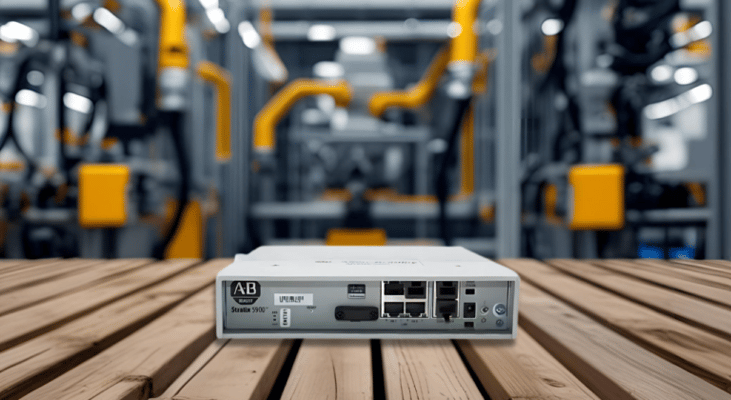
Allen-Bradley’s Stratix 5900 Services Router is an industrial networking technology milestone that provides functions that are much superior to those of conventional industrial routers. This comparison of the two types of networking devices scrutinizes their technical details, environmental hardness, security attributes, and conformity standards for professionals to make sound judgments on industrial networking infrastructure. The Stratix 5900 Services Router has an industrial-designed hardware platform that differentiates it from standard routers. A fixed configuration avoids the complexity of modular systems, enabling out-of-the-box functionality upon deployment. The hardware has an extensive connectivity solution with four Fast Ethernet (10/100) connections for area networking, one Gigabit Ethernet connection for high-speed uses, and one specific WAN port for wide-area networking. This integration of ports supports versatile architectures for both remote and local communications...
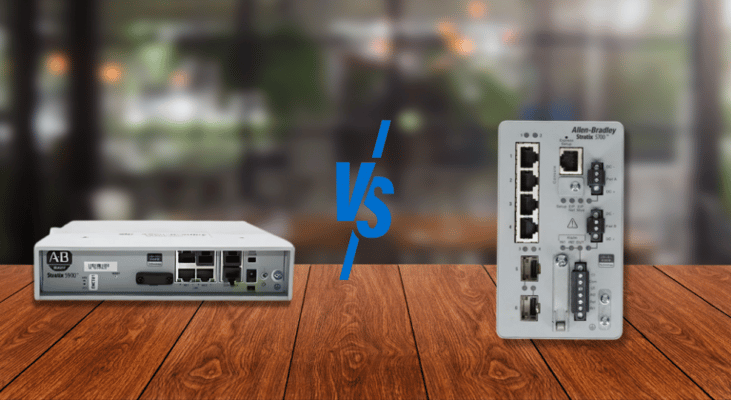
In any industrial setting, getting two machines to talk to each other is only half the battle. The real challenge is keeping that conversation organized, secure, and flowing in the right direction. This is where networking hardware comes into play. If you’re already invested in the Allen-Bradley environment, then the Stratix family might be familiar to you. Like other families of automation tech from AB, the Stratic models serve different purposes. While the 5900 and 5700 may sound like cousins, they’re built for entirely different jobs. While the 5700 keeps online traffic flowing smoothly, the 5900 stands guard to keep out bad actors from entering the network. That being said, which one belongs on your panel? Starting with our industrial-grade managed switch, the Stratix 5700 is designed to control the flow of traffic in industrial settings. It’s designed to make sense of the chatter between drives, controllers, and operator interfaces. With configurations ranging from six to twenty...
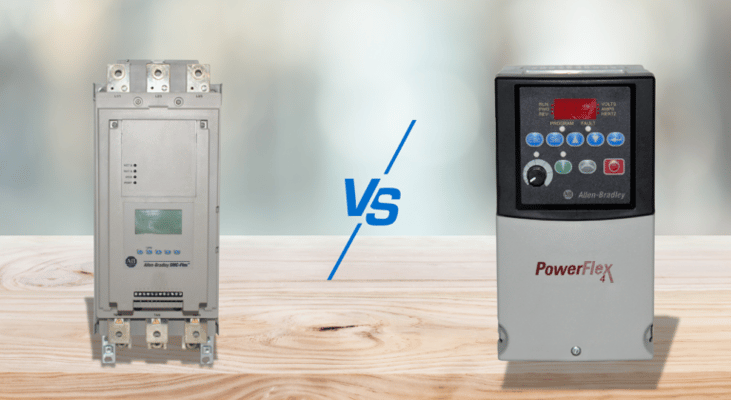
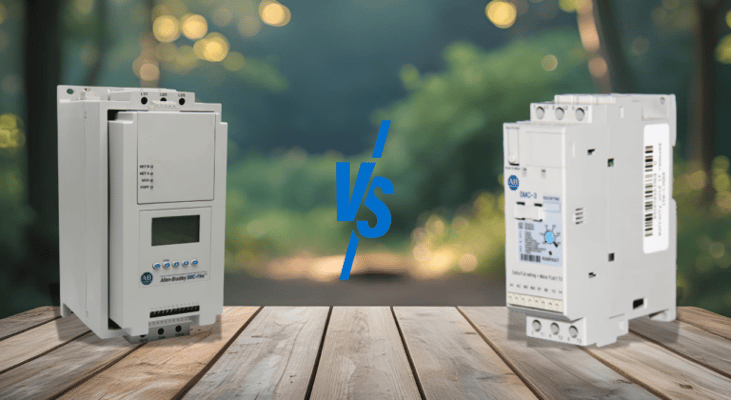
Imagine starting a 500-hp motor by flipping a switch, just like you would with a desk lamp. Sounds a bit reckless, right? After all, all of that power and torque is going to slam on, and who knows what damage that can cause? This is where smart motor controllers and soft starters come in. Yes, they’re different tools, but they’re designed to handle motor startup without damaging components or blowing fuses. But for those who haven’t been in the industry long enough, the difference between them might not be clear. So, how do they differ, and when should you reach for one over the other? A soft starter does exactly what it sounds like: it starts the motor, just.. gently. So instead of slamming full voltage into the motor the second it kicks on, it gradually ramps up to that desired voltage. This limits the inrush current, smooths out acceleration, and reduces mechanical strain on any couplings, belts, and gears. From a more technical standpoint, soft starters operate by controlling the...