We found 92 posts about Maintenance from DO Supply, a global automation parts
reseller focused on hard-to-find and obsolete industrial automation products.
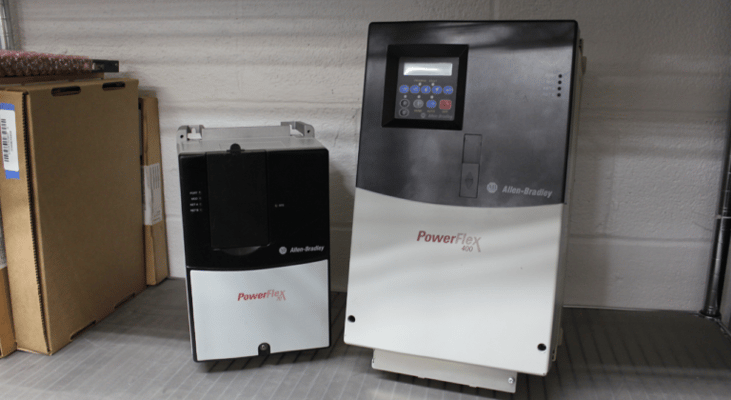
As a general rule of thumb, anything that moves, shakes, or powers up eventually needs maintenance. This is especially true for a factory environment where a PowerFlex 700 series drive will likely be installed. Keeping a drive in its prime reduces downtime caused by unexpected hardware failures, but you probably already know that. However, what someone might not know is just how to do that. After all, maintaining equipment is a bit of an art form. So, just how does one take care of a PowerFlex 700 drive? Well, that brings us to our first topic. Shop for PowerFlex 700 Drives Here Checking your equipment in intervals is a fairly standard but practical way to ensure everything runs as smoothly as possible. Before we get into it, it is worth reminding you to disconnect all power and ensure that the capacitors inside are fully discharged. Using a multimeter to read voltage (or lack thereof) across the DC Bus terminals (+DC and -DC) is a good way to do so. Then, it would help to get some...
Troubleshooting Allen-Bradley drives can be critical to ensure smooth and efficient operation in various industrial applications. This article provides valuable tips and solutions to common issues that users may encounter with their drives, helping them quickly identify and resolve faults. Whether dealing with motor acceleration problems, encoderless mode challenges, or fault codes, this article offers practical troubleshooting steps and best practices. With clear instructions for diagnosing faults, handling warnings, and managing drive resets, these tips will help optimize drive performance and minimize downtime, ensuring the reliability of your Allen-Bradley drive systems. When an issue arises with your Allen-Bradley drive, the Velocity Processor (VP) and Current Processor (CP) light on the main control board provides critical diagnostic insights: Browse Our Allen Bradley Drive Selection Here Solid Green : No fault. lashing Green : Drive warning detected. Flashing Red : Drive soft...
Integrating the SMC Dialog Plus into your control systems requires careful attention to various technical aspects to ensure optimal performance and safety. This article offers essential tips for seamless integration, covering key areas such as proper enclosure and mounting, power connection best practices, and control wiring requirements. Additionally, it highlights the importance of accurate calibration, configuring overload protection, and ensuring communication parameters are set correctly. Emphasizing safety precautions, including handling hazardous voltages and ESD-sensitive components, is also crucial. By following these guidelines, you can maximize the SMC Dialog Plus functionality, efficiency, and reliability in your control applications. Appropriate enclosure and mounting are crucial for dependable operation when integrating the SMC Dialog Plus controller. Because of its open-style design, it must be installed in a proper enclosure with an internal temperature between 0°C and...
In any industry, even a brief period of downtime can result in substantial financial losses. Proper maintenance is not just a routine task—it is an important strategy for preserving the performance, reliability, and lifespan of your PowerFlex 7 drives. If done correctly, maintenance helps sustain these drives’ performance and longevity. This article mentions the best maintenance practices to help you increase your system’s reliability. A proper maintenance plan consists of pre-scheduled periodic inspections. It is recommended that the first inspection be conducted on the newly installed drives within the first 3-4 months of installation. After the initial inspection, an annual maintenance schedule can be planned. The frequency of inspections needed is based on the operation and environmental conditions. This is a benchmark approach to detect potential issues as early as possible. Contamination from dust and debris adversely affects the drive performance. These are highly flammable...
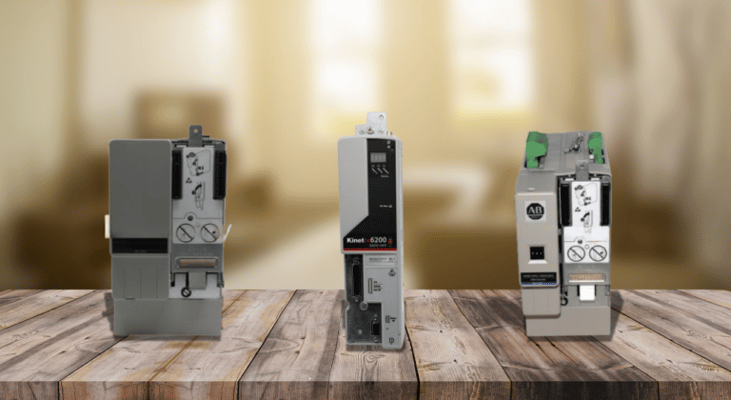
When implementing Kinetix 6200 drives, different complex challenges can arise, leading to operational inefficiencies and potential system failures. This article lists typical mistakes that should be avoided when installing and configuring equipment, highlighting the significance of accurate parameter settings, efficient heat management, and appropriate feedback device integration. By resolving problems like incorrectly configured settings, insufficient safety precautions, and delayed communication, companies may greatly improve the efficiency and dependability of their automation systems. Optimizing drive functioning necessitates having a solid grasp of dynamic load needs and putting strong power loss ride-through mechanisms into place. By avoiding these mistakes, you may create an automated environment that is more reliable and effective. All these mistakes have been discussed below in further detail. Shop Kinetix 6200 Drives Here When implementing Kinetix 6200 drives, failing to...
Ever feel like your industrial servo drives have a secret pact to explode right when you need them most? Well, maybe not explode, but you’re not alone. It’s almost as if they know the exact moment when a breakdown will cause maximum chaos. But here’s the good news: extending the lifespan of these vital components isn’t reserved for those with a PhD in engineering or a magical toolbox. With some practical steps, you can keep your servo drives running smoothly and avoid those untimely surprises. So, whether you’re a seasoned engineer who’s wrestled with more servo drives than you’d care to admit, or a novice just stepping into the world of industrial machinery, there’s something here for you. Before we start diving into all the ways you can keep your servo drive running smoothly for years, it’s worth taking a moment to understand what you’re working with. After all, you wouldn’t expect to perform surgery without knowing your way around a scalpel, right? While servo drives are far less...
PowerFlex Drives are key players in industrial automation, offering flexible solutions for motor control across a wide range of applications. However, like all sophisticated equipment, they can present challenges that may require troubleshooting to ensure smooth operation. An inoperative drive can disrupt operations, causing significant downtime and production losses. However, the fault codes displayed by PowerFlex drives offer valuable insights into underlying issues, guiding effective corrective actions. PowerFlex drives provide crucial feedback on equipment and application performance, helping businesses maintain efficient operations. This article aims to simplify the troubleshooting process by outlining common issues encountered with PowerFlex Drives and offering practical solutions. Buy PowerFlex 40 Series Drives One of the frequent challenges with PowerFlex drives is handling bound or excess load, which can lead to overheating and related faults. Common fault codes signaling an...
Allen-Bradley provides various motor control solutions. One of these solutions is the SMC Dialog Plus , which offers soft starting, stopping, and motor protection. This article provides a step-up guide based on the best practices for optimal performance of SMC Dialog Plus soft motor controllers during installation, programming, calibration, and maintenance. Featuring an open-style design, the SMC Dialog Plus controller must be installed in an appropriate enclosure. The internal temperature of the enclosure should be between 0°C and 50°C. In case of overheating, operation might not be reliable. The controller should be positioned such that it allows vertical flow of air through the power structure. There should be a minimum free space of six inches (15 cm) around all sides for proper ventilation. Before the power is connected, the product nameplate should be referred to for information related to lug termination, including lug wire capacity and tightening torque requirements. These...
The PowerFlex 753 drive is a versatile and robust solution for industrial motor control, offering a seamless blend of performance, flexibility, and ease of use. In this article, we have discussed the features of the PowerFlex 753 drive that could be designed to assist users in the integration, installation, and maintenance. We will cover the essential steps and best practices for installing and configuring the drive to ensure optimal performance. Additionally, we will highlight key maintenance tasks and safety precautions to maximize the drive’s longevity and efficiency. After that, we will discuss some of the example modules that this drive series provides. With power ratings ranging from 0.5 to 200 HP at 200-240V AC, 1 to 350 HP at 380-480V AC, 1 to 300 HP at 600V AC, and 7.5 to 250 kW at 690V AC, PowerFlex 753 drives are capable of handling a wide range of control applications. Suitable for 400 HP and 270 kW maximum. Integrated I/O is a feature of PowerFlex 753 drives that improves...
Safety PLCs are those overachieving, highly dependable systems that ensure your factory doesn’t turn into an accidental pyrotechnics show. Safety PLCs, or Programmable Logic Controllers, play a key role in maintaining this balance by preventing accidents and ensuring safe operation. Unlike regular PLCs that manage routine control tasks, Safety PLCs add a crucial layer of protection. Their significance in industrial settings is immense, as they help avoid incidents that could lead to expensive downtime or hazardous situations—understanding how Safety PLCs work and their applications reveal why they are indispensable in modern industrial automation. Safety PLCs are Programmable Logic Controllers designed specifically to enhance the safety of industrial operations. Unlike standard PLCs, which primarily focus on automating and controlling machinery and processes, Safety PLCs incorporate additional features that ensure the system operates safely under all conditions. These features include...
The PowerFlex 700H series sets a benchmark in high-performance drives for demanding industrial environments. This drive series, renowned for its superior flexibility, robust design, and advanced control features, offers exceptional speed control and programming capabilities. With a wide array of power ratings and configurations, these drives are manufactured to integrate different application needs, from heavy-duty machinery to precision motor control. The PowerFlex 700H series ensures reliable operation, efficient performance, and easy incorporation into different industrial systems, making this series a good choice for complex and challenging operational demands. The available ratings for this drive series are 200 to 1900 HP at 480 Volts AC, 150 to 2400 Horsepower at 600 Volts AC, and 160 to 2000 kW at 690 Volts AC input. Due to their wide power and voltage ranges, these drives are ideal for a wide range of industrial applications. This drive series has a full-function LCD HIM with...
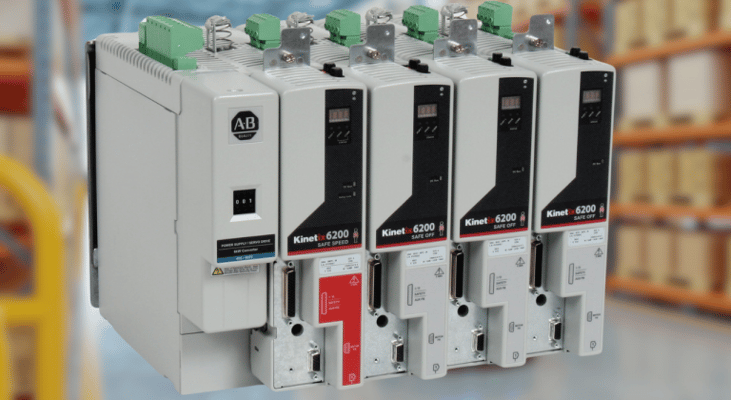
The Allen-Bradley Kinetix 6200 (Bulletin 2094) are multi-axis servo drives that offer a Kinetix Integrated Motion platform for drive/actuator or drive/motor applications through SERCOS (Serial Real-time Communications System) interface. These drives are available with Safe Torque Off (STO) and Safe Speed Monitoring (SSM) safety options to enhance workplace safety and ensure increased machine productivity. They are also compatible with Kinetix 6000 drive systems, meaning you can upgrade any number of existing Kinetix 6000 drive axes to advanced safety with Kinetix 6200 drives, where needed. In addition, the Kinetix 6200 servo drives feature an innovative modular design that allows for greater machine flexibility and adaptability for future drive improvements, such as increasing the drive’s power or control range by adding a new power or control module. The modular design also allows Kinetix 6200 drive axes to easily transition from SERCOS interface connectivity to EtherNet/IPnetworking...
Among the myriad of tools and technologies making a difference, there’s a particular type of equipment that doesn’t always get the spotlight but definitely deserves a mention: the Liquiflo pump. It’s not just any pump; it’s a workhorse designed for the tough jobs, the kind that involves corrosive chemicals or viscous liquids that would make lesser machinery falter. But why focus on a pump, you might ask? In the intricate ballet of chemical processing, every component counts, and having a reliable pump can be the difference between a smooth operation and a problematic one. Liquiflo pumps have carved out a niche for themselves, not by being flashy but by being dependable, versatile, and, frankly, just really good at what they do. This isn’t about putting a brand on a pedestal. It’s about acknowledging a tool that many engineers and plant operators have come to rely on, perhaps more than they’d like to admit. So, let’s take a step back and look at the bigger picture of industrial...
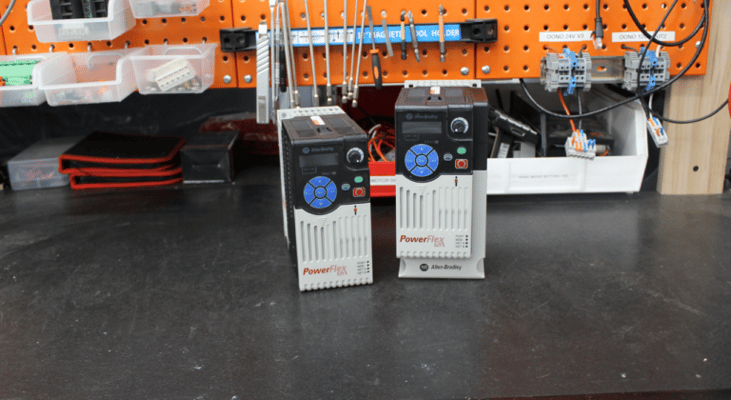
It is said that achieving the right balance between versatility and efficiency is akin to hitting a gold mine. The Allen-Bradley PowerFlex 525 AC Drive achieves this ideal by ensuring top-notch performance and adaptability within the industrial landscape. Allen-Bradley, synonymous with innovation and reliability under the Rockwell Automation umbrella, has designed PowerFlex 525 to meet diverse needs in today’s industries. This is great for a wide range of application areas, including manufacturing and material handling; hence, it supports smooth and effective operation. With advanced features and a user-friendly design, it has become easy to understand why this particular drive is the favorite of engineers who want to boost their productivity while saving on energy costs. Whether for modernization needs of existing systems or new projects, the PowerFlex 525 is up to meeting the demands of modern automation, and here is why: The PowerFlex 525s are part of the flexible and highly...
AC drives are essential components of industrial automation processes, especially when precise motor speed control is required. All modern electric trains or locomotive systems rely on AC drives for power. Robotics represents another significant domain where AC drives provide accurate speed and position control. An AC drive, also known as an adjustable frequency drive, is an advanced electronic device used to regulate the speed of an electric motor by changing the frequency and voltage of the electricity supplied to it. The primary function of an AC drive is to dynamically adjust the motor’s speed to match the workload, optimizing process control and conserving energy. This capability allows for precise modulation of motor speed in response to varying operational requirements, improving efficiency and reducing energy consumption. By effectively aligning motor speed with the application’s demands, AC drives contribute to enhanced productivity and operational flexibility while extending...