Enhancing Machine Safety with Allen Bradley SMC Plus
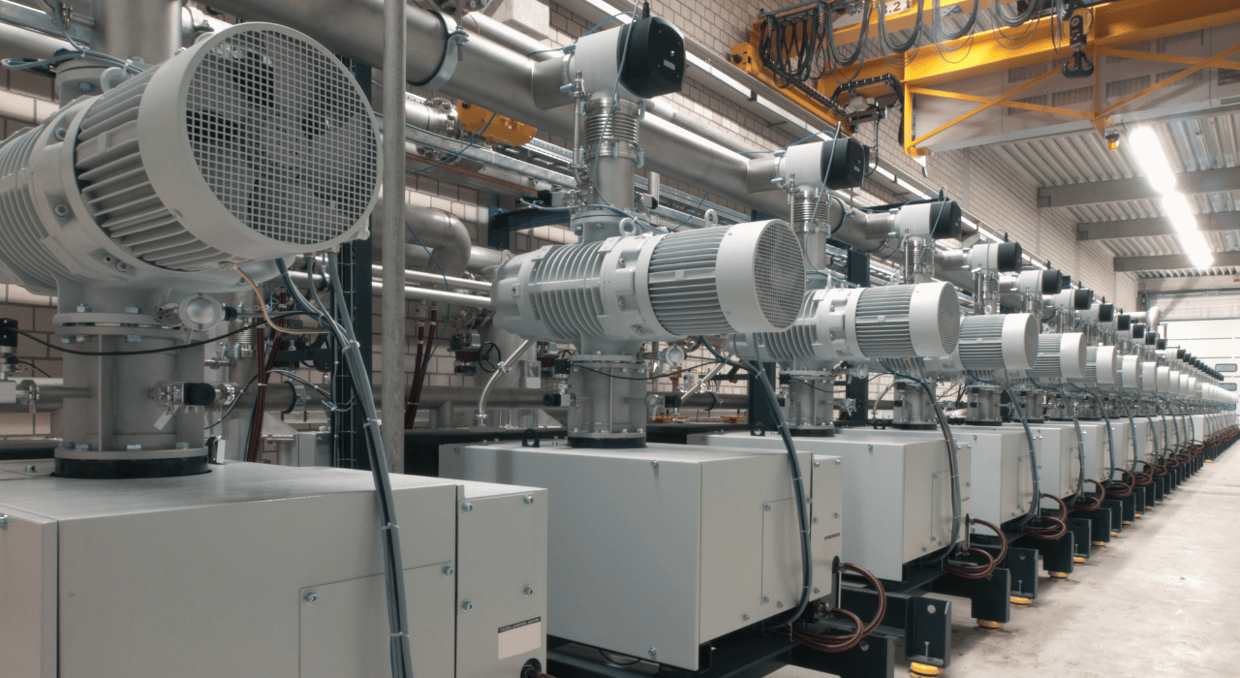
Machine safety holds prime importance in any industrial setup. It not only enhances the productivity and efficiency of the machine but also assures the well-being and safety of the workers. In this context, the Smart Motor Controller (SMC) Plus by Allen-Bradley/Rockwell Automation has emerged as a key player, ensuring machine safety and efficiency. The SMC Plus is a variant of Allen Bradley’s smart motor controllers with an intelligent microprocessor to control motor operations. It significantly prevents machine malfunctions and accidents, enhancing machine safety through many notable functions and features.
This article discusses the modes, features, and technical aspects of the SMC Plus that enhance machine safety.
Start Modes
The SMC Plus has multiple start modes. These modes provide flexibility in controlling the motor safely based on the application requirements.
Soft start: This mode of operation is used for general applications. In this mode, the motor’s torque is increased to an initial value that can be programmed between 5% and 90% of the locked rotor torque. During the acceleration ramp time, which may be programmed from 2 to 30 seconds, there is a gradual increase in motor voltage. This mode ensures the machine has the best starting performance over the desired load range.
Soft start (with selectable kickstart): As the name suggests, this operational mode provides a kickstart or boost to the motor. It delivers a current pulse, usually 550% of full load current. The kickstart time can be adjusted between 0.4 and 2 sec. This mode enables the motor to develop additional torque for loads requiring a start boost.
Current limit start: During the start of any operation, the current may rise to its maximum value, which can cause undesirable wear and tear to the motor and, ultimately, the machine. To resolve this problem, the Allen-Bradley SMC Plus offers a Current Limit Start operational mode, which helps to control the starting current. This can be varied within a range of 50%—500% of full load current.
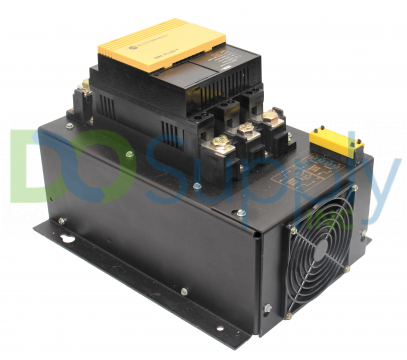
Full Voltage Start: This mode enables the motor to start at maximum voltage safely without damaging both the machine and the motor. This operational mode is usually used for applications where motors are required to acquire the maximum operating speed as early as possible. This mode does not involve any ramp-up or current limiting while the motor is reaching its full operational voltage.
Stop Modes:
The SMC smart motor controllers have multiple stop modes that bring the motor to rest while ensuring machine safety and minimal losses to the motor. The stop modes for the SMC Plus controller are discussed below:
Soft stop: In any industrial setting, whenever the voltage supply to the motor is cut, the load, such as conveyor belts, fans, pumps, etc, stops suddenly, which might cause considerable damage. To avoid this issue, the SMC smart motor controller has a soft stop operational mode that allows the motor to slow down gradually and stop, which prevents the load from stopping suddenly when the voltage supply to the motor is removed. Using the soft stop mode, we can adjust the voltage ramp down time between 2 to 60 seconds, which is nothing but the time the motor takes to stop. The load would eventually stop when its torque exceeds the motor’s. This strategic termination of motor operation enhances machine safety while reducing the risks of wear and tear.
Preset slow speed: There are many applications where the motor speed has to be low at specific instants, such as moving the conveyor belt slowly so that the machine part undergoes all manufacturing processes. In such cases, smooth motor control has to be established so that the speed varies from high to low and the motor operates at a slower speed than its normal speed. To implement such control, the SMC Plus allows preset slow speed. We can easily define a slow speed using the DIP switch, corresponding to different percentages of the motor’s base speed. Hence, a smooth control over motor speed can be established, ensuring the process’s efficiency and machine safety.
Smart motor braking system: In some applications, situations may arise where the motor has to be shut down faster than usual, such as emergency stops in the conveyor belt, precise control of the motor during CNC machine operation, and robotic arms that are used in assembly lines to prevent collisions or misplacements. The SMC Plus has a smart motor braking system, which helps to stop the motor faster than usual. The braking system is based on a micro-computer, which applies a braking current to the motor. This braking system does depend on any contactor, timer, sensor, or tachometer to stop the motor operation. With stable control over the motor, accidents and wear & tear of the motors and machines can be avoided, which enhances the overall safety of the machine.
Pump control: The pump control is a feature that assists in pump operation, specifically the centrifugal pumps, to start or stop the pump smoothly by increasing or decreasing the motor speed and preventing surges. Motor surges are reduced through control commands that the microcomputer generates after analyzing the motor variables and can adjust the motor’s starting (2-30 seconds) and stopping time (2-120 seconds). Hence, this feature helps to implement smooth control over the motors being used in pumps, enhancing the safety and efficiency of the pump.
Accu-stop and Accu-stop with slow speed at the start: The “Accu-Stop with Slow Speed at Start” feature enables the motor to operate at a slow preset speed (7% or 15% of rated
speed) when starting. This reduces the need for jogging to position a load. After the start command, the voltage will increase from the preset slow speed to full speed. The “Accu-Stop” feature is used when a controlled stopping is required. It applies braking torque to the motor until it reaches the slow preset speed and maintains it until a stop command is given. Then, it applies more braking torque until the motor stops completely.
Hence, all these features collectively contribute to establishing smooth motor control, which would increase the machine’s efficiency, reduce the risk of accident or equipment failure, and enhance machine safety.
Diverse Technical Aspects and Operating Environmental Conditions:
Now, let’s discover those aspects that make SMC Plus stand out in any environment and contribute to machine safety. The SMC Plus can operate within the input voltage range of 3-phase 200V AC – 600V AC. The control module operates on control voltage within the range of 100V AC – 240V AC. Since the SMC Plus has power and circuit operation line frequencies of both 50Hz and 60Hz, it can be used within any region of the world. It has a diverse range of current ratings between 1A and 1000A. To protect the machine from potential damage caused by electrical failures and voltage spikes, the SMC plus has a Repetitive Peak Inverse Voltage (RPIV) rating of 1400V (for 200V – 480V line voltage) and 1600V (for 200V – 600V line voltage). SMC Plus can also tolerate voltage surges due to lightning or power outages. It can also tolerate showering arcs/multiple arcs during the operation, which can cause damage to electrical equipment, leading to equipment failure or even fires. The SMC Plus can tolerate a surge of 3000V (3KV peak) and showering arcs of 1500V without failing, ensuring the smooth operation of the motor and the machine’s safety. The load/output has different input power ratings, so the SMC Plus delivers a wide range of output power. All variants of SMC Plus have different power ratings between 5Hp – 1000Hp.
The SMC Plus can operate in different environmental conditions, which reflects its durability to withstand any operating parameters while ensuring the safety of the machines. The operating temperature for the SMC plus is 0°C to 50°C. However, the storage temperature is between -40°C to 85°C. It can operate in relative humidity between 5%-95%. It can bear a vibration of 2.5G for up to 60 minutes and tolerate a 30G peak acceleration shock of 11 ms. Another feature of the SMC Plus is that it can operate at an altitude of 2000m above sea level without affecting its performance. This feature enables the SMC Plus to be operated anywhere across the globe. Hence, all these features contribute to SMC Plus’s durability, making it a good choice for industrial settings where both machine safety and equipment durability are required side by side.
Safety Features:
The SMC smart motor controllers have multiple safety features that ensure the motor’s durability and longevity. These safety features are discussed below:
Electronic motor overload protection: The SMC Plus has a standard electronic motor overload protection safety feature. The overload protection is achieved electronically using an I2t algorithm. When effective short circuit protection is connected with motor overload protection, this overload protection can safeguard the power wiring, motor, and motor controller within the circuit from overheating due to excessive overcurrent. The overload protection can be programmed. This offers flexibility to the user as the overload trip class can be chosen from class 10, class 15, class 20, or class 30 protection. The trip current can be programmed by entering the motor’s full load current. Thermal memory is also in the controller, enabling it to monitor the motor’s operating temperature. Thus, SMC Plus uses real-time protective measures to enhance machine safety.
Stall Protection and Jam Detection: Motors can face high torque levels and locked rotor currents if they stall or jam. Such situations can cause wear & tear on the motor’s winding insulation or damage the load. The SMC plus controllers offer both stall protection and jam detection, which can enhance machine safety. The stall protection features allow the user to set a maximum delay time between zero to 10 seconds for stall protection, which starts when the programmed start time ends. If the controller detects a stalled motor, it shuts down after the delay has ended.The jam detection feature allows the user to set the jam detection level. It is the percentage of the motor’s full load current rating. The jam detection is active when the motor reaches its full speed. To avoid unnecessary tripping, a jam detection delay time can be set. Due to motor jams, this would be the time interval before the SMC plus trips. During this delay, the motor current rises above the jam detection level. Hence, both features contribute to enhancing motor protection and machine safety.
Energy saver: This is the SMC Plus’s built-in feature, which does not require extra space, external wiring, or a setup procedure. It conserves energy whenever the motor is used for small load applications or not used for long periods, improving both the motor’s efficiency and longevity.
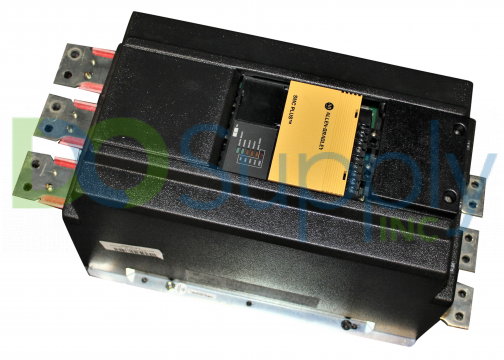
Phase Rebalance: The phase rebalance is an inbuilt feature within the SMC Plus, which does not require any additional setup process. It dynamically adjusts the voltage output so that the three-phase current drawn by the motor can be balanced. By doing so, the voltage unbalance can be compensated within the SMC Plus, ensuring the machine’s safety.
Undervoltage protection: Undervoltage protection is a standard feature of SMC Plus. This feature stops the motor if it detects a decrease in the incoming line voltage. We can also adjust the line voltage level at which this feature can be triggered. This level can be adjusted within 0%-99% of the programmed line voltage. We can also adjust the delay (0-99 seconds), after which the protection is activated to avoid unnecessary motor shutdowns. This feature protects the motor, which contributes to enhancing overall machine safety.
SMC Smart Motor Controller Identification
Even though the SMC smart motor controller promises machine safety and smooth operation, it is important to know which variant of the SMC plus should be selected to ensure machine safety and efficiency while considering environmental parameters and operating conditions. An interesting fact is that all information that reflects the technical aspects and the operating conditions for any SMC Plus is present in the catalog number of the SMC Plus. Here’s a guide to studying the catalog number of the SMC smart motor controller. For open-type, non-combination SMC Plus controllers, the catalog number is encoded as follows:
AAA – BBB C DD E – FFF
- In such catalog numbers, “AAA” refers to the bulletin number 150, 150B, or 150R for open-type controllers.
- “BBB” refers to the controller rating of the SMC plus, which is between 24A and 1000A.
- “C” refers to the enclosure of the SMC Plus controller, which is N (for open enclosure), A (for NEMA Type 1), B (for NEMA Type 1 ventilated), J (for NEMA Type 12), F (for NEMA Type 4), H (for NEMA Type 3R) and S (for NEMA Type 4X).
- “DD” refers to the input line voltage range, which is either 200V – 400V AC or 200V – 680V AC.
- “E” refers to the optional stop modes provided within the SMC Plus controller, such as A (for soft stop), B (for pump control), C (for preset slow speed), D (for SMB smart motor braking), E (for Accu-Stop) and F (for slow speed with braking).
- “FFF” shows whether the SMC Plus controller is a Line-Mounted Protective Module(8L4, 8L6, 8M4, 8M6) or a Line-and-Load Mounted Protective Module(8B4, 8B6).
For combination SMC Plus controllers, the catalog number is encoded as follows:
AAAA – BB C D- EE – FFF
- In such catalog numbers, “AAAA” refers to the bulletin number which is 152B,152H, 152R, 153B, 153H, and 153R for
- “BB” refers to the enclosure, which is WA (for NEMA Type 1), WB (for NEMA Type 1 ventilated), WJ (for NEMA Type 12), WH (for NEMA Type 3R), and WS (for NEMA Type 4X).
- “C” refers to the line voltage, which is A (for 240V AC), B (for 480V AC), C (for 600V AC), and H (for 200V AC).
- “D” refers to the option/feature provided within the SMC controller, which is A (for soft stop), B (for pump control), C (for preset slow speed), D (for SMB smart motor braking), E (for Accu-Stop) and F (for slow speed with braking).
- “EE” refers to the horsepower rating for each variant, which is between 5-1000 HP.
- “FFF” shows whether the SMC Plus controller is a Line-Mounted Protective Module(8L4, 8L6, 8M4, 8M6) or a Line-and-Load Mounted Protective Module(8B4, 8B6).
This knowledge helps identify the best and optimum SMC, which will enhance machine safety and performance.
Conclusion:
Allen-Bradley has always promised the best and optimum solutions to industrial automation problems. The SMC plus has indeed proved to be an effective solution that provides all the features necessary for smooth and secure operation, enhancing machine safety and longevity.
DO Supply Inc. makes no representations as to the completeness, validity, correctness, suitability, or accuracy of any information on this website and will not be liable for any delays, omissions, or errors in this information or any losses, injuries, or damages arising from its display or use. All the information on this website is provided on an "as-is" basis. It is the reader's responsibility to verify their own facts.