Solar Farms and Australia's Solar Farm Project
What is a Solar Farm?
Solar farms, also sometimes referred to as solar parks, are large-scale, ground-mounted installations of massive arrays of Photovoltaic (PV) panels or other means of converting sunlight into solar energy, which is then routed to a utility’s power grid. They are simply solar power stations that operate just like other electricity-generating plants such as fossil-powered or natural gas power plants. But unlike traditional power plants, solar farms don’t produce any sort of pollution and they hardly use water in electricity generation.
In general, the concept of a solar farm can be associated with both commercial solar projects and residential rooftop solar systems that have just a few solar panels. However, unlike these two solar systems, solar farms are decentralized and they normally consist of large arrays of ground-mounted solar panels. Also, rather than supplying power to a local household or business, solar farms are part of a utility’s energy mix and in most cases, they provide power to a national electric grid. In addition, solar farms leverage economies of scale and they allow installation of the solar panels in more ideal locations, free from tree shading.
Types of Solar Farms
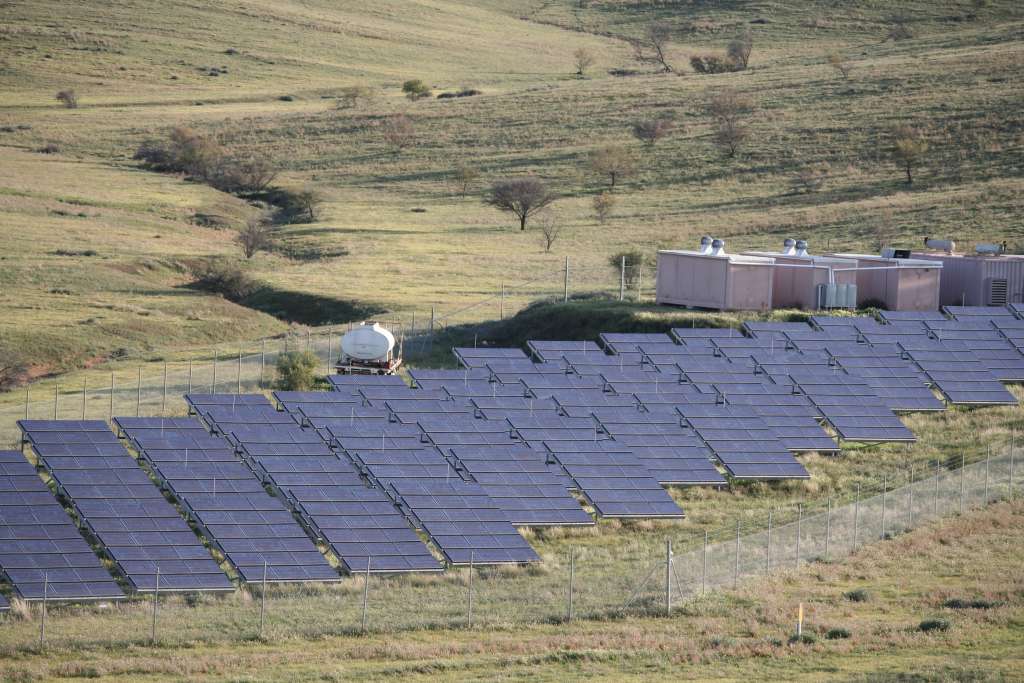
Based on the size, solar farms are divided into two categories, namely:
- Utility-Scale Solar Farms: These are large solar installations consisting of thousands of solar panels. They are owned by an electric utility company that’s connected to the nation’s electric grid. The utility company then distributes the generated solar power to industrial, commercial, and residential consumers connected to the grid. Hence, a solar farm cannot be referred to as a utility-scale project if it’s completely disconnected from the national grid. Utility-scale solar farms have a generating capacity ranging from 1 Megawatt (MW) to 2000 Megawatts.
- Community Solar Farms: Also known as “roofless solar” or “solar gardens”, these solar farms consist of a few hundred solar panels, spanning several acres of unoccupied land. Community solar farm projects provide electricity to several households and local businesses. Usually, the end-users of community solar are members or subscribers who pay to have a share of the generated solar power. Typical community solar farms have a generating capacity of less than 5 MW, and some small-scale community solar farms can even have a capacity of under 100 kW (Kilowatts).
How Does a Solar Farm Work?
A solar farm converts the sun’s rays into electric power (electricity) using two primary types of solar technologies: (i) Solar Thermal Energy Arrays; (ii) Ground-Mounted Installations of Photovoltaic (PV) Solar Panels.
Solar farms using thermal energy technology include concentrating solar systems with illustrative troughs that reflect, concentrate, and collect the solar energy to heat exchange fluid. The warm exchange/heat transfer fluid is then pumped into a thermal engine, which converts the heat energy into electric power. Other solar thermal arrays make use of mirrors to reflect and concentrate sun rays onto receivers that collect the solar energy, converting it into heat energy that’s then used to produce electricity. On the other hand, Photovoltaic (PV) solar panels convert sun rays directly into electricity. When sunlight shines onto the PV solar panels, it activates semiconductors inside PV cells which generate usable electric power.
A Photovoltaic (PV) cell is a specially designed diode that converts sunlight into DC electricity. To function, the PV cells are required to establish an internal electric field, which occurs when negative and positive charges are separated. To create this electric field, the PV cells are particularly fabricated with negatively and positively charged semiconductors sandwiched together –i.e. a silicon semiconductor “doped” with other materials.
When the PV cells are exposed to sunlight, the semiconductors absorb the sunlight’s energy, in the form of photons, and transfer it to the electrons (negatively charged particles in the semiconductor material). The extra energy enables the electrons to drift freely in a specific direction in response to the internal electric field within the PV cells, causing electric current to flow. The flowing electric current is extracted via conductive metal contacts that line the PV cells–the grid-like power lines on PV solar panels–and can then be directed into electric grid transmission lines (in the case of a utility-scale solar farm) for distribution to various end-users. The primary standards of a PV solar farm are similar to the operation of residential rooftop solar panels but for a bigger scope.
Note: Photovoltaic (PV) solar panels generate DC (Direct Current) electricity while electric grid power lines transmit AC (Alternating Current) electricity. Also, most electricity consumers require AC electricity to power appliances, lights, and other electrical devices. For this reason, solar farms consisting of PV arrays require multiple inverter units to convert the generated DC power into usable AC power, which then flows through a utility meter into the power grid. Essentially, a PV solar farm includes Photovoltaic solar panels, cables, inverters, racking, transformers, and a substation or a power line that delivers the generated electricity to the transmission grid.
What is the Generating Capacity of a Solar Farm?
Currently installed PV solar farms have a generating capacity of up to 850 MW (Megawatts) daily, making them the most popular type of solar farm on a global scale. Longyangxia Dam Solar Farm in China is the largest PV solar farm on the planet with a generating capacity of approx. 850 MW per day, closely followed by Desert Sunlight PV Solar Park in California which has a generating capacity of 550 MW. In contrast, the largest thermal energy solar farm in the world – known as Ivanpah Solar and which is situated in California – produces approximately 392 MW every day.
The maximum generating capacity of a PV solar farm is highly influenced by the efficiency of the PV cells in the installed solar panels. The efficiency of a Photovoltaic cell is the amount of electric power being extracted from the cell in comparison to the solar energy from the sun rays shining on it. It indicates the effectiveness of the PV cell in converting the sun’s energy into electric power.
The amount of electric power generated by PV cells depends on the intensity and wavelength of the available sunlight, as well as the multiple performance characteristics of the PV cell. Thus, the efficiency upon which a PV cell converts solar energy into electric power varies depending on the type of semiconductor material, the semiconductor’s bandgap, and the type of Photovoltaic cell technology in use. At present, the state-of-the-art Photovoltaic cells commercially available for solar farms have an efficiency of about 20%, though experimental PV cells with a 50% efficiency are being developed for high-end applications like space satellites.
Solar Farms in Australia
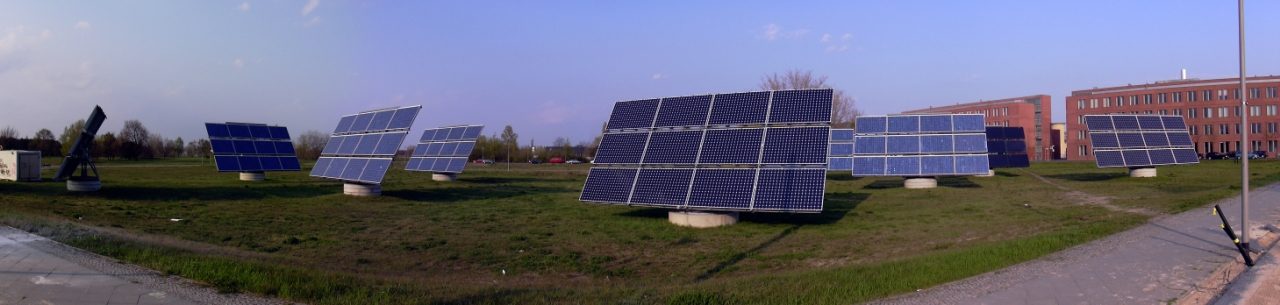
Australia, being one of the sunniest countries on Earth with a lot of desert space, is ideally positioned to include utility-scale solar farms as a key part of its national energy mix. Also, large-scale solar farms use the same technology as rooftop PV solar panels–specially designed semiconductor PV cells that convert sunlight into electricity. As a result, the Australian solar industry is building massive PV solar farms thanks to the economies of scale associated with large-scale solar energy generation, and the government’s push for renewable energy to counter climate change.
Although the Covid-19 pandemic stalled the installation and expected operation of several PV solar farm projects in Australia, it’s worth noting that Australia’s overall solar capacity grew to 3.9 GW (Gigawatts) due to the addition of 800 MW (Megawatts) of solar energy during the pandemic. At present, solar power is the largest contributor to Australia’s renewable energy pool, after overtaking wind energy in 2020 due to a massive surge of large-scale solar farm installations. This saw the proportion of Australia’s solar capacity to overall renewable energy production rise from 9.3% to 10%.
As Australia continues to expand its solar power capacity, let’s look at the six largest solar farm projects in Australia–both operational and currently in development.
Australia-ASEAN Power Link
Scheduled to begin operating by the end of 2027, the Australia-ASEAN Power Link (AAPL) project ranks as the world’s most ambitious solar farm project to date. It is a 10 GW (Gigawatt) solar farm that will cover 30,000 acres of vacant farmland in sunny Australia’s Northern Territory–between Alice and Darwin Springs. Its generating capacity will be equivalent to that of about 9 million residential rooftops’ Photovoltaic (PV) solar panels; making it the world’s largest PV solar farm under construction. Once online, this solar farm will be paired with a 30 GWh (Gigawatt-hour) storage battery to allow 24/7 dispatch of generated electricity.
Being a utility-scale solar farm, the electric power generated by the AAPL plant will need to be connected to Australia’s electric grid for distribution. And since it’ll be remotely located, the AAPL solar farm envisions a high-voltage overhead transmission line to transmit 3 Gigawatts to Darwin Springs, 800 kilometers away. From there, 2.2 GW will then be transmitted to Singapore via a 3,700 km undersea transmission line. The entire Australia-ASEAN solar farm project is expected to cost $20 billion AUD while creating up to 1,500 job opportunities during the development phase and about 350 jobs once it begins operating.
New England Solar Farm
This is a 720 MW solar farm that is under construction across two different solar fields, central and northern arrays near Uralla town in New South Wales, Australia. It’s a joint venture between AC Energy Corporation (ACEN) and UPC Renewables Group. Being a hybrid solar facility, the New England Solar Farm will include a 400 MWh (Megawatt-hour) battery storage system installed on-site.
The first phase of this project (the 720 MW solar farm + 400 MWh storage battery) is expected to start operating and connect to the grid by 2023, with a generating capacity enough to power over 250,000 homes in New South Wales. The project is also expected to significantly minimize greenhouse gas emissions by roughly 1.5 million tons of Carbon Dioxide (CO2) every year, and create about 700 jobs during its construction stage and up to 15 continuing roles over its 30-year service life.
Western Downs Green Power Hub
This solar farm project is being developed by Neoen Energy Company in Queensland–Western Downs region, 22 kilometers South-East of Chinchilla. It will feature a 460 MW solar farm consisting of Photovoltaic solar panels installed across a 1,545-hectare solar field and a 200 MW battery storage system. It will connect to Queensland’s main transmission electricity network both directly and through battery storage. The entire 460-Megawatt solar farm is expected to start operating in 2023, while the 200 MW storage battery is in the advanced stage of development and is likely to begin operations in early 2024. As of August 2022, the solar farm could supply 100 MW of solar power to Australia’s electric grid.
Once completed, the Western Downs Green Power Hub solar farm project will produce enough electricity to power 235,000 households in Queensland. It will also offset approximately 864,000 tons of CO2 greenhouse emissions, each year. In addition, by the completion of its construction phase, this project will have created up to 400 jobs and it’s anticipated to create 7 to 10 ongoing roles when in operation.
Darlington Point Solar Farm
This is a 336-Megawatt PV solar farm project located in New South Wales, 10 kilometers South of Darling Point town. It consists of roughly 1 million Photovoltaic (PV) solar panels installed across 1,993 acres of unoccupied land. It’s owned jointly by Fern Trading Development Limited and Edify Energy.
Darling Point Solar Park commenced its operations in August of 2020 and it’s now generating enough clean energy to power more than 115,000 homes every year, reducing greenhouse emissions by 154,147 tons of Carbon Dioxide. This revolutionary project has paved the way for Australia’s solar energy future; it’s currently the largest PV solar farm connected to Australia’s national electric grid, but this is due to change once the three solar farm projects discussed above go online.
Cultana Solar Farm
This is a large-scale PV solar farm project that’s being developed by ZEN Energy (49.9% ownership stake) and SIMEC Energy Australia (50.1% ownership stake) on unoccupied farmland located just North of Whyalla Steelworks, in South Australia. It will include 780,000 Photovoltaic solar panels ground-mounted across over 1,100 hectares, and 53 inverters installed on site. The generated electricity will be connected to the national electric grid through the existing Whyalla and Cultana substations.
Once it becomes operational in 2023, the Cultana PV solar farm is expected to have a generating capacity of 280 MW, enough to provide clean power to over 100,000 South Australian households; offsetting 492,000 tons of CO2 emissions annually. The project is expected to create roughly 700 job opportunities during its construction and up to 10 ongoing maintenance and operation roles over its service life.
Limondale Solar Farm
This is a newly constructed 249-Megawatt solar farm consisting of 872,000 Photovoltaic (PV) solar panels installed across 900 hectares. It’s located to the south of Balranald in New South Wales, Australia. The project was constructed by Downer Group (an Australian Engineering company), but it’s owned by RWE AG (a German multinational electricity generating company) through a subsidiary– BELECTRIC Solar & Battery.
Limondale Solar Farm became fully operational in the third quarter of 2021, and it is generating sufficient electricity (249 MW) to power 105,000 households annually. When under construction, the project created between 300 and 400 job opportunities, and it now requires up to 7 personnel for its ongoing operations.
DO Supply Inc. makes no representations as to the completeness, validity, correctness, suitability, or accuracy of any information on this website and will not be liable for any delays, omissions, or errors in this information or any losses, injuries, or damages arising from its display or use. All the information on this website is provided on an "as-is" basis. It is the reader's responsibility to verify their own facts.