Fusion Energy in Industrial Automation
We’ve all heard of the promises of a potential fusion energy breakthrough and what it could mean for us in terms of clean, near-limitless power; however, concepts of how we can revolutionize and renew our current infrastructure aren’t too common at all. Recent developments in fusion research have left many engineers speculating about how far we can go with this technology and its possible ramifications – from revolutionizing robots and factories to opening up new frontiers in automated manufacturing. In this article, we’ll explore what scientists are currently working on regarding net positive breakthroughs for fusion energy production and discuss why these technological strides might just be the key to solving some major engineering challenges we face today, as well as any challenges that may arise along the way.
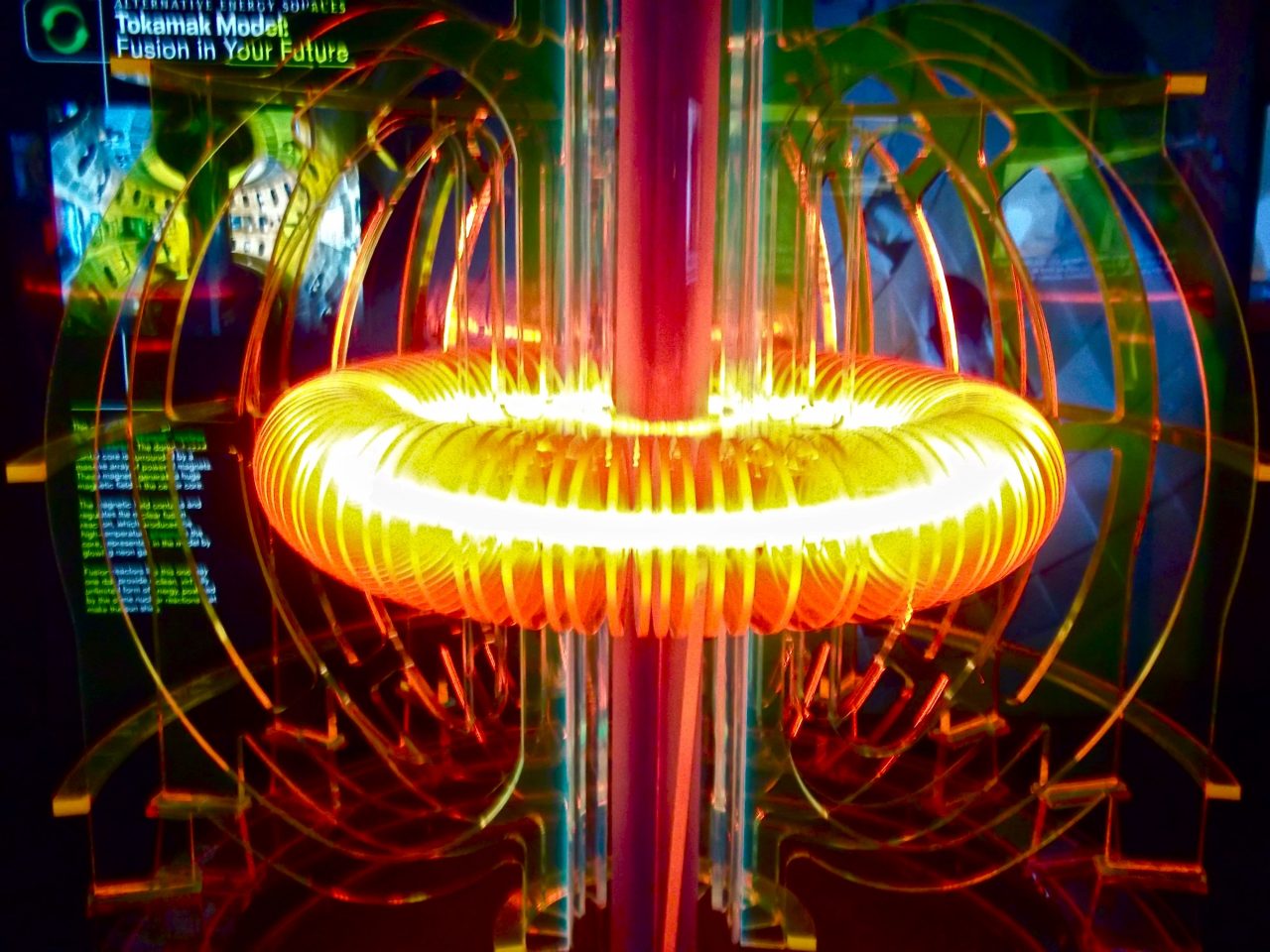
Fusion energy has been an alluring concept for many years, with its promise of virtually limitless clean energy. For all its potential advantages, the history of fusion is complex and full of challenges. Back in 1938, German physicist Hans Bethe introduced a revolution in fusion research with his theory outlining the process by which stars produce energy. Subsequent breakthroughs over the next century built on Bethe’s initial foundations; notable advancements include experimental processes to generate plasma, as well as powerful magnetic holders to contain and control it. Nuclear fusion was then achieved in the 1950s using a hydrogen bomb, followed by various designs to create small, controlled fusions in lab conditions today. Now, attention is turning towards how this concept can be harnessed and produced at larger scales to make power plants powered by fusion a possibility in the future. To make this feasible, scientists are exploring different ways to produce power from fusion. One of the most prominent fusion reactors being built today is ITER, which is located in southern France. ITER will use the same design principles as the Joint European Torus (JET) in that it uses a toroidal confinement device called a tokamak. The inside of the reactor is shaped like an inverted donut, though this one is much, much bigger and even more expensive than the one you may receive at a Dunkin Donuts drive-thru. Inside these reactors are enough magnets to pull an aircraft carrier 6 feet above the water or about 280,000 times stronger than earth’s magnetic field. This force is used to contain the plasma to keep away from the vessel walls. This plasma is used to fuse light elements to create energy. The ITER project seeks to produce net energy gain from a sustained reaction – something no other nuclear fusion reactor has achieved before until now.
In December of 2022, Lawrence Livermore National Laboratory achieved net positive fusion energy by firing the world’s most advanced laser system nicknamed ‘NIF’ (National Ignition Facility). NIF was designed to precisely target a small capsule of frozen deuterium and tritium, which are both heavy isotopes of hydrogen, with 192 lasers capable of delivering more than 2 million joules of energy. Those lasers are first started with a billionth of a joule of energy before being amplified over and over before reaching their peak energy to blast the pellet with, all in a matter of 5 microseconds. The capsule itself is then super-heated to temperatures exceeding 3 million degrees Celsius. This causes an implosion similar to rocket fuel to fuse the hydrogen atoms from the inside out. Once the “hot spot” is hot enough, the alpha particles will then heat the surrounding cold fuel to create a self-sustaining fusion reaction, or, ignition. The amount of energy that was used to fire the lasers was about 2.05 MJ, however, the power produced was 3.15 MJ, a 50% increase over what was originally used. While this does seem like a significant breakthrough, there are still quite a few setbacks that the lab needs to overcome before making this a viable energy source.
The first obstacle is the fact that NIF can only fire its laser a couple of times a day and even the energy it takes to power the system could cause a blackout in the laboratory. To have a steady stream of power from this plant, it would need to fire off thousands of times per hour. Another hurdle is the fact that there are only approximately 44 pounds of tritium on earth, a source of fuel for the NIF. Tritium is found in the upper atmosphere when cosmic rays interact with nitrogen, or when a nuclear weapon is detonated. This caused a fuel shortage even before the plant can be fully operational.
Sure, fusion energy still has some catching up to do before we can revolutionize any of our current infrastructure with its brilliance, it holds the promise to revolutionize the way we power current industrial and automation plants. In contrast to traditional reactors that currently help power some of our modern plants, fusion does not produce radioactive waste and can be powered as soon as commercial-scale plants become available. Harvesting power from a fusion reactor requires customized engineering solutions to adjust it to the specific requirements of different industrial applications, such as robots that use artificial intelligence and automated production lines. All of which would benefit from a clean, noise-free, source of energy. To achieve optimal power delivery, there must be an emphasis on minimizing losses when transferring energy from a reactor to a plant by using advanced technologies utilizing thermal insulation and optical fibers. With the right solutions at hand, industrial plants can look forward to tapping into a sustainable source of energy that would provide stable electricity prices, reduce costs associated with maintenance and optimization of manufacturing processes, and make heavy industries more environmentally friendly overall.
Another major benefit to having a plant run on clean power is the reduction of taxes imposed on facilities that still use dirty forms of power. In 2022, President Joe Biden of the United States proposed an increase in the amount it would cost companies per ton of greenhouse gasses to $51 over the previous $10 figure implemented under former President Donald Trump to become net-zero with emissions by 2050. While this figure doesn’t seem like a lot compared to a company racking in millions in revenue, a typical office business can produce about 1-6 metric tons of carbon emissions per employee per year. A company with 250 employees producing 2 tons of gas would equate to about $25,500 in taxes a year. In 2021, the U.S. electric power production industry emitted 1,551 million tons of greenhouse gasses, which would equate to $79,101,000,000 in taxes under this new rule. At the same time, the Biden-Harris administration is also making an effort to accelerate the research of fusion energy. Along with the tax cuts, this power source would reduce energy bills and energy price fluctuations as well. Even before the mass adoption of fusion energy, if a company can produce more energy than it uses, it can sell that energy back to the grid to earn money instead. This is a current incentive for companies to adopt solar panels in their factories or office buildings. Investors, an important factor in professional business decision-making, will be more inclined to put money into eco-friendly businesses. It is a proven marketing practice that is extensive. For the business owner who loves to cut costs and save money wherever possible, this is beginning to look like the holy grail of technology.
Clean and abundant energy can also improve our power grid to become more stable during times of harsh winters or when the shift to EVs is more pronounced. In February 2021, Texas suffered a major power crisis when three winter storms swept across the U.S. This caused a massive power generation failure, resulting in over $195 billion in property damage and more than 250 lives lost. In September of 2022, California narrowly averts a rolling blackout to prevent its power grid from buckling over the intense heat and increased power consumption due to stricter EV laws. While it is understood that the infrastructure itself needs to be updated to meet and exceed the current power demands, having fusion reactors to produce consistent and clean energy is a surefire way to combat future outages. Even as we progress to an EV-only transportation system, fast charging stations may become more abundant and able to handle the load with the new power source. With the mass adoption of electric vehicles comes the boom in vehicle and battery-manufacturing plants, which all rely on automation. These industry-grade robotics and circuits all consume electricity relative to the tasks it is programmed to do. Having machines that run on clean and limitless energy will further increase the amount a company can save, even making room to upgrade to power-hungry AI-focused supercomputers, now making a once-expensive option viable to increase productivity and efficiency within the workplace. This will likely create a boom in the automation industry on both the consumer robotics side and the PLC/software side in general. We already see automation taking over major work sectors, such as vehicle manufacturing and the bottling industry, so mass adoption of this progressive industry will be inevitable. Having more competition and innovation within the automation industry isn’t necessarily a bad thing. Not only will we see better technology and more competitive price points, but it could also open new avenues to rethink and renew our current and still modern automation practices based on the proposed circumstances.
If we do manage to hit that net-zero carbon emission goal by
2050, not only will we see human enlightenment in every industry, but we will
hopefully see a positive turn in our current climate change progress. While it
won’t be sudden and dramatic, droughts should become less severe, and the
extreme weather should also begin to subside. Not only will we see biodiversity
begin to flourish once again, but the color of The Great Barrier Reef comes
back, the haze in China subside, heatwaves grow less intense, crops become
abundant, and overall much cleaner waterways and air to enjoy. The generations
following ours will live in a world much, much better than our own today. While
having innovation is always a positive feat, having a world we may continue to
live and thrive is much, much more important.
While
we are still a decade away from clean, limitless fusion power as the old saying
goes, the future is absolutely beautiful with such a technology in our hands.
Our quality of life will grow just as the innovation that would boom after the
redesigned energy grid. Governments as well as private investors understand
this reality and have been pumping millions of dollars into these research
companies, giving them much more funding than they have ever received before.
It’s a race between these research stations to see who could achieve ignition
and keep it long enough to provide a stable and usable power source. The prize
at the end of the race for these research companies is not only mass adoption
of their work but the chance to change and revolutionize this would for not only
us but for our children and the many generations that will soon follow.
DO Supply Inc. makes no representations as to the completeness, validity, correctness, suitability, or accuracy of any information on this website and will not be liable for any delays, omissions, or errors in this information or any losses, injuries, or damages arising from its display or use. All the information on this website is provided on an "as-is" basis. It is the reader's responsibility to verify their own facts.