Exciting Upcoming Automation Tech
Every year it seems that technology is growing at an exponential rate, and truth be told, it is. It seemed just 3 years ago that AI wasn’t even quite possible for another decade or so, and yet, it seems every company is implementing it in various applications. This innovation also applies to robotics, and more importantly, automation. While robotics in factories have been around since the 1960s, they are becoming much more sophisticated to fit our ever-expanding range of needs. Not only are these machines getting more advanced, but they’re just downright cool. In this blog post, we’re going to go over the most anticipated technologies in automation for 2023, visiting brands such as Mitsubishi, Fanuc, and more! I would also like to give a quick disclaimer that we are not endorsed or sponsored by any of these brands.
3D Printing
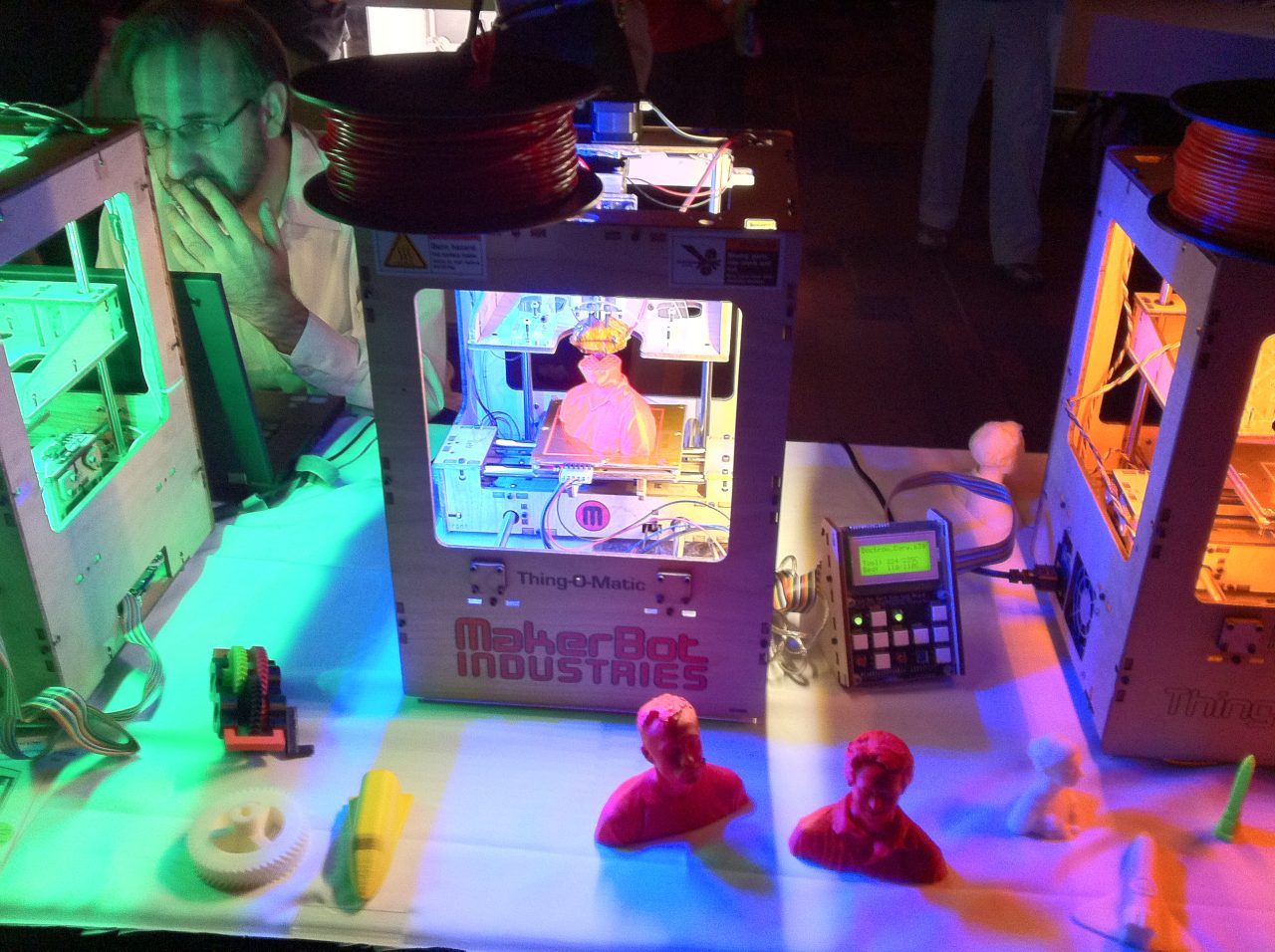
This is by far my favorite category, as well as for many other DIYers, enthusiasts, and engineers. To some, this tech is still very new and exciting, but those of us who have been in the game long enough know when to bat an eye at a new printer or to carry on about our day when shown something new. Innovations seemed to stagnate around the COVID time of 2021, to about mid-2022 as the race to create the absolute cheapest printer for the consumer market was on. While this didn’t particularly produce anything new, it still gave us something that the consumers needed: A price bottom. Before the average customer would spend ~$700 on something attainable, but now you can get a small, reliable printer for your desk for about $99 if you happen to catch the right deals. This is huge as this brings additive manufacturing to not only factories and prototyping divisions, but to many, many more consumers and hobbyists looking to get into it. Now that the floor had also been reached, companies are branching out and redefining the mold of what a 3D printer should do, look like, and what features they should come with. Metal 3D printers are also becoming much more common, redefining the prototyping method and even small-scale production as we know it. Another industry secret is that unless you want to print in exotic materials, spending 7-8 thousand dollars on a printer is completely unnecessary. Diminishing returns happen after the $800 price point for FDM printers if you don’t fancy enclosures and proprietary software. That being said, here are some very exciting printers available or coming out this year:
ELEGOO Neptune 3 Max
This direct drive FDM printer comes with a massive 420 x 420 x 500mm print surface. This printer has everything you come to expect in a modern rig, including quiet operation, auto bed leveling, and an LCD screen for operation. All for only $470. Just make sure you have a desk big enough for it. If that is too much printer for you, they also have a Neptune 3 PLUS and PRO version.
ANYCUBIC Photon M3 Max
With a 4.5 star rating with over 1,800 reviews on Amazon, this resin printer is a top contender for its category for both features, size, and price. It features a 298 x 164 x 300mm build plate, a 7k monochrome screen, and an auto resin filler for those large prints, and is currently on sale for $959.
Desktop Metal Studio System 2
This printer brings metal 3d printing to the office with its two-part print and sinter process. It features a 300 x 200 x 200mm build plate and extrudes bound powder filament to print, making it safe for the office. Convenience is the Studio System 2s game as its completed prints don’t need to be debonded, instead, you have to do is slap it into the furnace where the binder will be melted, and the metal powder sintered. These printers are fantastic for more in-depth prototyping or small-scale development. Like the resin printer, they do require a steeper learning curve compared to FDM printing, where shrinkage from sintering needs to be accounted for in the design. Materials, as you would expect, are also expensive. As of now, you must contact Desktop Metal directly to inquire about ordering.
Cobots
We heard of robots, but have you heard about the new sensation sweeping the nation known as cobots? While the name sounds quite funny, it does make sense as these are COllaborative roBOTS that are designed to work with workers rather than for workers. Some may argue that such a premise would defeat the purpose of these robots entirely, but that’s not the case at all. These real-world tests have shown that robots are safe to work with humans when designed appropriately and greatly increase the work efficiency for smaller tasks and small-scale work. They’re able to weld, tend to machines, plasma cut, and even assemble.
Universal Robots UR20
This cobot is taking the automation sector by storm. With a reach of 68.9 inches, a payload capacity of 44 lbs, and a total weight of 141 lbs, this cobot is ready for whatever you may throw at it. These cobots allow for custom node-based programs to be uploaded by their operator to fit them to the current workload, whether it’s automating mundane repetitive tasks, palletizing, or even welding. These are out now and available for order through an inquiry on Universal Robots website.
FANUC CRX Cobot
The CRX is a series of different-sized cobots to fit a variety of industrial automation applications. These robots are safe to use, reliable with an 8-year zero maintenance promise, and even have a list of devices that could be connected to it called CRXA devices. These cobots can hold from 5kg to up to 25 depending on the model and run on standard 120v power. More impressively is the interactive programming, allowing users to teach points with either their hands or a tablet. More importantly, these robots can sense external forces in the workplace, so that instead of smacking into you, they safely stop when touched. These cobots are also in production and ready to be ordered through the retailer.
Robots
Now let’s eliminate the human factor. Not in a SKYNET way, but more of a ‘let the robot do all the work’ kind of way. This is where we get autonomous. These robots are quite exciting tech but aren’t anything new. Still, examples of these machines have been shown at automation expos to display more and more of their capability. One by FANUC was even seen lifting and moving a C8 Corvette around in the air while an EPSON machine sorted items into slots at blistering speeds.
Kawasaki BX100S Spot Welding Robot
This robot put on an incredible demonstration at the AUTOMATE 2022 show in Detroit, showing the robot’s capability to slip along a car frame and spot weld it with ease. These robots are quick, feature a hollow wrist for cables and hoses, and their short reach design makes them suitable for small and light weld guns to be used in high-density applications. The payload for this bot is 100 kg with a max reach of 1,634mm.
Tompkins Robotics tSort
This network of agile bots is proficient at sorting to greatly enhance efficiency and maximize operational capabilities. These tray-like robots can be removed and inserted within their area of operation to eliminate downtime for maintenance. They can sort all kinds of parcels and items in real-time. Best of all, these robots are easy to configure and expand depending on your warehouse size.
Raspberry Pi
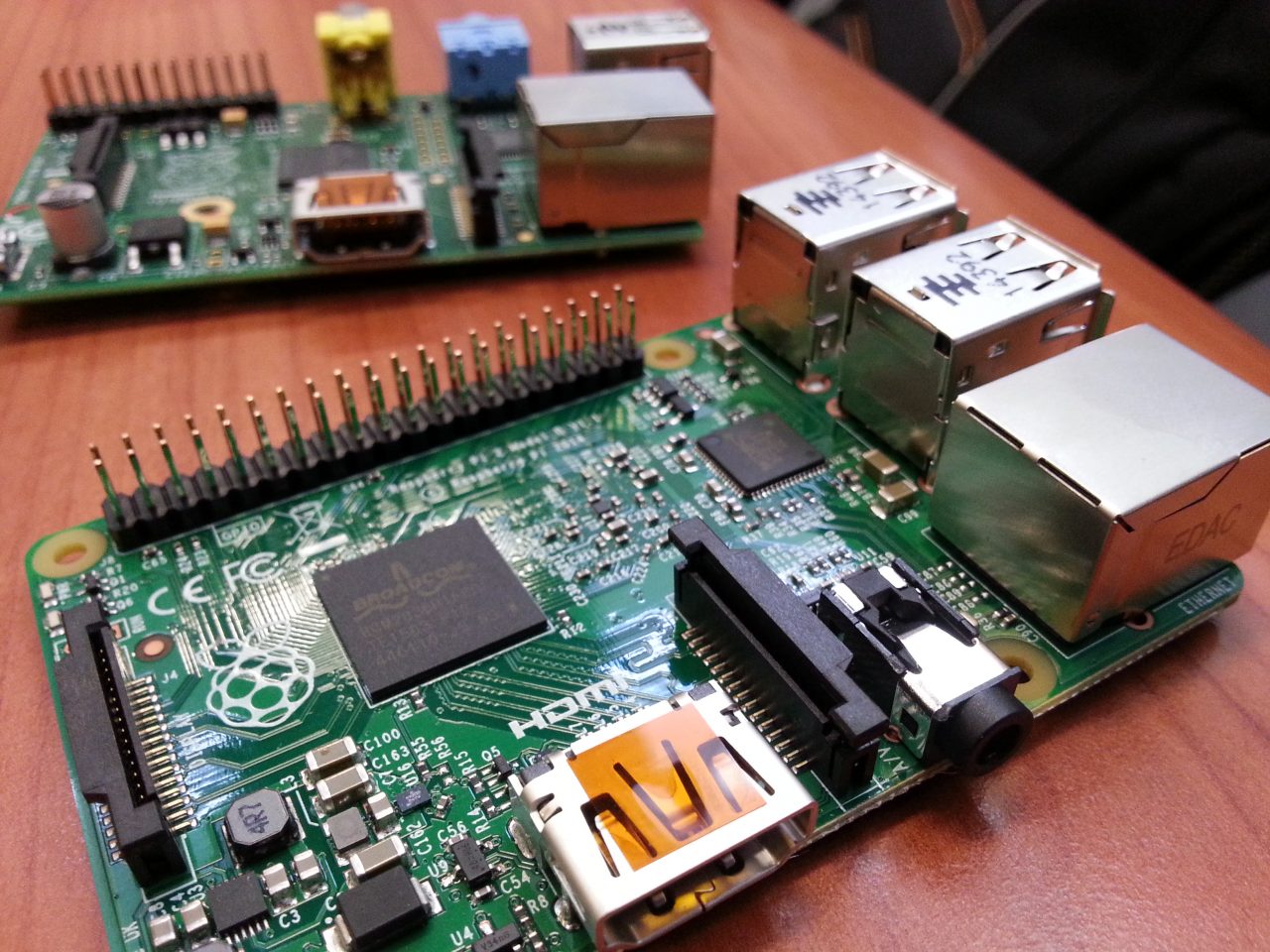
I’m sure this is a category most readers wouldn’t expect to be on a blog like this, but just hear us out. Like 3D printing, the Raspberry Pi is a series of small, open-source single-board computers originating from the UK. A fit for both hobbyists and engineers alike. The Raspberry Pi boards often found themselves in small-scale electronics for automation, and since, different variations of the Raspberry Pi have hit the market, as well as options from competitors. These little computers can be used for proof-of-concept solutions for cheap, or even building custom solutions for already owned equipment. While they’re not a replacement for PLCs, they can form the basis of I/O and sensor modules while being relatively cheap and attainable… well, that was the case before the chip shortage and increase of scalpers. Originally set for $35 retail for the latest Raspberry Pi 4, they are now going over 4x their retail price. So, here are some notable alternatives for much cheaper.
Libre Computer Board AML-S905X-CC (Le Potato)
While not quite up to par with the Raspberry Pi 4’s performance, these chips still pack great performance for only $35. They feature a quad 64-bit, 1.5GHz ARM Cortex-A53 processor with a 4K ARM Mali-450 GPU. Unfortunately, they do only come in DDR3 memory up to 2GB. These little boards can output 4K at 60fps with HDR through their standard 40-pin header. These boards do not come with onboard WIFI, but it does have an onboard IR receiver. 5V 1.5A is needed to power this board through its micro-USB port.
Rock Pi 4
This board is designed to mimic the raspberry Pi 4s layout to make it an easier drop-in replacement or installation for custom projects. It utilizes the same 40-pin GPIO, which is almost identical to the Pi 4s, well, except for one pin. Powering this mighty board is the Rockchip RK3399-T (2x Arm Cortex-A72 at 1.5GHz, 4x Cortex-A53 at 1GHz) with an ARM Mali T860MP4 for the GPU. Unlike the Le Potato up above, these boards can come with either 2 or 4 GB of DDR4 memory as well as onboard 2.4/5 GHz WIFI. 5V 3A is all that is required to power this board through its USB Type-C port.
Batteries/Supercapacitors
Power comes in all shapes and forms. Whether hard-wired directly to the grid or provided remotely through your trusty, albeit dusty lithium-ion pack. Innovations in battery and capacitor power have changed the game when it comes to high-volume storage. With the push to electrify all of our transportation, scientists and researchers have been conducting experiments with different battery compositions. Some of which can enhance your workspace.
Skeleton SuperBattery
This is where batteries get exciting. When you start taking out the original recipe of cobalt, copper, and nickel and replace them with curved graphene, you end up with a battery/capacitor hybrid that can be charged 100x faster than Li-ion batteries. Not only that, but they are also rated for 50,000 life cycles and are much safer than Li-ion batteries when pierced, crushed, or overheated. Skeleton’s main target for this technology is industry, whether it be EVs or charging infrastructure. These batteries come in a standard D60 large cell form factor, or could even be shipped in modules to supply backup power during times of peak power usage.
Skeleton SuperCapacitors
Once more on this list is Skeleton with their curved graphene technology, this time used for strictly capacitor applications. They can come in either PCB-mountable or a D60 form factor. These supercapacitors are available at either 2.85v or 3v with the lowest internal resistance on the market. These specific capacitors feature a capacitance of 3000 – 5000 F, an ESR of 0.14-0.22 mOhm, a power rating of 22.1-28.4 kW/kg, and a specific energy rating of 6.8-11.1 Wh/kg.
Conclusion
The world of automation is incredibly vast with different technologies to fit different needs. While our list has no specific automation work style in mind, it focuses on the broader idea of what could be useful to the general plant, warehouse, or engineering team. We hope that this list has sparked some ideas or inspiration for those looking for a new creative path for their workspace, or simply looking to upgrade already existing technology and tools.
DO Supply Inc. makes no representations as to the completeness, validity, correctness, suitability, or accuracy of any information on this website and will not be liable for any delays, omissions, or errors in this information or any losses, injuries, or damages arising from its display or use. All the information on this website is provided on an "as-is" basis. It is the reader's responsibility to verify their own facts.