Could Codeless Automation Testing Take Over Traditional Methods?
Automation testing is a process in which Software Developers, DevOps professionals, Quality Assurance (QA) engineers, QA testers, and SDETs (Software Development Engineers in Test) utilize test automation frameworks and test scripts along with other tools to automate the analysis of software products or programs, throughout their entire development process.
Traditional automation testing methods, such as the code-based approach, are no longer sufficient in today’s fast-paced, dynamic world of software development. To keep up, companies are adopting more agile automation testing solutions like low-code and no-code approaches, which do not require testers to learn advanced programming languages, e.g. Java, Python, JavaScript, PHP, C#, Ruby, etc. As such, codeless automation testing is gaining popularity in many organizations as a means of enabling companies to speed up the launching of new products and features, while ensuring a bug-free user experience.
What is Codeless Automation Testing?
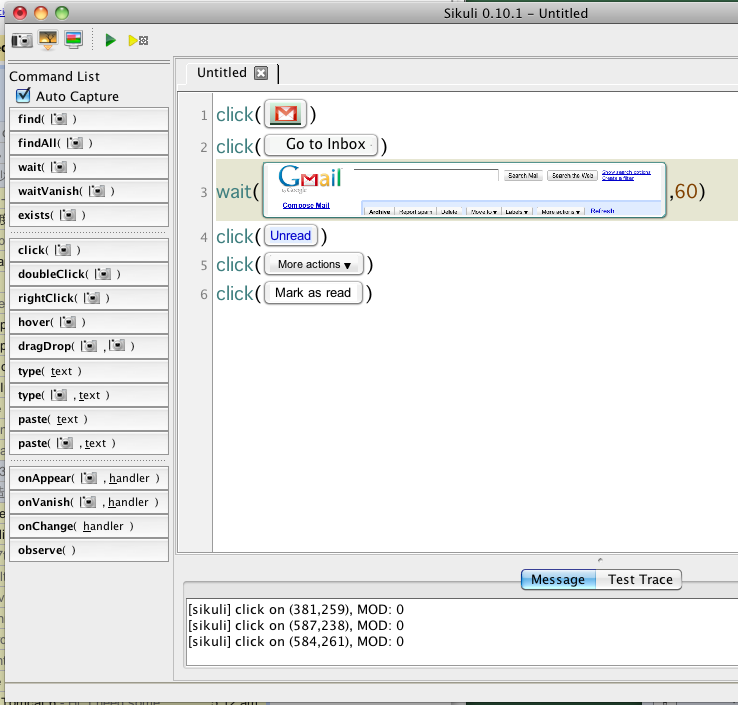
Codeless (no-code) automation testing can be defined as a process of generating automated test scripts for software products and related features without writing even one line of physical code. It allows software testers to automate the process of developing test scripts regardless of their programming expertise level. Test scripts are a set of instructions to be executed on target automation platforms to validate a feature or an expected outcome.
With codeless automation testing, developers, QA engineers, QA testers, etc., leverage specialized testing tools based on Artificial Intelligence (AI) algorithms to develop proper test scripts. The idea is that anyone in an organization – from engineering and product development to legal, finance, sales, and marketing – can create automated tests quickly and easily using codeless automation tools without being required to write code. It provides testers without any automation or programming expertise with project templates for interface customization, element libraries, and workflow analysis
In addition, Codeless automation platforms usually consist of Natural Language Processing (NLP) and self-healing features that allow for test modification per the user interface changes. So, codeless automation testing provides full analytics of product development in real-time and enables automation of User Experience (UX) testing and checking the testing coverage percentage.
Listed below are the key features of codeless test automation:
- Self-healing mechanism with advanced Artificial Intelligence (AI) and Machine Learning (ML) tools
- Record and playback functionalities
- Supports Continuous Integration (CI) tools and cloud-based environments
- Standard functionalities
- Robust and comprehensive reporting capabilities
- Complements code-based automation testing
How Does Codeless Automation Testing Work?
Codeless automation testing is a drag-and-drop interface that lets development and QA teams create and execute automated test scripts without writing code from scratch. Test cases and test scripts are generated automatically through auto-coding, whereby visual modeling tools are used for rapid scripting and the formation of test cases. The concept behind this process is to make the execution, integration, and maintenance of test scripts convenient through a simple User Interface (UI). Generally, codeless automation testing is accomplished through two approaches, namely:
A) Record and Playback Approach
In this test automation approach, the software tester performs the testing actions manually, while the integrated automation testing tool records and saves those actions to assist in developing the test script. Next, the testers modify and edit the generated test script per the requirements of a given software product; they then re-run the script without human intervention, which is a form of codeless automation testing.
The Record and Playback feature is available with Katalon Studio, a very common codeless automation tool. The feature is widely used by web-based product developers and QA testers.
B) Test Flow Diagram
In this approach, QA testers and engineers develop a workflow test diagram comprising structured test blocks. The test script is then executed automatically based on the actions outlined in the test flow diagram.
Advantages of Codeless Automation Testing Over Traditional Methods
The goal of codeless automation testing is to make it easy to run, maintain, and integrate test scripts through a simple user interface. As a result, it expedites the delivery of the final software products compared to traditional automation testing methods. Some of the advantages of codeless automation testing over traditional automation testing approaches include:
A) Improved Product Development Cycle
Codeless test automation uses graphical UI techniques and auto-generated test scripts. Once the User Interface (UI) is created, the testing process automates the use cases without wasting time or requiring complex automation frameworks. This agile, continuous integration and testing may match the development cycle pace.
Also, since codeless test automation is structured using visual user-interface approaches, all test scripts can be created within the same testing framework. As a result, learning automation and putting it into practice is straightforward. In plainer terms, a tester can begin automating test cases after the UI development is finished. Such a process can significantly save a lot of development time and it does not require sophisticated coding frameworks.
B) High Scalability
For most professionals, upgrading conventional code-based automation testing platforms is usually a difficult task. But most codeless test automation tools are cloud-based solutions, with excellent scalability features. Hence, companies can easily scale up such tools according to the test project and product requirements. Furthermore, scaling codeless test automation platforms is much more secure and less expensive than scaling traditional methods.
C) Reusability
Codeless automation testing tools facilitate the re-usability of test cases(test steps) of different applications, projects, and Operating Systems. For example, a given tool can prioritize the reusability of a particular test case and automatically update the reused test steps. Such features assist in saving testing time and costs.
D) Better Test Coverage
Automated test flow diagrams (test flows) can be combined into sub-flows for testing use cases. And since codeless test automation relies on native identification of test use case objects, most app changes don’t need automation flow corrections. Also, integrating visual user interface (UI) operations with modern business standards simplifies the management and expansion of automated testing. It is usually optional to fine-tune the automation processes every time the system undergoes test modifications. In addition, automated test flows can easily be combined and applied to sub-flows of different test cases for better management.
E) Wider Automation Scope
Codeless automation testing platforms are developed to support different types of applications, including desktop, online, and virtual apps. The resulting automated tests have the potential to actively include a variety of application interfaces. Compliance of this kind makes codeless automation testing easier to scale the automation of multiple applications.
F) Improved Team Collaboration
Knowledge, test cases, and appropriate methods can easily be communicated across codeless automation projects with the help of a centralized Center of Excellence tool. In addition, using already developed test automation flows and components significantly reduce the time needed to start new automation initiatives.
G) Better Resource Saving
The widespread use of codeless test automation tools has freed application testers from the monotony of code authoring. In addition, developers are not necessarily needed in creating UI-based tests when using codeless test automation. This setup is considered to be more efficient and cost-effective than code-based conventional test automation approaches.
H) Enhanced User-Friendliness
Code-based automation is typically more difficult and time-consuming since it needs advanced programming expertise in JavaSript, PHP, Python, C#, etc. In contrast, codeless test automation features an easy-to-use graphical user interface (GUI), which speeds up and simplifies the test automation process. Hence, even non-technical professionals can readily use most codeless automation testing platforms.
I) Supports Agile Test Methodologies
Codeless automation allows testers, developers, subject matter experts, and project managers to participate in the testing process.
Is Codeless Automation Testing a Replacement for Traditional Methods?
Traditional automation testing methods are a key aspect of evaluating software products and improving product deployment speed. However, the traditional approach of hand-scripted test automation necessitates advanced programming expertise to write proper test codes. Consequently, software testers encounter a lot of challenges in preparing large test scripts. Hence, companies are constantly looking for a modern automation testing solution that’s not programmer-centric to free up software developers’ and testers’ time, so that they can focus more on improving product development strategies and enhancing testing operations.
This has resulted in the increasing adoption of the codeless test automation approach, which is a more effective and efficient way of automating software testing. It is also much more agile compared to traditional methods. Because the test scripts are not coded from scratch, they can be developed and executed much faster – improving the flexibility and efficiency of test automation. In essence, codeless test automation enhances broader participation across software developers, QA testers, QA engineers, and business analysts. It’s ideal for QA and development teams looking to enhance their agility and obtain better results from their test automation efforts.
But is codeless automation testing a replacement for traditional methods?
The truth is, codeless automation testing is not a replacement for traditional automation testing – it is simply a more agile test automation approach. This is because even with codeless automation, testers are still required to invest time and resources in creating test automation frameworks. Although with codeless automation testing, development and execution times are considerably short and it’s easy to operate even without any programming skills. So if you are thinking of taking your test automation capabilities to the next level, codeless automation testing is the way to go.
If you’re ready to make the switch from traditional automation testing methods to codeless test automation, there are a few things you need to take into consideration. First, the available codeless automation testing platforms are not created equal. Therefore, if you’re planning to implement codeless automation testing in your organization, ensure that you do thorough market research and select a codeless automation tool that best fits your specific needs for automated testing. Discussed below are some of the most popular codeless automation testing tools:
A) Katalon Studio

This is a complete suite of codeless automated testing tools for Mobile, Web, Desktop, and API applications. It includes powerful tools used to solve common problems that occur when automating UI-based tests, such as wait time, pop-up, and inline frame (iFrame).
As a codeless automation testing tool, Katalon Studio provides a user-friendly interface, drag-and-drop commands, as well as record and playback capabilities that assist with test automation. Hence, instead of software testers having to build test frameworks from scratch based on element libraries, they can use the tools provided by Katalon Studio to automatically generate test automation frameworks.
B) Perfecto Scriptless
Previously known as TestCraft, this is an end-to-end codeless automation testing framework designed for regression and continuous testing. It leverages Artificial Intelligence technologies and advanced visual modeling techniques to speedily create and execute automated tests. As with other codeless automation testing tools, the record-and-playback feature of Perfecto Scriptless provides fully automated test scripts with inputs coded beforehand. The auto-generated test scripts can later be edited and modified as per the user’s requirements.
C) Perfecto
This is a cloud-based codeless automation testing tool for Mobile and Web-based applications. It offers comprehensive Artificial Intelligence analytics with bug detection in testing and error classifications – filtering out false errors – to optimize the Continuous Integration and Continuous Delivery (CI/CD) pipeline.
It also supports multiple browsers, devices, and Operating System (OS) combinations for web and mobile app testing. Perfecto includes robust and AI-driven bindings for 94.7% of app modifications. An example is its self-healing feature that allows automated test scripts to execute continuously without any interruptions or maintenance requirements.
D) CloudQA
This is an integrated cloud-based codeless automation testing framework designed to develop, execute, and maintain test scripts against multiple web browsers in parallel. Recorded test scripts are saved into maintainable modules and can be visualized easily in comprehensible formats. Also, with this tool, similar test scripts can be re-used for synthetic monitoring, load testing, and regression testing.
Note, CloudQA is similar in functionality to the code-based Selenium automation testing tool but without the need for sophisticated programming skills.
E) Sikuli
This is a Python-based Graphical User Interface (GUI) codeless automation testing solution used to automate the execution of test scripts on any screen with conventional GUI components such as Linux programs, Windows dialogs, toolbars, and dialogue boxes. Also, Sikuli provides a productive Integrated Development Environment (IDE) that acts as an editor in visual scripting API to test computer vision commands and control screenshots. However, unlike other codeless automation testing tools, Sikuli requires its users to install the Java runtime as an additional Plug-in.
Limitations of Codeless Automation Testing
While codeless automation testing is an innovative and agile software testing solution, only a few QA companies have currently integrated the approach compared to how widely traditional automation testing methods have been implemented. The reason is, despite the many benefits its implementation offers, this approach still has some major drawbacks including:
A) High Risks
Codeless automation testing tools can run into problems when carrying out test actions on critical website components such as user interface objects. And in case the software testers executing the test scripts do not understand the principles of web development, then recognizing the nature of the bug and fixing it may be a challenge. This may damage the software product being tested.
B) Functionality Restrictions
Codeless test automation platforms are not always equipped with the full range of testing tools necessary to perform full-fledged codeless test automation. platforms don’t always have the full range of tools necessary for full-fledged test automation.
C) Reduced Safety
Most codeless automation testing resources in use today are located on the web. For this reason, developers are required to distribute the product file using a common IP address to have access to those resources. As a result, the software product being tested in the public domain may be accessed by anybody, consequently compromising its safety.
D) Maintainability Issues
Considering the ever-increasing number of software tests and the ever-evolving nature of software products and programs, problems with maintainability may occur if codeless automation tests are not created with reusability and modularity in mind.
DO Supply Inc. makes no representations as to the completeness, validity, correctness, suitability, or accuracy of any information on this website and will not be liable for any delays, omissions, or errors in this information or any losses, injuries, or damages arising from its display or use. All the information on this website is provided on an "as-is" basis. It is the reader's responsibility to verify their own facts.