Calculating ROI For Installing an AC Drive
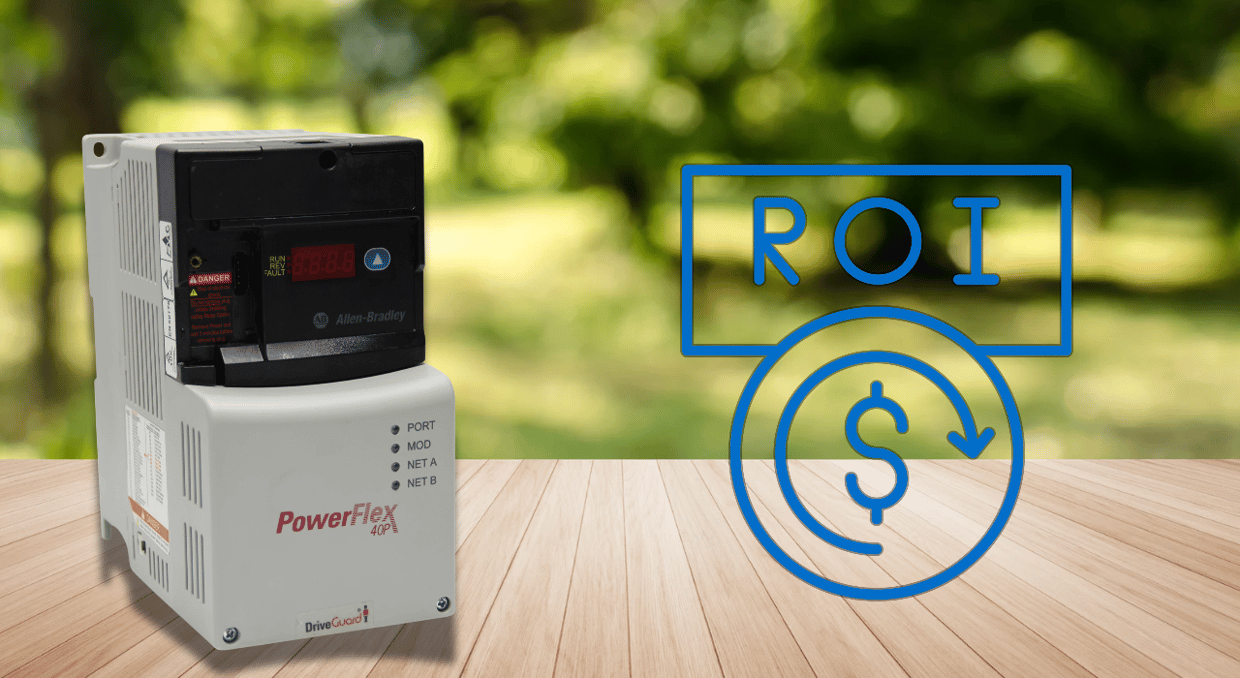
The operational performance and energy efficiency of industrial motor systems with changing load demands can be optimized by installing an AC drive, also known as a variable frequency drive (VFD). Electric motors consume the majority of industrial power, particularly when driving rotating industrial machinery and equipment such as conveyors, compressors, blowers, fans, and pumps. While these applications rarely require maximum continuous power output, standard electric motors run at a fixed speed.
Conventional mechanical flow-control methods, such as dampers in air-handling systems, mechanical brakes, or throttling valves in fluid systems, usually control process output but intentionally dissipate and waste energy. In contrast, an AC drive eliminates these power losses by precisely adjusting motor speed to match actual process demand. However, these technical benefits of the AC drive do not always guarantee profitability for every single installation. As such, a formal financial evaluation — incorporating specific utility rate structures, total installation costs, and verified energy reductions — is required to determine the precise economic viability of your AC drive installation.
What is ROI and How Does it Apply to AC Drives?
Return on investment (ROI) is a standard financial metric used to assess an investment’s profitability, loss, or efficiency. Expressed as a percentage, ROI measures the net profit or loss generated relative to the initial capital invested. It is calculated by correlating the net income generated by the investment against the total cost of the investment —dividing the net income generated by the investment by its total cost. To compare projects fairly over different timeframes, businesses often standardize this financial ratio over a twelve-month period, which is referred to as an annualized ROI.
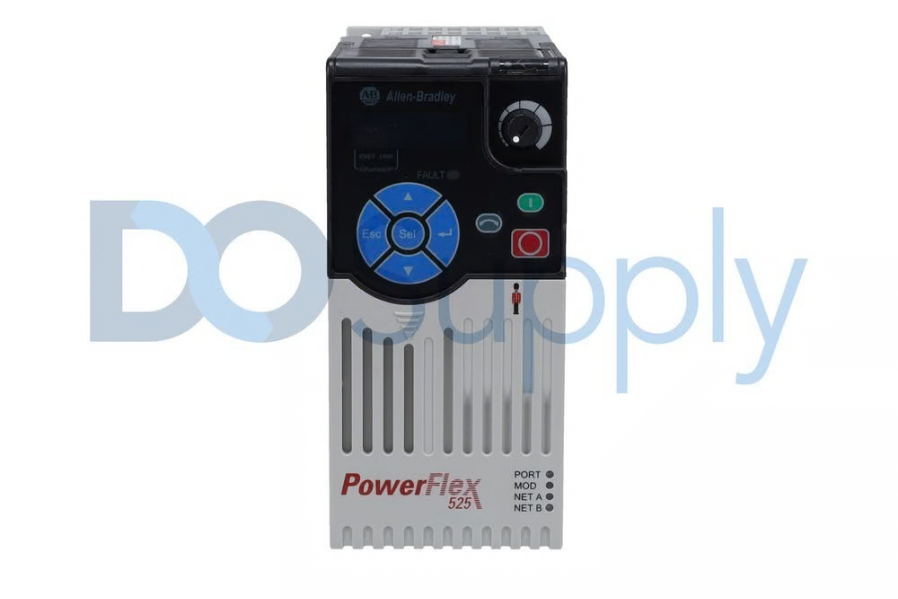
You can apply this metric to industrial efficiency by installing an AC drive to optimize energy use by precisely regulating motor speed. In standard configurations, electric motors driving industrial fans, pumps, and conveyors run at a constant, maximum speed even when the process requires less than full power. Running a fixed-speed motor under partial load forces it to draw excessive power and accelerates mechanical wear. Integrating an AC drive into the motor system drastically cuts energy consumption and maintenance costs by regulating the connected motor’s speed and torque. As a result, it runs only as fast as the process demands.
Why Calculate ROI Before Installing an AC Drive?
An AC drive’s technical advantages do not automatically guarantee attractive financial returns. Installing an AC drive requires an initial capital investment, and the drive itself will consume a small fraction of power. Instead of assuming an AC drive installation will automatically minimize energy consumption, an economic analysis is needed to evaluate the profitability and efficiency of the complete motor-driver system. Therefore, verify a proposed AC drive installation only after establishing a clear financial baseline through a rigorous ROI calculation. This foundational financial assessment lets engineers objectively compare alternative motor control strategies, operating conditions, motor technologies, and AC drive sizes.
Evaluating the ROI of AC Drive Installation
Industries use ROI calculations to confirm whether an AC drive installation’s long-term financial returns outweigh the required capital expenditure. In industrial motor applications, this metric compares the total initial investment—including procurement, installation, configuration, and commissioning costs—with the net annual savings achieved after AC drive deployment.
The basic ROI formula is:
ROI (%) = (Yearly Net Savings ÷ Initial Investment) × 100
The final ROI value is presented as a percentage. For instance, an ROI of 25% indicates that the yearly financial gain recovers a quarter of the original investment. Maintenance engineers, plant managers, and financial teams can use this financial metric to compare automation investments or energy-efficiency upgrades with an AC drive installation project.
To ensure a meaningful ROI, the financial analysis should accurately reflect the real-world operating profiles and duty cycles of the motor, AC drive, and driven equipment. An inflated ROI results when returns are calculated by dividing projected power savings by the AC drive’s purchase price while overlooking vital costs such as engineering work, maintenance, and other expenses.
Determining the Power Consumption of the Existing Motor
The first step in calculating the ROI of an AC drive installation is determining the existing electric motor’s baseline energy consumption. This data provides a comprehensive baseline for direct comparison with energy consumption after the AC drive installation. Engineers should rely not only on the motor nameplate specifications but also on empirical field measurements.
For instance, a 30kW rated motor does not always consume 30 kW. Several factors, including the operating speed, mechanical losses, power factor, and motor loading, determine the actual electrical consumption. Engineers can monitor usage with diagnostic tools such as smart meters, power meters, and portable energy analyzers. This data should be collected over a representative operating period that can capture idle periods, reduced production, and peak loading.
After determining the average electrical power, the following relation can be used to project the annual energy consumption:
E = P avg × HE
Where:
E = Yearly energy consumption in kilowatt-hours (kWh)
P avg = Average electrical power in kilowatts (kW)
HE = Operating hours per annum
For instance, a motor that operates 6,000 hours per year and averages 22 kW consumes approximately: 6,000 × 22 = 132,000 kWh/annum. This consumption baseline underpins the overall project ROI and helps predict AC drive power savings.
Estimating Energy Savings from an AC Drive
The engineer must project the power savings from the AC drive once current energy consumption is determined. In this phase, precision is vital since any errors in this estimate can compromise the entire ROI calculation. For instance, if a motor consumes 420,000 kWh per annum and engineering analysis indicates that variable-speed control cuts energy use by 25%, this represents the expected savings.
Based on these projections, the baseline energy savings are:
25% × 420,000 = 105,000 kWh/annum
At an electricity price of $0.10/kWh, the financial savings will be:
$0.10 × 105,000 = $10,500 per year
Implementing the AC drives generates $10,500 in annual electrical savings. Engineers should first verify the 25% figure against actual field variables rather than using it solely to justify project funding. The potential savings are structurally tied to variables such as drive efficiency, motor efficiency, speed range, process requirements, and operating hours.
In centrifugal pumps and fans, the affinity laws play a significant role in calculating AC drive energy savings. These affinity laws relate the major characteristics of centrifugal equipment to speed.
For consistent operating conditions:
- Speed ∝ Flow
- Pressure ∝ Speed²
- Power ∝ Speed³
To ensure energy efficiency, the cubic relationship between power and speed is crucial. The required power decreases significantly when you reduce the speed of a fan or centrifugal pump. For instance, reducing the operating speed to 80% of the rated motor speed, we get:
Power Ratio = 0.80³
Power Ratio = 0.512
In practice, a 48.8% energy savings is not automatically guaranteed for every motor-driven industrial fan or pump. Real-world power reductions are often limited by systemic factors such as mechanical friction losses, drive-efficiency losses, and fixed process constraints. The affinity laws are not an absolute financial guarantee; they are part of a comprehensive engineering analysis. These laws clearly show why motor speed control is remarkably effective in centrifugal applications despite real-world power-reduction limitations. Even minor reductions in motor speed can yield a disproportionately large drop in power consumption.
Including Maintenance Savings
While energy savings are the most quantifiable metric, AC drives also deliver significant maintenance benefits by mitigating mechanical wear and tear. Legacy direct-on-line (DOL) motor strategies subject connected equipment to severe mechanical shock and high inrush current spikes. In many industrial applications, frequent start-and-stop cycles accelerate mechanical wear and tear across critical powertrain components—including bearings, gearboxes, couplings, and the driven equipment itself, such as pumps or fans.
The AC drive does not expose the entire system to immediate full-speed operation but provides regulated acceleration and deceleration. Using programmed acceleration parameters, the drive systematically increases motor speed. This soft-starting capability extends the service life of connected machinery and also minimizes wear and tear. For instance, if a facility spends $1,500 annually on pump-related mechanical repairs, variable speed control can reduce these costs. The drive can cut the maintenance costs by $500 annually, boosting the cumulative energy savings.
Accounting for AC Drive Power Losses
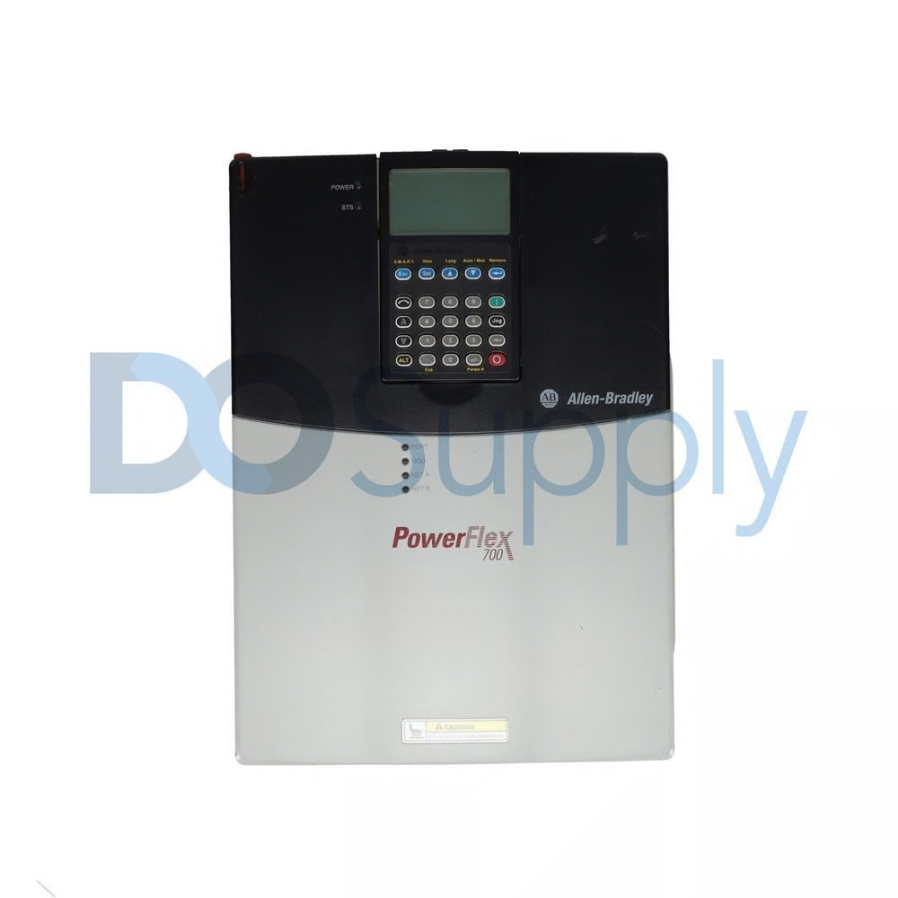
Although an AC drive significantly reduces total motor-system energy usage, it introduces minor inherent electrical losses. Reduction in motor power does not always result in an equivalent drop in overall facility energy use. Therefore, ROI calculations should evaluate the efficiency of the entire system, not just the motor.
Power losses occur within internal AC drive components, primarily due to inefficiencies in the inverter switching devices, input rectifier, and thermal cooling systems. In thorough engineering calculations, these minor losses should not be ignored, even though modern drives operate at high efficiencies. Theoretical motor savings are always higher than the net facility savings since a portion of that energy is consumed by the drive. For instance, a motor saving 15 kW of power saves less power than this. This discrepancy makes post-installation performance measurements essential.
This calculation directly compares the energy consumption of the current motor-system setup with the combined power requirements of the post-retrofit system, including the electric motor, AC drive, and auxiliary industrial equipment.
Electricity Tariffs and Their Effect on ROI
Local electricity tariffs heavily influence the return on investment (ROI) of an AC drive. Even with identical configurations, two deployed motor/AC drive systems will yield different payback periods because energy rates vary by location.
For example, if an AC drive installation reduces power consumption by 100, 000 kWh every year, an industrial facility paying an electricity rate of $0.08 per kWh will achieve a net yearly savings of :
$0.08 × 100,000 = $8,000 per annum
At $0.15/kWh:
$0.15 × 100,000 = $15,000 per annum
While physical energy usage remains identical in both scenarios, financial returns vary significantly based on the local electricity tariff. To ensure accurate financial results, industrial facilities should base ROI calculations on actual utility billing data rather than flat average rates. A robust ROI analysis should account for complex utility rate structures, including peak demand charges, seasonal rate shifts, and time-of-use (TOU) pricing.
Because many industrial electricity tariffs are based on peak demand, an AC installation that flattens a plant’s load profile — eliminating peak demand — can unlock substantial additional cost reductions. However, these demand-based financial benefits can be approved and realized only when backed by empirical operating data and precisely aligned with local utility tariff rates and rules. We also have an article going over if automation can save time and money for small businesses here.
If you are looking for an AC drive to boost the efficiency of your system, look no further than DO Supply. We carry AC drives from leading brands, such as Allen-Bradley, Mitsubishi, and more. All of our products also come backed with our two-year warranty, including equipment repair services. Visit our site and browse our selection of AC drives today!
DO Supply Inc. makes no representations as to the completeness, validity, correctness, suitability, or accuracy of any information on this website and will not be liable for any delays, omissions, or errors in this information or any losses, injuries, or damages arising from its display or use. All the information on this website is provided on an "as-is" basis. It is the reader's responsibility to verify their own facts.