Kinetix 7000 with MP Series Motors: Making the Most of Regenerative Braking
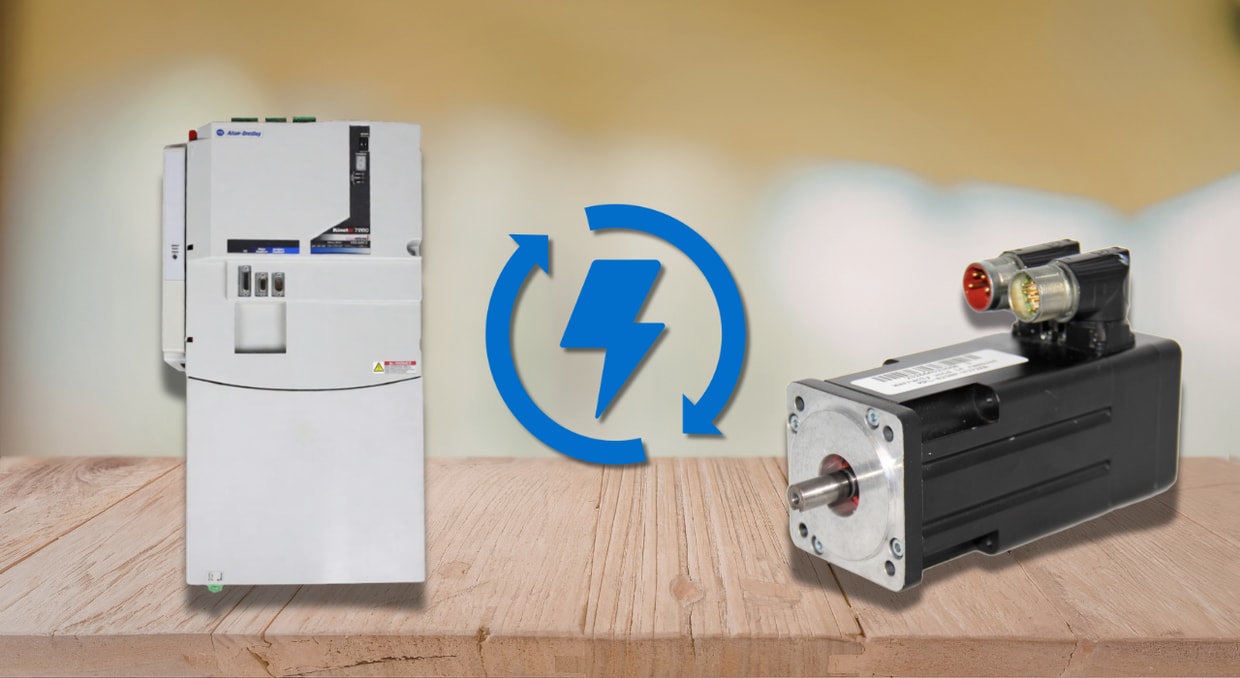
Rockwell Automation’s high-power servo drive platform, the Kinetix 7000, is intended for large-frame motion applications. Commonly paired with MP-Series motors, the drive was available in power ratings from 22 to 149 kW, making it well suited for applications involving high inertia, large mechanical loads, and demanding acceleration and deceleration cycles.
One challenge that arises with these applications is managing regenerative energy. When a servo motor decelerates or is driven by its mechanical load, it can operate as a generator and return excess energy back to the drive’s DC bus. However, if that energy has nowhere to go, the rising bus voltage can cause an overvoltage fault.
How the Kinetix 7000 handles this energy depends on the system’s power configuration. A drive can operate from its own AC line connection, while systems with greater regenerative demands can incorporate external shunt equipment or a regenerative power supply such as the 8720MC-RPS. Kinetix 7000 drives can also be used in supported common-bus arrangements, allowing regenerated energy to be managed across the DC-bus system rather than treating every drive independently.
How MP-Series Motors Generate Regenerative Energy?
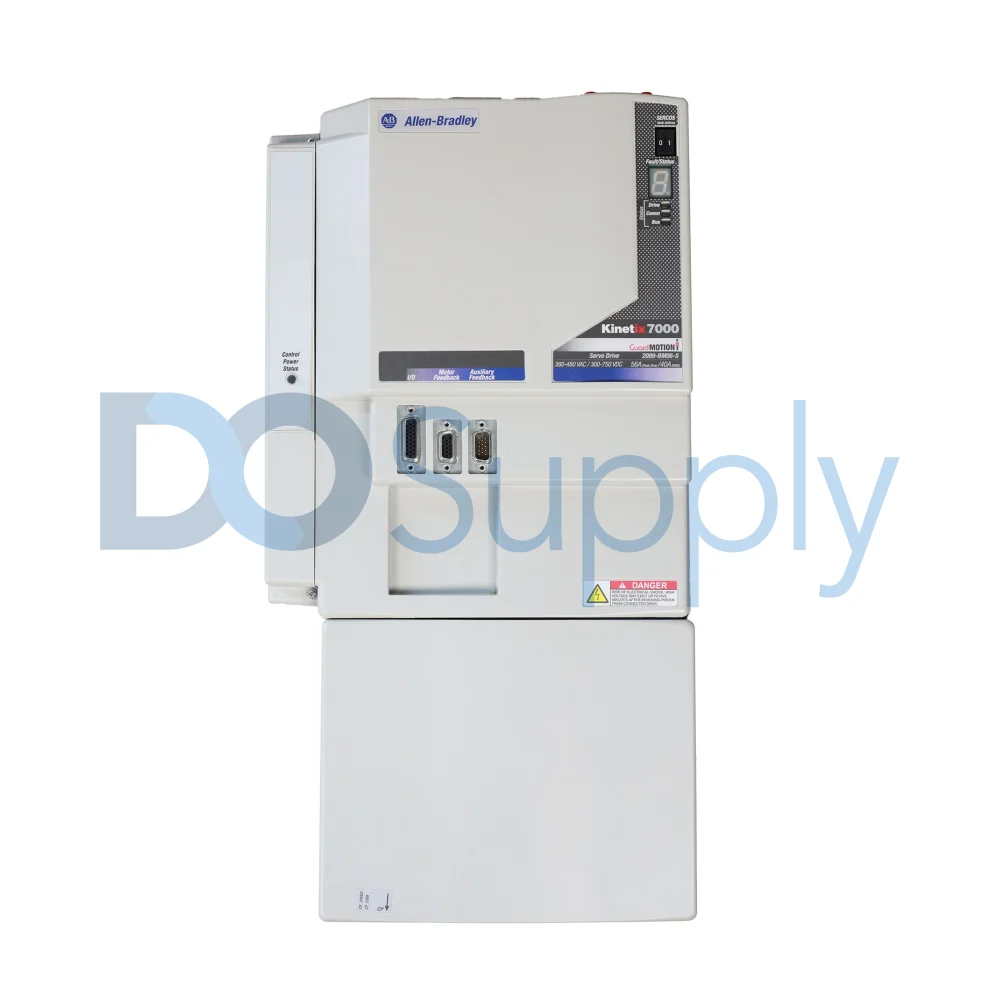
Like other PM synchronous machines, MP-Series motors are permanent magnet synchronous motors that act as generators when torque is supplied in a direction that opposes motion or when the rotor is driven faster than the specified speed. When the motor’s back-EMF exceeds the drive’s applied voltage during deceleration, current flows through the motor windings in reverse, and energy is returned to the DC bus through the servo drive’s power stage rather than being drawn.
The load inertia, the ordered deceleration rate, mechanical friction, and windage losses—which naturally lose some kinetic energy before it reaches the electrical system—all affect how much energy is recovered. Lightly loaded axes with progressive ramp-down profiles require far less regeneration energy than high-inertia loads with rapid-deceleration profiles, which are frequently seen in indexing tables, flying shears, and vertical-axis applications with inadequate counterbalancing.
DC Bus Voltage Behavior During Regeneration
The DC bus voltage exceeds its nominal operating level when an MP-Series motor regenerates through its Kinetix 7000 axis module. During regeneration, returned energy can cause the Kinetix 7000 DC bus voltage to rise. If the system cannot absorb or remove that energy, the drive can eventually reach its bus-overvoltage limit; Rockwell specifies an 800 VDC overvoltage trip point for the 460 V-class Kinetix 7000.
How this rising bus voltage is managed depends heavily on the configuration of the Kinetix 7000 system. In a common DC-bus system, regenerated energy can be used by another drive that is currently motoring, reducing the amount of energy that must be removed from the bus. Systems with an external shunt can dissipate excess regenerative energy as heat, while configurations using an 8720MC regenerative power supply can return that energy to the incoming AC line. In the event that the system cannot absorb or dissipate this energy fast enough, the DC-bus voltage can continue to rise until the drive reaches its overvoltage limit and faults to protect the power stage.
Shared DC Bus Energy Recovery Between Axes
Optimizing bus sharing amongst axes is the best approach to utilize regenerative energy on a Kinetix 7000 system. When one axis in a multi-axis machine decelerates while another accelerates or holds against a load, the motoring axis uses the regenerated energy of the decelerating axis straight through the common bus; no external dissipation or energy storage is required.
As a result, axis sequencing and motion profile synchronization are no longer only mechanical timing considerations but rather significant design levers. To minimize the load on the shunt regulator and external resistor bank and, consequently, the heat produced in the control cabinet, machine builders configuring multi-axis Kinetix 7000 systems should consider whether motion profiles can be staggered so that regeneration events on one axis coincide with motoring demand on another.
Sizing Regenerative Resistors for High-Inertia Loads
An external regenerative resistor, also known as a dynamic brake resistor, is needed to dissipate surplus energy as heat when bus-sharing capacity in a multi-axis system is insufficient to absorb regenerated energy. Because resistors are rated for both continuous power dissipation and peak/surge power over brief intervals, accurately sizing this resistor involves calculating both the peak regenerative power and the duty cycle of regeneration events, not only the peak power.
The motor’s torque constant, the number of regeneration events per unit time in the application’s duty cycle, the specified deceleration time, and the load’s reflected inertia at the motor shaft are important sizing inputs. During prolonged or repeated high-inertia deceleration cycles, undersized resistors will exceed their thermal limits, which can result in overtemperature conditions or, in the absence of proper protection, resistor damage.
Common Overvoltage Fault Scenarios and Root Causes
On Kinetix 7000 systems with MP-Series motors, bus overvoltage problems usually have one of many underlying causes. The most common is an undersized or missing regeneration resistor relative to the application’s actual inertia and deceleration profile, especially after a mechanical change such as a greater payload, a quicker deceleration time specified during commissioning, or a subsequent process speed-up.
Vertical Axis Applications and Regenerative Braking Considerations
Because gravity always operates on the load rather than the motor just reacting to a prescribed deceleration profile, vertical or overhung load axes offer a unique regenerative braking scenario. In any downhill motion when the gravitational force is greater than the torque needed to maintain the desired velocity profile, an inadequately counterbalanced vertical axis can regenerate, not just during controlled deceleration.
Regenerative resistor size and, more significantly, fault behavior during an uncontrolled stop or power-loss scenario are directly affected by this. Since the regeneration profile on these axes does not follow the same intermittent pattern typical of horizontal indexing or conveyor applications, applications with significant overhung vertical loads should be evaluated to determine whether mechanical counterbalancing, a brake-holding mechanism, or an oversized regenerative resistor for continuous rather than intermittent duty is required.
Energy Efficiency Gains from Effective Bus Sharing
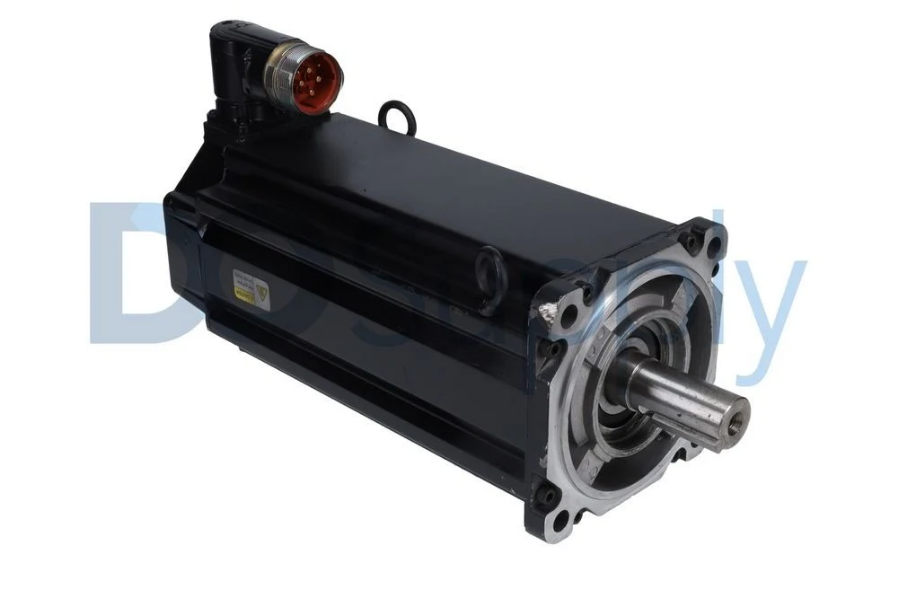
Effective use of the shared DC bus design in the Kinetix 7000 offers a direct energy-efficiency benefit in addition to fault prevention. Another axis on the same bus can collect and repurpose energy that would otherwise be lost as heat via a regenerative resistor, which would otherwise represent a pure loss from the facility’s electrical supply. This can significantly reduce the net electrical energy extracted from the incoming line supply in multi-axis systems with complementary motion profiles, compared with a system in which each axis’s regeneration is dissipated separately.
To quantify this advantage, it is necessary to examine each axis’s unique motion profile over the course of a machine cycle, identify overlap periods during which regeneration and motoring occur, and compare the computed net energy draw to a case in which bus sharing is not used. This analysis can significantly influence the sizing decision for incoming electrical service as well as energy cost projections for machines with frequent, high-inertia motion cycles, such as pick-and-place systems or high-speed packaging equipment.
Commissioning Checklist for Regenerative Performance
When commissioning a Kinetix 7000 and MP-Series motor system for dependable regenerative performance, a number of things should be verified: the external shunt or regenerative equipment should be properly sized for the application; the common DC-bus configuration and connections should be reviewed across all axes intended to share regenerative capacity; and worst-case deceleration scenarios, including maximum load inertia at the maximum commanded deceleration rate, should be tested to ensure that the bus voltage stays within acceptable bounds throughout the motion profile.
Final Thoughts
In conclusion, treating regeneration as a system-level design issue rather than an afterthought per axis is essential for dependable regenerative performance on a Kinetix 7000 system. Since excessive regenerative energy and insufficient external shunt or regenerative capacity are common causes of problems, proper sizing and configuration of the system’s external regenerative equipment are crucial when bus sharing alone cannot manage the returned energy. Because of the constant gravitational loading, vertical axes require special consideration. To ensure dependable production performance, commissioning under worst-case inertia and deceleration conditions remains crucial.
For more help sourcing a regenerative Kinetix 7000 system, feel free to reach out to our team at DO Supply! We carry the Kinetix 7000 line and the 8720MC regenerative power supply needed to make it happen. We also carry Allen-Bradley MP series motors, such as the MPM and the MPL servo motors. Give us a call today and let us help you pick the right equipment for your system! If you would like to learn how PowerFlex drives handle regenerative loads, we have an article here for you!
DO Supply Inc. makes no representations as to the completeness, validity, correctness, suitability, or accuracy of any information on this website and will not be liable for any delays, omissions, or errors in this information or any losses, injuries, or damages arising from its display or use. All the information on this website is provided on an "as-is" basis. It is the reader's responsibility to verify their own facts.