Automation vs The Great Pacific Garbage Patch
The Great Pacific Garbage Patch is one of the largest accumulations of plastic debris in the world’s oceans. Spanning an area twice the size of Texas, it lies between Hawaii and California. It affects a vast region of the North Pacific Ocean. It is estimated to contain 1.8 trillion pieces of plastic debris, weighing more than 80,000 metric tons. This debris ranges from microscopic particles that can harm marine life to large items such as bottles, containers, and ghost nets that entangle and trap aquatic animals. The Great Pacific Garbage Patch has severely impacted ocean ecosystems, with toxic chemicals from degraded plastics leaching into the water column and being consumed by fish and other aquatic species. This has resulted in decreased food supplies for certain species and health problems for wildlife and humans who eat seafood contaminated with these toxins. In addition, the sheer volume of trash has caused navigational hazards for boats and degradation of habitats for sea birds that get entangled or suffer from starvation due to plastics clogging their stomachs or blocking access to food sources. The Great Pacific Garbage Patch demonstrates how much humans rely on our oceans and how careless we can be when disposing of garbage properly.
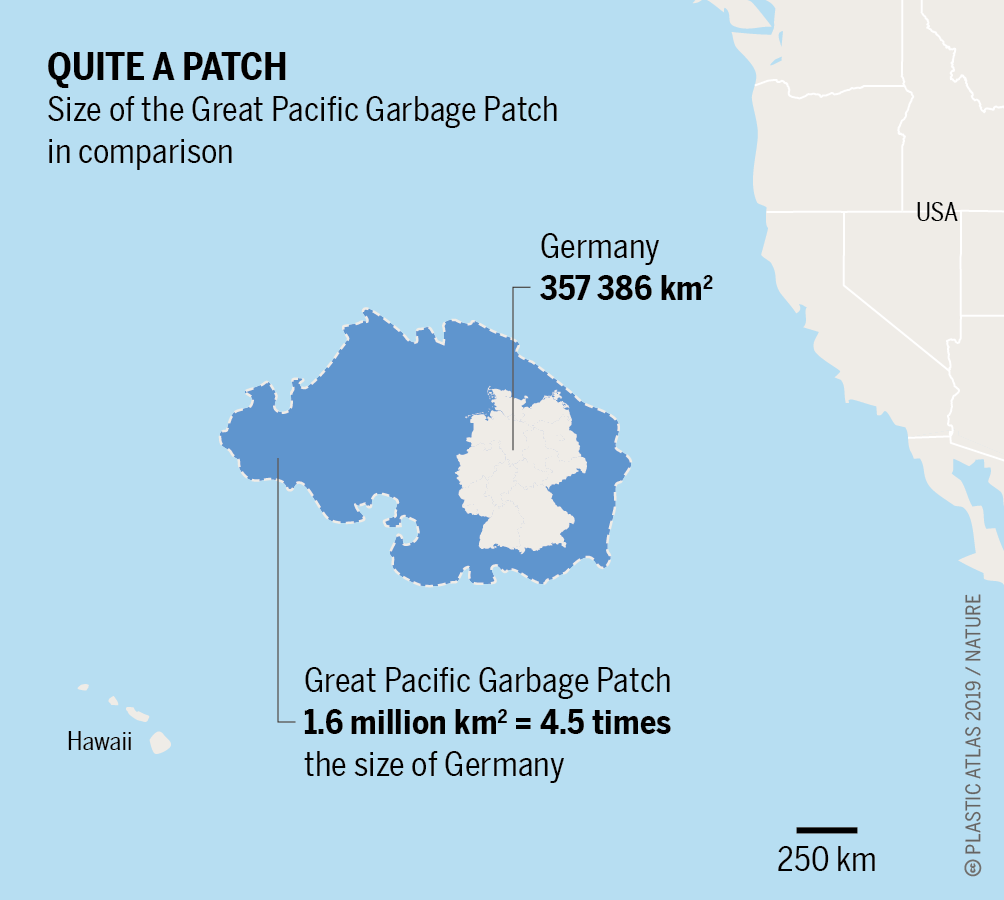
While this does seem like a problem with no solution, with the help of brave souls, engineers, volunteers, and automation, humankind has its sights directed on that garbage patch to destroy it. Organizations worldwide have made significant efforts to clean up the Great Pacific Garbage Patch. The Ocean Cleanup, founded by Dutch innovator Boyan Slat, designed and deployed a 600-meter-long floating structure called the Interceptor. The Interceptor is designed to passively collect plastic waste that has entered rivers from land as well as other sources of marine trash. The Interceptor has conveyors that sort out plastic for recycling and reuse.
Additionally, the Seabin Project installed its first floating garbage cans in marinas and ports throughout the region to help rid ocean waters of plastic pollution. These floating bins can collect up to 1.5 kg of debris daily by sucking in debris while filtering out oil, fuel, and detergents. The 4Ocean organization is also dedicated to cleaning up marine debris throughout the Great Pacific Garbage Patch through its global beach cleanups, research initiatives, and education programs. They have removed over 5 million pounds of trash from oceans and coastlines worldwide in 2020 alone. Ultimately, all these efforts have positively impacted cleaning up the Great Pacific Garbage Patch – reducing its size and the amount of pollution entering our oceans each year.
With particular problems comes innovation to conquer them. For instance, The Ocean Cleanup crew started ten years ago in 2013, with its first design of the Interceptor in 2017 with its second design the following year. These solar-powered autonomous crafts are set to catch plastics and other trash at rivers, which they claim to contribute to 80% of plastics in our ocean. They designed a fully autonomous and solar-powered craft to set up strategically at a river’s end. From there, they deploy the barrier to direct trash and debris to its conveyor belt, which automatically fills trash bins. Once all the bins are filled, the Interceptor will send an alert to the crew to change the bins so that it may continue to clean the river. The Interceptor can extract more than 100,000 kilograms of trash daily at its top performance. The Ocean Cleanup crew plans to build and deploy hundreds of these machines to the most polluting rivers to stop pollution at its source in five years.
While the Interceptor itself is impressive, The Ocean Cleanup also has vessels out in the ocean to scoop up trash floating in our great blue depths. The first iteration of this is called System 01. System 01 is designed to create a coastline out in the ocean with a 600-meter-long floater with a 3-meter-deep skirt to contain the trash. The floater is designed so that the skirt can stay afloat and that the plastic can’t go over the top. The skirt is to catch debris lurking below the surface. This system depends entirely on catching plastic by wind, waves, and currents. Also fitted onto this large self-guiding net are sensors, solar-powered lights, anti-collision systems, cameras, and satellite antennas to create an autonomous, eco-friendly solution for trapping plastic. A boat will then collect the trash from the nets like a deep-sea garbage truck. Their System 02 changes this where now two vessels are leading the net, and when it gets full, the vessels come together to pass the net to one while the other will load the trash and sort it for recycling. System 03 is 2.5 kilometers long, dwarfing System 1 and 2. The net is longer, and the tracking system to find concentrated plastic patches has been upgraded.
The Seabin is an automated trash-collecting device that is revolutionizing how our oceans are cleaned. It uses a combination of an automated pump and filtration system to collect floating debris, such as plastic bottles and other trash, from the water. The pump continually circulates the water while a filter catches any larger pieces of trash. This process then deposits the collected waste into an attached bin which can be removed and emptied when full. Cleaning up our waters in this way reduces pollution levels and improves the health of marine life living in that area. In addition to its environmental benefits, it also increases safety around harbors by removing floating objects that could cause damage or accidents to boats or swimmers. The Seabin is currently deployed in many ports worldwide. Its automation makes it a sustainable solution for keeping our oceans clean and healthy.
These inventions have one thing in common: They collect trash from the water’s surface. What about what lies under the surface and at the bottom? Well, SEACLEAR has designed a fully autonomous solution to automate trash cleanup using drones, detection algorithms, and an autonomous surface vehicle that acts as the hub for the robots. The vessel conducts the initial scan for large debris in the water. To fine-tune the initial scan, the observational robot extends down to scan closely at the bottom. From there, a collection robot will find each piece of litter on the map, catch it with its specialized gripper, and place it into a basket for collection. This project heavily relies on AI learning to distinguish between aquatic life and the objects poisoning them. Hence, they will pluck trash and not crabs from the ocean floor. This system boasts an 80% success rate in classification, a 90% success rate in collection, and a 70% reduced cost compared to divers without putting any lives at risk.
Bringing this back to the beachside, another example of automated cleanup comes from 4Ocean. 4Ocean has made great strides in preserving the environment, mainly using robotics and automation. Their BeBot technology is a self-powered and remote-controlled ocean-cleaning robot that can collect debris from the beach or shallow waters. BeBot can navigate challenging terrains, such as rocky surfaces, uneven sand, and various obstacles, while collecting trash. This cutting-edge technology uses algorithms to detect and analyze data collected from sensors mounted on its body. Thanks to the specialized software, BeBot can identify specific types of debris, including plastics and glass, making it easier for 4Oceans workers to quickly collect large amounts of trash by using its vibrating sand sifter and conveyor collector. Automated robots like BeBot provide an efficient alternative to manual labor for beach cleanups, allowing 4Oceans workers to cover broad areas without spending too much time. This technology helps reduce human labor and the risk of human injury associated with beach cleanup efforts. The BeBot also rides on tracks to evenly distribute its weight to minimize beach erosion, typically seen when larger farm vehicles are used to clean up the sand. Robots and automation have enabled 4Oceans to clean up more beaches faster than ever before, helping them make a more significant impact in protecting our oceans from pollution.
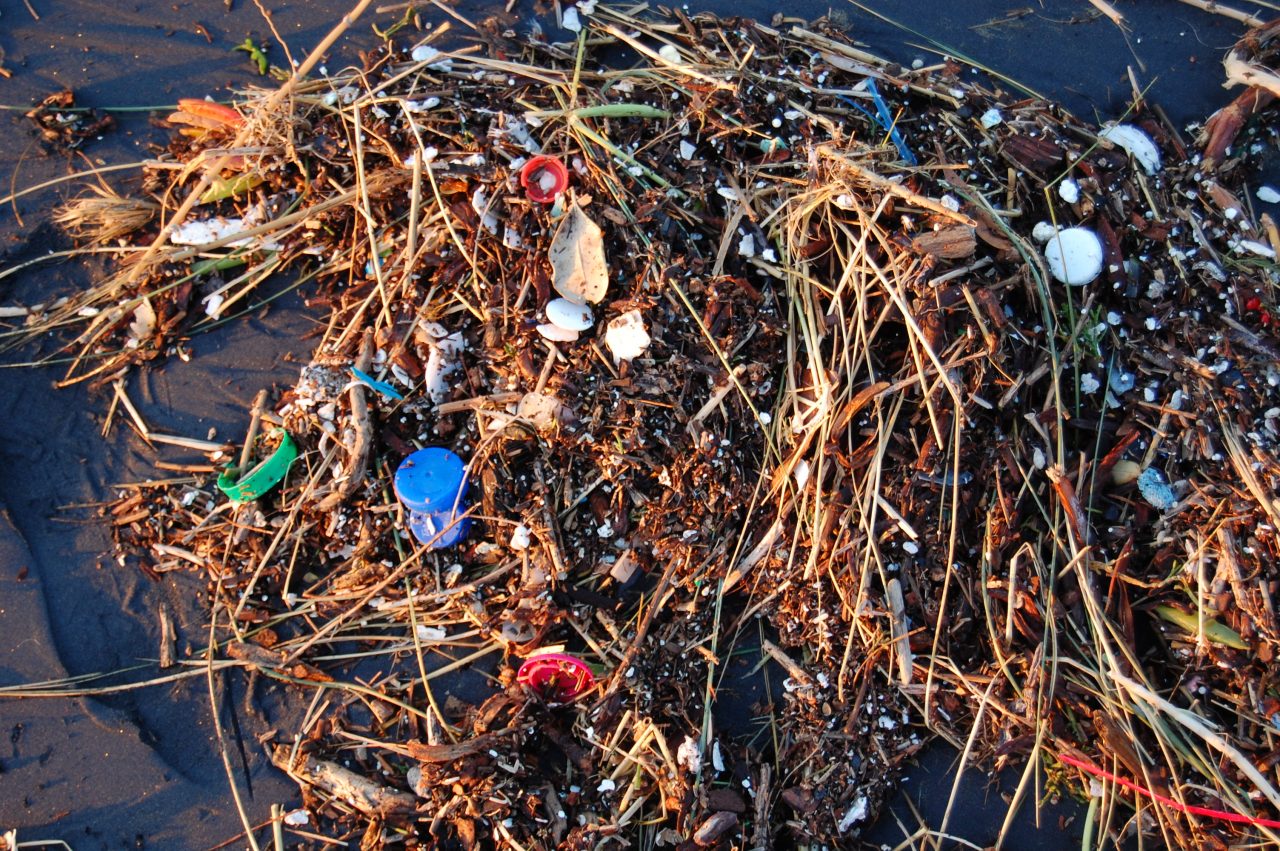
On the more industrial side of the spectrum, BeachTech is a leading provider of beach cleaning solutions. The BeachTech 2000 shoreline cleaner is one of the most popular products in their line. This automated system uses advanced technology and mechanical components to quickly and effectively clean beaches of all kinds of trash. Some features that make it stand out include an integrated cutting system for plastic bottles, a patented mesh sieving unit that filters out even the smallest pieces of debris, and a hydraulically adjustable rear conveyor belt to transport waste away from the beach. Its performance results are also impressive; tests have shown that it can remove up to 95% of all litter at depths of up to 8 inches beneath the sand and get rid of even large items such as planks, wood beams, tires, etc. Additionally, it has been shown to reduce cleaning time by up to 50%, making it significantly more efficient than traditional methods. The BeachTech 2000 shoreline cleaner is a great way to ensure that beaches stay clean and safe for everyone who visits them.
It is clear that automation comes in all different forms and is sometimes hidden in plain sight. The role of this technology in itself is simple. Still, the number of applications it can be used for is nearly limitless. Something that seems so monumentally challenging to tackle is being targeted by a large group of courageous and bright minds, with the help of automation, to power their agenda to make the world we live in a cleaner and better place. With these projects gaining traction, we will see cleaner waters, nicer beaches, and flourishing aquatic life. This movement may encourage others not only to participate but to innovate. Then, we could completely eradicate the very thing scientists have warned us about for decades.
DO Supply Inc. makes no representations as to the completeness, validity, correctness, suitability, or accuracy of any information on this website and will not be liable for any delays, omissions, or errors in this information or any losses, injuries, or damages arising from its display or use. All the information on this website is provided on an "as-is" basis. It is the reader's responsibility to verify their own facts.