From Car Manufacturing to Space Exploration: How Industrial Automation is Shaping the Future
The manufacturing industry is now in the era of Industry 4.0, characterized by the harmony of revolutionary innovations like robots, the Industrial Internet of Things (IIoT), artificial intelligence (AI), big data analytics, and cloud computing. Simply put, it is going through a new industrial revolution: automation. Machines and systems are interconnected to communicate with each other in real-time. This leads to a more flexible and responsive production system. This ensures the collection and analysis of large amounts of data which can be used to improve production processes and increase product quality. This automation and digitization enable manufacturing processes to increase competitiveness in the modern world. The development of smart factories, where equipment, goods, and workers are all connected via communication networks and the Internet. It has transformed the total manufacturing sectors like car manufacturing, space exploration, and many other industries. This can fundamentally alter how we create, produce, and use products, and it has already greatly influenced sectors like these industries.
Intelligent Automation Technologies
To start the discussion on the role of industrial automation, it is important to familiarize ourselves with the different types of technologies used in automation. These are briefly given below:
AI and Machine learning: “Artificial Intelligence” is used by intelligent computers to think like humans and complete activities on their own. But “Machine learning” is how a computer system gains intelligence.
Collaborative robots: “Collaborative robots” are a kind of automated technology that is designed to operate alongside human employees in a cooperative and collaborative workplace. A “collaborative robot” is liable for repetitive duties, whereas a human employee completes highly complicated and thought-intensive activities.
Semantic Software Systems: Semantic technology incorporates meaning independently from content and information files, as well as from application code. This allows both robots and humans to comprehend, share, and rationalize with them during execution.
Robotic Process Automation: Software called RPA makes it simple to create and use while handling software robots that mimic how people interact with computers and software. It is used to automate repetitive and rules-based tasks.
Intelligence Augmented: Artificial intelligence is also connected to “augmented intelligence.” As described, it is a design concept in which humans collaborate with AI to increase cognitive performance. The most significant advantages of augmented intelligence are related to understanding and making decisions, although technology may be employed in various sectors. After all, integrating human brains with AI maximizes their ability.
Machine Vision: “Machine vision” is an area within artificial intelligence focused on helping computers and whole systems extract significant and pertinent information from online resources. These digital sources may vary from photographs to films to various forms of visual inputs.
Automation in Car Manufacturing
A Historical Perspective of Car Manufacturing
Automation was started from simple hydraulic and pneumatic systems to modern-day robotics, resulting in considerable changes in the manufacturing division. One of the first forms of automation in the industrial manufacturing sector was the assembly line, which Ford Motor Company debuted in 1913. Ford was the first company in the world to use factory automation, which enhanced production rates and profitability. During the 1930s, Japan was a forerunner in developing parts that assisted production automation. During Second World War, technology was heavily used in fighter air jets, land craft, and tanks from 1939 to 1945. After the war, although Japan surrendered later on, it rose to prominence as the global leader in automation in industry. Nissan, Honda, and Toyota took advantage of this new technology in their manufacturing plants.
The Latest Developments of Automation in Car Manufacturing
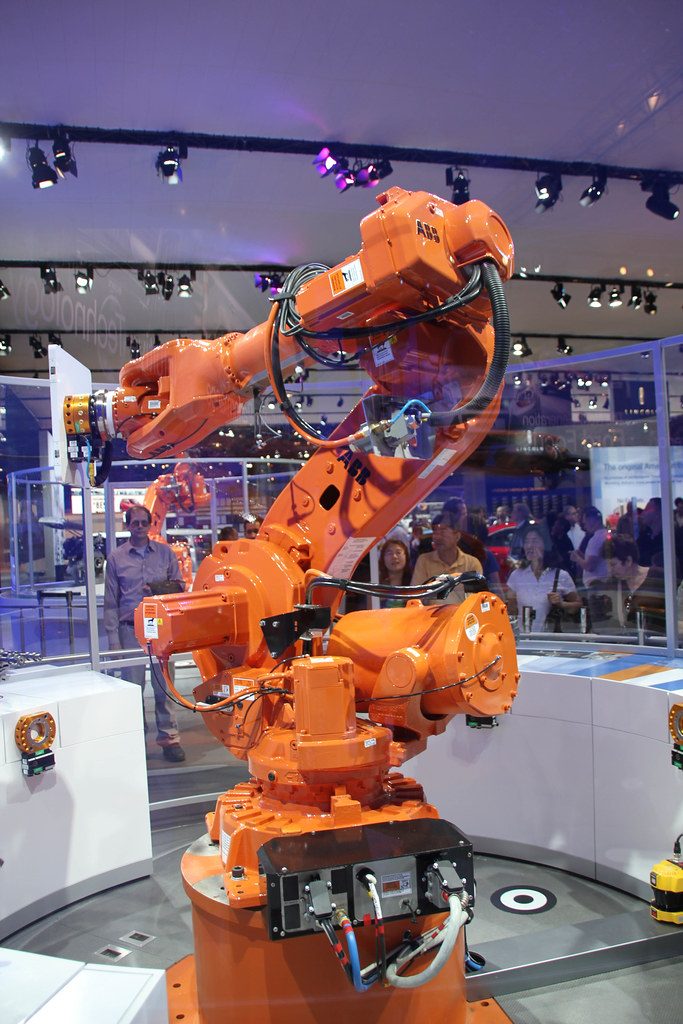
The latest industrial robots have advanced degrees of liberty, visual systems, and high-quality computer capabilities. They still need human involvement and are limited to highly organized contexts. Industrial automation, or digital-integrated production, depends on software and hardware capabilities to integrate and optimize various industrial system elements.
Today, most car factories use some form of automation in their production. This includes robots, machine vision, and automation that work together to complete welding, assembly, inspection, and testing tasks. “Assembly robots” are particularly prevalent as they are faster and more precise than humans. They are ideal for screw driving, windshield installation, and wheel mounting. Collaborative robotic solutions offer a more flexible and lightweight alternative to traditional industrial-grade robots and can reduce costs associated with making modifications in manufacturing facilities. “Robotic process automation” (RPA) automates repetitive and rules-based tasks. These tasks can be inventory management, onboarding of suppliers, and order processing. Every step of the automotive value chain is affected by artificial intelligence (AI). This includes manufacturing tasks such as design, production, and service jobs.
The Advantages of Automation in Car Manufacturing
Automated workflows may drastically cut labor costs in car manufacturing by automating regular processes; otherwise, it needs humans to spend time and effort. This may free workers to concentrate on more challenging and essential duties, reducing the need for extra help or overtime compensation.
Automation may assist in enhancing product quality by lowering mistakes and irregularities throughout the production process. Manufacturers may verify that goods match standards by automating operations like quality control and inspection, which minimizes the need for rework or waste.
The Future of Automation in Car Manufacturing
The future of every industry will undoubtedly be automated, and car manufacturing is leading the way. The car production environment is about to undergo a substantial upheaval thanks to smart factories based on Industry 4.0 notions. Automation will promote efficiency, decrease errors, and improve quality. Consequently, by embracing and applying new automation technology, car manufacturers will remain ahead of the competition. As automation and innovation drive the future, expect substantial breakthroughs in the automobile sector.
Present-day car manufacturers must be competitive, which requires upgrading to automation. It is used throughout production, has a rising impact on back-office upkeep, and may one day power all future automobiles.
Automation in Space Exploration
Technological advancements have made space exploration feasible, but it has also grown more complicated and costly. Technology has served a critical role in increasing the efficiency and cost-effectiveness of space exploration.
Automation is often employed in exploring space to accomplish jobs that would be too risky, difficult, or complicated for people to undertake. Space exploration is a complex and dangerous endeavor, and automation is critical to mission success. Automation in space exploration provides several advantages, including less human error, increased efficiency, and improved safety.
One of the most important uses of automation in space exploration is in spaceship construction and design. Automation helps engineers and technologists construct spaceships capable of surviving the severe conditions of spaceflight. Automated arms, for example, are employed to assemble components of the International Space Station (ISS). This lessens the danger to astronauts and enhances efficiency since robots can operate nonstop.
How Automation Helps the Space Mission
Automation is also often employed in the discovery of other planets. The planet which is mainly observed and researched is Mars. Curiosity and Perseverance are two NASA Mars rovers that are outfitted with advanced robotic equipment that allows them to gather data and samples from the planet’s surface.

Automation is also used by surface-based control centers for monitoring and operating spaceships during missions. By detecting abnormalities in real-time and promptly repairing them, HQ can ensure our spaceship stays on track, function properly, and ultimately reduce mission failure risks while keeping our astronauts safe.
Automation is also employed in the manufacture of rocket fuel and other materials needed in space exploration. The technique of utilizing resources accessible on other planets to manufacture fuel and other commodities is known as in-situ resource utilization (ISRU). Automation is implemented to regulate and track ISRU systems, making sure that they run smoothly and provide the necessary materials.
Automation systems guarantee that data is accurately transferred and obtained, even over long distances. It is critical for space travel since communication delays may be enormous, and any mistakes can be disastrous.
The Future of Space Technologies Through Automation
In the future, automation will be essential to the success of the following space exploration missions, and new automation technology development will be critical. Automation has played a crucial part in space exploration, and its relevance is growing. It allows us to discover space in a safer, more efficient, and cost-effective. Automation will become more important as space travel becomes more sophisticated and complicated.
Application of Automation in Other Industries
Food and Beverage
In recent years, automation has become more prevalent in the food sector. 62% of the firms aim to use Artificial Intelligence in 2023. The advantages of digitization and automation in food companies are employee safety, insurance, assurance of quality, increased production rates, improved supply chain management, and decreased food wastage. Automated systems can be used to arrange, inspect, and package food items which reduces the need for human intervention. There are also challenges to be addressed in implementing automation in the food and beverage industry, including the versatile ability of the product, cost consideration, cultural changes, expert skill requirements, and transparency issues.
The future of automation in the food and beverage industry looks bright, with opportunities to improve efficiency, safety, supply chain, and customer experience. However, it will be necessary for companies to consider the limitations of automation in this sector carefully.
Textile
The manufacturing of textiles is increasingly recognized as a worldwide sector. Many various kinds of items are produced in the textile industry, including yarns, fabric, garments, and knitwear. The adoption of technologies gradually increased, and in the modern era, because of the continuously evolving demands, numerous researchers and investors have begun to focus on different kinds of modern machinery and technology to improve product quality and increase production.
The garment industry is Bangladesh’s critical economic engine. To compete and succeed, one must continually keep current on new tools and technologies. In the last four years, business owners in Bangladesh have begun to use automation in their manufacturing. According to Akshay Jaipuria, a consultant at Vaya Home, a denim shirt may be produced for $7.48 in the USA; however, the price per shirt in a robotic assembly line is $0.33. The human sewing line produces an average of 669 t-shirts in only 8 hours. The output will rise by 71% thanks to a robotic sewing line, which can create 1142 t-shirts. Utilizing the latest innovations may considerably lower manufacturing costs (30–40%) while also increasing productivity and shortening lead times. The cutting division of a medium-sized industry used to need 150–200 employees, but today it only requires 10–12 thanks to the automated cutting equipment. Although this may raise joblessness, the positives of automation, such as higher productivity, better product quality, lower labor costs, and increasing demand for qualified employees, cannot be underestimated. Finally, automation is required to stay up with industrialized nations and secure the expansion of the clothing sector.
Pharmaceutical
Through the application of intelligent automation, the pharmaceutical business is experiencing a transition. According to McKinsey, 50% of present labor in the pharmaceutical and medical manufacturing industries might be automated over the next ten years, creating up to 120,000 new employments. To deal with this transition, the sector must retrain its workforce to meet developing talent shortages, with emotional and social abilities becoming more vital.
Using automation, pharmaceutical companies may accurately reach consumers with the correct material at an appropriate time, depending on their relationships and needs. It may also help to speed up clinical trial management. It automates patient data input, reviews records, arranges visits, tells patients about their timetable, and creates clinical trial results. Automation tools such as bots may gather and input data from supplier records, verify the facts to guarantee accuracy, detect non-compliance, and communicate as needed. The administration of stocks, monitoring shipments, noting delays or inconsistencies, automating bills and order-to-cash operations, and notifying human employees when pharmaceuticals in inventory are nearing expiry dates may all benefit from automation.
Pharmaceuticals have now reached a stage at which they are becoming increasingly reliant on technology. Increased efficiency and productivity, along with drastic reductions in mistakes, resulted in considerable cost savings, improvements in quality, and, most significantly, enhanced patient safety.
Chemical Manufacturing
Automation improves the effectiveness and the standard of an operation in chemical substance manufacturing. Automation enables handling and managing chemical processes more efficiently to reach the required product quality. It additionally has a substantial influence on safety and the environment. Automated systems can perform tasks quickly and accurately, reducing the time and resources needed to complete tasks and leading to a more efficient manufacturing process. By eliminating manual labor, automation can help reduce labor costs, waste, and energy consumption, leading to cost savings over time. Automation may enhance working conditions for chemical industrial personnel by lowering their exposure to dangerous chemicals and eliminating the demand for physical labor.
The increased need for automated operations has forced the creation of efficient tools and techniques. As technology advances, new potential for chemical manufacturing and production automation emerges. Keeping up with the times requires knowledge of both automation and chemical processes technologies.
Conclusion
In conclusion, this article has explored the role of automation in car manufacturing, space exploration, and other manufacturing industries. We highlighted several key points in each section, including the application, benefits, and future automation considerations. Moreover, we also discussed the potential challenges and limitations of automation.
Automation has revolutionized the car manufacturing industry, allowing manufacturers to produce high-quality vehicles using different types of robots and artificial intelligence. In an exploration of space, automation plays a significant role in ground bases and also in space. It not only minimizes human error but also ensures astronaut safety. Its application includes discovering planets, controlling and monitoring spaceships, removing abnormalities, and communicating over long distances.
Many other manufacturing industries are taking advantage of automation in their process. In the food industry automation increases productivity, quality, and production and efficiency. In the textile industry, automation reduces cost, improves safety, and fastens the production process, but it requires high investment and skilled employees. In the pharmaceutical industry, automation transforms personalized marketing, accelerates Clinical Trials, optimizes Supply Chain Management, grows sales, and improves compliance. In chemical manufacturing, automation increases the efficiency of the manufacturing process and reduces costs, waste, and energy consumption. It also reduces the exposure of workers to dangerous chemicals
From car manufacturing to space exploration, automation is shaping the future of technologies.
DO Supply Inc. makes no representations as to the completeness, validity, correctness, suitability, or accuracy of any information on this website and will not be liable for any delays, omissions, or errors in this information or any losses, injuries, or damages arising from its display or use. All the information on this website is provided on an "as-is" basis. It is the reader's responsibility to verify their own facts.