Advancements in AI-Powered Machine Vision
What is Machine Vision?
Machine vision, often abbreviated as MV, encompasses the technology and techniques utilized for imaging-based automatic inspection and analysis in applications like automated inspection, process control, and robot guidance, typically within industrial settings. Machine vision technology grants industrial equipment the capability to perceive its surroundings and swiftly make decisions based on visual data. Absolutely, as defined by the Automated Imaging Association (AIA), machine vision covers a wide array of applications, both in industrial and non-industrial settings. In these applications, the combination of hardware and software components is essential for their successful functioning. By capturing and processing images, this technology provides necessary operational guidance to devices, enabling them to carry out their functions with precision and efficiency. Machine vision’s ability to interpret visual data reshapes processes across various sectors, making it a transformative force in modern technology.
AI-Powered Machine Vision
Artificial intelligence (AI) has become a transformative force in the rapidly changing world of technology, revolutionizing several industries and sectors. Machine vision, which combines artificial intelligence and computer vision to allow machines to interpret and comprehend the visual world, is one of the areas where AI has made significant progress. Artificial intelligence-powered machine vision incorporates machine learning algorithms, particularly into the machine vision process. A subset of machine learning called deep learning uses neural networks inspired by the human brain to recognize patterns and draw conclusions from data. AI-powered machine vision has created new opportunities and applications in a variety of industries, with promises of increased effectiveness, precision, and automation.
Machine vision innovations powered by AI have profoundly changed a number of industries by improving productivity, precision, and automation. Here are a few significant advancements in this area.
Deep Learning and Neural Networks
Convolutional neural networks, also called CNNs or ConvNets, are a subclass of neural networks that are particularly adept at processing data with a grid-like topology, like images. Binary visual data is represented as a digital image. It has several pixels that are arranged like a grid and are each assigned a value to indicate how bright and what color each pixel should be. A CNN typically has three layers: a convolutional layer, a pooling layer, and a fully connected layer. The convolution layer is the core building block of the CNN. It carries the central portion of the network’s computational load. The pooling layer replaces the network output at specific locations by deriving a summary statistic of the nearby outputs. Neurons in the fully connected layer have full connectivity with all neurons in the preceding and succeeding layers. The applications of Convolutional Neural Networks used today include object detection; with CNN, we now have sophisticated models for object detection, including R-CNN, Fast R-CNN, and Faster R-CNN. These models are the main pipeline for many object detection models used in autonomous vehicles, facial recognition, and other applications. CNNs are employed to create captions for images and videos. Applications for this include activity recognition and providing descriptions of videos and photos for visually impaired people. YouTube has heavily deployed it to make sense of the many videos uploaded to the platform regularly.
Recurrent neural networks (RNNs) are a type of neural network that are useful for modeling sequence data. RNNs, which are derived from feedforward networks, behave in a manner resembling that of human brains. In simple terms, recurrent neural networks can predict outcomes in sequential data that other algorithms cannot. These architectures are vital for sequence-based tasks, allowing machines to understand patterns over time, essential for applications like video analysis and tracking. RNNs can be used to translate text from one language to another in one form or another. Today, almost all translation systems use an RNN in some form or another. The output will be in the user-selected target language, with the input being the source language. This text summarization tool can be a massive help in condensing content from books and tailoring it for use in programs that can’t handle a lot of text. Text summarization would be useful, for instance, if a publisher wanted to put the summary of one of his books on the back page to give readers a sense of the content inside. Face detection and image recognition are major applications of computer vision. It is also one of the most accessible forms of RNN to explain.
3D Vision and Depth Sensing
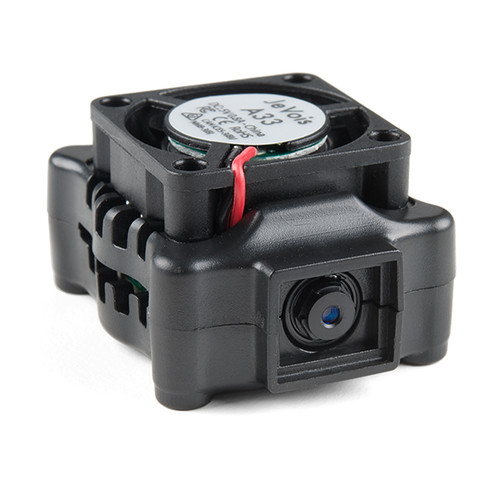
A technology known as 3D Machine Vision enables machines to recognize and comprehend three-dimensional information from the outside world. It combines different imaging methods and processing algorithms to produce a thorough representation of an object’s form, size, and spatial location. It enables machines to carry out difficult tasks with greater accuracy and effectiveness. Modern industrial applications like automated inspection, robotics, and quality control heavily rely on 3D Machine Vision. 3D vision systems can improve production procedures, reduce errors, and guarantee the highest product quality by giving precise and accurate information about an object’s geometry. Furthermore, these systems make it safer for robots to work alongside people in manufacturing environments by facilitating better collaboration. A potent tool for enhancing the capabilities of 3D machine vision systems is artificial intelligence (AI). Improved accuracy and productivity in 3D imaging tasks result from AI algorithms, particularly deep learning, and neural networks, which can process complex datasets and extract meaningful information. AI can be incorporated into machine vision systems to help experts create more complex solutions to handle complex imaging scenarios and produce accurate results. Various challenges like Noise reduction, Feature detection, and matching are addressed with the help of this advancement.
Depth sensing measures the gap between two objects or the distance between a device and an object. For this, a 3D depth-sensing camera is employed, which instantly recognizes the presence of any nearby object and calculates the distance to it. Using real-time intelligent decision-making enables the device or equipment integrated with the depth-sensing camera to move independently. The depth sensors we commonly use today are structured light sensors, which project a known pattern into the scene using a non-visible wavelength. The Kinect innovation, in particular, was to project a known pattern from an infrared (IR) projector and image that pattern with a single IR camera. Since light travels in straight lines, a virtual IR camera on the projector would always capture the same pattern image. Therefore, the image pattern from the real IR camera can be matched against a pre-saved template image to find correspondences. This can be done quickly on embedded hardware. With the help of depth sensing, processes that ordinarily require human observation can be automated by altering how digital systems perceive actual environments. Image acquisition, processing, and analysis are three interconnected tasks that are necessary. Research and development (R&D) of distinctive depth cameras that can perform precise real-time distance imaging for various applications has shown that time-of-flight depth sensors are fundamental. Depth sensors are now frequently used in navigation systems for unmanned robotic vehicles, multi-point level depth sensing, people counting, and advanced human-machine interfaces (gesture recognition, motion tracking, etc.).
Generative Adversarial Networks (GANs)
GANs, generative adversarial networks, are a method of generative modeling that uses deep learning techniques like convolutional neural networks. Generative modeling is an unsupervised learning task in machine learning that involves automatically discovering and learning the regularities or patterns in input data so that the model can be used to generate or output new examples that plausibly could have been drawn from the original dataset. GANs fulfill the promise of generative models in the ability to produce realistic examples across a variety of problem domains, most notably in image-to-image translation tasks like translating photos of summer to winter or day to night, as well as in the generation of photorealistic images of objects, scenes, and people that even humans are unable to tell are fake. GANs have a lot of real-life applications, like generating examples for image datasets. In fields like medicine and material science, where acquiring large datasets is challenging, GANs can generate synthetic data. This artificial data can augment real datasets, providing more material for research and analysis. This advancement can create realistic human faces, a valuable tool for video game designers and filmmakers who need diverse characters. This application is particularly useful when hiring multiple actors or models is impractical or costly. To create realistic images or videos, photographers and videographers can use GANs. Making prototypes, demo reels, or placeholders with this program before a photo shoot can be useful. Illustrators and animators can use GANs to produce distinctive cartoon characters or scenes. By producing initial designs that can later be improved and altered to fit the artist’s vision, this technology helps to accelerate the creative process. GANs expertly translate images from one domain to another. For example, they can turn satellite images into maps, colorize images that were previously black and white, or switch summer landscapes for winter ones. Architecture, urban planning, and environmental studies are just a few creative and practical fields where this ability is used. Businesses can optimize their risk management strategies with the help of GANs, which can simulate a wide range of extreme scenarios. Companies can plan for various contingencies and ensure resilience and preparedness in the face of uncertainties by producing data that represents worst-case scenarios.
Increased Use of Collaborative Robots
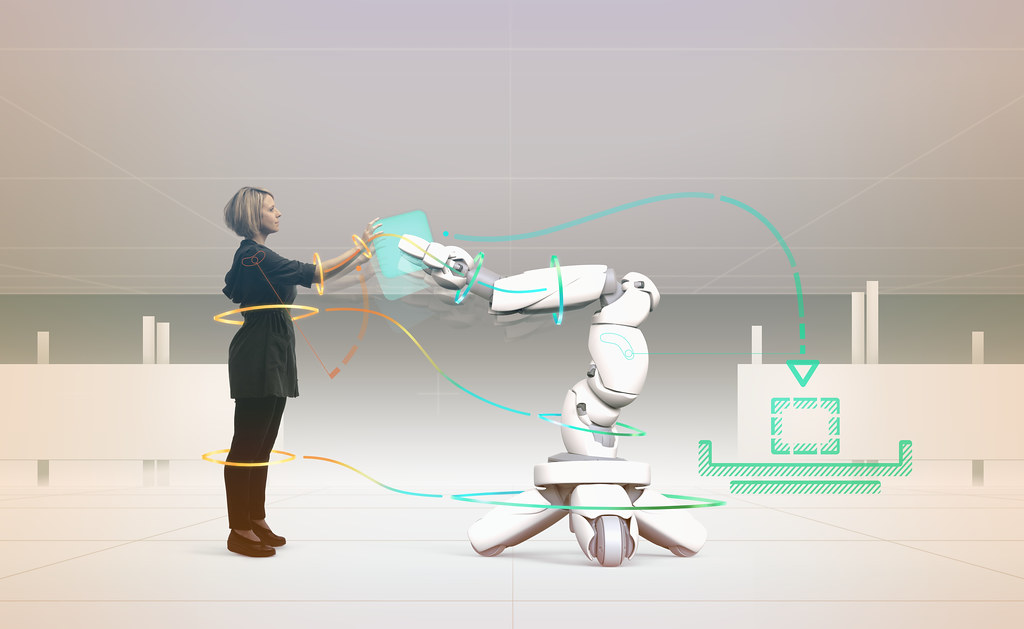
A type of robotic automation known as collaborative robots is designed to work safely with human employees in a communal, collaborative workspace. In most applications, a collaborative robot is responsible for mundane, repetitive tasks while humans handle more difficult, mentally taxing jobs. Collaborative robots are created to be an enhancement to human workers’ intelligence and problem-solving abilities through their accuracy, uptime, and repeatability. The ability to work collaboratively with humans greatly expands the potential applications of robotic automation. The market for collaborative robots is expected to experience exponential growth as more and more industries realize the profits to be gained from this technology. Within the context of the sweeping advancements in AI-powered machine vision, collaborative robots signify a pivotal stride toward intelligent automation. These cobots serve as an example of how machine vision and artificial intelligence can be combined in useful applications. Their integration with machine vision technologies amplifies their capabilities, enabling them not only to perceive but also comprehend and react intelligently to their surroundings. This collaboration is revolutionary, representing a seamless alliance where AI-driven machine vision enables these robots to collaborate effectively with human counterparts. Material handling is one of the most important uses for cobots because it is frequently regarded as one of the riskiest jobs in manufacturing. When handling materials like metal, plastic, and other substances, human workers may be in danger. Moreover, repetitive material handling tasks increase the risk of repetitive strain injuries. Cobots with machine vision capabilities step in at this point and significantly lower workplace accidents. Moving heavy objects across factory floors is made easier by mobile robot platforms. Cobots, particularly those developed by Universal Robots, are adept at performing complex machine tending tasks, including those involving potent CNC machines. They also play a pivotal role in assembly and quality assurance processes while also relieving human workers of labor-intensive and challenging assembly tasks, such as screw drilling and welding. Their consistent performance in these tasks ensures superior quality and precision. Unlike humans, cobots maintain unwavering consistency, completing tasks in the same manner without fatigue ensuring quality control during the production process. Their capability to use cameras and machine vision technology to measure different workpieces further emphasizes how seamlessly they integrate with highly developed visual intelligence.
Conclusion
The combination of artificial intelligence (AI) and machine vision is a testament to human ingenuity in the rapidly changing world of technology. This potent combination has unlocked previously unimaginable possibilities, revolutionizing entire industries and altering how machines view and interact with the outside world. Machine vision, bolstered by the capabilities of AI, has become a cornerstone of modern innovation. It empowers machines not only to see but also to comprehend and interpret visual data. Techniques like Convolutional Neural Networks (CNNs) and Recurrent Neural Networks (RNNs) have propelled machine vision into realms once considered science fiction. CNNs excel in intricate pattern recognition, enabling applications such as object detection, facial recognition, and image captioning. RNNs, on the other hand, are pivotal for modeling sequential data-finding applications in tasks like language translation and video analysis—the advancement of Generative Adversarial Networks (GANs). GANs, a subset of AI, generate synthetic data that finds applications in various fields. From creating realistic images and videos to simulating diverse scenarios for risk management, GANs have become a driving force behind innovative solutions. Additionally, the development of collaborative robots, or cobots, demonstrates the revolutionary effects of AI-driven machine vision on automation. These robots are made to work alongside people, enhancing human abilities and productivity. Cobots care for labor-intensive, repetitive tasks, freeing humans to concentrate on jobs that call for creativity and problem-solving abilities. This teamwork-based strategy not only boosts output but also ensures workplace security. From enhancing industrial automation to revolutionizing healthcare diagnostics and augmenting creative endeavors, AI-powered machine vision has become an indispensable tool. Its ability to process vast amounts of visual data, recognize intricate patterns, and make intelligent decisions has far-reaching implications across industries. This transformative force is not just reshaping industries; it’s laying the foundation for a future where human-machine collaboration leads to unprecedented advancements, propelling us into a new era of innovation and possibilities.
DO Supply Inc. makes no representations as to the completeness, validity, correctness, suitability, or accuracy of any information on this website and will not be liable for any delays, omissions, or errors in this information or any losses, injuries, or damages arising from its display or use. All the information on this website is provided on an "as-is" basis. It is the reader's responsibility to verify their own facts.