Top 5 Benefits of Using PLC in Industrial Automation for Product Sorting
As industries continue to transform in the age of Industry 4.0, there is a continuing demand for cutting-edge solutions that can optimize processes. Product sorting, an essential part of manufacturing and logistical operations, promises to benefit tremendously from such technological advancements. Traditional product sorting procedures are sometimes time-consuming, error-prone, and inefficient. It is critical for improving efficiency, reducing errors, and optimizing production. Industrial automation systems have become more complicated as technology has improved, allowing for smooth and precise product sorting operations. This is where PLCs come in, delivering unequaled automation and precision to product sorting processes. PLCs are sophisticated digital computers designed primarily for controlling industrial applications. Because of their adaptability and real-time control, they are suitable for product sorting activities.
Using contemporary sensors, optical systems, and automated technologies, PLCs can precisely arrange items depending on predefined criteria. The criteria are size, weight, shape, color, material composition, barcodes/RFID, chemical composition, production/expiration dates, product quality, and customer orders. Automated systems furnished with cutting-edge sensors and scanning technology properly categorize items and send them to their proper destinations. This enables more efficient procedures, fewer errors, and faster delivery, especially in distribution facilities and e-commerce fulfillment operations. Furthermore, sorting items based on quality or chemical composition assures adherence to demanding criteria in industries such as food and beverage or medicines. Overall, effective product sorting by industrial automation is critical to increasing production and maintaining the highest degree of product integrity across a wide range of businesses.
Now, we will look at the top five benefits of using PLC in industrial automation for product sorting:
Enhanced Precision and Accuracy
Using PLCs (Programmable Logic Controllers) in industrial automation product sorting is a crucial advantage. PLCs provide unrivaled accuracy and precision, ensuring that objects are sorted with excellent dependability and few mistakes. PLCs may communicate with various sensors, including vision systems, laser scanners, weight and proximity sensors. These sensors give real-time data regarding product properties such as size, weight, shape, color, and barcodes. The sorting system can make exact judgments regarding the optimal sorting destinations for each item by analyzing this data using high-speed PLC logic. Multiple sensors may be used in complicated sorting applications to collect diverse product properties. PLCs use data fusion algorithms to aggregate data from several sensors to gain a thorough picture of the product’s features. This data fusion aids in making accurate sorting selections, especially when items have several identifying characteristics.
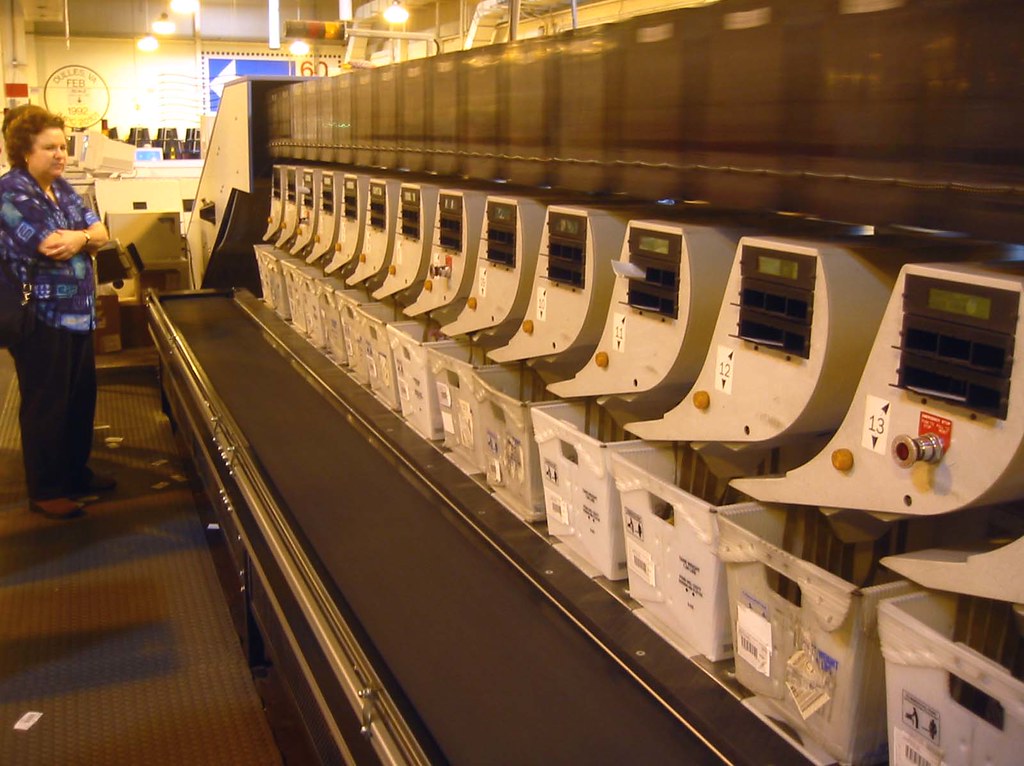
PLCs are built for fast data processing and decision-making. They can perform microsecond logic and sorting algorithms, ensuring that products are routed to the right locations as soon as possible. This high-speed processing power enables PLCs to meet high-throughput sorting needs, crucial in businesses with significant product quantities. PLCs may combine machine learning and artificial intelligence (AI) algorithms in sophisticated sorting systems. Based on past data and input, these technologies enable the system to learn and adapt continually. The PLC can improve its accuracy over time by learning from prior sorting judgments, lowering sorting mistakes even more.
For example, PLCs combined with modern vision systems and machine learning algorithms are utilized to sort parcels effectively in a parcel sorting center. Cameras gather photos and analyze distinctive attributes such as size, shape, and barcodes as items move down the conveyor belt. The PLC analyses this data in real time, determining the best destination for each parcel. As it meets new package types, the machine learning component allows the system to learn from previous sorting patterns, minimizing sorting mistakes and boosting overall accuracy.
Error Management and Resolving
Error management is critical to employing PLCs (Programmable Logic Controllers) in industrial automation for product sorting. Errors can arise in complicated production processes owing to various variables, including sensor inaccuracy, mechanical flaws, or unanticipated variances in product qualities. PLCs are built with strong error detection algorithms and robust recovery procedures to enable smooth and uninterrupted sorting operations. The error management procedure starts with the PLC continually monitoring the sorting system for deviations from the intended results. When a mistake is identified, the PLC uses fault diagnostic procedures and error codes to identify the root cause quickly. This data is sent to the operators via a Human-Machine Interface (HMI), which provides real-time feedback on the kind and location of the problem. PLCs may generate and evaluate error codes, providing operators and maintenance personnel with vital diagnostic information. The PLC uses mathematical algorithms and logic circuits to detect the nature of errors, allowing for rapid troubleshooting and resolution. They include fault tolerance strategies, which allow the system to keep running even if some components or modules fail or experience errors. Using mathematical algorithms and logical redundancy, the PLC can identify broken components and divert the sorting process to alternative channels, providing efficient sorting without interruption. As a result, it is seen that the PLC-based systems are much more reliable for sorting and are more effective in reducing downtime. Recognizing and solving errors immediately boosts productivity, eliminates waste, and gives consistent, accurate sorting results. As a result, industries benefit from enhanced sorting processes and increased production efficiency.
Increased Quality Control
PLCs are key to increased quality control by ensuring that items are sorted and listed appropriately at the right time. It increases client happiness and aids in the production of speedy items and the sorting process. PLCs are now technologically advanced, with various resolution techniques like image processing and algorithms, including computer vision ideas. These algorithms ensure that the robotic arm efficiently detects flaws and faults in the sorting process. Any product that has a mistake is mentioned. PLC may make clever sorting selections in this manner. Real-time statistical analysis, such as mean, standard deviation, and control charts, allows the PLC to monitor variances in product characteristics and initiate corrective measures to ensure consistent product quality. Furthermore, PLCs use machine learning algorithms for anomaly detection, which learn from past data to spot anomalies suggesting faulty goods. Integrating seamlessly with quality management systems allows for transferring quality control data and closed-loop feedback, optimizing manufacturing, and improving overall product quality. PLCs in the electronics sector evaluate features such as solder joint integrity and reject non-compliant goods. PLCs in pharmaceutical packaging evaluate product information to ensure correct labeling and regulatory compliance. The advantages include increased product dependability, cost savings via decreased waste and rework, standard compliance, and continuous process improvement, making PLCs essential for attaining superior quality control in various sectors.
Multi-feature sorting
Using PLCs (Programmable Logic Controllers) in industrial automation product sorting is a significant advantage. It refers to the capacity of a PLC-based sorting system to analyze and act on several traits or criteria at the same time when sorting objects. This unique technique allows firms to sort items with increased precision and diversity, allowing them to fulfill difficult sorting requirements easily. When combined with sophisticated vision systems, PLCs can record comprehensive product information such as size, shape, color, and patterns. The PLC can categorize things based on various visual criteria by reviewing visual input in real-time. This ensures consistent and precise sorting. PLCs are capable of complicated conditional logic programming. The sorting system may check various combinations of characteristics and conduct specialized sorting using conditional expressions. For example, a product may be sorted based on size and color simultaneously, resulting in a more exact and tailored sorting process. For example, PLC-based sorting systems paired with modern vision systems and data fusion algorithms may successfully sort recyclable materials in a recycling system. The vision system delivers data to the PLC by distinguishing different materials based on appearance, color, and form. Weight sensors can also be used to differentiate between light and heavy goods. The PLC uses conditional logic programming to classify commodities into relevant categories, such as plastics, metals, and paper, while also considering visual and weight-related elements. This capacity enables firms to adjust to complicated sorting requirements and diverse product kinds quickly, boosting staff utilization and reducing sorting mistakes significantly. Furthermore, the PLC-driven Multi-Criteria Sorting enhances production line efficiency and throughput by efficiently processing large objects and making intelligent decisions based on various criteria. Industries benefit from operational excellence and customer satisfaction due to faster sorting operations, higher quality standards, and cost-effectiveness.
Cost Efficiency
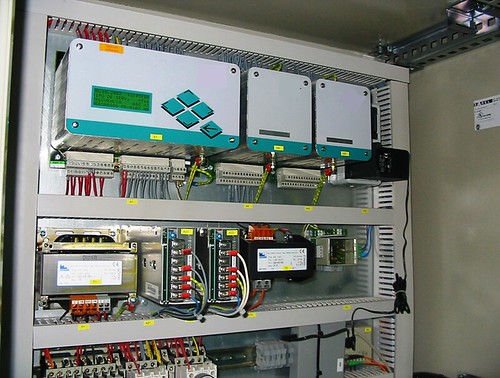
The use of PLCs (Programmable Logic Controllers) in industrial automation for product sorting has a substantial cost advantage. PLC-based sorting systems provide several technological and mathematical benefits that reduce costs and improve overall operational efficiency. These factors help organizations to optimize resource utilization, reduce production cycle times, and save operational costs. For starters, PLCs’ high-speed processing capabilities enable them to execute logic and sorting algorithms in microseconds, assuring quick decision-making and minimal processing delays. This efficiency enables efficient resource utilization, resulting in shorter sorting times and increased production. Another important technological component of PLC-based sorting systems is real-time data monitoring. PLCs continually check product qualities and sorting performance by gathering data from sensors and vision systems, allowing operators to spot inefficiencies quickly. Real-time insights enable operators to rapidly modify the sorting process, optimizing it for cost-effective operations. Energy efficiency is an important factor in industrial environments, and PLCs address it with power-saving features, including sleep modes and low-power consumption CPUs. PLC-based systems contribute to minimizing operating expenditures and fit with sustainable practices by minimizing energy use during idle hours. Furthermore, integrating modern technologies such as image processing, machine learning, and sensor integration into PLCs helps reduce errors. This reduces rework and material waste, further improving cost efficiency. On the quantitative aspect, PLCs make cost-benefit evaluations easier, allowing organizations to compare installation costs to prospective labor, material, and energy savings. These assessments enable informed investment decisions to maximize cost efficiency. Mathematical optimization procedures, such as linear programming or evolutionary algorithms, simplify sorting operations and reduce resource utilization, resulting in less sorting time and cost. Furthermore, the capacity of PLCs to collect real-time data on sorting performance and resource utilization enables reliable ROI estimates. Businesses may measure the financial benefits of PLC deployment and the system’s cost efficiency over time.
Conclusion
In conclusion, we ensured that PLC could make efficient sorting decisions rather than using manual labor to carry out laborious tasks. PLC provides us with huge advantages by ensuring we adhere to their properties. They make it easy because of their Enhanced precision and accuracy. They ensure they understand every aspect of the product, including its size, quantity, shape, color, weight, etc. They are also very reliable in checking and sorting products based on their nature (plastic, steel, wood). PLCs (Programmable Logic Controllers) have emerged as indispensable instruments in industrial automation for product sorting, driving industry change in Industrial automation. Their versatility, real-time control, and technical developments have revolutionized the efficiency and accuracy of product sorting systems. The advantages of using PLCs in this situation are many and important. For starters, PLCs’ increased precision and accuracy ensure that items are sorted with excellent reliability and minimum mistakes. PLCs can analyze several product qualities in real-time, making exact sorting judgments even for complicated sorting needs, thanks to seamless interaction with various sensors and powerful algorithms. Second, PLCs’ error control features help to more efficient sorting processes and less downtime. PLCs identify faults promptly and apply robust recovery mechanisms to ensure continuous sorting processes while minimizing waste and optimizing output. Furthermore, PLCs help to improve quality control by ensuring that goods are correctly classified according to predetermined criteria. Real-time data monitoring and integration with quality management systems allow businesses to meet stringent criteria while reducing waste and improving overall product quality. Another significant advantage of PLC-based sorting systems is their low cost. High-speed processing, real-time data monitoring, energy economy, and error reduction improve resource utilization and lower operational costs. Finally, the multi-criteria sorting capabilities of PLCs enable them to evaluate several qualities concurrently, enabling intelligent and personalized sorting judgments. This adaptability is especially important in sectors with a wide range of products and demanding sorting criteria, as it improves operational excellence and customer satisfaction. Overall, PLC-based industrial automation for product sorting dramatically benefits many businesses. PLCs provide exceptional precision, efficiency, and cost reductions in industries ranging from manufacturing and logistics to medicines and e-commerce. As technology advances, PLCs will likely play an increasingly important role in further optimizing product sorting processes, propelling the industry to higher levels of automation, productivity, and global competitiveness.
DO Supply Inc. makes no representations as to the completeness, validity, correctness, suitability, or accuracy of any information on this website and will not be liable for any delays, omissions, or errors in this information or any losses, injuries, or damages arising from its display or use. All the information on this website is provided on an "as-is" basis. It is the reader's responsibility to verify their own facts.