Common Failure Points in ControlLogix Systems
Although the ControlLogix platform is among the most dependable industrial controllers in production settings worldwide, dependability does not mean it is immune to failure. The power supply, backplane, I/O modules, communication modules, processor firmware, and field wiring attached to the chassis are almost always among the expected failure points that take a ControlLogix system down. Quick, efficient troubleshooting depends on knowing where these problems occur, why they happen, and what the system’s built-in diagnostics report when they do. The most frequent ControlLogix failure sites are listed in this article along with their corresponding fault indications, underlying causes, and remedial measures.
Power Supply Overload: The Most Frequent Failure
In an increasing ControlLogix system, the power supply is the most frequent site of failure—not because the supply malfunctions per se, but rather because the system expands beyond the capacity of the initial supply. Regardless of the number of slots, a 5A supply faults out if modules together demand more than 5A. The overall draw exceeds the supply’s rating, and the supply trips when a new I/O module is installed during a project extension. This state is indicated by a solid red POWER LED on the 1756-PSx power supply. The solution is simple: use the ControlLogix Selection Guide publication 1756-TD006 to add up the watts of each installed module, then make sure the supply rating has at least 20% headroom over that amount.
Power Supply Internal Protection Trips
In addition to overload, ControlLogix power supplies provide circuitry for overvoltage, overcurrent, and thermal protection that may latch into a fault state after a supply transient. Instead of trying to regulate through the problem, the supply shuts down to protect itself when a voltage spike exceeds clamping thresholds. This protective latch is reset and functioning is temporarily restored by cycling the toggle switch on the supply front panel, but the fundamental reason persists. Supply failures are accelerated in facilities that often suffer voltage sags or switching transients on the incoming supply. In locations with poor power quality, installing a line conditioner or UPS on the chassis’s incoming power eliminates this failure scenario, protecting the supply and the contents of the processor’s memory during disruptions.
Processor Firmware Corruption and Non-Recoverable Faults
A non-recoverable error resulting from damaged firmware, an incompatible firmware version after an upgrade, or hardware failure in the processor’s flash memory subsystem is indicated by a ControlLogix processor displaying Major error Type 4, Code 20. This error cannot be fixed with a typical fault reset and keeps the CPU from going into Run mode. The resolution process includes cycling power, confirming that the installed firmware version matches the project’s target revision, and reflashing the firmware if the discrepancy is verified. Power supply instability during the processor’s boot procedure is indicated by intermittent Type 01 Code 60 faults, non-recoverable power-up memory clearing events, and the need to confirm that the chassis ground resistance is less than 1 ohm to a confirmed earth ground.
I/O Module Faults and Backplane Communication Loss
A ControlLogix chassis’s I/O module failures result in Major Fault Type 3 circumstances that are viewable in the controller’s fault log. The module in the chassis may differ physically from the module specified in the I/O tree, have an electrical keying mismatch, or have lost backplane connectivity due to connector contamination or module failure. A malfunctioning I/O module may draw excessive current from the backplane, causing a voltage sag on the 1.2V backplane communication rail and leading nearby healthy modules to report communication issues as well. Most of these issues may be fixed without replacing the module by pulling the suspicious module and checking the backplane connection for contamination, corrosion, or bent pins.
EtherNet/IP Communication Module Failures
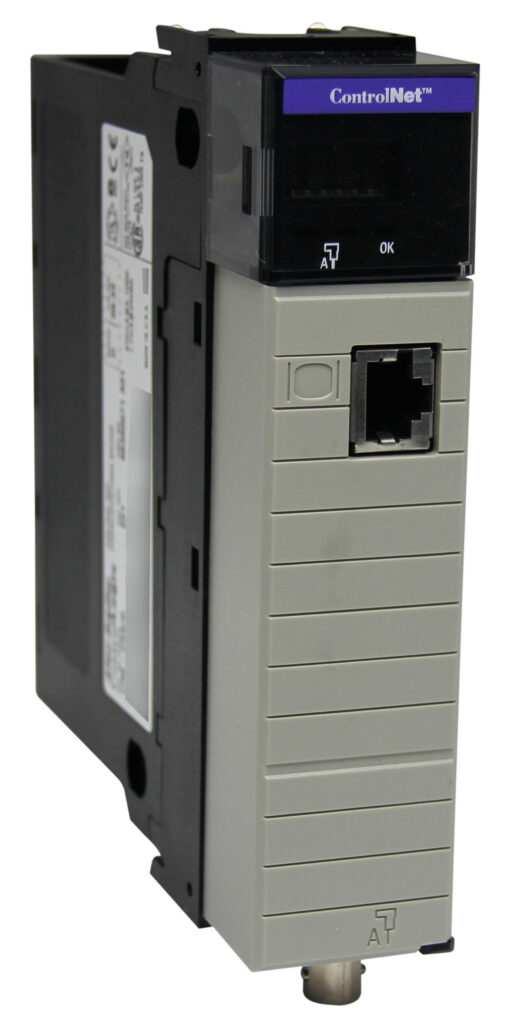
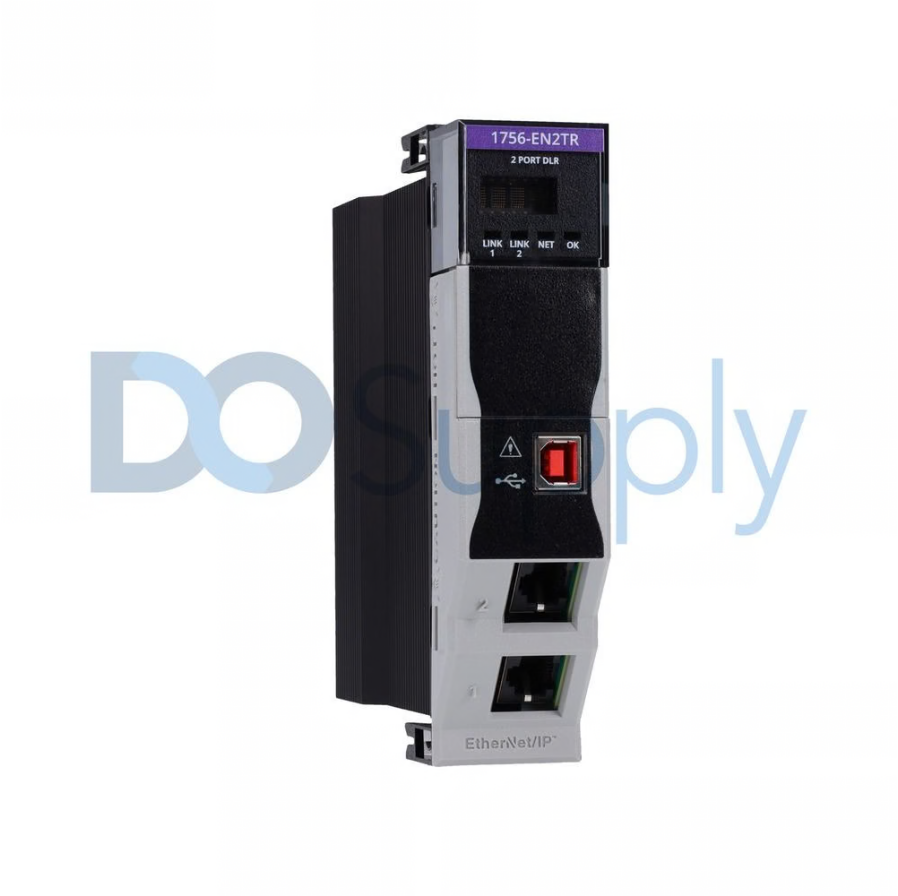
Due to their greater exposure to external network circumstances, the 1756-EN2T and 1756-EN2TR EtherNet/IP connection modules are the most often replaced modules in an operational ControlLogix chassis. A Major Fault Type 7 appears in the processor fault record when connectivity to an EtherNet/IP module is lost. Common causes include managed switch port failures, IP address conflicts on EtherNet/IP networks, improper subnet setup after network changes, and CIP connection count overruns on severely congested networks. At firmware version 20 and above, the 1756-EN2T can tolerate 128 CIP connections; exceeding this limit causes sporadic module communication loss that looks like a hardware module failure. This is fixed before attempting to replace any hardware by comparing the connection count with the module’s utilization parameter.
Chassis Backplane Degradation
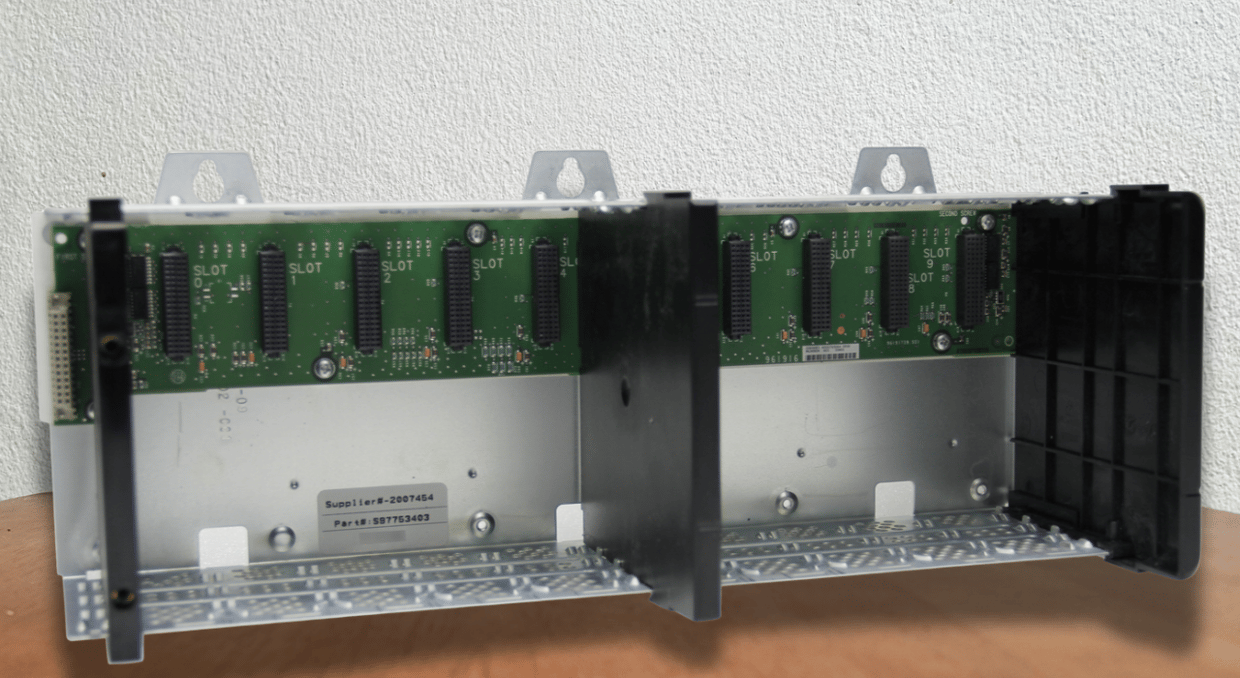
The 1756 chassis backplane is long-lasting but not always dependable. It is a passive printed circuit board that carries power and communication signals between the power supply and all mounted modules. A potential chassis issue is expressly indicated by Issue Type 3, Code 20 in the ControlLogix fault record. According to the literature, this situation is unrecoverable and necessitates chassis replacement. The main reasons for backplane failure include corrosion in high-humidity installations, environmental particle pollution, and physical damage to backplane connection pins. A dependable sign of localized backplane connection damage rather than module failure is a chassis that periodically drops one or two modules from backplane communication, although those particular modules report healthy in isolation.
Battery Failure and Program Memory Loss
Lithium batteries are used by the ControlLogix microcontroller to store RAM during power outages. Low battery voltage is shown by the BATT LED on the processor’s front panel, which serves as a warning that there is not enough battery life left to support memory during the next power outage. Program loss occurs during the subsequent unforeseen power outage if the BATT LED warning is ignored. Operating temperature and power-off duty cycle affect battery service life; a CPU in a hot enclosure that undergoes repeated plant shutdowns uses battery capacity much faster than the two-to-five-year estimate. Regardless of battery status, using a 1756-ESMNSE CompactFlash memory card as a non-volatile program backup eliminates the risk of program loss.
Field Wiring Faults Misdiagnosed as Module Failures
A significant percentage of ControlLogix I/O module repairs in the field are superfluous because the module is in good condition and the field wiring that connects it to it is really failing. The fault signal produced by an output module reporting a fault state due to a field device shorting to ground is similar to that of a failed output module. Before ordering a new module, the field wire is isolated from the module by measuring continuity and insulation resistance from the I/O terminal block to the field device while the module is removed from the chassis. The three most frequent field wiring issues that show up as ControlLogix module failures in the system fault record are moisture intrusion into junction boxes, failed solenoid coils shorting internally, and damaged cable insulation at strain relief points.
Motion Module and Servo Drive CIP Motion Faults
When the servo drive’s EtherNet/IP connection is lost or the motion coarse update period cannot be maintained throughout the available network bandwidth, ControlLogix systems using Integrated Motion on EtherNet/IP via 1756-EN2TR modules encounter a particular kind of failure. The motion job is stopped by the processor, which concurrently stops all coordinated axes and creates a Major Fault Type 7 motion connection loss. The most frequent cause is a deteriorated EtherNet/IP cable connection between the drive and the switch; this cable passes a continuity test but shows high attenuation at the gigabit Ethernet operating frequency, causing sporadic packet loss that shows up at motion update rates. Most motion connection loss errors may be fixed without replacing the drive or module by changing the cable that connects the drive’s EtherNet/IP port to the closest switch.
Final Thoughts
In conclusion, the system’s built-in diagnostics use fault codes in the fault log, LED indicators, and module status bits accessible through the controller’s I/O tree to precisely communicate the specific, identifiable failure points that cause almost all ControlLogix system failures. In all industries, the vast majority of ControlLogix system downtime is caused by power supply size problems, software version mismatches, backplane connection deterioration, battery neglect, field wiring errors, and thermal management issues. A reactive, downtime-driven maintenance approach can be transformed into a proactive reliability program that keeps ControlLogix systems operating at the performance levels the platform was intended to deliver by addressing each failure point through planned preventive maintenance, disciplined project version control, accurate initial sizing, and methodical diagnostic reading prior to component replacement.
We at DO Supply pride ourselves with being a goof source of ControlLogix PLCs and accessories. Stop by our site and browse our selection for replacements, spares, or even parts for a plant wide upgrade. We also carry HMIs, AC drives, motors, and everything in between. Give our customer service team a call and we can help find what you’re looking for. If you’re interested in designing ControlLogix systems, we do have an article here focusing on high uptime.
DO Supply Inc. makes no representations as to the completeness, validity, correctness, suitability, or accuracy of any information on this website and will not be liable for any delays, omissions, or errors in this information or any losses, injuries, or damages arising from its display or use. All the information on this website is provided on an "as-is" basis. It is the reader's responsibility to verify their own facts.