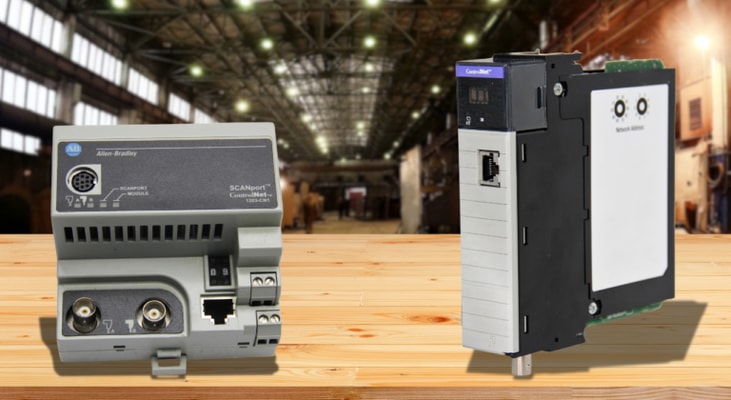
Distributed control systems, essential to modern industrial automation, need distinct hardware components to communicate seamlessly across large facility floors. The Programmable Logic Controller (PLC) is at the core of this system. PLCs execute control logic, process sensor and I/O data, command field devices, and exchange information with HMIs, SCADA systems, drives, remote I/O, and higher-level systems. But a PLC’s effectiveness depends on the communication networks that connect it to company databases, input/output (I/O) modules, human-machine interfaces (HMIs), and supervisory control and data acquisition (SCADA) systems. Over the last several decades, simple proprietary serial lines have given way to sophisticated, high-speed Ethernet-based protocols. Determinism, bandwidth, distance, setup complexity, and cybersecurity must all be balanced to choose the best protocol, which is seldom a simple technical task. Automation engineers must understand these trade-offs to build...
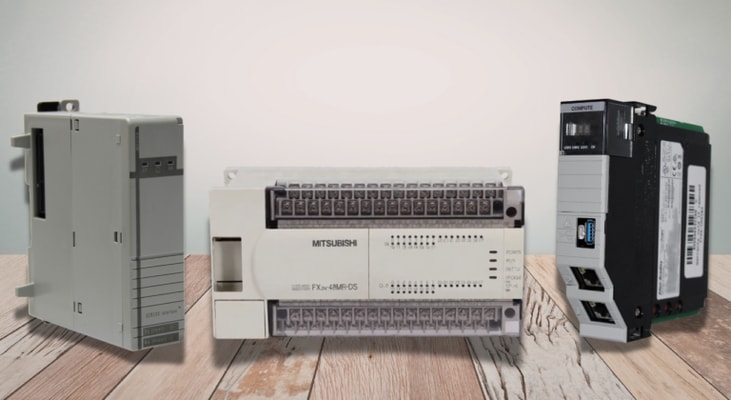
When choosing a PLC, the system’s architecture affects all subsequent engineering work, from how control panels are drawn to the cost of maintaining the system over years of service. Most PLCs fall into one of two competing design philosophies: modular architecture, where the I/O, CPU, and power supply are separate elements on a common backplane, or fixed architecture, where all of these are combined in a single housing. Every major PLC vendor offers product lines that follow both designs, and understanding how each platform is laid out helps an engineer pair architecture to application rather than defaulting to whatever solution is already sitting on the shelf. Comparing the five largest control vendors in Europe, North America, and Asia – Rockwell, Siemens, Schneider Electric, Mitsubishi, and Omron – all of which market modular and fixed models side by side – shows which factors vendors weigh when dividing fixed and modular I/O architectures. The real tradeoffs come down not to...
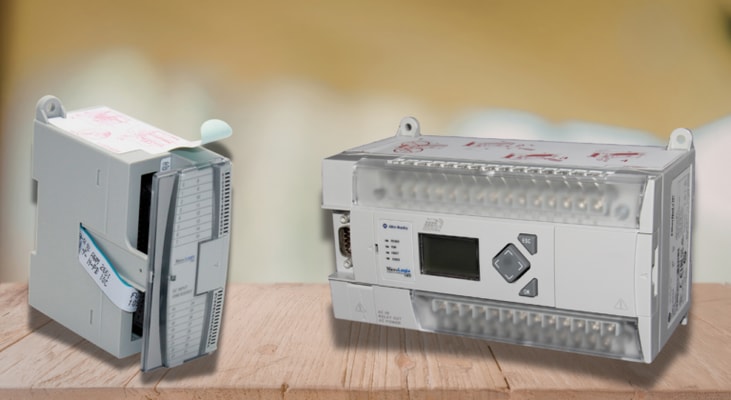
For more than 20 years, one of the most extensively used programmable logic controller (PLC) platforms in small and medium-sized industrial facilities has been the MicroLogix family, which includes the 1000 , 1100 , 1200 , 1400 , and 1500 series. Each MicroLogix controller combines the CPU, power supply, communication interfaces, and fixed or semi-modular input/output (I/O) into a single chassis, making it a small, self-contained automation system. MicroLogix streamlines installation, minimizes cabinet space, and reduces overall system complexity compared to modular PLC systems like CompactLogix and ControlLogix, which distribute these components across a backplane. By enabling modest extension with Bulletin 1769 Compact I/O modules, the MicroLogix 1500 further increases versatility. MicroLogix controllers have enough processing power for a variety of industrial applications, while being small by today’s standards. They handle 16 to several hundred discrete I/O points, provide between...
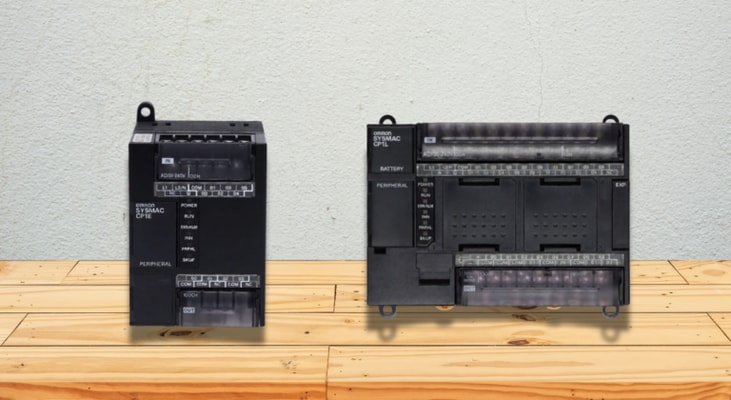
The problem that every OEM machine builder faces is what hardware to buy that will help power and control their system. For PLCs, they may face constraints with controller memory size, communication options, motion capabilities, and the size of the PLC. For many compact to moderately complex OEM machines, an Omron CP1 controller may already provide everything the design requires. Designed for machine level automation, the CP1 families capabilities range from basic control tasks to more capable applications involving communications, analog signals, and positioning. Omron has split the CP1 controller family into three different performance levels: The CP1E, CP1L, and CP1H. The CP1E is the most cost effective solution for simpler machines, the CP1L offers a middle ground between the three, and the CP1H is the high end model with additional speed and positioning capabilities. Order Omron CP1 CPU Units Here The Omron CP1E is the entry level controller in the CP1 family. It is designed to...
ControlLogix communication delays are often not the fault of a single component. In most field situations, the culprit is not a broken device but a design misalignment among the controller’s capacity, the choice of communication module, and the network built around it. A ControlLogix system is modular, and delays often trace back to a specific design decision: too many nodes on the I/O bus, the use of an antiquated bridge module, or a backplane routing configuration stretched beyond its performance envelope. Getting a strong grip on these mechanics and moving away from thinking of delay as just a generic “network problem” is what will distinguish a permanent fix from a temporary workaround. Every ControlLogix controller has an upper limit on the number of nodes and connections it can support, and exceeding that limit is one cause of communication lag. A node is any device added to the I/O configuration, and pushing a network beyond that count can cause delays that no amount of...
General-purpose automation just cannot meet the demands placed on a control system by high-speed production. A vision-guided robotic cell that makes accept/reject decisions in less than two milliseconds, a packaging line that produces 1,200 units per minute, or a multi-axis servo system that coordinates ten simultaneous motion profiles are all unable to withstand the scan time variability, communication latency, or processing constraints that are acceptable on a typical discrete manufacturing line. A system that operates at line speed or one that becomes a bottleneck depends on the choice of processor generation, motion architecture, task structure, and communication topology within Rockwell Automation’s ControlLogix platform, which is specifically designed for this environment. This article discusses each of those selection decisions in the context of high-speed manufacturing requirements. Controllers that offer complex automation, integrated safety, motion control, and scalable...
There was a time when PLC memory planning mainly consisted of counting I/O points, estimating the number of instructions, and making sure that the program would fit inside the controller’s memory. This approach worked when a PLC’s primary responsibility was reading switches, controlling outputs, and keeping a machine moving through a relatively simple sequence. Fast forward to modern facilities, and you will see that PLCs are asked to do a lot more. In addition to running the core program, modern PLCs may coordinate motion, communicate with dozens of devices, and retain maintenance data. Every function that a controller is told to do requires memory, even when it doesn’t add many visible rungs to the program. Because of this, sizing a PLC for its memory can be an easy oversight. While it may seem to have enough processing power and I/O capacity for an application, it can fall short on program memory, data memory, retentive storage, or even communication resources. PLC memory is...
Modern industrial automation relies heavily on Programmable Logic Controllers (PLCs). PLCs are ruggedized, microprocessor-based industrial computers used to govern critical industrial processes across chemical processing plants, oil & gas systems, food packaging systems, water & wastewater treatment plants, manufacturing, and other industrial complexes. While control engineers and system integrators invest substantial effort into optimizing PLC control code, network configurations, and field input/output devices, a stable PLC power supply is equally vital for reliable system performance. Although PLCs are inherently designed to withstand harsh environmental conditions, such as vibration, extreme temperatures, and dirt, they do require a highly consistent power supply to function properly. An uninterrupted power supply prevents data corruption, logic errors, and catastrophic downtime in any PLC-controlled automation system. A stable PLC power supply readily converts variable line...
Reliability of control architecture is essential for large material handling systems. ControlLogix, part of the Rockwell Automation Logix family, has become a backbone for high-speed conveyor networks in distribution centers, parcel hubs, and manufacturing systems worldwide, owing to its reliability and adaptability. However, designing a ControlLogix conveyor system goes beyond the controller itself. A conveyor network running numerous divert mechanisms, hundreds of conveyor zones, and thousands of I/O points depends heavily on how the ControlLogix platform sits alongside distributed I/O, drives, industrial Ethernet, safety circuits, and PC-level systems. Below is a breakdown of the architecture that makes ControlLogix suitable for large conveyor networks, and the technologies engineers must account for. The ControlLogix platform, with its established 5580 family and the newer 5590 controllers from Rockwell Automation, is built for large conveyor solutions that need the performance...
Although a PLC installed on a vibrating conveyor frame in a steel mill and a PLC sitting in a climate-controlled control room can belong to the same product family, the technical choices made for each installation are very different. Compared to traditional factory automation, industrial control systems utilized in hazardous or toxic industrial environments need to have far more robust designs and better environmental ratings. Corrosive vapors, conductive dust, explosive gases, excessive humidity, loud electrical noise, and extremely high or low temperatures can all be found in these settings. Buying a more costly processor is not the only option when designing a PLC system for these circumstances. Conformal coating, vibration mounting, thermal management, enclosure selection, EMI shielding, and hazardous area classification are all systems engineering tasks that must be completed at different stages of the design process. Understanding the particular environmental stresses the PLC...
A new installation is not the same as a retrofit project. The selection logic for a ControlLogix processor must take into consideration elements that are absent from a greenfield project, and the risks and constraints are different. A processor must fit into a panel sized for a PLC-5 or SLC 500 chassis, communicate with devices never intended for EtherNet/IP, coexist with existing wiring, and be maintainable by a team that has worked on RSLogix 500 for years. A predetermined set of technical criteria must be followed to make the proper choice. That approach is covered from the start in this article. The first task on any ControlLogix retrofit is documenting the full scale of the legacy system, not just the I/O count, but everything the existing controller manages. A practical first pass is to group the 5580 processors by memory class: 1756-L81E for smaller systems, 1756-L82E or 1756-L83E for moderate retrofits, and 1756-L84E or 1756-L85E for larger PLC-5 migrations, high tag counts...
Choosing the right PLC is one of the most important decisions in an automation or infrastructure project. A well-designed PLC can help minimize commissioning time, reduce stability problems during long-term operation, and lower maintenance costs. In energy-intensive applications, PLCs do more than handle basic logic. They may also support energy optimization, multi-VFD coordination, system monitoring, and long-term lifecycle reliability. The system requirements should drive the PLC selection, not the brand name alone. Start by determining how many I/O points the application requires. A small machine may only need a few dozen I/O points, while a tunnel, pump station, or utility system may require hundreds or thousands across ventilation, drainage, lighting, monitoring, and safety-related equipment. In larger systems, distributed I/O, expansion capacity, remote communication, and reliable backplane or network performance become major selection factors. For applications tied into utility...
Allen-Bradley CompactLogix and ControlLogix controller platforms play a key role in modern industrial automation. ControlLogix controllers are configurable for safety, standard, Logix SIS, and redundancy applications, facilitating faster system performance, high I/O capacity, enhanced productivity, and improved security for enterprise-level and large-scale automation systems. CompactLogix platforms offer the same core processing capabilities as ControlLogix platforms, but for cost-sensitive, mid-range, or standalone automation applications — often at a fraction of the total ControlLogix investment. Selecting the correct Allen-Bradley controller between the ControlLogix and CompactLogix platforms requires balancing cost, I/O capacity, performance, complexity, and scalability to avoid oversized control panels, redundant programming complexity, and inflated hardware costs. This article explains the technical differences between the two platforms and provides a clear selection criterion...
A bottle of water or a frozen dinner may look simple and unassuming on the outside. You pick it up, toss it into your cart, and go about your day. Yet, behind the scenes lie a choreographed dance of machinery and control systems that cook, pack, and label your next easy meal or bottled beverage. Food and beverage automation comes in many different flavors, from motors to run conveyor lines to robot arms that sort packages to make palletizing easier. Today, we will highlight one of the most important pieces of the system: the PLC, the glue that holds together an industry that relies on consistency, sanitation, uptime, and quality control. The Food and Beverage industry is one of the largest manufacturing sectors in America, accounting for 16.8% of all U.S manufacturing sales and 15.4% of U.S. manufacturing employment as of 2021, according to the USDA. That’s over 1.7 million workers ensuring that the quality of your next meal or drink is as you would expect it to be. On top of that...
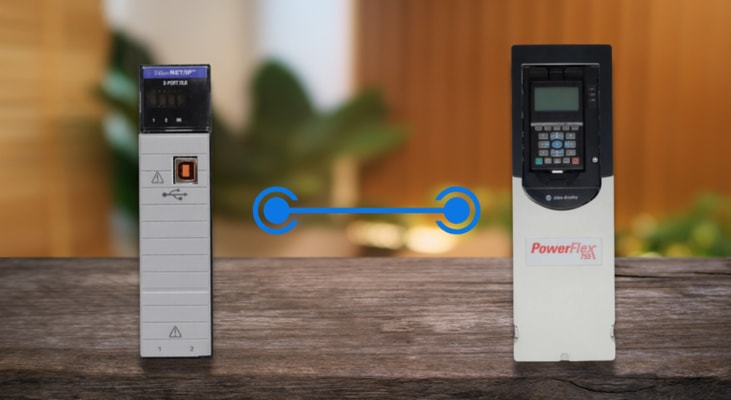
Variable frequency drives and programmable controllers have evolved from loosely connected hardware communicating via hardwired I/O to tightly integrated systems that share tag-based data, diagnostic information, and motion commands over a single industrial Ethernet network. The main point of this architecture in Rockwell Automation environments is the ControlLogix platform, and its integration with the PowerFlex drive family defines how modern Allen-Bradley-based control systems handle motor control from simple pump speed regulation to coordinated multi-axis positioning. This article covers the full integration architecture across hardware, communication protocols, Auto-Device Replacement, CIP Motion, and diagnostic practices. Order PowerFlex 755 Drives Here The PowerFlex drive portfolio spans several product lines, each with distinct integration characteristics when paired with ControlLogix. The PowerFlex 525 (catalog 25B series) is a compact drive rated from 0.5 to 30 HP and...