Johnson Controls and the Evolution of HVAC Automation: Breathe Easier in Smart Environments
The crucial importance of comfort and sustainability has propelled innovation in an era where technology is changing the very landscapes we live in. Enter the world of HVAC automation, a development that has improved indoor settings while paving the path for smarter buildings using less energy. This essay, titled “Johnson Controls and the Evolution of HVAC Automation: Breathe Easier in Smart Environments,” sets out on a journey through the incredible collaboration between Johnson Controls and the dynamic growth of HVAC systems. Johnson Controls stands out as a forerunner in a world that is becoming more environmentally conscious and seeks out greener solutions. This investigation illuminates how Johnson Controls has skillfully weaved automated HVAC systems into the tapestry of responsive, energy-efficient spaces as buildings transform into “smart” ecosystems. Beyond temperature regulation, this evolution includes air quality management and proactive maintenance, providing occupants with a setting where breathing becomes a simple comfort. Johnson Controls’ commitment to advancing HVAC automation is in the spotlight as we design living and working places that balance human demands with environmental obligations. This article explains how these developments go beyond simple climate control to include air quality control and proactive maintenance, all of which work together to provide situations where breathing easier is a real possibility. Join us as we examine how Johnson Controls is redefining comfort even as it ushers us into a time when technology and well-being work in astonishing harmony.
Building Management System
Johnson Controls is at the forefront of this transition and offers cutting-edge BMS systems that define smart environments. Critical systems like HVAC, lighting, security, and others are seamlessly integrated and controlled by the BMS, which serves as a central hub. Building operators can receive unmatched insights and control over these systems with Johnson Controls’ cutting-edge BMS technologies, going beyond traditional control techniques. Facility managers may access real-time data streams from various components thanks to remote monitoring capabilities, enabling them to make educated decisions and react quickly to changing circumstances. Take, for instance, a commercial office building with Johnson Controls’ BMS installed. The BMS continuously tracks temperature, occupancy levels, and energy usage as the day progresses, and occupancy varies. The BMS proactively modifies lighting and HVAC settings to save energy when a conference room is empty. Additionally, the BMS uses predictive algorithms to optimize HVAC systems during off-peak hours, maintaining ideal temperature and air quality while consuming the least energy possible. The evolution towards smart environments, where Johnson Controls’ new solutions are ushering in an era of improved occupant comfort, energy efficiency, and environmental sustainability, is supported by the BMS’s centrality in managing numerous systems.
Johnson Controls is at the forefront of this transition and offers cutting-edge BMS systems that define smart environments. Critical systems like HVAC, lighting, security, and others are seamlessly integrated and controlled by the BMS, which serves as a central hub. Building operators can receive unmatched insights and control over these systems with Johnson Controls’ cutting-edge BMS technologies, going beyond traditional control techniques. Facility managers may access real-time data streams from various components thanks to remote monitoring capabilities, enabling them to make educated decisions and react quickly to changing circumstances. Take, for instance, a commercial office building with Johnson Controls’ BMS installed. The BMS continuously tracks temperature, occupancy levels, and energy usage as the day progresses, and occupancy varies. The BMS proactively modifies lighting and HVAC settings to save energy when a conference room is empty. Additionally, the BMS uses predictive algorithms to optimize HVAC systems during off-peak hours, maintaining ideal temperature and air quality while consuming the least energy possible. The evolution towards smart environments, where Johnson Controls’ new solutions are ushering in an era of improved occupant comfort, energy efficiency, and environmental sustainability, is supported by the BMS’s centrality in managing numerous systems.
Integration of renewable energy
Integration of renewable energy entails refining HVAC automation algorithms to modify system performance in response to renewable energy supply dynamically. The HVAC system can modify its cooling and heating techniques based on the surplus or deficit of renewable energy by utilizing real-time data from solar panels or wind turbines. When solar energy production is at its highest, extra energy can be used for pre-cooling, reducing reliance on the grid. In contrast, the HVAC system may temporarily switch to energy-saving modes as the availability of renewable energy declines, maintaining a balance between comfort and resource efficiency. Imagine, for instance, a house with solar panels incorporated that is powered by Johnson Controls. The BMS notices increased solar energy production as sunlight gets stronger. The HVAC system adjusts its cooling cycle accordingly to ensure a comfortable home temperature without using conventional energy sources. The HVAC system effectively regulates its operations during drops in solar output, keeping up with the ebb and flow of renewable energy supply.

Air Quality Management
According to Johnson Controls and the Evolution of HVAC Automation, air quality management is key to designing healthy indoor environments. To rigorously monitor and control indoor air quality parameters, Johnson Controls’ creative approach to this aspect blends cutting-edge technologies, such as air quality sensors, into HVAC systems. Pollutants, CO2 concentrations, and airborne particles are all continuously measured by air quality monitors such as the Johnson Controls VOC sensors and PM (Particulate Matter) detectors. These sensors serve as the backbone of a data-driven approach to indoor air quality by transmitting real-time data to the BMS. Think about a school with an air quality control system from Johnson Controls. The flood of pupils and their exhalations during a lecture in a classroom lead to increased CO2 levels. The BMS quickly recognizes the increase in CO2 concentration thanks to its advanced technologies, including IoT (Internet of Things) integration and AI. As a result, HVAC automation increases ventilation rates smoothly, bringing in fresh outdoor air and optimizing indoor air quality without sacrificing comfort. Furthermore, the BMS activates strengthened filtration systems to ensure the purification of recirculated air if pollutants or particle matter exceed predetermined criteria.
Fault Detection and Diagnostics
Johnson Controls’ dedication to developing cutting-edge maintenance techniques perfectly complements FDD algorithms, accelerating the transition to proactive and intelligent smart environments. FDD entails using sophisticated algorithms to continuously parse data from a network of sensors and other devices inside the HVAC system. Using pattern recognition, machine learning, and statistical analysis, these algorithms examine data for deviations from expected performance. This careful examination enables the early identification of potential flaws or inefficiencies, even before they become obvious problems. Think of a busy business complex with an FDD-integrated HVAC system from Johnson Controls. The FDD algorithms notice an unusual decline in the cooling capability of a chiller as the summer heat increases. The technology detects an impending refrigerant leak caused by a damaged compressor using past data and predictive analytics. The BMS immediately alerts facility managers, requiring rapid action. Aiming to prevent an impending breakdown and provide continuous comfort for occupants, the compressor is swiftly repaired. In this ecosystem, Johnson Controls employs sophisticated controllers like Programmable Logic Controllers (PLCs), Building Automation Controllers (BACs), and Distributed Control Units (DCUs) to oversee FDD operations. These controllers possess the computational prowess to analyze complex data streams, execute FDD algorithms, and trigger responsive actions, solidifying the foundation of a robust FDD framework.
Adaptive Cooling Strategies
Utilizing Johnson Controls’ cutting-edge automation, adaptive cooling strategies involve managing a building’s components dynamically in reaction to outside humidity and temperature conditions. Intelligent ventilation systems, motorized shades, and automated windows work harmoniously under the direction of real-time data from environmental sensors. Think of a modern, urban workplace environment using Johnson Controls Adaptive Cooling Strategies. External temperature and humidity sensors transmit this information to the Building Management System (BMS), a key component from Johnson Controls when a warm summer wind fills the area. In reaction, the BMS activates motorized windows to let in the cooling outside air and provide cross-ventilation that naturally cools the inside rooms. Intelligent shades simultaneously alter their positions in response to bright sunlight, limiting solar heat accumulation without obstructing natural light. This complex interaction guarantees a constant level of comfort while lightening the burden on conventional cooling systems.
Demand Response Participation
The idea of demand response participation is to set up Johnson Controls’ HVAC automation systems so they can react to signals from utility companies in real time. They use technology like smart meters and cutting-edge communication protocols like OpenADR (Open Automated Consumption Response) to adjust HVAC operations automatically during times of increased energy consumption. In the metropolis, energy consumption rises on a hot day. When a demand response signal is sent by the utility company, the BMS quickly responds by using Johnson Controls’ sophisticated algorithms and real-time data from smart meters. It modifies setpoints slightly and enhances airflow to change the building’s cooling systems. This precise planning lowers the facility’s energy use during peak hours while maintaining a cozy user atmosphere. Johnson Controls’ Demand Response Participation represents a paradigm leap towards more intelligent energy usage by seamlessly combining cutting-edge communication technologies, data analytics, and real-time response.
Long-term Environmental Life Cycle
Johnson Controls ‘ vision explores the long-term environmental effects of HVAC automation systems, which go beyond short-term efficiency benefits. Their philosophy of designing intelligent spaces that promote both occupant enjoyment and planetary well-being is consistent with their all-encompassing strategy. An exhaustive analysis of the lifespan of HVAC automation systems is required for lifecycle environmental impact analysis. Johnson Controls assesses elements, including gathering raw materials, manufacturing procedures, delivery and installation processes, operating energy usage, and final end-of-life disposal. Johnson Controls uses technologies like life cycle assessment software and data analytics to measure environmental implications, from greenhouse gas emissions to resource depletion. Consider a commercial structure incorporating the HVAC automation system from Johnson Controls. A lifecycle study is performed before installation to determine the selected components’ environmental impact and production methods. Real-time data collecting techniques monitor emissions, performance, and energy use after installation. In line with the principles of the circular economy, a responsible disposal strategy reduces waste after the system’s useful life.
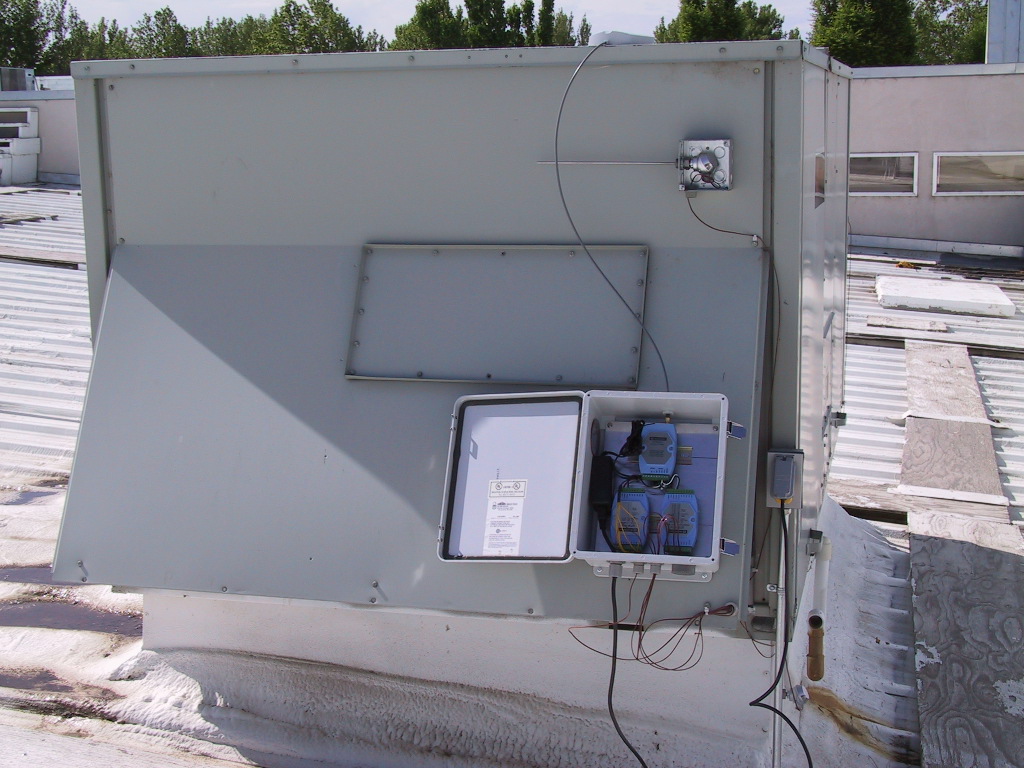
The focus of Johnson Controls’ lifecycle environmental impact analysis is consistent with the organization’s larger commitment to sustainable innovation.
Cybersecurity Measures
One of the most important pillars in assuring the integrity and dependability of HVAC automation systems is the deployment of solid cybersecurity measures. As a pioneer in smart building solutions, Johnson Controls is well aware of the necessity to protect its systems from possible online attacks. HVAC automation systems are protected using a variety of cybersecurity measures. Johnson Controls uses cutting-edge tools and procedures to build a strong defense:
Secure Communication Protocols: To ensure that data exchanged between system components and external interfaces is encrypted and secured from eavesdropping, Johnson Controls uses secure communication protocols like TLS (Transport Layer Security) and MQTT (Message Queuing Telemetry Transport).
Encryption: Sensitive data is encoded using cutting-edge encryption methods like AES (Advanced Encryption Standard), making it unintelligible to unauthorized parties even if intercepted.
Johnson Controls incorporates intrusion detection systems (IDS) that continually monitor system activity and network traffic—any unusual behavior or possible intrusion results in instant notifications, allowing quick reactions to threats.
Consider a sizable facility that is automated by Johnson Controls’ HVAC system. To increase security, the system uses TLS for secure communication between the HVAC and Building Management System (BMS) components. Additionally, AES encryption methods encrypt any data on the system’s servers. Actively monitoring network traffic, intrusion detection systems rapidly identify any odd activity, such as an illegal attempt to enter the system.
IoT Integration
The development of intelligent and responsive HVAC systems fundamentally relies on integrating IoT (Internet of Things) technologies. Johnson Controls is at the forefront of this transition, utilizing IoT to promote seamless data interchange and connectivity across diverse system components. IoT integration describes how HVAC systems’ components and sensors are connected to one another through the Internet. Johnson Controls uses a wide range of IoT devices, such as wireless sensors and actuators, to facilitate real-time data interchange. This information, often about the air quality and surroundings, serves as the cornerstone for accurate and prompt modifications to HVAC systems.
Consider a contemporary workplace with HVAC automation powered by the Internet of Things from Johnson Controls. Wireless sensors strategically positioned throughout the structure continuously collect information on the air quality, occupancy, humidity, and temperature. These sensors use the Internet to transfer this data to the Johnson Controls Building Management System, another example of the company’s ingenuity. The BMS orchestrates adaptive HVAC modifications in response to the data input, adjusting temperature and air quality to suit occupant preferences and comfort.
Johnson Controls’ vision for intelligent environments is exemplified through the combination of wireless sensors, IoT technologies, and the BMS.
Compliance Reporting
Compliance reporting is the HVAC automation system’s capacity to gather, examine, and display information on energy efficiency and sustainability performance. It includes smoothly integrating several technologies, such as regulatory databases, cloud computing, and data analytics. This technology regularly gathers data on energy use, indoor air quality, and environmental effects. It compares this information using sophisticated data analytics to guidelines and benchmarks for sustainability and energy efficiency provided by organizations like LEED (Leadership in Energy and Environmental Design) or local building codes. The HVAC automation system, for instance, proactively checks and modifies its operations to remain in compliance if a regulatory body requires a maximum permitted energy consumption level. It produces thorough reports on a regular basis that indicate measures for energy efficiency, emissions reductions, and adherence to sustainability norms. These reports are available to facility managers so they may show their dedication to regulatory compliance and pinpoint areas that still need work.
Conclusion
In conclusion, the article Johnson Controls and the Evolution of HVAC Automation: Breathe Easier in Smart Environments sheds light on an engrossing trip through the changing environment of HVAC automation and smart building solutions. Johnson Controls stands out as a trailblazing force in a world where the fusion of comfort, sustainability, and technology is crucial, transforming how we view and engage with the settings in which we live. The article explores cutting-edge standards and technologies that highlight Johnson Controls’ dedication to developing intelligent environments promoting occupant well-being and environmental responsibility. The Building Management System (BMS) is the primary orchestrator, smoothly integrating vital building systems, including HVAC, lighting, and security. The BMS goes beyond conventional control techniques to maximize building operations and energy efficiency by providing facility managers with real-time data, remote monitoring capabilities, and predictive analytics. It demonstrates Johnson Controls’ commitment to deliver unrivaled insights and control. Moreover, incorporating renewable energy sources demonstrates Johnson Controls’ vision for a sustainable future. Buildings may harness the power of solar panels and wind turbines by dynamically altering HVAC systems in response to renewable energy availability, decreasing their dependency on fossil fuels and cutting greenhouse gas emissions. This demonstrates Johnson Controls’ dedication to environmental stewardship. Innovative air quality sensors and HVAC automation are combined in Air Quality Management, another pillar of Johnson Controls’ innovation, to create environments where indoor air quality is continuously monitored and changed in real time. This makes breathing simpler and healthier for residents, which is essential in today’s society.
Fault Detection and Diagnostics (FDD) is another advancement in preventative maintenance. Early diagnosis of HVAC system inefficiencies and potential defects is made possible by incorporating FDD algorithms, reducing downtime, and increasing system dependability. Johnson Controls improves HVAC systems to quickly adapt to changing environmental factors and energy needs. This is demonstrated by their adaptive cooling strategies and participation in demand response programs. Johnson Controls’ systems react to changing conditions, assuring comfort, energy effectiveness, and grid stability by utilizing IoT technologies, real-time data, and predictive algorithms. The company’s comprehensive dedication to sustainability is demonstrated through the Lifecycle Environmental Impact Analysis. Assessing the environmental impact of HVAC automation systems throughout their entire lifespan, from production to disposal, goes beyond looking at short-term efficiency benefits. Johnson Controls’ commitment to security, openness, and compliance with regulations is supported through cybersecurity measures and compliance reporting. These steps guarantee that HVAC systems are effective, robust to online attacks, compliant with sustainability certifications, and in line with energy efficiency standards.
DO Supply Inc. makes no representations as to the completeness, validity, correctness, suitability, or accuracy of any information on this website and will not be liable for any delays, omissions, or errors in this information or any losses, injuries, or damages arising from its display or use. All the information on this website is provided on an "as-is" basis. It is the reader's responsibility to verify their own facts.