Automated Healthcare: Robots in Hospitals and Clinics
Introduction
The intersection of technology and healthcare has created a transformative era marked by integrating robotics into hospitals and clinics. Healthcare robots have become specialized tools designed to revolutionize disease diagnosis, treatment, and patient management. These robots are crucial in reshaping how medical professionals approach their tasks. Behind the functionality of healthcare robots lie essential technological components. It has become apparent that these machines, controlled remotely or locally, are at the forefront of enhancing healthcare delivery.
What Are Healthcare Robots?
Healthcare robots are designed specifically for use in the medical profession. Robots are specialist tools meant to help in disease diagnosis, treatment, and management. Such robots are frequently employed in monitoring patients, rehabilitation, and surgery. They come in different levels of capability and sophistication and may be operated autonomously or under human direction. They are controllable remotely and locally, providing healthcare professionals with a versatile and precise toolset.
All robots, whether they are medical or not, have certain technological components. These components include:
- The controller runs all of the robots’ programs.
- If the power source is fixed, a battery inside may power the robot. The power supply type determines the robot’s performance and movement ability.
- Programming is a collection of instructions configured with a controlling device to follow directions and prevent mistakes and inefficiencies.
- Sensors are available in various sizes, forms, and purposes for observing the environment.
- The end effector enables the robot to function and engage with its environment.
Transformative Applications Across Medical Domains
The integration of robotics has emerged as a transformative force. They are reshaping the way medical professionals diagnose, treat, and care for patients. They help in precision diagnostics, minimally invasive surgeries, radiation therapy, and even psychological support. This comprehensive exploration delves into the diverse applications of medical robotics.
Robots for diagnosis
Triage and preliminary diagnosis are two of the most significant applications for medical robotics. Machine learning programs are as accurate as human physicians in diagnosing some types of cancer, reaching as much as ninety percent accuracy. In addition, they often reach these results much more quickly than traditional diagnostic techniques.
When robots with AI are used to diagnose people, valuable time is saved. These early diagnoses may assist expedite the procedure so patients receive the treatment they need earlier, even if medical professionals still make the ultimate choice.
The ability of diagnostic robotics to conduct assessments on patients when healthcare staff is inaccessible is another advantage. In this manner, lengthening the diagnosis and treatment procedures won’t be caused by a lack of workers or hospitals operating at capability. That’s a significant advantage considering the substantial turnover in the sector.
Robotic for Surgery
Certain robots may further treat patients after diagnosing them. Though their use has only increased recently, surgery robotics have been available since 1997. Presently, surgeons have employed them to carry out numerous minimally invasive procedures, ranging from hundreds to potentially thousands.
Currently, available robotic surgical systems do not have complete autonomy. Their hands are steadier, and they can maneuver in much smaller spaces, but they need to be controlled remotely by surgeons. Doctors may execute intricate procedures with fewer bleeds, less tissue damage, infection risk, and other issues because of these little, stable robotic arms.
Their second main benefit is that surgical robotics enable more individuals to obtain high-quality treatment. Top surgeons may operate on patients from a distance using remote control devices, which saves time and improves patient results.
Robots for Radiation Therapy
Radiation treatment robots are another form of medical robots that are becoming increasingly popular. As the name implies, these devices provide cancer patients with quick radiation treatment that would be difficult for manual procedures to do.
Among these alternatives, the CyberKnife robotic is the most widely recognised. The CyberKnife utilizes real-time analysis of X-rays to pinpoint lesions, directing a radiation beam with precision accuracy to within a single millimeter. CyberKnife uses body movement to prevent harm to non-cancerous cells, eliminating the need for anesthesia or restraints.
Some robots, such as ACE from XACT Robotics, treat radiation differently. To monitor or ablate tumors, ACE inserts probes beneath the skin of its patients with an accuracy of 1.7 millimeters. Additionally, the robot only requires a small amount of room since it only has a few pounds.
Social Care Robotics
Medical robotics are not limited to providing just physical care. Certain bots converse with patients to attend to their psychological and social requirements.
“Stevie,” a social healthcare robot, can converse with patients, sing for them, play games with them, and call for help if necessary. Even while these social encounters may not appear to have anything to do with health care at first, they are essential for lifting people’s spirits when they are alone or under stress. That morale bump significantly impacts patient outcomes.
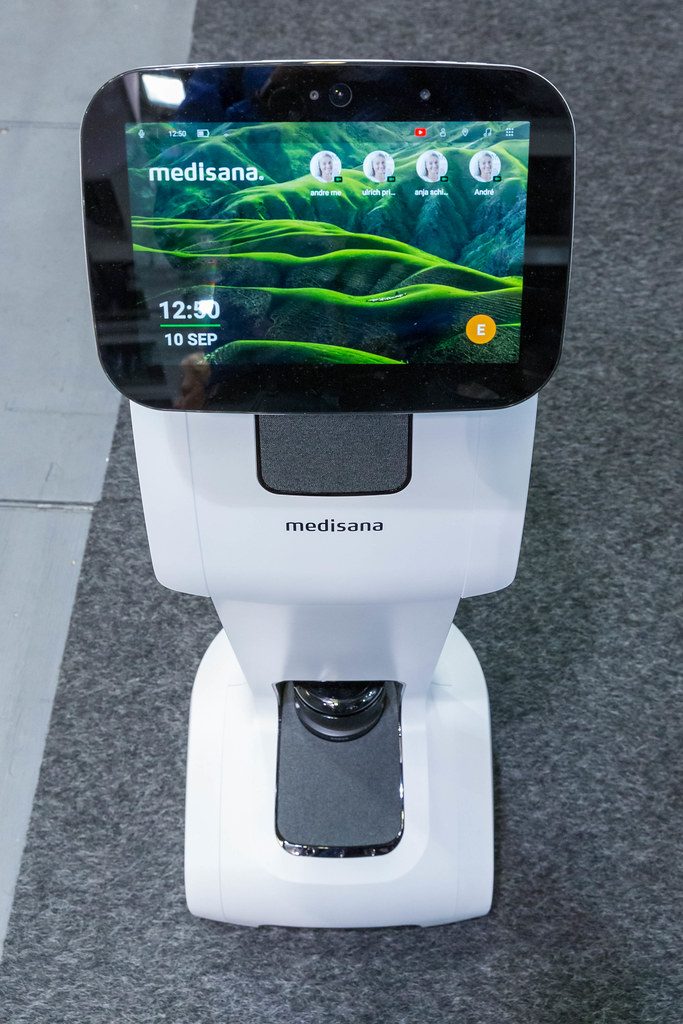
Research indicates that although poor mental state often results in a shorter lifespan, pleasant emotions may slow the pace at which diseases grow. While they can’t completely replace human interaction, social care robotics may help prevent loneliness when ongoing human socialization isn’t feasible.
Exoskeletons
Exoskeletons, or wearable robotics, are also used in the medical field. Although medical workers may use these robot supports to lift big objects without exerting themselves, physical therapy is their most common use.
Patients’ limbs are supported by exoskeletons when they attempt to stand up and walk. They give patients sufficient assistance to stay upright without aid, guiding them through everyday activities so they may recover strength and control. The wearable robots’ sensors can track changes in a patient’s response, allowing for modifications to their physical treatment regimen.
These findings corroborate the great effectiveness of exoskeletons. According to some physical therapy professionals, exoskeletons can do tasks that typically need five to ten sessions in only one session.
Disinfectant Systems with Automation
As the COVID-19 epidemic grew, hospitals began deploying healthcare robotics for disinfection and cleaning. Because machines are immune to infectious pathogens, they are the best option for sanitizing an area without worrying about cross-contamination.
Ultraviolet light is used by cleaning robots to disinfect surfaces since UV rays may destroy spores, fungi, bacteria, and viruses. Additionally, it reduces the possibility of cross-contamination by enabling robots to disinfect a space without coming into contact with anything. They can deal with even the most delicate or infectious patients because of their independent operation without endangering medical workers.
Time constraints and a lack of personnel often prevent hospitals from being thoroughly cleaned. For these procedures, using independent UV-equipped robots removes that worry without needing more staff.
Robots for Delivery
Another use for medical robots that emerged during the COVID-19 outbreak is delivery drones. Medical supplies, food, and other necessities may be delivered to patients by autonomously or remotely controlled robotics without running the danger of spreading illness.
One business created drones that could carry 2,500 doses of vaccines per day at the height of the epidemic. Other companies used robots to deliver meal orders to customers taking refuge in their houses. Essential medical supplies may be delivered via the same mechanisms.
There are other applications for delivery robots besides stopping the spread of illness. Hospitals may use them to deliver supplies to clients while staff members concentrate on giving direct medical treatment. This productivity is especially beneficial to hospitals that are experiencing a labor shortage.
Robots for rehabilitation
Even though the subject of robotics for rehabilitation is relatively young, Theodor Büdingen explored the idea of employing machines to help patients recover as early as 1910 when he developed a device that helped those suffering from heart disease assist their walking motions. The first genuinely robotic rehabilitation equipment was developed based on ideas that involved continuous passive motion, which moves a portion of the individual’s body while he rests.
One such use is gait treatment. Robotics, as opposed to conventional physical therapy techniques, provide regulated, rigorous, and repeated training that may ease the therapist’s workload and offer a quantifiable evaluation of the patient’s development. Because of these benefits, robots are being used in rehabilitation increasingly.
Robots in Laboratories
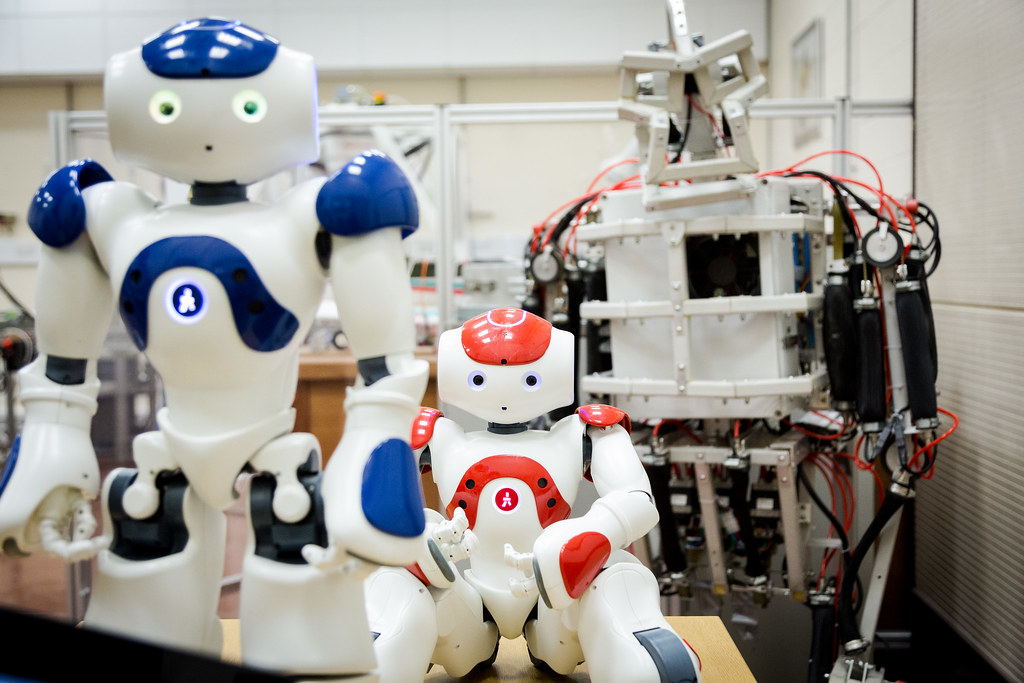
Robotics have been a lab staple for the last thirty years. The machines seen in laboratories are specifically designed to help technicians with repetitive chores or to automate operations. Similar to their counterparts in the commercial robotics domain, laboratory robots are often tasked with handling hazardous or chemically-based materials that pose a risk to human health. By decreasing human error, automated laboratory robots provide speed, capacity, and accuracy advantages.
Robots for Clinical Training
Surgeons have mostly learned on the job or from cadavers up until now, which makes them less intriguing than other people on the list. Utilizing robots provides invaluable experience by serving as realistic substitutes for human patients. By simulating real-life scenarios and responses, robots offer invaluable hands-on experience, acting as highly realistic substitutes for human patients. Moreover, the use of clinical training bots addresses the ethical concerns associated with practicing on cadavers or live patients. It allows medical students and professionals to refine their skills ethically without the potential emotional impact of traditional training methods. The controlled environment of these robots ensures a gradual and structured learning curve, allowing learners to make mistakes, learn from them, and refine their techniques in a supportive educational setting.
Advantages of Robotic Healthcare Systems
- Robotics are employed in several contexts in healthcare institutions. They affect the patients’ lives either directly or indirectly. To keep old and disabled patients from experiencing pain or boredom, they even tend to them and have conversations with them. The advantages of healthcare robots are endless and go hand in hand.
- One of the main benefits of medical robots is their ability to perform surgery more accurately and smoothly. Even the surgical success rate has increased.
- The fact that robots operate perfectly within the time and task limitations allotted is yet another important benefit of medical robotics.
- Due to its ability to eliminate human interaction with patients, healthcare robots have dramatically decreased the danger of infection in clinics. Medical robots can execute treatments with little invasiveness because of their accurate and automated motions, which lowers the risk of infection transfer.
- Medical robots also provide the advantages of effective patient monitoring, faultless performance, time savings, and many other advantages.
Drawbacks Robotic Healthcare Systems
- There are two sides to every coin. While using robotics for performing tasks in the healthcare industry has many advantages, there is also a risk of mistakes and malfunctions. With these sophisticated robots, human mistakes or mechanical malfunctions are also possible.
- Just one mechanical breakdown may be deadly to people. It is impossible to ignore the little hazards of bleeding and infection when it comes to surgical robots.
- The primary drawback of healthcare robots is their expense. Surgical robots are only used in advanced countries, modern hospitals, and clinics.
- Just like patients, there are some situations when they cannot afford robotic surgery.
- Furthermore, the healthcare provider must spend significant resources and time training its workers to manage robotics; the expense of lifetime servicing is also a concern.
- The possibility that robots would replace humans and cause unemployment is a further drawback of using them in healthcare.
Future of Robotics in Healthcare
Automation professionals have an endless future in the healthcare industry as they gain more expertise in robots and artificial intelligence. The evolution of health robotics is set to progress further as technologies like machine learning, data analytics, computer vision, and others continue to advance. All types of robots will keep developing to be able to carry out jobs accurately, quickly, and independently.
Intel and many other companies are working with academics and technology companies to investigate the next wave of robotics technologies. This development boosts automation, boosts efficiency, and tackles certain of the most urgent problems in healthcare.
In the not-too-distant future, robots may take the role of physicians, nurses, and other professionals in some duties, including everyday care, minor surgery, and diagnostics. We must consider the influence of human beings and society before replacing medical personnel with technology. For this scenario to pass, several current rules must be altered.
We will often engage with robotics in everyday life as they become more sophisticated and capable, especially in healthcare and clinics.
Conclusion
In conclusion, healthcare robots are transforming the way we approach medical care. From precise diagnostics to surgery and patient companionship, these robots offer diverse applications. While their advantages in accuracy and efficiency are evident, challenges such as cost and potential job displacement need consideration.
Looking ahead, the future of robotics in healthcare is promising. Ongoing collaborations and advancements in technology ensure a continuous evolution of these systems. However, a thoughtful approach is essential to address ethical concerns and societal impacts. As robotics becomes more sophisticated, its integration into everyday healthcare seems inevitable. Balancing innovation with the human touch is crucial for a future where robots contribute positively to patient outcomes while respecting the influence of human beings and society.
DO Supply Inc. makes no representations as to the completeness, validity, correctness, suitability, or accuracy of any information on this website and will not be liable for any delays, omissions, or errors in this information or any losses, injuries, or damages arising from its display or use. All the information on this website is provided on an "as-is" basis. It is the reader's responsibility to verify their own facts.