Innovations in Warehouse Automation
Warehouse automation is the process of using advanced technologies, software, and machines to perform repetitive, time-consuming, and labor-intensive warehousing tasks traditionally carried out by human workers, such as receiving and stowing inventory, packing goods, sorting items, palletizing, picking orders, tracking inventory, data entry, and shipping products. It is a strategic approach for companies seeking to streamline their warehouse operations, optimize workflows, improve operational accuracy, save costs, boost overall warehouse productivity, and stay competitive in the rapidly evolving world of e-commerce and global trade.
In recent years, warehouse automation, powered by innovative automation solutions and cutting-edge technologies, has emerged as a transformative force, revolutionizing how goods and materials are stored, handled, and distributed. In this article, we’ll look at several innovative technologies that are driving efficiency, accuracy, and productivity in automated warehouses worldwide.
Key Innovations in Warehouse Automation
IoT-enabled Systems
The Internet of Things (IoT) refers to a collective network of physical objects embedded with specialized software, sensors, and other technologies that interconnect and exchange data between themselves and with computing systems(e.g., cloud computing, edge computing, and fog computing platforms) over the Internet via wireless or wired networks.
In warehouse automation, IoT-connected sensors collect real-time data on the condition of warehouse machinery and equipment, inventory levels, environmental factors (like temperature and relative humidity), and the movement of inventory and materials within a warehouse. This data enables inventory tracking in real time, proactive monitoring of warehouse operations, and predictive maintenance of warehouse equipment, contributing to more efficient and reliable warehouse operations.
The data also provides an increased level of real-time visibility in every facet of a warehouse, from when goods and materials are received into the warehouse to when they are shipped out. This helps streamline inventory flow, allowing better control and management of warehouse processes. For example, smart shelves integrated with IoT sensors can broadcast information on stored inventory and warn warehouse managers of displaced products, low stock, theft, unsuitable temperatures, humidity levels, etc.
Additionally, wearable IoT devices like smart gloves equipped with IoT-enabled sensors may capture and transmit data regarding manual handling warehousing tasks, such as loading and unloading pallets, moving goods, handling empty pallets, etc. Warehouse managers can then use this data to track the performance and location of their workers, as well as identify potential ergonomic issues.
Moreover, IoT-connected sensors can be used to identify safety hazards when carrying out warehouse operations before they cause major disruptions. For example, IoT-enabled ultrasound detectors and motion sensors can alert an operator when a forklift enters a restricted or unsafe area. This can help prevent workplace accidents and mitigate the risk of equipment damage or costly downtime. Also, IoT-connected vibration sensors can be attached to fragile items to alert warehouse personnel to handle the items with greater care.
Blockchain Technology in Warehousing
A blockchain is a decentralized digital ledger or database that provides a tamper-proof method of recording and sharing information. The information is recorded in a secure, transparent, and inalterable manner, while the power to update it is distributed between the nodes (physical devices) or participants of a private or public computer network. Blockchain provides a reliable platform for logging transactions and tracking digital assets across a peer-to-peer business network.
In warehouse automation, blockchain technology offers the following benefits:
Improved Transparency: The decentralized nature of blockchain technology ensures that all network participants have access to the same information, making it easy to identify any fraudulent activities and reduce the risk of errors. This enhanced transparency also helps build trust among a company’s internal and external stakeholders, critical in supply chain management, real estate, and finance industries.
Enhanced Traceability: Deploying warehouse blockchain technology provides complete visibility into inventory levels, locations, and movements. Thus, using a blockchain platform, warehouse managers can accurately track the exact location of a product in the warehouse at any given time.
Accurate Inventory Management: Each transaction associated with the warehouse inventory, whether outgoing or incoming, can be recorded in the deployed blockchain network, where it can be accessed and verified by anyone within the network. This allows for accurate inventory management.
Also, with blockchain, warehouse managers can view consumer demand in real time, which enables them to forecast the demand accurately and thereby always stock the right type and quantity of goods and materials needed to meet the expected demand.
Streamlined Workflows: Since blockchain records are digital and update automatically across a network of computers, they can considerably reduce the paperwork and manual bookkeeping associated with most warehouse operations. This can help streamline warehouse workflows and automate various warehousing tasks. Also, all transactions related to the warehouse inventory can be processed online and in real time, eliminating the costs and reducing the time associated with processing manual transactions.
Inventory Scanning Technologies
Inventory scanning technologies are used in warehouse automation to electronically identify, track, and manage inventory details, including item location and stock levels. They are an integral part of automated, high-throughput manufacturing facilities, warehouses, and distribution centers.:
Common types of inventory scanning technologies include:
Barcode Labels and Scanners: Barcode labeling and scanning is the most popular type of inventory scanning and identification technology used in modern-day warehouses. Unique alpha-numeric bar codes that can be scanned are printed on product labels to identify and distinguish each inventory item in the warehouse. These barcode labels also enable warehouse personnel to track inventory movement within the warehouse automatically.
RFID Reader Devices: Radio-Frequency Identification (RFID) reader devices use radio waves to automatically identify and track electronic tags (called RFID tags) attached to inventory items.
Note: While barcode scanners require proximity and line-of-sight to scan each inventory item separately, RFID technology does not require the inventory items and RFID tag readers to be nearby or within line-of-sight and can read multiple tags simultaneously.
In addition, integrating RFID tag readers into a Warehouse Management System (WMS) can deliver increased real-time visibility into the flow of inventory inside a warehouse facility. The RFID readers capture inventory details in real time and transmit them to the WMS, allowing real-time monitoring of the location and movement of items throughout the warehouse from a central database.
Handheld Terminals or Mobile Scanners: These are portable computer devices that are equipped with RFID tag readers or barcode scanners. They integrate barcode scanning, Radio-frequency Identification, and data processing functions in a single module. In so doing, they allow warehouse workers to easily locate and identify inventory items fitted with barcode labels or RFID tags and update inventory records on a warehouse management system or Enterprise Resource Planning (ERP) system for automation purposes.
Automated Guided Vehicles
AGVs are self-propelled load carriers or material handling systems that function autonomously, moving goods and materials throughout a warehouse facility without an onboard driver or operator. They move along fixed pathways across the warehouse floor guided by onboard computer software and sensor-based guidance systems like magnetic strips, floor markers (stickers), wire guidance sensors, LiDAR systems, cameras, etc. These pathways are predefined and require extensive installation, which limits the use of AGVs to large warehouse facilities with a properly built navigation infrastructure.
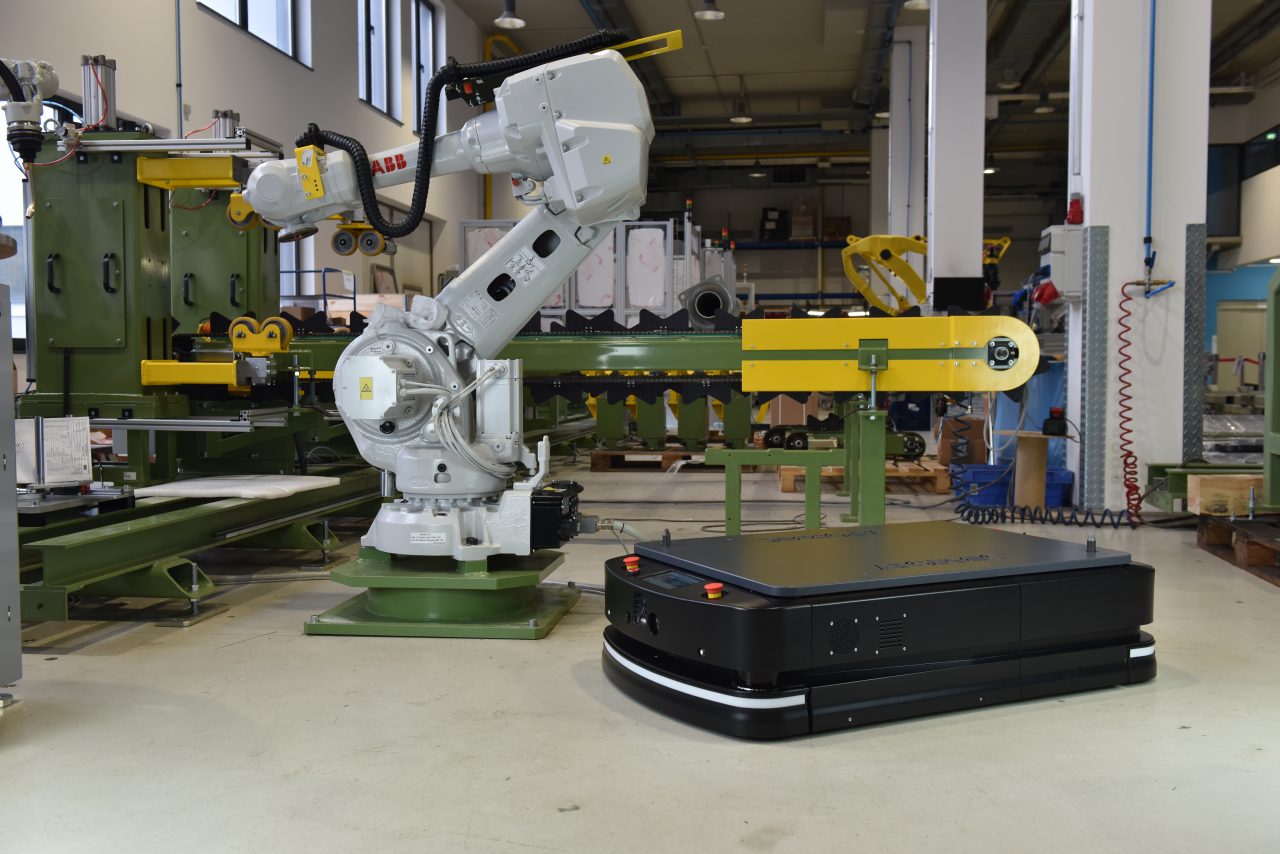
AGVs are ideally designed to reduce the need for manual material handling in warehouses. They are thus used to carry out warehousing tasks traditionally handled by manual forklifts, carts, or human workers, such as transferring loads, moving and stacking pallets, towing heavy loads, completing assemblies, or moving large volumes of goods/materials repetitively. By automating these tasks, AGVs help avoid possible human errors, increase warehouse efficiency, and ensure workplace safety by removing human workers from unsafe or potentially hazardous working conditions.
Note: Even though AGVs include built-in vision cameras, safety scanners, obstacle detection units, and load sensors that prevent collisions, thereby ensuring accurate and safe material handling, their onboard intelligence is minimal. They can detect obstacles in their pathway but cannot navigate around them. So, when encountering an obstacle on their predefined route, they stop to avoid collision and can only resume motion when the obstacle is removed or when they’re reprogrammed to follow another route.
Autonomous Mobile Robots
Autonomous Mobile Robots (AMRs) are software-controlled machines that operate autonomously and are able to navigate independently in uncontrolled environments without direct supervision/intervention from a human operator or the need for preset routes. Instead of relying on magnetic strips, wire guidance sensors, or floor markers (stickers) to move along fixed pathways like the AGVs, AMRs rely on onboard sensor and machine vision technologies, intelligent navigation capabilities, and Artificial Intelligence algorithms to interpret their surroundings, detect and avoid obstacles, dynamically navigate through the warehouse floor, and complete specific tasks.
In essence, AMRs are an improvement in automated guided vehicles. They can navigate autonomously through more flexible routes within a warehouse environment or between facilities using their onboard technologies and without pre-established navigation layouts. They are much more intelligent and can readily adapt to dynamic warehouse environments or changes in their surroundings.
Autonomous Mobile Robots are primarily used in warehouses to perform routine tasks such as transporting materials and goods from point A to point B, counting inventory, sorting items, picking orders, and replenishment tasks. They can also move around a warehouse reading RFID tags or scanning barcodes to track inventory levels. They play a vital role in warehouse automation by significantly enhancing warehouse efficiency, precision, scalability, safety, productivity, and overall operational effectiveness.
Warehouse Cobots
Cobots, commonly known as ‘collaborative robots,’ are advanced industrial robots designed to operate safely alongside humans in a shared workspace.
They incorporate advanced sensors, intelligent navigation capabilities, and robust safety mechanisms, like speed monitoring, collision detection, and force-sensing technologies, enabling them to interact directly with human workers, assisting and complementing their tasks without needing protective barriers. Essentially, these advanced safety features allow the warehouse Cobots to stop or slow down if they come into contact with warehouse personnel or encounter an unexpected obstacle, guaranteeing a safe working environment for humans and robots.
Warehouse Cobots are specifically engineered to relieve human workers from menial, repetitive, laborious, or hazardous tasks while supporting them in their skilled work. They are an invaluable tool for improving the quality and safety of warehousing operations and can be easily integrated into existing warehouse infrastructure to complete multiple complex tasks. They are also less expensive than traditional industrial robots.
Here are some of the tasks carried out by warehouse Cobots:
Picking and Packing: These robots can execute repetitive and time-consuming tasks like picking items from shelves, placing products on a pallet, and packing orders for dispatch. As such, they are used in warehouses for picking and packaging tasks, working alongside human operators to improve speed and accuracy in order fulfillment processes.
Sorting of Goods: They can collaborate with warehouse workers to pick and sort inventory items more efficiently, contributing to timely order fulfillment. This is especially important in distribution centers where products must be classified before dispatch.
Material Handling: Warehouse Cobots can transport containers or carts containing goods and materials from one location to another within the warehouse, relieving human operators of repetitive, labor-intensive material handling duties.
Palletizing: Cobots can work alongside humans, lifting and stacking products or boxes into pallets, thereby enhancing palletization.
Inventory Management: Warehouse Cobots can help ensure accurate inventory management by carrying out regular inventory checks. They can navigate through the warehouse, scan barcodes or read RFID tags, and update the inventory system in real time.
Quality Control: Quality control inspections can be performed using warehouse Cobots equipped with machine vision systems and radar sensors. The Cobots detect product flaws and other irregularities in such applications, ensuring that only high-quality items are shipped to end-users.
Packaging and Repackaging: Warehouse Cobots are capable of labeling, sealing, and boxing products and can, therefore, be used to carry out packaging and repackaging tasks, assisting with preparing products for shipping.
In a nutshell, deploying Cobots for warehouse automation brings about the following benefits:
- Improved workplace safety
- Increased warehouse efficiency
- Enhanced flexibility
- Improved working conditions
- Increased throughput
Warehouse Management Systems and Warehouse Control Systems
Warehouse Management Systems are often integrated with Warehouse Control Systems to optimize and streamline warehouse operations, enabling seamless warehouse automation.
A Warehouse Management System (WMS) is responsible for higher-level warehouse operations such as order management and inventory tracking. In contrast, a Warehouse Control System (WCS) is responsible for the detailed control and coordination of material handling equipment. Integrating the two provides comprehensive visibility into a warehouse’s daily operations, from the moment inventory is received into the warehouse to when it is shipped out.
Use cases of a Warehouse Management System (WMS) in warehouse automation:
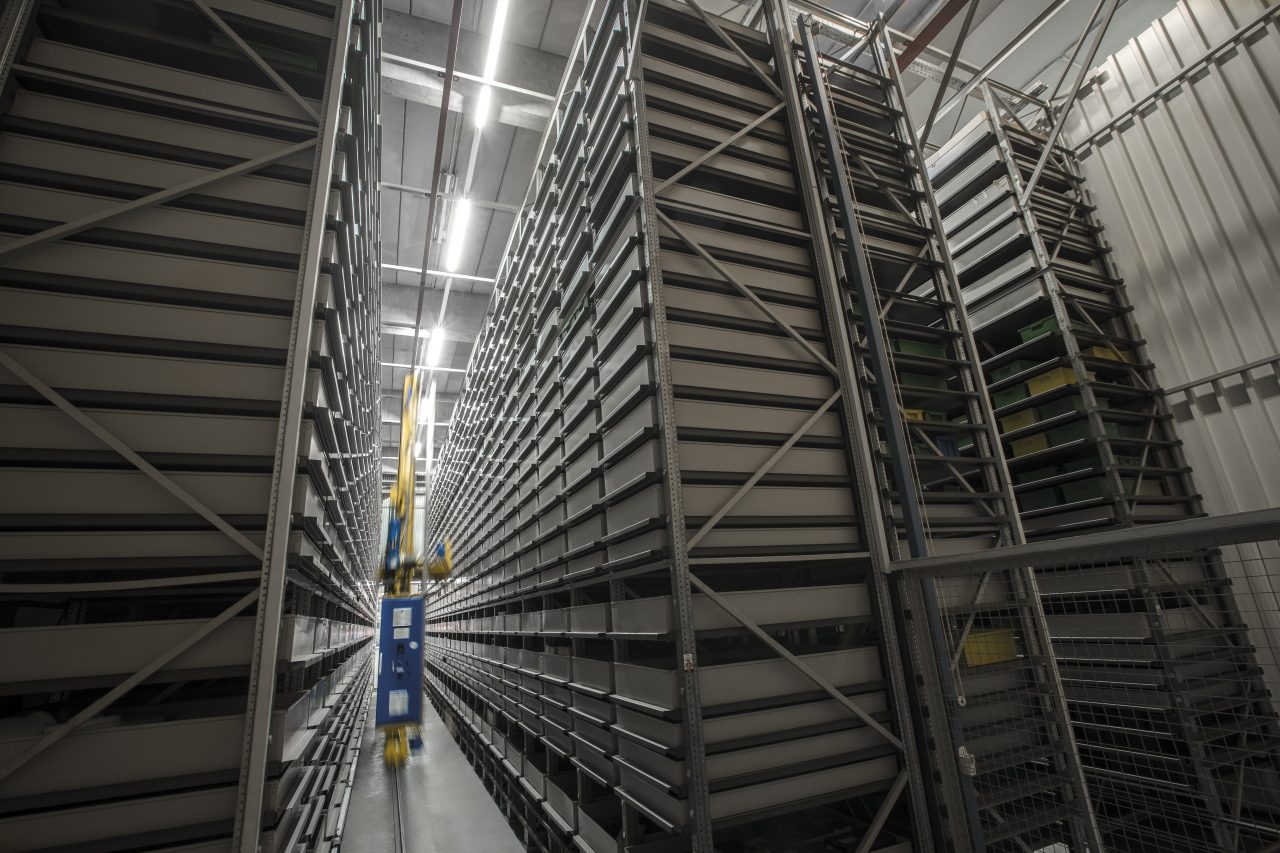
Inventory Control: A WMS can assist in real-time tracking and management of warehouse inventory. It can show the location, status, and quantity of each inventory item within the warehouse at any given time.
Order Processing: Warehouse Management Systems make order fulfillment processes easier and faster by streamlining picking, sorting, packaging, and shipping operations. They also help to organize and prioritize orders, reduce picking errors, and ensure timely delivery of goods.
Space Optimization: A WMS allows space optimization in a warehouse by intelligently organizing inventory items based on essential parameters such as end-user demand, storage requirements, and picking frequency.
Real-time Visibility: Warehouse Management Systems enable warehouse managers to make well-informed decisions and respond promptly to changes in consumer demand or other variables by providing real-time visibility into all warehouse operations.
Integration with Other Systems: You can integrate a WMS with a variety of other digital warehouse automation systems, including ERP (Enterprise Resource Planning) systems, Robotic Process Automation (RPA), Order Management Systems (OMS), and transportation management systems, to provide a continuous flow of information across the supply chain.
Use cases of Warehouse Control Systems in warehouse automation:
Control of Material Handling Equipment: A Warehouse Control System (WCS) deployed in a warehouse facility is in charge of controlling and optimizing the movement of material handling equipment within the warehouse, such as automated conveyors, sorters, automated guided vehicles (AGVs), carousels, palletizing/depalletizing machines, and warehouse collaborative robots, among others.
It also monitors the condition and performance of the material handling equipment in real time, detecting and resolving problems as they arise, thereby reducing operational disruptions and equipment downtime.
Route Optimization Algorithms: The WCS features intelligent algorithms that identify the most effective routes and sequences for transporting products and completing orders, consequently reducing travel time and increasing warehouse throughput.
Task Management: A WCS coordinates and directs order fulfillment tasks like picking and sorting items, packaging products, and shipping goods. It ensures that inventory items are classified into the correct orders and the right products are selected for order processing.
DO Supply Inc. makes no representations as to the completeness, validity, correctness, suitability, or accuracy of any information on this website and will not be liable for any delays, omissions, or errors in this information or any losses, injuries, or damages arising from its display or use. All the information on this website is provided on an "as-is" basis. It is the reader's responsibility to verify their own facts.