Omron CQM1 PLC Overview: Features and Applications

The Omron CQM1 Programmable Logic Controller (PLC) series provides a reliable solution for different industry processes, with various advanced capabilities designed to suit the different manufacturing environments. The CQM1 PLCs are known for their reputation in terms of dependability, efficiency, and versatility. This article provides an understanding of the main features and applications of the Omron CQM1 PLC series. This discussion will cover several aspects, such as Current Consumption, Weight and Dimensions, Transmission Speed, Supply Voltage, Data Memory Capacity, I/O Instructions, Communication, Interrupts, and Programming Logic Language. The CQM1 PLC series enables engineers and technicians to create advanced control systems for different applications, such as manufacturing, packing, and material handling of all industry types. It has a strong hardware design and user-friendly programming capabilities. The CQM1 PLC series offers exceptional performance and versatility for industrial automation solutions globally, thanks to its small size, fast processing capabilities, and effortless integration possibilities.
Current Consumption
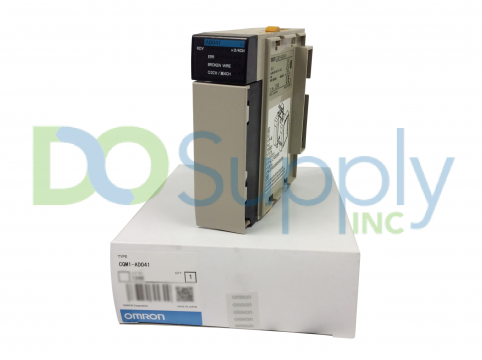
When there is a discussion of the amount of electricity needed for Omron CQM1 Programmable Logic Controllers (PLCs) to function, current consumption is crucial. Current consumption differs across Omron CQM1 PLC modules according to their features and attributes. For example, the CQM1-CPU43-EV1-CE CPU unit ensures energy efficiency and works on a 980 mA current at 5 volts DC. For Example, the CQM1-AD041 Analog Input Unit offers accurate analog signal conversion at low energy usage of 80 milli-amperes at 5 Volts DC. Because of this capability, it is perfect for applications like pressure monitoring sensors and temperature monitoring sensors in industrial processes. Similarly, expanding up to 512 Input/Output points with input and output currents of 7 milli-Amps and 0.5 Amps, respectively, per point, the CQM1-B7A01 Expansion Input/Output Module displays effective current consumption, ensuring trustworthy operation. These PLCs help work with various systems, from manufacturing and assembly lines to logistics and management in different sectors, including automotive, food and beverage, and pharmaceuticals. They do this by optimizing power utilization.
Programming Logic Language
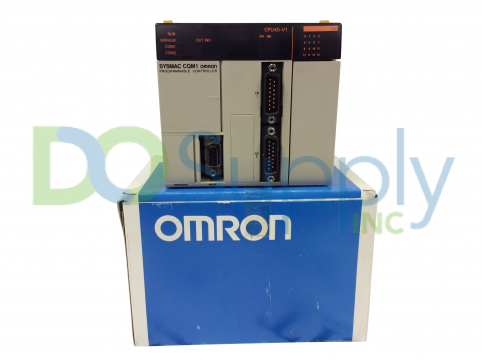
Control logic for automating industrial processes is created using the Programming Logic Language feature in the Omron CQM1 Programmable Logic Controllers (PLCs). It offers an adaptable and dynamic framework for creating, putting into practice, and debugging control algorithms suited to particular applications’ demands. With support for many programming languages, customers may choose the Omron CQM1 PLC module that best fits their application requirements. Different programming languages, which include Ladder logic, Structured Text language, Sequential Function Chart (SFC) language, Instruction List language, and Function Block Diagram (FBD) language, are supported by the CQM1-CPU45-EV1 CPU unit. Because of its adaptability, programmers may choose the language that best suits their style of writing code and the intricacy of the control logic. The ladder diagram programming language, on the other hand, is principally used by the CQM1H-CPU11 PLC. Users acquainted with electrical schematics will find this language straightforward since it uses graphical representations of relay logic circuits. The CQM1H-CPU11 has a memory capacity of 3K words, sufficient for storing intricate ladder logic programs and facilitating effective industrial process management. The Programming Logic Language feature is crucial because it converts control specifications into executable code, making industrial system control and monitoring more accurate. To satisfy a wide range of application requirements in sectors including manufacturing, automotive, and packaging, Omron CQM1 PLCs provide extensive programming tools for setting input/output signals, carrying out logic operations, and managing sophisticated sequence control.
Interrupts
The Omron CQM1 Programmable Logic Controllers (PLCs) are not possible without interrupts. They provide a responsive control mechanism in industrial automation applications and a means of managing time-sensitive events. Interrupts improve the real-time performance and efficiency of PLCs by enabling the processor to halt its ongoing job to address critical events momentarily. The CQM1-B7A13 module, for instance, has three planned interrupt capabilities, which allow the PLC to react quickly to outside events like sensor inputs or communication demands. By programming these interrupts to start certain processes or activities, attending to important duties immediately is possible without interfering with the PLC’s main processing loop. Scheduled interrupts are preferred for high-priority process monitoring, fault detection, and emergency stop handling. Similarly, the CQM1-SRM21-V1 module provides flexibility in event-driven control techniques by supporting both scheduled and external interrupts. While scheduled interrupts allow periodic or time-based activities to be done precisely, external interrupts allow the PLC to respond quickly to external signals or inputs. This functionality is especially helpful in applications like motion control or process synchronization, where timing precision is essential. Interrupts are crucial to Omron CQM1 PLCs because they may lower latency, increase overall performance, and improve system responsiveness. Interrupts allow PLCs to satisfy strict control requirements in different systems such as HVAC, building management systems, and manufacturing to logistics by effectively managing time-critical events.
Communication
The Omron CQM1 PLCs are essential to their operation because of their communications capabilities, which enable smooth data interchange and integration between PLCs, peripheral devices, and supervisory systems. The extensive connection options provided by Omron CQM1 PLCs can incorporate many electrical systems because of different communication protocols and interfaces. For instance, the RS-232C and RS-422A/485 connections on the CQM1-CPU43-EV1-CE CPU unit allow connectivity with other devices, including computers, HMI panels, and other PLCs. These ports provide efficient data sharing and control across dispersed systems by supporting communication protocols such as SYSMAC Link and Host Link. This allows centralized production process monitoring and management from a supervisory control system in industrial applications. Similarly, the CQM1-B7A01 Expansion I/O Module integrates an RS-232C connection to increase communication capabilities inside the automation system. This module improves logistics and warehouse automation systems’ data collecting and tracking capabilities by enabling smooth interaction with gadgets like barcode scanners, printers, or RFID readers. Additionally, the RS-485 interface used by the CQM1-LK501 PLC module allows for high-speed data transfer at up to 187.5k bps. Large-scale automation systems allow reliable communication between PLCs or between PLCs and distant I/O modules. Applications requiring real-time data interchange and coordination, such as process control, material handling, and automobile assembly, benefit from this dependable and effective communication connection.
Input/Output Instructions
A key component of Omron CQM1 Programmable Logic Controllers (PLCs) is its convenient I/O instructions, which provide customers with effective and user-friendly tools for designing input/output processes in industrial automation applications. Engineers may more easily build sophisticated control logic thanks to these instructions, improving the PLCs’ flexibility and usability and speeding up the programming process. For example, 8-digit BCD data may be read from a ten-key input device using the TEN KEY INPUT command. For applications like data entry or parameter setting where numerical input is necessary, this command simplifies the process of entering numerical data into the PLC. In the same way, reading 8-digit hexadecimal data from I/O Units is made easier using the HEXADECIMAL KEY INPUT command. Applications needing hexadecimal input, such as system settings configuration or address entry, may benefit from this instruction. Moreover, the DIGITAL SWITCH command makes reading four or eight-digit BCD data from digital switches easier. This command is helpful when using binary-coded input, like in control panels or operator interfaces. Additionally, data with four or eight digits may be exported to seven-segment displays using the 7-SEGMENT DISPLAY exported command. This instruction is necessary for producing a clear and concise visual representation of data output, which helps display numerical data, such as the working status indication of a machine or process monitoring. For example, the CQM1-ID211 Digital Input Module provides easy-to-use I/O instructions for setting up input signals from different switches or sensors. The CQM1-OC222 Output Module offers practical guidelines for managing output components, including relays, motors, and valves. The CQM1-CPU45-EV1 CPU unit also provides several useful instructions for handling data processing and input/output activities.
Data Memory Capacity
One important aspect of Omron CQM1 PLCs is its data memory capacity, which establishes how much storage should be utilized for storing program data, intermediate values, and other important information in run time. This capacity greatly impacts the PLC system’s performance, scalability, and adaptability. For example, the 32K word data memory of the CQM1-CPU45-EV1 CPU unit is large enough to store large amounts of control logic, variable values, and intermediate outcomes. Because of their enormous capacity, PLCs may be used to operate conveyor systems, sorting systems, and SCADA controls. This allows engineers to create sophisticated control strategies and algorithms. Moreover, using data memory, the CQM1-OC222 Output Module stores output values and control signals for operating external devices like motors, valves, or relays. A memory cassette from the CQM1 PLC series, the Omron CQM1-ME08K, was created to provide easy storage options for Omron PLCs in the CQM1 series. It can store up to 8K words in memory. The CQM1-ME04K memory cassette has a 4K word storage capacity and is configured as read-only memory (ROM).
Supply Voltage
Among the most important aspects of Omron CQM1 PLCs is the supply voltage, which determines how much power the system needs to run correctly. This parameter affects the PLC’s performance, dependability, and compatibility in different industrial processes. One example from this series, which offers versatility in power supply configurations, is the CQM1-B7A01 expansion Input/Output Module, which works best between 12 to 24 volts of Direct Current. Thanks to its voltage range, the module may be incorporated into various systems, including assembly stations, material handling systems, and production lines. Similarly, the CQM1-PR001-E Programming Console runs on a 5-volt DC supply voltage. The console is appropriate for use in power-constrained locations or applications where energy economy is a concern, such as portable or battery-operated control systems, because of its low voltage need, which maximizes energy efficiency and lowers power consumption. Moreover, the 24-volt DC supply voltage required by the CQM1-ID211 Digital Input Module is a typical standard voltage level for industrial control systems. This voltage guarantees efficient working with different field devices and sensors, such as push buttons, proximity sensors, and limit switches in different automation systems.
Transmission Speed
The primary feature of Omron CQM1 PLCs is transmission speed, which affects how well and quickly data is sent between devices in industrial automation systems. This parameter controls the pace of data transmission and enables prompt coordination between different components. For instance, fast data transfer between the controller and other devices is made possible by the high-speed communication modes supported by the CQM1-SRM21-V1 Input/Output Module. This module enables quick information transmissions, making it suitable for real-time control and monitoring applications, including motion control systems or high-speed manufacturing lines. Typical reaction times for normal and high-speed modes are 19.2 ms and 3 ms, respectively. Time-division multiplex transmission is another technique that the CQM1-B7A13 Interface Module uses to provide accurate and dependable data transfer between linked devices. This module guarantees quick and effective communication by optimizing transmission speeds for both regular and high-speed modes, improving the overall functionality of industrial automation systems. Moreover, the CQM1-LK501 PLC Module has a strong RS-485 interface with data transmission speeds of up to 187.5k bps. This module, with a transmission range of up to 200 meters, is ideal for long-distance communication applications, including distributed control systems or remote monitoring applications. Its versatility allows for the building of complicated system designs.
Weight and Dimensions
In industrial settings, the Omron CQM1 PLCs’ weight and dimensions are important factors to consider during system integration, installation, and maintenance. These factors affect the PLC units’ handling, mobility, and physical footprint, affecting their suitability for certain kinds of uses. The CQM1-CPU45-EV1 CPU module, for example, is good for installations with restricted space or weight limitations because of its size of 90 by 100 by 75 millimeters and 200 grams of weight. Due to its lightweight and small form may be easily handled during maintenance and installation, saving time and effort throughout the process. It can also be deployed in areas with limited space, such as control panels or equipment enclosures. The CQM1-AD042 Analog Input Unit guarantees smooth integration into control systems with its space-efficient design and proportions exclusive to the CQM1H Series. This device best fits applications such as process control, monitoring, data collecting, and the DIN Rail mounting option, which helps in maintenance. Moreover, the CQM1-OC222 Output Module’s lightweight design and small size make it an ideal solution for automation systems. This module covers less space and is small, which makes it perfect for space-constrained applications, including robotic cells, packing machines, and conveyor systems.
Conclusion
In conclusion, The Omron CQM1 PLC series is a fundamental aspect of automation, providing a wide range of sophisticated capabilities designed to address the varied requirements of contemporary manufacturing settings. The CQM1 PLC series combines a sturdy physical architecture with easy-to-use programming features, making it a reliable, efficient, and versatile tool for managing and optimizing industrial operations. This article has explored several essential characteristics and uses of the Omron CQM1 PLC series, such as power consumption, programming language, interrupt handling, communication capabilities, user-friendly I/O instructions, data storage capacity, voltage supply, transmission speed, and physical dimensions. Each of these characteristics plays a crucial role in improving the efficiency, expandability, and flexibility of the CQM1 PLC series in various industrial automation applications. The conversation about present-day consumption emphasized the importance of utilizing electricity efficiently to achieve maximum energy efficiency and system functionality. This was demonstrated by examples from several modules, including CPU units, analog input units, and expansion I/O modules. In addition, we delved into the programming logic language feature, highlighting its importance in developing flexible control algorithms that are customized to meet unique application requirements. We included examples that spanned from ladder diagram programming to the support for various programming languages. Interrupts are crucial for ensuring prompt control mechanisms in time-sensitive industrial automation systems. Examples demonstrate how interrupts improve real-time performance and efficiency. The importance of communication capabilities for smooth data exchange and integration between PLCs, peripheral devices, and supervisory systems was emphasized. Examples were provided to demonstrate the support for different communication protocols and interfaces. The effectiveness of convenient I/O instructions in developing input/output processes was explored, with examples illustrating their utility in simplifying chores such as numerical data input and output to devices like seven-segment displays. The Omron CQM1 PLC series is widely regarded as the top choice for industrial automation solutions globally because of its unparalleled performance, versatility, and durability. The extensive array of features and applications guarantees the smooth incorporation and enhancement of industrial activities throughout diverse sectors, encompassing manufacturing, packing, material handling, and more.
DO Supply Inc. makes no representations as to the completeness, validity, correctness, suitability, or accuracy of any information on this website and will not be liable for any delays, omissions, or errors in this information or any losses, injuries, or damages arising from its display or use. All the information on this website is provided on an "as-is" basis. It is the reader's responsibility to verify their own facts.