Advanced Motor Control with SMC Dialog Plus: Why it’s Worth the Investment

The SMC Dialog Plus (Bulletin 150, 150B, and 150R) is an Allen-Bradley product line of microprocessor-based motor controllers that provide intelligent motor control and outstanding performance with innovative control options, advanced motor starting techniques, state-of-the-art motor protection features, easy programmability, and diverse networking capabilities.
The controllers are designed to operate three-phase, squirrel cage AC induction motors rated as follows:
- Current rating: 1 to 1000 Amperes
- Voltage rating: 200 to 480V AC or 200 to 600V AC, with input frequency of 60/50 Hertz (Hz)
Note: Some SMC Dialog Plus controllers accept a 24V DC/AC control power input, while others accept a 100 to 240V AC control input. This depends on the purchased SMC Dialog Plus controller’s catalog number.
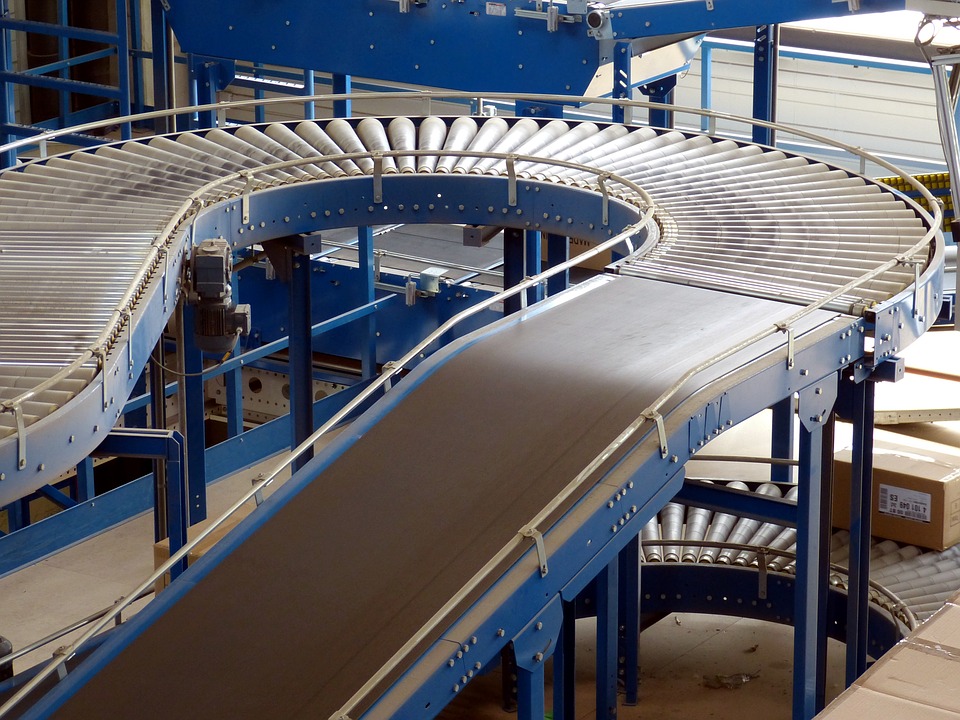
Additionally, SMC Dialog Plus motor controllers are available with a variety of features and control options for controlled starting, slow speed operation, ultra-modern motor braking, pump control, and soft stopping, providing unmatched motor management solutions for an extensive range of industrial applications. Typical applications for these controllers include material handling, conveyor systems, extruders, overhead cranes, rock crushers, lumber and sawmills, centrifugal pumps, ventilators and blowers, compressors, stirrers and mixers, mills and kneaders, and transport systems.
Standard Features
SMC Dialog Plus controllers incorporate the following features as standard:
- A built-in Serial Interface Port: The port permits connection to an optional Bulletin 1201 HIM module or a wide selection of Bulletin 1203 networking and communication modules, including Allen-Bradley Universal Remote I/O, RS-485/422/232-DF1, and DeviceNet modules.
- 16-character, 2-line LCD Display: This is a built-in backlit LCD display that enables parameter identification through lucid and descriptive text. It displays the parameters in a 4-level menu structure for faster access, allowing easier and swift controller setup without the need to refer to a user manual.
- A Five-Button Keypad: This keypad includes five buttons: (i) Select button, (ii) Enter button, (iii) Escape button, (iv) Up Arrow, and (v) Down Arrow. It allows users to program SMC Dialog Plus controllers easily.
- Programmable Auxiliary Contacts: These are three hard contacts. Auxiliary Contacts 1 & 2 can be programmed for Normal or Up-to-Speed. Meanwhile, Auxiliary Contact 3 can be programmed to show fault or normal.
- Integral Electronic Overload Protection: SMC Dialog Plus, motor controllers, achieve motor overload protection electronically using a built-in I2 t overload algorithm.
- Power Metering Capability: SMC Dialog Plus controllers come with the ability to monitor power without requiring additional devices like transducers and power meters. They carry out power metering by monitoring and measuring these electrical parameters:
- Power output in kW (kilowatts)
- Power Factor
- Power Consumption in kWH (kilowatt-hour)
- 3-phase Voltage
- 3-phase Current
- Elapsed time
- Motor Thermal Capacity Usage
- Advanced Starting Modes: SMC Dialog Plus is available with five different motor starting modes as standard. These include:
- Current Limit Motor Start
- Soft Start
- Soft Motor Start with Selectable Kickstart
- Full Voltage Motor Start
- Dual Ramp Motor Start
- Status Indicators: They include status indicators that show Speed, Fault, Ramping, Stopping, and Stopped conditions.
Benefits of SMC Dialog Plus Controllers
Here are some of the reasons why SMC Dialog Plus motor controllers are considered a worthwhile investment.
Outstanding Reliability
SMC Dialog Plus motor controllers are characterized by a compact, solid-state design that features the exceptional reliability and integrity of solid-state electronics for controlling the starting and stopping of three-phase induction AC motors in a smaller footprint, using much fewer components than traditional electro-mechanical motor controllers.
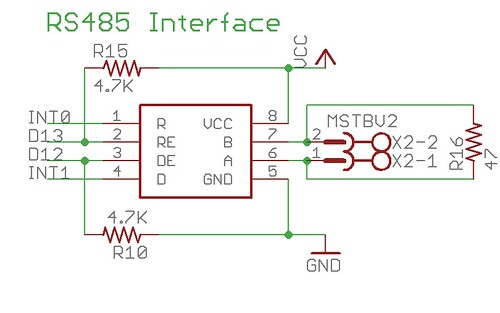
In addition, using compatible Allen-Bradley Bulletin 1203 networking and communication cards, the SMC Dialog Plus motor controllers do offer advanced networking capabilities over an array of industrial communication protocols, including:
- ControlNet
- DH-485
- DeviceNet
- RS-485/422/232 (all DF1 protocols)
- Universal Remote I/O
These advanced and diverse networking capabilities can help increase system reliability by scaling down the overall number of system components and terminal points per control unit.
Application Versatility
All SMC Dialog Plus controller configurations offer five starting modes as standard. This provides ample controller design flexibility to meet almost any application need. The starting modes are:
- Full Voltage Start: In this starting mode, the SMC Dialog Plus controller functions in the same manner as a solid-state contactor, attaining maximum locked rotor torque and inrush current.
The mode provides a ramp time of less than ¼ second and is suitable for across-the-line starting of induction motors.
- Soft Start: In this mode, the initial torque setting given to the induction motor can be adjusted from 0 to 90% of the rotor’s locked torque. This allows for a gradual increase in the voltage applied to the motor in the acceleration period. The acceleration ramp time is user-programmable from 0.0 to 30.0 seconds.
Soft Start mode reduces starting torque surges, thereby providing smooth, step-less acceleration of the connected induction motor whilst also minimizing damage to belts, couplings, and gears. It is the most popular starting mode in general motor control applications.
- Soft Motor Start with Selectable Kickstart: Activating the Selectable Kickstart feature in Soft Start mode provides an additional torque pulse. The Selectable Kickstart is an optional feature that provides a current or torque boost to break away high-friction motor loads that need a high-torque pulse to get into motion. It’s designed to deliver a current pulse that is 550% of the motor’s rated full load current.
Users can modify the Selectable Kickstart time period from 0.0 to 2.0 seconds.
- Current Limit Start: This mode is applied when it’s necessary to limit the inrush current during acceleration. The current limit level can be adjusted by users from 50 to 600% of the motor’s full load ampere rating, while the current limit time is user-programmable from 0.0 to 30.0 seconds.
Note: Current Limit Start mode can also include the Selectable Kickstart feature.
- Dual Ramp Start: This mode lets users pick between two different Soft Start profiles with individually adjustable starting torque settings and ramp times. Users can adjust the starting torque values from 0 to 90% of the rotor’s locked torque and the ramp times from 0.0 to 30.0 seconds.
The dual ramp starting mode is designed for industrial applications with fluctuating motor loads that demand varying starting torque. It’s also suitable for applications with reversing and two-speed requirements.
Enhanced Motor Performance
SMC Dialog Plus motor controllers are available with innovative control (starting and stopping) options that provide enhanced motor performance. These include:
- Soft Stop: This option increases the stopping time of the connected motor to reduce load spillage or shifting. It is intended for applications with frictional loads that need an extensive coast-to-rest.
- Pump Control: This is an interactive control feature designed to minimize fluid surges in pumping applications. It offers closed-loop deceleration and acceleration control of induction motors used to power centrifugal pumps without needing conventional feedback devices.
- SMB (Smart Motor Braking): SMC Dialog Plus motor controllers have an integral microprocessor-controlled braking system that quickly stops the connected induction motor by applying an appropriate amount of braking current. This helps reduce stopping times, consequently improving operation cycle times and increasing system productivity.
- Preset Slow Speed: This control option provides two distinct jog speeds to facilitate system set-up and alignment. It’s useful in general positioning applications that benefit from a slow-speed jog.
- Slow Speed with Braking: This option avails slow set-up speeds and a braking-to-stop function at the end of the operation cycle. It essentially combines the capabilities of the Preset Slow Speed option and SMB Smart Motor Braking.
- Accu-Stop Position Control: This option allows rapid braking from full speed to the predetermined slow speed setting and then gradual braking to a complete stop. It is a cost-effective solution for general-purpose positioning applications.
- Accu-Stop w/ Slow Speed at Motor Starting: This control feature enables the connected induction motor to run at a predetermined slow speed whenever the Slow Speed Motor Start option is selected. This reduces the amount of jogging required to accurately position the motor load.
- Optimized Energy Consumption
SMC Dialog Plus controllers optimize energy consumption using a built-in Energy Saver feature designed for low-load conditions. The feature is typically used to economize energy in industrial applications where the induction motors in use are unloaded or slightly loaded for prolonged time spans.
Once the Energy Saver is enabled, the SMC Dialog Plus controller makes use of its internal feedback system to steadily monitor the applied load, phasing back the supply voltage to the motor any time the motor is vaguely loaded or completely unloaded.
Advanced Diagnostics and Motor Protection
Allen-Bradley SMC Dialog Plus motor controllers offer cutting-edge diagnostic and protective features that significantly enhance system performance, efficiency, and reliability. For instance, the fault diagnostic capabilities integrated into the controllers help users pinpoint an issue for easy troubleshooting and faster re-starting.
Available SMC Dialog Plus motor protection and diagnostic features include:
- Overtemperature Protection: SMC Dialog Plus controllers use internal thermistors to monitor the temperature of the Silicon Controlled Rectifiers (SCRs) in their power section. An overtemperature fault could be an indication of excessive cycling, inadequate ventilation, overloading, or high ambient temperature. This fault can be resolved by reducing the SCR temperature to allowable levels.
- Open Gate: An open gate fault is an indication of improper SCR firing on any of the controller’s power poles, normally due to an open SCR gate. Before an SMC Dialog Plus controller halts operation because of this fault, it will try to start the connected induction motor three times.
- Line Faults: SMC Dialog Plus controllers continuously examine the line conditions of the incoming three-phase voltage for abnormal factors, such as shorted SCR, missing load connection, or power loss.
- Underload Protection: SMC Dialog Plus controllers continually monitor the operating current of connected induction motors, enabling users to deduce detailed information on equipment performance. For example, a sudden decrease in motor current can signal fault conditions like belt breakage, pump cavitation, or component failure.
When sensing a drop in motor current, an SMC Dialog Plus controller can halt motor operation using its underload protection feature.
- Voltage Unbalance Protection: SMC Dialog Plus, motor controllers, detect voltage unbalance by monitoring the magnitudes of the incoming three-phase line voltage along with the rotational correlation of the 3 phases. They then stop motor operation whenever the measured voltage unbalance equals the user-programmed trip level for voltage unbalance. Users can program the trip level setting from 0 to 25% unbalance and delay time from 0.0 to 99.0 seconds.
- Stall Detection and Protection: When an induction motor stalls during startup, it may take the overload protection circuit more than 20 seconds to trip. This can cause the motor to overheat. Hence, quick stall detection is required to reduce the possibility of the motor overheating and allow for quick re-starting once the problem is resolved.
The stall protection feature in SMC Dialog Plus, motor controllers, allows users to adjust the maximum stall delay period from 0.0 to 10.0 seconds. Once the programmed stall delay period has expired, the controller shuts down the motor.
- Jam Detection: A motor jam is normally a sign of a mechanical issue in the motor system. Quick detection helps prevent equipment damage as well as unnecessary production downtime.
The jam detection feature in an SMC Dialog Plus motor controller allows users to specify the jam level setting as a ratio of the motor’s rated full load current. It also lets users adjust the jam detection delay period from 0.0 to 10.0 seconds, preventing nuisance tripping.
- Excessive Motor Starts Per Hour: With SMC Dialog Plus motor controllers, users can program the allowable number of motor starts per hour to a maximum of 99. This helps get rid of motor stress resulting from repeated startups over a short period.
- Overload Protection: SMC Dialog Plus motor controllers incorporate a thermal memory and an integral overload algorithm, features that provide improved motor protection against overload conditions.
- Overvoltage Protection: The overvoltage protection feature integrated in SMC Dialog Plus controllers halts motor operation on detecting a surge in the incoming three-phase line voltage.
- Undervoltage Protection: The undervoltage protection feature incorporated in SMC Dialog Plus controllers halts motor operation on detecting a drop in the incoming three-phase line voltage.
- Enhanced Control
SMC Dialog Plus controllers deliver improved motor control by providing users with the ability to quickly and easily access parameter settings, either locally through the controllers’ inbuilt LCD display or remotely via the built-in serial interface communication port. The controllers are also easy to program with structured, descriptive, application-specific control parameters.
- Prolonged Motor Lifespan
SMC Dialog Plus motor controllers feature a built-in dynamic Phase Rebalance element that compensates for line voltage unbalance by automatically modifying the output voltage to offset the three-phase AC currents being drawn by the connected induction motor.
Achieving phase rebalance helps extend the service life of connected AC induction motors. This is because a supply voltage unbalance as low as 4% can bring about a 20% current unbalance. Such an imbalance can cause a 25% rise in motor temperature, often leading to premature component or motor failure.
In addition, SMC Dialog Plus motor controllers offer controlled motor starting features like soft start, current limit motor start, and soft start with selectable kickstart. This helps reduce wear on motor bearings by providing a smooth acceleration ramp, consequently increasing the lifespan of the motor.
- Reduced Maintenance Costs
SMC Dialog Plus controllers provide solid-state starting induction motors powering various industrial machinery and equipment. This starting technique allows for smooth acceleration without the chattering, arcing, or vibration issues associated with traditional electromechanical motor starters. The result is less wear and tear on moving machinery parts such as bearings, belts, gearboxes, and chains, which translates to reduced maintenance costs.
DO Supply Inc. makes no representations as to the completeness, validity, correctness, suitability, or accuracy of any information on this website and will not be liable for any delays, omissions, or errors in this information or any losses, injuries, or damages arising from its display or use. All the information on this website is provided on an "as-is" basis. It is the reader's responsibility to verify their own facts.