How PLC Manufacturers Balance Innovation with Backward Compatibility
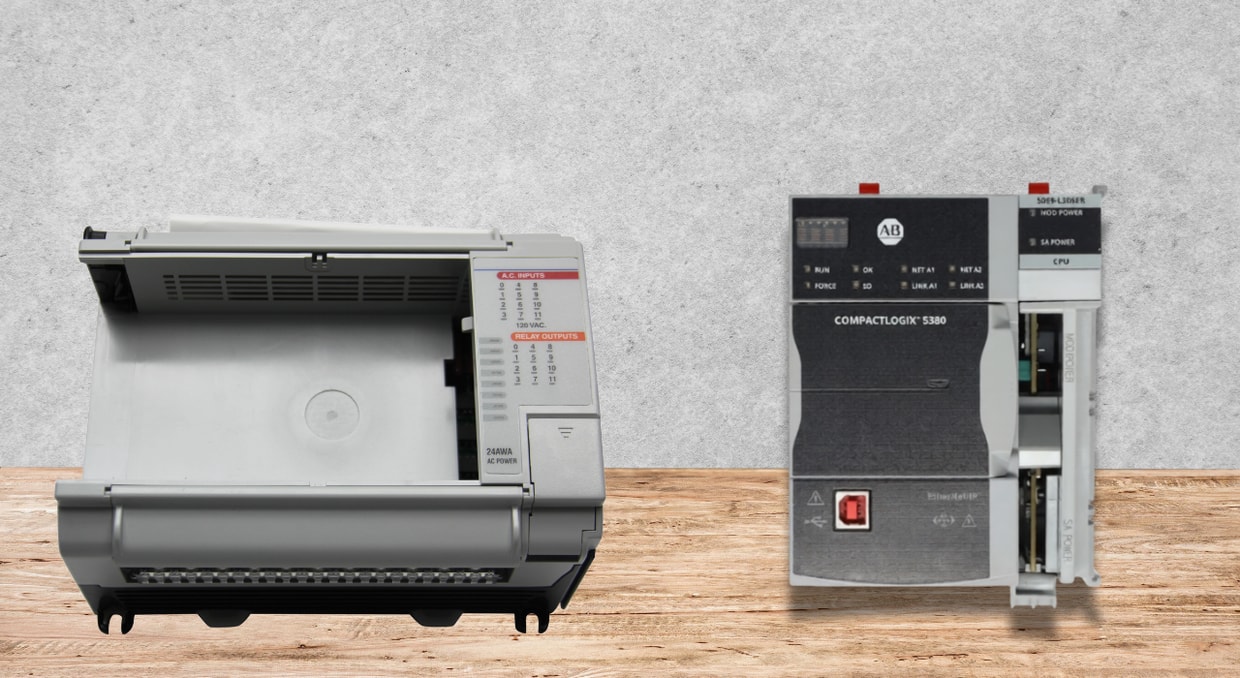
Modernizing industrial automation requires balancing technological innovations with operational continuity. Critical infrastructure — including water treatment/waste management facilities, oil refineries, electricity-generating plants, pharmaceutical production lines, and manufacturing plants — continues to rely on legacy programmable logic controllers, often in service for 20 to 30 years. Unlike the rapid turnover and short lifetimes of consumer electronics, PLC-based industrial control systems prioritize deterministic execution, environmental and operational resilience, and structural longevity for multi-decade stability. This creates a unique engineering challenge for PLC manufacturers, who must deliver technical enhancements in processing power, connectivity, data analytics, and cybersecurity, while maintaining strict backward compatibility with decades-old PLC hardware and firmware.
Industrial automation infrastructure, including PLC control systems, is inherently capital-intensive and operationally sensitive, with minor adjustments to memory structure or timing behavior that can disrupt safety interlocks, process regulation loops, and coordinated motion control. This can compromise the integrity of safety-critical, real-time operations. To ensure long-term sustainability, PLC manufacturers must facilitate seamless modernization of decades-old PLC controller platforms by enabling innovation and technical upgrades while preserving legacy engineering investments, such as existing functional logic and configurations. This article explores how PLC manufacturers achieve this balance through modular PLC hardware, deterministic runtime replication, architectural abstraction, cybersecurity layering, protocol bridging, virtualization, digital validation frameworks, and lifecycle governance.
Strategies PLC Manufacturers Use to Balance Innovation with Backward Compatibility
In the industrial automation sector, system reliability and operational stability are prioritized over novelty to prevent safety-critical failures and costly production disruptions. This requires PLC manufacturers to maintain strict, deterministic behavior even as they integrate advanced multi-core processors and high-speed communication subsystems. For instance, in motion control applications, a variation of only a few seconds in scan-cycle timing can disrupt synchronization of drive axes or degrade the closed-loop control feedback.
While modern PLC controllers integrate gigabit Ethernet interfaces, increased RAM capacity, and multi-core architectures to handle complex, data-driven control tasks, PLC manufacturers ensure determinism by leveraging hard real-time operating systems (RTOSs) that preserve legacy execution semantics. They also implement function schedulers to manage priority-based hierarchies, mirror legacy performance, execute fixed scan intervals for deterministic timing, and use execution governors to prevent uncontrolled concurrency. The paradox is in ensuring that silicon-level enhancements of the PLC controller do not alter determinism at the application level. PLC manufacturers often resolve this by compartmentalizing advanced functions into parallel execution segments, while maintaining legacy functions within dedicated, real-time CPU cores.
Unified Engineering Environments
Long-term compatibility of PLCs and other industrial automation systems requires strategic software migration and regular patches, bridging multi-decade control logic with modern, supported programming platforms. To achieve this, PLC manufacturers create unified engineering and design software platforms that can interpret legacy project archives and compile them for next-generation PLC controllers without manual rebuilding. Backward-readable database schemas enable the continued preservation of legacy configuration metadata across platform upgrades.
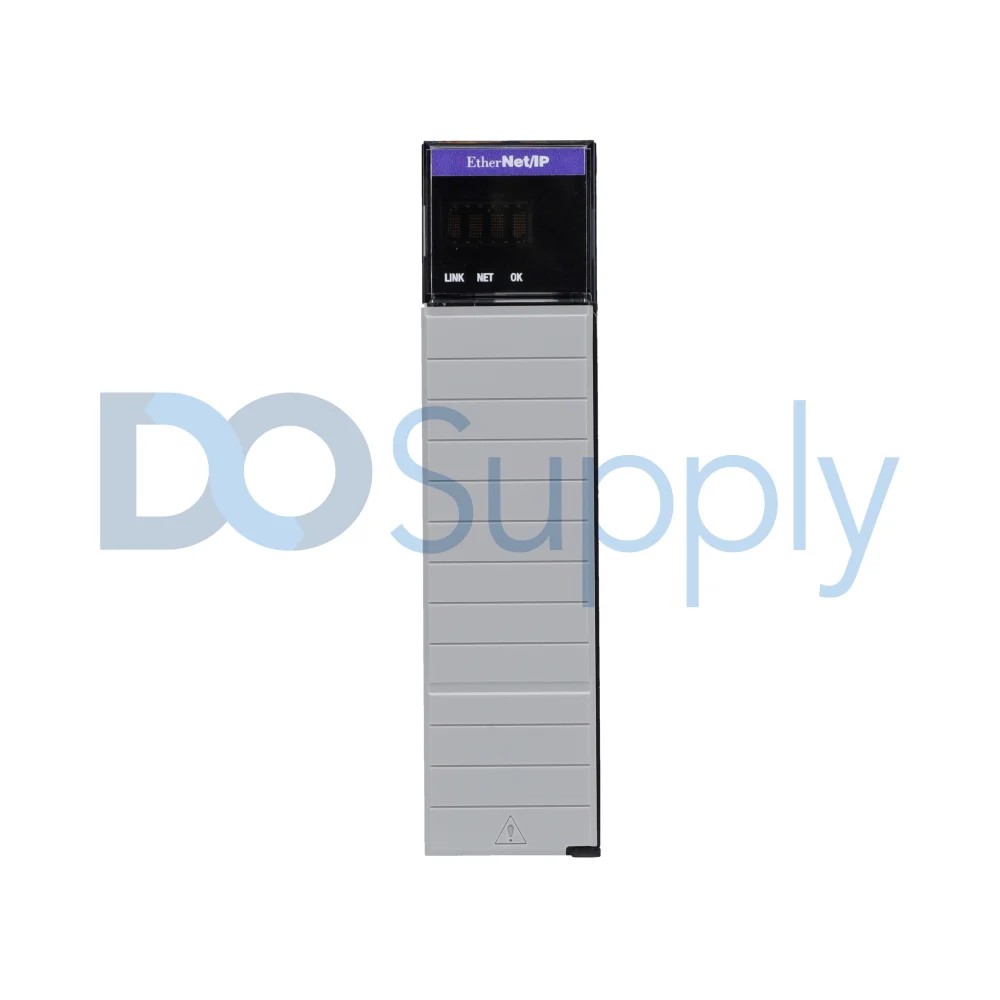
Available PLC software migration engines perform automated instruction mapping, replacing deprecated opcodes with compatible alternatives while preserving logic integrity. Compatibility libraries mimic legacy task block behavior, ensuring consistent execution responses. PLC manufacturers minimize retraining and protect intellectual property enclosed in legacy automation codebases through consolidated development ecosystems.
Hardware Encapsulation and Modular Architecture
Industrial control systems are long-term capital investments, with core automation infrastructure—including power distribution rails, I/O modules, terminal blocks, and field wiring—remaining in service for decades. PLC manufacturers help reduce upgrade-related production disruptions by creating modular backplane architectures that allow upgrades of legacy processors without rewiring existing field I/O topologies. Using firmware-based address mapping and pin-compatible CPUs helps maintain seamless continuity between modern and legacy I/O modules. Mapping legacy I/O modules onto new, higher-performance PLC processors ensures a stable logical slot address even as internal bus bandwidth increases. With hardware encapsulation, PLC manufacturers can offer increased processing and computational capabilities while preserving existing field I/O wiring and hardware configurations.
Communication Protocols Bridging
Industrial networks comprise a variety of devices spanning multiple generations of technology. This often requires integrating legacy devices that communicate via serial-based fieldbus systems with modern data analytics platforms that rely on cloud APIs and Ethernet-based protocols. PLC manufacturers embed multi-protocol stacks into the PLC firmware to accommodate diverse communication configurations. Dual-stack networking frameworks allow concurrent, secure operation of serial or fieldbus protocols and modern, high-speed industrial networks. PLCs with embedded multi-protocol firmware also utilize shared memory buffers to coordinate high-speed data exchange among different protocol engines, ensuring real-time consistency. Essentially, built-in protocol bridging allows legacy modules to integrate seamlessly into modern PLC controller platforms; it facilitates the continued use of decades-old devices while providing the necessary data conversion for real-time, Ethernet-based control networks.
Deterministic Runtime Replication
Backward compatibility necessitates accurate behavioral equivalence across different hardware generations. Despite significant improvements in processor performance, PLC manufacturers deploy deterministic scheduling kernels and artificial timing governors that duplicate historical scan-cycle characteristics of legacy processors. Interrupt servicing designs are used to replicate established priority chains, while watchdog timers are configured to replicate legacy timeout limits. Through this approach, the order of task execution remains consistent even in modern multi-core processor architectures. The deterministic safeguards ensure that already validated control algorithms continue to function the same after PLC hardware upgrades.
Instruction Set Preservation
Legacy control applications require deterministic instruction libraries created for earlier PLC processor models. PLC manufacturers enforce runtime and firmware-level instructions to avoid software obsolescence. This is accomplished through integrated microcode abstraction layers that transform legacy opcodes into modern functional primitives without redesigning application logic. PLC manufacturers maintain backward opcode compatibility within firmware kernels, rather than eliminating deprecated instructions, ensuring operability across generations.
Obsolete opcodes are dynamically assigned using runtime interpretation engines derived from intermediate representation layers in enhanced controller platforms. To transform legacy instruction blocks into enhanced native machine code during execution, while maintaining deterministic I/O synchronization and scan cycles, certain high-performance systems integrate just-in-time (JIT) compilation. Compatibility validation mechanisms additionally verify stack integrity, memory alignment, and register distribution to prevent migration errors. PLC manufacturers facilitate seamless controllers while preserving lasting operational continuity and industrial process stability, by maintaining execution-determinism and eliminating recompilation failures
Memory Map Continuity
Early-generation programmable controllers used fixed memory tables that pre-allocated address spaces for internal flags, counters, timers, data registers, and discrete I/O. These fixed allocation schemes were closely linked to application logic, making code restructuring or system upgrades error-prone and labor-intensive. PLC manufacturers deploy memory virtualization layers that isolate logical address references from physical memory structures to guarantee backward compatibility. Logical address translation tables adaptively map legacy memory offsets to dynamically allocated or modern segmented memory, without modifying the application’s source code. To avoid displacement errors in secondary addressing processes, PLC manufacturers preserve static data distribution patterns, including pointer relationships and fixed register indexing.
Advanced PLC controllers integrate predictable memory management mechanisms and memory protection units (MPUS) that ensure consistent scan-cycle timing regardless of underlying architectural changes. Data-type preservation, stack integrity checks, and buffer alignment further guarantee computational consistency. By guaranteeing memory map integrity across hardware generations, PLC manufacturers enable smooth migration between controller systems, preventing unintended data corruption and subtle logic faults while maintaining predictable control behavior.
Cybersecurity Modernization
Increasing connectivity continues to expose legacy industrial control systems to present-day cybersecurity threats, making them more susceptible to data breaches and operational disruptions. Adherence to industrial cybersecurity guidelines requires secure-by-design device development lifecycles and continuous vulnerability management operations. PLC manufacturers are increasingly incorporating hardware root-of-trust components, multi-factor authentication mechanisms, encrypted, signed firmware validation, and encrypted communication channels into new PLC hardware to ensure secure startup and runtime integrity. Most modern PLCs use phased security activation configurations that preserve communication with legacy controllers during the transition. These security improvements are layered without interfering with established, core industrial control network structures.
Edge Computing Integration
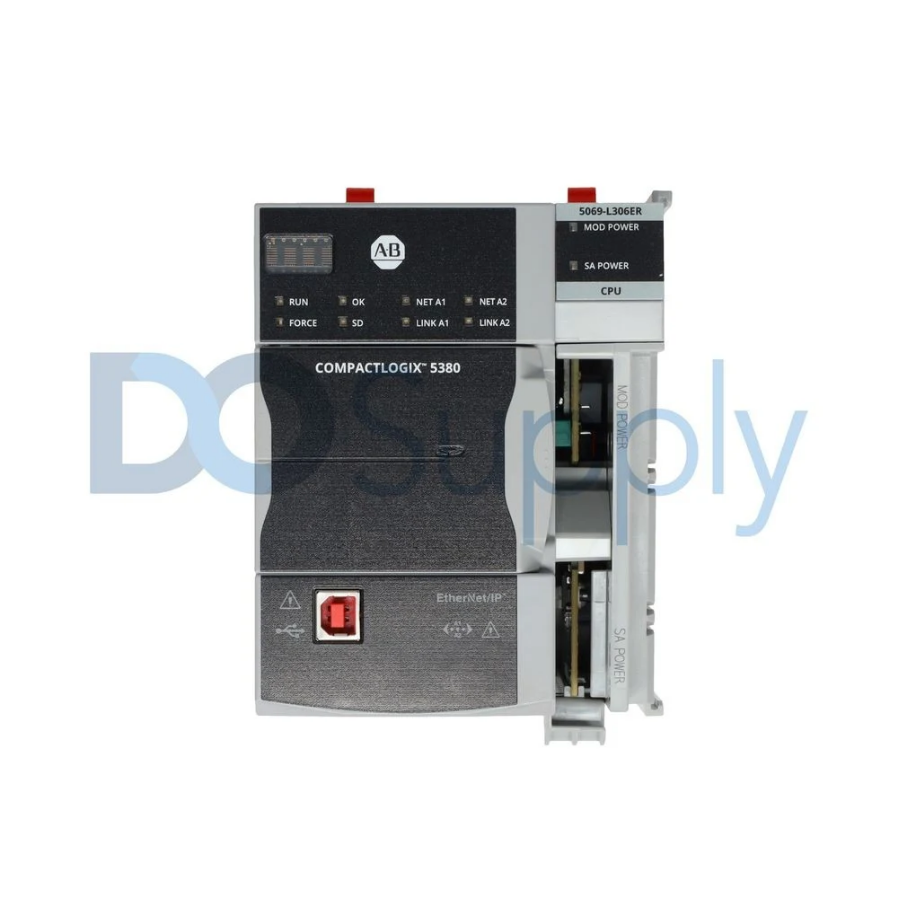
Edge analytics improves anomaly detection capabilities, energy optimization, and predictive maintenance. PLC manufacturers incorporate secondary subsystems capable of executing containerized workloads alongside predictable control functions. Real-time partitions separate non-deterministic analytics from time-critical execution tasks. Resource allocation protocols avert interference between data processing and control loops. Edge integration illustrates how PLC manufacturers extend capabilities while preserving predictable execution guarantees.
Open Standards and Interoperability
Deterministic cross-platform compatibility across diverse automation ecosystems is a requirement in the global manufacturing setting. PLC manufacturers deploy standardized communication systems such as OPC UA information architectures and IEC 61131-3 programming frameworks to facilitate system integration and vendor-neutral data exchange. These open standards facilitate smooth integration between enterprise platforms, edge devices, SCADA systems, and controllers. Distributed automation standards promote architectural modernization. To protect deprecated codebases, PLC manufacturers conserve compatibility with established structured text paradigms, function block, and ladder logic. Dual-stack communication engines and backward protocol support ensure integration with proprietary fieldbus systems. PLC manufacturers maintain ecosystem compatibility without compromising long-term deployment stability or predictable control performance by preserving a balance between backward compatibility and openness.
Virtualization and Legacy Emulation
Virtualization technology facilitates runtime abstraction, independent of physical hardware limitations. PLC manufacturers utilize containerized runtime settings that emulate legacy controllers on contemporary processing platforms. Hardware abstraction layers preserve binary compatibility. Legacy firmware executes within secure virtual partitions, maintaining communication timing and identical I/O behavior. Virtualization separates hardware obsolescence from application longevity.
Lifecycle Engineering
To ensure version reproducibility and binary traceability for rollback scenarios and field replacements, PLC manufacturers preserve secure artifact repositories. Sustained spare part positioning is facilitated by controlled, certified refurbishment channels, last-time-buy programs, and component obsolescence approaches. Collaboration standards and diagnostic tooling integrated with original manufacturing specifications are maintained by repair depots. Migration guidance, end-of-life notifications, and transparent lifecycle roadmaps strengthen customer confidence in long-term operational continuity and backward compatibility commitments.
Digital Twin Migration Validation
For controller upgrade initiates, digital twin simulation systems provide reliable pre-deployment validation. PLC manufacturers incorporate enhanced simulation settings that can emulate task-scheduling behavior, interrupt handling, scan-cycle timing, network latency, and real-time I/O states. These virtualization settings simulate both firmware execution kernels and hardware abstraction layers, guaranteeing that obsolete application logic is evaluated under conditions that closely resemble physical plant functions.
Enhanced digital twin frameworks integrate modeling of the communication stack for industrial protocols, facilitating synchronization precision, jitter tolerance, and verification of mm packet timing. To test closed-loop functionality under dynamic load states, PLC manufacturers deploy co-simulation capabilities that connect control algorithms with process, electrical, and mechanical models. To detect compatibility issues, timing deviations, or memory conflicts before hardware deployment, engineers execute stress simulations, fault-injection analyses, and migration test cases. PLC manufacturers minimize unplanned downtime, reduce operational risk, and establish a controlled transition route between next-generation platforms and legacy control architectures by facilitating rollback strategies and predictive validation.
IT and OT Convergence
Industrial digital transformation demands tight integration between enterprise IT infrastructure and operational technology (OT) to ensure reliable performance. PLC manufacturers design isolated communication connectors that interface real-time control platforms with MES, ERP, and cloud-based analytics systems. While they maintain scan-cycle determinism, these connectors implement standard conversion between IT-standard communication stacks and industrial fieldbus networks (such as Modbus TCP, PROFINET, and EtherNet/IP).
To mitigate cyber threats, PLC manufacturers use defense-in-depth architectures featuring TLS-encrypted tunneling, deep packet inspection, stateful firewalls, industrial DMZs, and VLAN-based network segmentation. Legacy subsystems are often secured through external zero-trust authentication platforms and role-based access models. They also ensure operational continuity and minimize attack surfaces. Compatibility middleware protects time-critical control functions from interference by non-synchronous IT data requests. By deploying buffered data brokers and edge computing nodes, PLC manufacturers isolate enterprise polling cycles from high-frequency I/O operations. In essence, PLC manufacturers enhance digital transformation through precisely engineered IT/OT convergence approaches while maintaining overall process reliability, latency constraints, and control-loop stability.
Conclusion
One of the most technically exacting engineering challenges in the industrial automation sector is balancing innovation with backward compatibility. PLC manufacturers maintain long-term system reliability while introducing innovative features and advanced capabilities through digital twin validation, lifecycle control, virtualization frameworks, protocol bridging, modular hardware encapsulation, and deterministic runtime replication. Unlike the rapid turnover and disruptive models in consumer electronics, innovations in the industrial automation sector must prioritize operational continuity and multi-decade system stability. This is achieved through carefully designed abstraction layers that ensure validated control algorithms remain intact after hardware migration.
Leading PLC manufacturers guarantee that modernization continues to strengthen functional resilience by treating backward compatibility as a key design principle rather than a limitation. As factories advance and industry 4.0 initiatives shift towards autonomous operations, the long-term success of PLC manufacturers depends on their capacity to integrate cybersecurity, advanced connectivity, and intelligence while preserving the deterministic reliability and operational resilience of legacy industrial control systems.
Here at DO Supply, we support both current and legacy PLC systems by supplying both old and new hardware from popular brands, as well as parts to keep them running strong. With legacy parts becoming increasingly difficult to find, we step in and offer our repair service to keep your equipment running as it should. If you’re interested in seeing if a new PLC system would work with your infrastructure, give us a call today, and we can make sure you are set up for success.
DO Supply Inc. makes no representations as to the completeness, validity, correctness, suitability, or accuracy of any information on this website and will not be liable for any delays, omissions, or errors in this information or any losses, injuries, or damages arising from its display or use. All the information on this website is provided on an "as-is" basis. It is the reader's responsibility to verify their own facts.