How PowerFlex Drives Handle Regenerative Loads
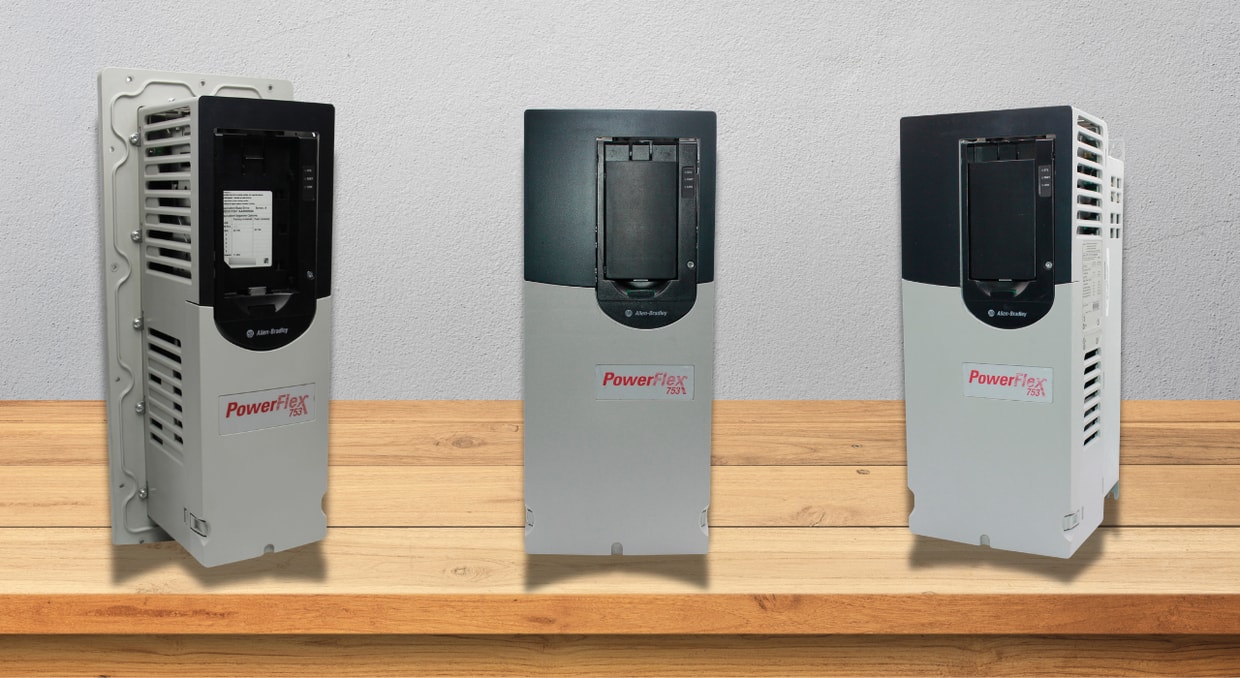
DC Drive regen technology isn’t anything new. In fact, they’ve been around since the late 1800s and have been evolving to make industrial systems more efficient. In Rockwell Automation’s PowerFlex lineup, regeneration can be handled through several different architectures, including active front end systems, common-bus systems, regenerative DC drives, and medium-voltage regenerative drives. Today, this lineup extends its regenerative technology to the PowerFlex 755TR, PowerFlex 755TM, PowerFlex 755TL, PowerFlex 7000, PowerFlex DC, and the PowerFlex 700AFE.
Why Regeneration Matters
To understand how a PowerFlex drive handles regenerative loads, it’s best to start at the drive’s front end. In a traditional AC drive with a passive diode front end, incoming AC power is rectified into DC power before the drive inverts it back into controlled AC power for the motor. Under normal motoring operation, that power path is one-directional from the line, through the drive, and out to the motor. When the motor regenerates, energy can flow back into the drive’s DC bus, but the passive front end does not provide a controlled path back to the AC line.
Because of this, when a load drives the motor (such as a hoist or downhill conveyor) or a motor brakes, that energy is wasted either as heat from braking resistors or through mechanical brakes. This often requires additional hardware and cooling to compensate for the increased heat and stress. In the worst-case scenario, the drive may also fault due to an overvoltage condition if the energy from movement or gravity becomes excessive.
Inside Rockwell Automation’s Active Front End
To combat energy loss and optimize drive efficiency, Rockwell Automation developed its active front end technology. An active front end replaces the simpler, passive diode rectifier with fully controlled insulated-gate bipolar transistors (IGBTs). This allows energy to flow in both directions. The motor, driven by the load, can now act as a generator, supplying energy that would otherwise be wasted as heat back to the AC line/facility electrical system.
Active front end technology also improves how the drive interacts with incoming power. Because the front end is actively controlled, it can reduce input harmonics and help maintain a strong power factor across changing motor speeds and load conditions. In Rockwell Automation’s own comparison, a PowerFlex 700AFE shows typical current distortion of 3–5% ITHD, compared to 30–50% ITHD for a non-regenerative 6-pulse converter with a DC choke. The result is a PowerFlex drive system that is better suited for regenerative loads, energy recovery, and applications where power quality matters.
Regeneration in PowerFlex DC Drives
While active front end technology is one way that modern PowerFlex drives handle regenerative energy, it isn’t the only path Rockwell Automation took. The PowerFlex DC drives are also available in regenerative configurations, enabling use of this technology in DC applications.
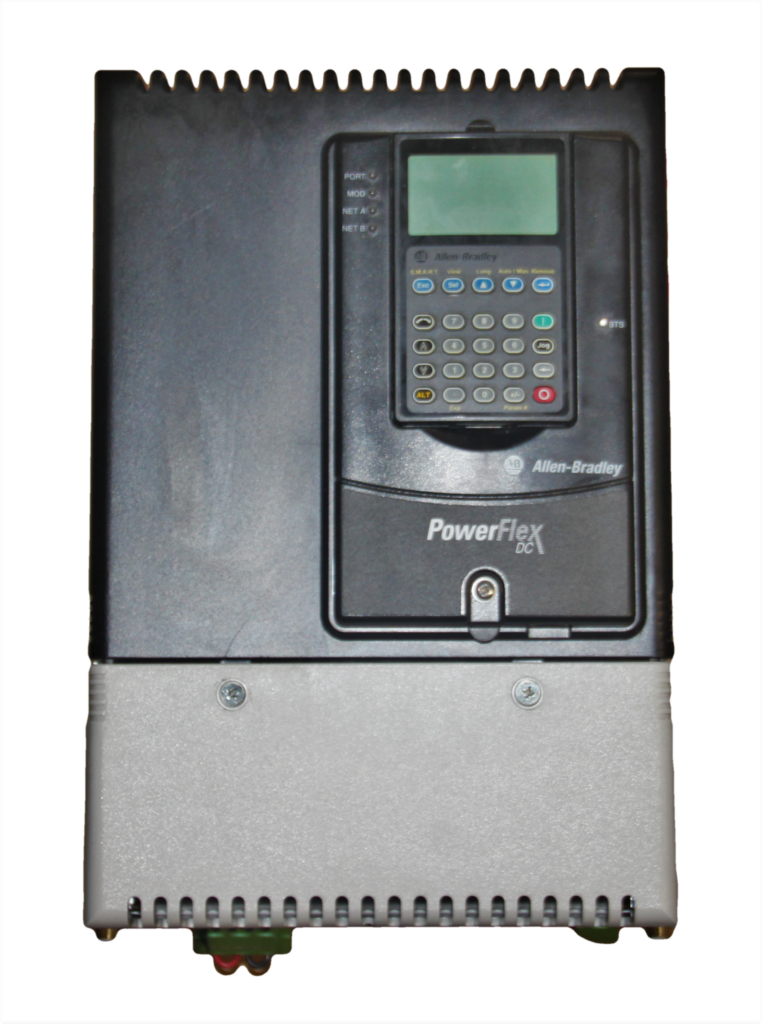
This matters because many older industrial systems still rely on DC motors. Cranes, hoists, elevators, winders, unwinders, test stands, and heavy process equipment often use DC drives for their robust torque control and smooth speed regulation. On top of that, these applications are the ideal place for regenerative technology. A hoist lowering a load or an unwinder being pulled by a process line may spend a meaningful amount of time with the motor acting like a generator.
Non-regenerative DC PowerFlex drives are usually two-quadrant, allowing the motor to run in one direction with limited braking capability. A four-quadrant drive enables bidirectional motor control and regenerative capability. Rockwell’s support material identifies the 20P4xxx PowerFlex DC drives as 4-quadrant, regenerative, and reversing, whereas the 20P2xxx indicates a 2-quadrant drive.
What Sets Them Apart from AFE Drives?
A regenerative-capable AC and DC PowerFlex drive are two different architectures that share a similar idea. An AFE-based PowerFlex system primarily manages power flow between the incoming AC line and the drives’ DC bus. When the connected motor regenerates, the active front end gives that energy a controlled path back to the AC supply.
On the other hand, a PowerFlex DC drive differs in that it controls a DC motor directly. Instead of using an inverter to synthesize AC output for an AC motor, the drive regulates the motor’s armature and field. In regenerative configurations, this allows the drive to control motoring and braking energy directly in the DC motor circuit.
AC PowerFlex Drives Built for Regeneration
Most PowerFlex drives do not offer regeneration, making AFE an option reserved for Rockwell’s premium PowerFlex lines.
PowerFlex 700AFE
The PowerFlex 700AFE is a legacy platform utilizing Rockwell’s AFE technology. This drive includes a regenerative DC bus supply with a PWM-controlled IGBT converter, enabling bidirectional power flow to the AC line. This provides a list of optimizations, such as reduced heat and harmonics, and improved power factor.
PowerFlex 755TR
The PowerFlex 755TR is part of the updated PowerFlex 755T series featuring Total FORCE technology. These drives are designed around regeneration and low harmonics, making them a top contender for applications where braking energy is produced often enough that burning it through resistors would waste power, add heat, and increase maintenance. Rockwell lists the PowerFlex 755TR power range as 10 to 6,000 HP (7.5 to 4,500 kW).
PowerFlex 755TL
While the PowerFlex 755TL has regenerative capabilities, it is not as aggressive as the 755TR, as the TL’s main focus is harmonic mitigation and power factor correction. It fits in applications where power quality is the biggest concern, and regeneration is more of a nice-to-have.
PowerFlex 755TM
The PowerFlex 755TM differs from most of the lineup in that it is a modular common-bus system rather than a single drive. In a typical standalone AC drive, each drive has its own input section, DC bus, inverter, and motor output. A 755TM system separates those functions so multiple inverter sections can share one common DC bus.
In this configuration, a PowerFlex 755TM converts AC power to DC and energizes its DC bus, allowing common-bus inverters to use that power to drive multiple individual motors.
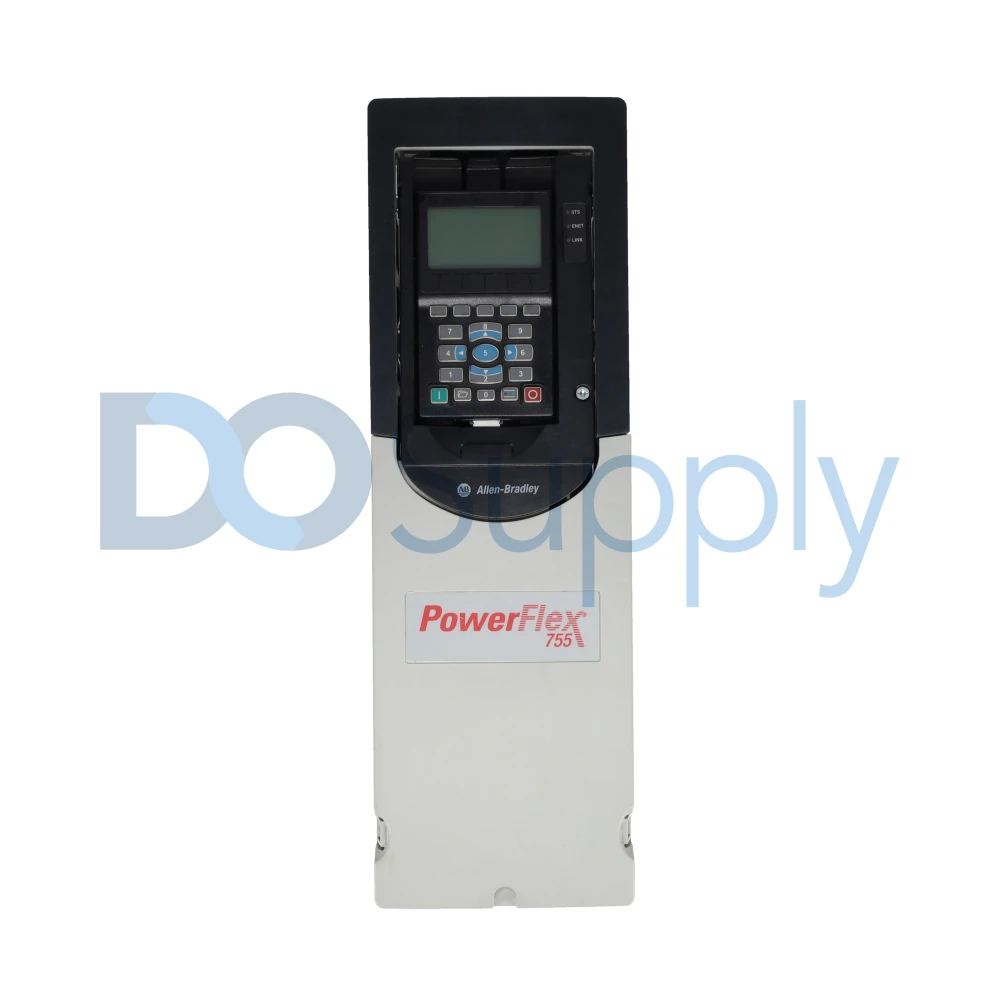
Regeneration-wise, if one motor is braking or being overpowered by the load, it can feed energy back into the shared DC bus. This energy is then available immediately for other motors to use or sent back to the incoming line if that built-up energy is excessive.
PowerFlex 7000
Stepping up to medium voltage drives, the PowerFlex 7000 is a special-purpose drive designed for regenerative applications. These PowerFlex drives are rated from 200 to 34,000 HP (150 to 25,350 kW) and from 2.4 to 6.6 kV AC. They are designed for demanding industrial loads such as cranes, hoists, marine systems, or conveyors.
The PowerFlex 7000 also comes in an ArcShield configuration, with Rockwell touting it as the first arc-resistant medium-voltage drive with full regeneration capabilities. It provides an arc-fault rating of up to 50 kA. It meets Type 2B accessibility protection standards, helping protect personnel at the front, side, and rear of the enclosure, even when the low-voltage control door is open for maintenance.
Where Regenerative PowerFlex Drives Make Sense
Finding applications where these drives fit is quite easy. Anywhere where braking energy is frequent, heavy, or unavoidable. If a motor only needs to slow down occasionally, a standard drive with dynamic braking may be sufficient. But when the machine regularly pushes energy back into the motor, that energy becomes part of the design problem.
Cranes, Hoists, and Elevators
These applications all share the common theme of picking up a load and lowering it back down. A motor is used to lift the load while gravity does most, if not all, of the work to lower it back down. If the drive is non-regenerative, the excess energy generated as gravity does work on the motor will be dissipated as heat via braking resistors or mechanical braking. A regenerative drive will resupply the electrical system with that energy.
High Inertia Machines
High inertia machines are centrifuges, large fans, flywheels, or other similar loads that don’t appreciate being stopped so quickly. If the drive commands a fast deceleration, the spinning mass can push energy back toward the drive. For occasional stops, a resistor may be fine, but regeneration is preferable for frequent deceleration cycles.
Common-Bus Systems
Multi-drive machines are another strong fit for regeneration. With one motor, a heavy load can be braked, sending the regenerated energy back to the common DC bus for use by another accelerating motor. This creates a system in which many motors could contribute to regeneration, resulting in an energy-efficient setup.
Final Thoughts
Regenerative loads may not always be obvious at first, but when they are part of normal operation, they are worth designing around. Rockwell understood this and designed a range of PowerFlex drives to further optimize an already energy-efficient system. For applications where regeneration is part of normal operation, Rockwell offers more specialized solutions. The PowerFlex 755TR is the more direct low-voltage regenerative drive option, while the PowerFlex 755TM makes sense for common-bus systems where multiple drives can share energy across a DC bus. Regenerative PowerFlex DC drives remain useful for DC motor applications, and the PowerFlex 7000 brings regeneration into larger medium-voltage systems. If you would like to learn more about PowerFlex drives, we have an article highlighting their uses in conveyor systems here!
Choosing the right PowerFlex drive for a regenerative load depends on more than voltage and horsepower. The braking cycle, load inertia, duty cycle, motor type, enclosure requirements, and existing drive architecture all matter. So whether you are sourcing regenerative drives to make your process more efficient or want to have your old failed drive repaired or replaced, we at DO Supply can help! We carry a wide range of Allen-Bradley PowerFlex drives, accessories, and even hard-to-find models. We also offer repair services and a 2-year warranty to help keep your equipment moving with less downtime. Contact us today to find the right PowerFlex drive solution for your application.
DO Supply Inc. makes no representations as to the completeness, validity, correctness, suitability, or accuracy of any information on this website and will not be liable for any delays, omissions, or errors in this information or any losses, injuries, or damages arising from its display or use. All the information on this website is provided on an "as-is" basis. It is the reader's responsibility to verify their own facts.