How to Choose the Right PowerFlex Drive for Conveyor Systems
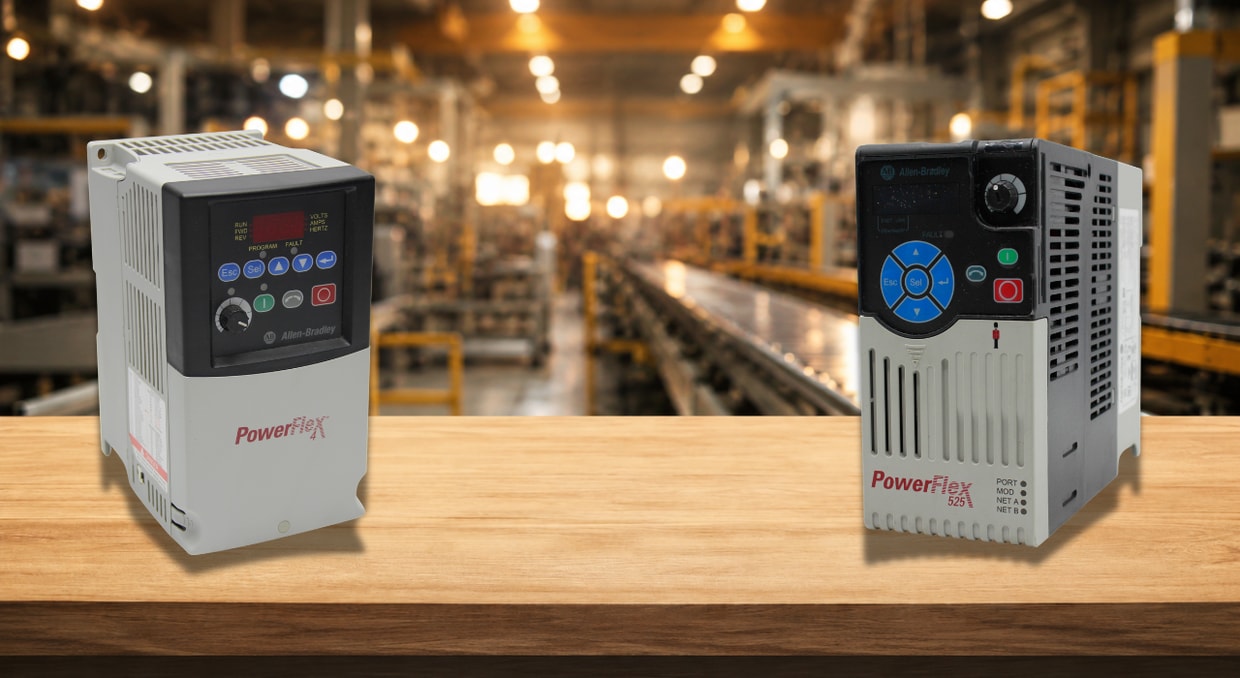
Conveyor systems serve as crucial circulatory networks in warehouses, airports, mining operations, food processing plants, and manufacturing industries. Well-designed conveyors drastically reduce manual material handling while improving operational efficiency and ensuring consistent output quality. Allen-Bradley PowerFlex drives are essential components of modern conveyor systems, whose performance relies heavily on precise control of the connected motors. PowerFlex drives utilize advanced control modes, including Sensorless Vector Control (SVC), Volts/Hertz (V/Hz), and TotalFORCE technology (available on the PowerFlex 755T series), to deliver high-precision regulation of motor speed and torque. This highly precise motor control enables smooth acceleration and deceleration of conveyor systems, significantly reducing wear and tear on conveyor belts, gearboxes, and bearings by minimizing mechanical shock.
Selecting the correct PowerFlex drive helps minimize system downtime, enhance energy efficiency, and reduce maintenance requirements and related costs. However, selecting the wrong PowerFlex drive often results in poor conveyor performance and higher operating expenses. Determining the appropriate PowerFlex drive for a given conveyor system requires evaluating much more than just the conveyor type and motor horsepower. Engineers and system integrators must also analyze the speed control, starting torque, communication, operating environment, and safety requirements to guarantee long-term system reliability.
This article discusses key selection factors such as load, speed and torque regulation, communication requirements, etc., to assist you in choosing the right PowerFlex drive for your conveyor system. It also contrasts the key features of the PowerFlex 755, PowerFlex 753, PowerFlex 525, and PowerFlex 523 drives, which are ideal for conveyor systems.
Key Selection Factors to Consider
Communication Capabilities and Connectivity
Modern conveyor systems feature advanced communication capabilities that streamline their integration into broader automation networks. This allows seamless information exchange across drives (e.g., PowerFlex drives), controllers, operator panels, and supervisory-level systems. The streamlined network integration allows operators to centrally monitor motor currents, track performance trends, and identify faults. In addition, this centralization simplifies access to vital system data by maintenance personnel, streamlining maintenance and troubleshooting.
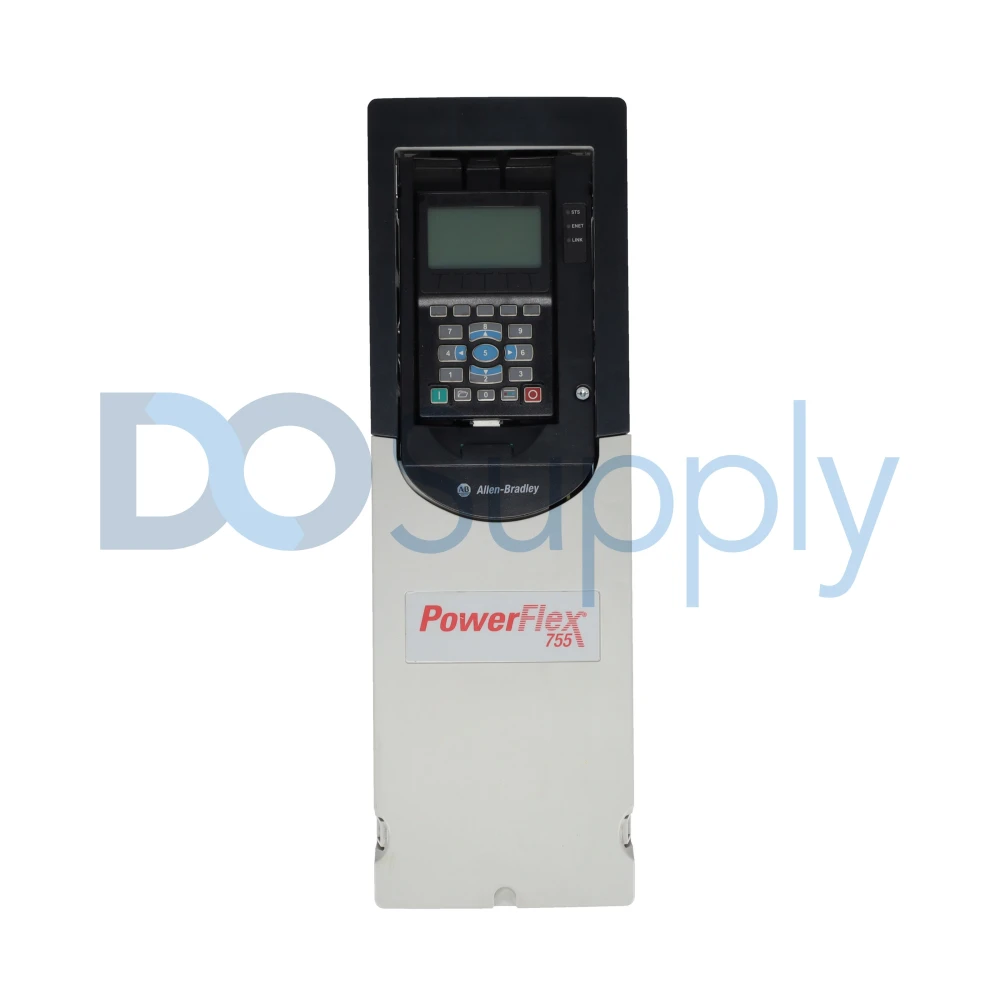
Core operational advantages of this network integration include:
- Real-time system monitoring
- Real-time data access across operator panels, controllers, and supervisory devices
- Remote diagnostics
- Centralized control
- Performance monitoring and reporting
- Faster troubleshooting
Allen-Bradley PowerFlex drives feature advanced networking capabilities that provide substantial benefits for facilities with integrated conveyor systems by centralizing diagnostic data and motor control into a unified platform. For applications that specifically need predictive analytics or TotalFORCE control, the 755T/755TS family should be considered.
Speed Control Considerations
Conveyor speed control requirements vary depending on the conveyor type and production goals. Some conveyors can run consistently at a fixed speed, while others require variable speed to meet fluctuating production demands. The use of variable speed offers several advantages, such as eliminating bottlenecks and improving process efficiency. Adjustable motor speed also enables operators to synchronize multiple conveyors running on the same production line, preventing equipment strain and product spills/jams.
One of the key factors to consider when selecting a PowerFlex drive is the required level of speed-control accuracy. Basic speed control methods, such as Volts/Hertz (V/Hz), are suitable for simple conveyor applications. For more complex, heavy-duty conveyor systems, PowerFlex drives with advanced motor control technologies, such as TotalFORCE and Sensorless Vector Control, are an excellent choice for precise speed regulation. Be sure to assess your process speed requirements carefully, as selecting a PowerFlex drive with appropriate speed-control capabilities will facilitate smooth, consistent process operations.
Conveyor Load Characteristics
When choosing the right PowerFlex drive, engineers should first evaluate the conveyor system’s load characteristics. This is a critical factor to consider because load requirements dictate drive sizing, overload capacity, and the control features the drive requires. Most conveyors fall under the category of constant torque applications. In constant torque applications, the connected motors must deliver a uniform torque across the operating speed range. Such conveyors consistently demand a specific amount of steady torque to move heavy payloads across varying speeds; this requires the connected drive to deliver sustained current capacity and high starting torque without overheating. By contrast, centrifugal pumps and fans are variable torque applications, in which the required torque is proportional to the square of the motor speed.
There are several factors that can shape the conveyor load requirements. One of the key elements is the material weight. It requires less effort to move lightweight carts, but much more effort to move them on conveyor systems hauling mined materials or bulk aggregates. Load demands are also influenced by the conveyor length since longer conveyors cause a lot of friction and mechanical resistance. Horizontal conveyors often require less torque compared to inclined conveyors.
The starting condition is also a key consideration. When a conveyor is overloaded, it places a greater demand on the connected drive than an empty conveyor. Load characteristics should therefore be evaluated carefully to ensure that the selected PowerFlex drive is neither undersized nor oversized.
Motor and Drive Sizing Requirements
The basis for choosing the right PowerFlex drive is the provided motor sizing data. Before selecting a PowerFlex drive, gather all relevant operating information and review the motor nameplate to ensure compatibility.
Important key parameters to consider from the motor nameplate include:
- Overall duty cycle
- Motor service factor
- The base motor speed
- Rated frequency
- Total horsepower
- Voltage requirements
- Full-load current
When choosing the appropriate PowerFlex drive for your conveyor system, horsepower may be considered a reference point, although the current rating is a more dependable sizing parameter. The drives are responsible for delivering current to the motors that drive the conveyor systems. Under both peak-demand and normal operating conditions, the selected PowerFlex drive must deliver sufficient current. Selecting the right drive size prevents conveyor malfunction and overloading.
Oversized drives can increase equipment cost and may reduce cost-effectiveness, but some margin may be justified for high-inertia loads, frequent starts, harsh environments, or demanding overload requirements. The ideal choice is a PowerFlex drive that accurately matches the motor nameplate and applied conveyor load. Another key consideration when sizing a PowerFlex drive is the acceleration requirement. Fast acceleration requirements demand higher current and thus a larger PowerFlex drive. Additional drive capacity is an added advantage in conveyor applications that start and stop frequently.
Starting Torque Requirements
In conveyor applications, starting torque is also a critical consideration. During normal operation of a conveyor system, less running torque is required than at startup. Excessive mechanical stress and failure start to occur when a drive provides insufficient startup torque.
Some applications, such as heavy-duty chain conveyors, mining conveyors, and conveyors operating on an incline, require high startup torque. These conveyor systems often start under load; thus, they require a considerable amount of starting torque to overcome friction and inertia. Each PowerFlex drive offers different motor control techniques to meet varying starting torque requirements. The basic motor control techniques are well-suited to simple conveyors that require less torque at startup. For heavy-duty conveyors, more advanced motor control techniques are necessary to precisely regulate speed and enhance torque performance.
It is critical to assess the maximum load conditions that would be expected during startup. This evaluation will help to determine whether a higher-end PowerFlex drive is necessary or if a standard controller is sufficient. Selecting the right PowerFlex drive capable of delivering sufficient starting torque helps reduce equipment wear, improving long-term conveyor system reliability.
Environmental Considerations
Environmental factors can affect the performance of a drive system. A proper understanding of the installation environment is essential prior to selecting the right PowerFlex drive. Dust can reduce airflow, while extreme heat reduces cooling. In addition, moisture can cause electrical failure and risk of corrosion. If vibration is not properly addressed, it affects long-term reliability.
It is critical to consider enclosure requirements, especially when operating in harsh environments. When the equipment is protected from contamination, it lasts longer. To avoid unexpected failures and increased maintenance costs, environmental considerations should be carefully considered during the drive selection process. Matching the right PowerFlex drive to the operating environmental conditions helps enhance performance.
Safety Requirements
Safety is an integral factor when designing any conveyor system. Personnel safety is necessary in contemporary facilities to maintain both operational efficiency and high productivity. Some types of PowerFlex drives have integrated safety features that are easy to implement and minimize the need for additional hardware. The presence of these features reduces cable complexity and enables compliance with safety standards.
Safety-related functions available with PowerFlex drives include:
- Personnel protection
- Safe Torque Off
- Emergency stop integration
- Integration of Safe Stopping Functions
- Maintenance protection
Energy Efficiency and Lifecycle Costs
Energy efficiency is a key consideration in most industrial settings. Often, the conveyor systems run for long periods of time, increasing operational costs from energy consumption. PowerFlex drives allow motors to run at the required speed rather than operating continuously at full speed, substantially improving energy efficiency. This approach also minimizes energy waste and improves overall system performance. The drives also enable gradual acceleration and deceleration of connected motors, resulting in minimal wear on mechanical parts. By maintaining low mechanical stress, the conveyor’s durability is maximized, and maintenance requirements are significantly cut down.
When deciding which PowerFlex drive to purchase, it is advisable that organizations consider the total lifecycle costs beyond the initial hardware costs. Sometimes, when the initial price is higher, there are excellent long-term returns through reduced ongoing maintenance and minimized operational costs.
Need for Future Expansion
Production needs do not always remain constant. Plants may acquire additional machinery, boost production capacity, or expand production, depending on business demands. To avoid spending on future upgrades, one can opt for a scalable PowerFlex drive at the outset. PowerFlex drives with enhanced functionality and versatile communication capabilities do offer this versatility.
Additionally, anticipating the future growth of production lines eliminates costs associated with early replacements of conveyor and drive systems. A scalable PowerFlex drive system enables plants to adapt to new production demands while safeguarding their automation investment. Planning for future expansion right from the time of selecting the suitable drive long-term costs, including expensive retrofitting and production downtimes.
Best PowerFlex Drives for Conveyor Applications
Different Allen-Bradley PowerFlex drive models are suitable for different conveyor needs. Heavy-duty PowerFlex drives are a great choice for complex, networked conveyor applications while compact PowerFlex drives work well for simple, light-duty conveyors.
PowerFlex 523
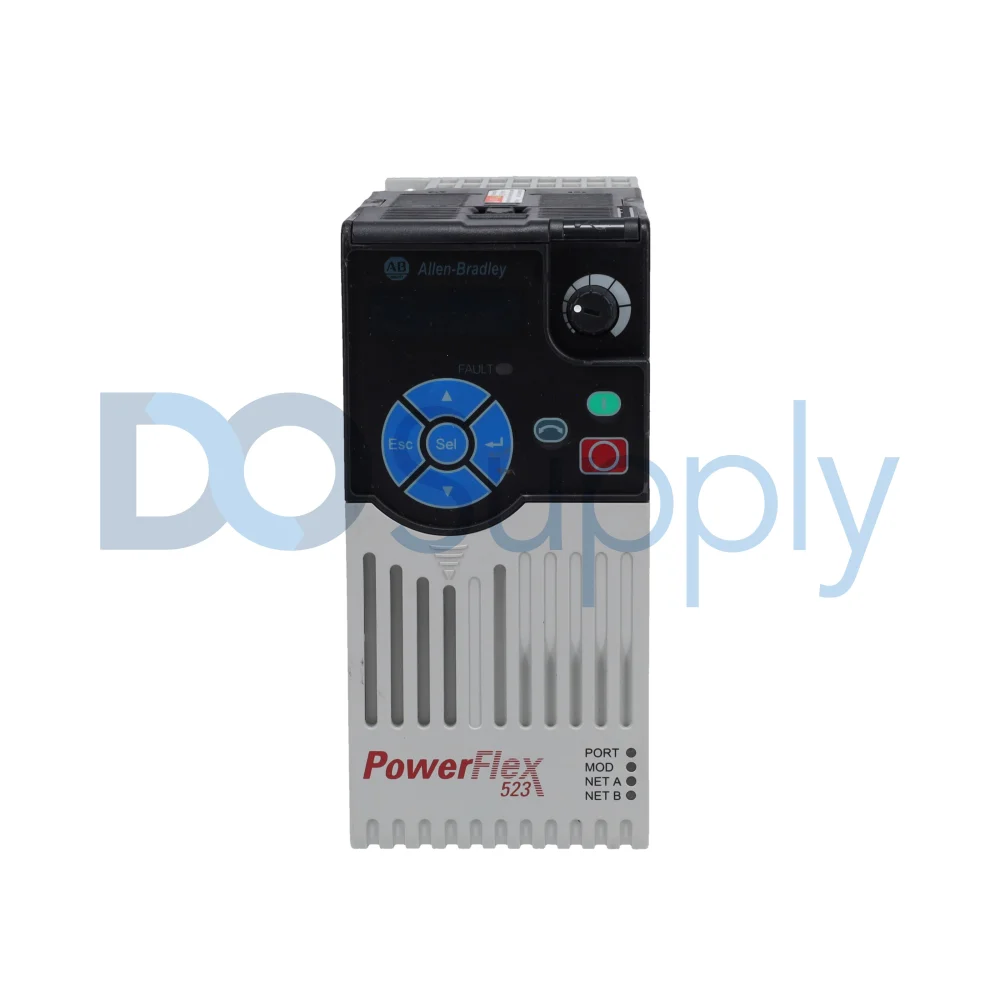
The PowerFlex 523 design is ideal for basic machine-level applications. Even without requiring complex networking capabilities, it reliably regulates the motor. The drive is often deployed in applications such as individual handling equipment, light-duty conveyors, and packaging systems. It is a popular choice in smaller installations because of its compact size and efficient design, offering a cost-effective solution without compromising performance. The drive also has standard speed-control capabilities, making setup easy.
PowerFlex 525
In most industrial conveyor systems, the PowerFlex 525 family is among the most extensively used PowerFlex drive. It is more versatile than the PowerFlex 523 and easy to deploy.
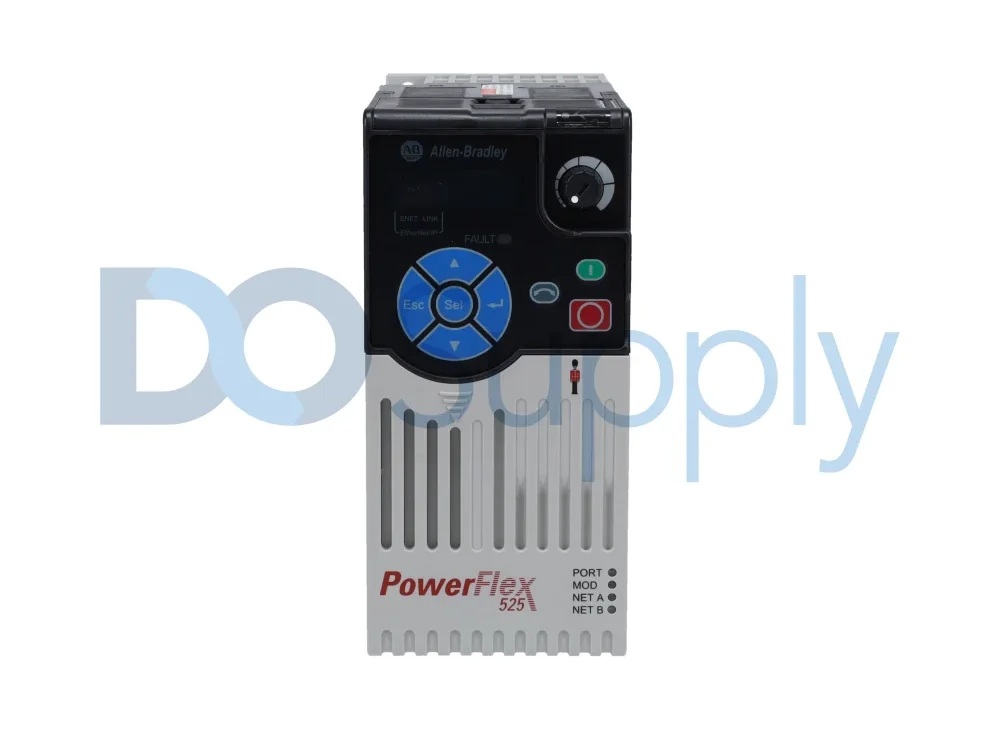
Some of the key advantages include:
- USB programming capability
- Versatile Input/Output configuration
- Integrated Ethernet/IP communication
- Sensorless vector control
- Embedded safety features
These drives are widely used in distribution centers, warehouses, packaging, and on assembly lines. Essentially, the PowerFlex 525 series provides a great balance between cost and functionality.
PowerFlex 753
The PowerFlex 753 is well-suited for large-sized and demanding industrial applications. It can be customized to meet specific application needs because of its modularity. This drive series features advanced diagnostic and communication capabilities, making it well-suited for facilities that require more sophisticated motor control capabilities. It is used in processing, manufacturing, and heavy-duty conveyor applications. In addition, it is highly scalable, facilitating future expansion of the conveyor system.
PowerFlex 755
The PowerFlex 755 drive is an excellent choice for applications that demand reliability and high efficiency. This drive provides predictive diagnostics, powerful motor control, and flexible networking. The PowerFlex 755 can be used in industries such as paper manufacturing, bulk material handling, mining, and cement production. For these industries to operate effectively, they need robust and heavy-duty equipment. It is suitable for critical conveyor systems where maximum efficiency is a priority and downtime must be minimized, thanks to its advanced features.
Conclusion
Selecting the appropriate Allen-Bradley PowerFlex drive for a conveyor system requires a comprehensive evaluation of key selection variables, including application requirements, speed control considerations, environmental conditions, communication capabilities, startup torque, load characteristics, motor properties, and future expansion needs.
The PowerFlex 523 drive offers a compact, cost-effective design for simple, light-duty conveyor applications. The PowerFlex 525 modular drive offers a great balance of flexibility and high performance. The PowerFlex 753 offers high scalability and is an excellent choice for larger, complex conveyor systems that require customization. The PowerFlex 755 delivers improved hardware reliability for heavy-duty conveyor applications.
Through a well-structured and informed selection process, you can identify the most appropriate PowerFlex drive for your conveyor system. This leads to increased reliability, reduced maintenance costs, and enhanced system efficiency. Though for more harsh environment applications, consider reading our PowerFlex selection guide for harsh environments article here.
Choosing the right drive doesn’t have to be difficult. We at DO Supply offer PowerFlex drives, drive accessories and modules, as well as supporting hardware to ensure your automated system is running efficiently. If the choice isn’t clear, why not give us a call? Our team is happy to support you in finding the right drive for the right job.
DO Supply Inc. makes no representations as to the completeness, validity, correctness, suitability, or accuracy of any information on this website and will not be liable for any delays, omissions, or errors in this information or any losses, injuries, or damages arising from its display or use. All the information on this website is provided on an "as-is" basis. It is the reader's responsibility to verify their own facts.