Designing ControlLogix Systems for High Uptime
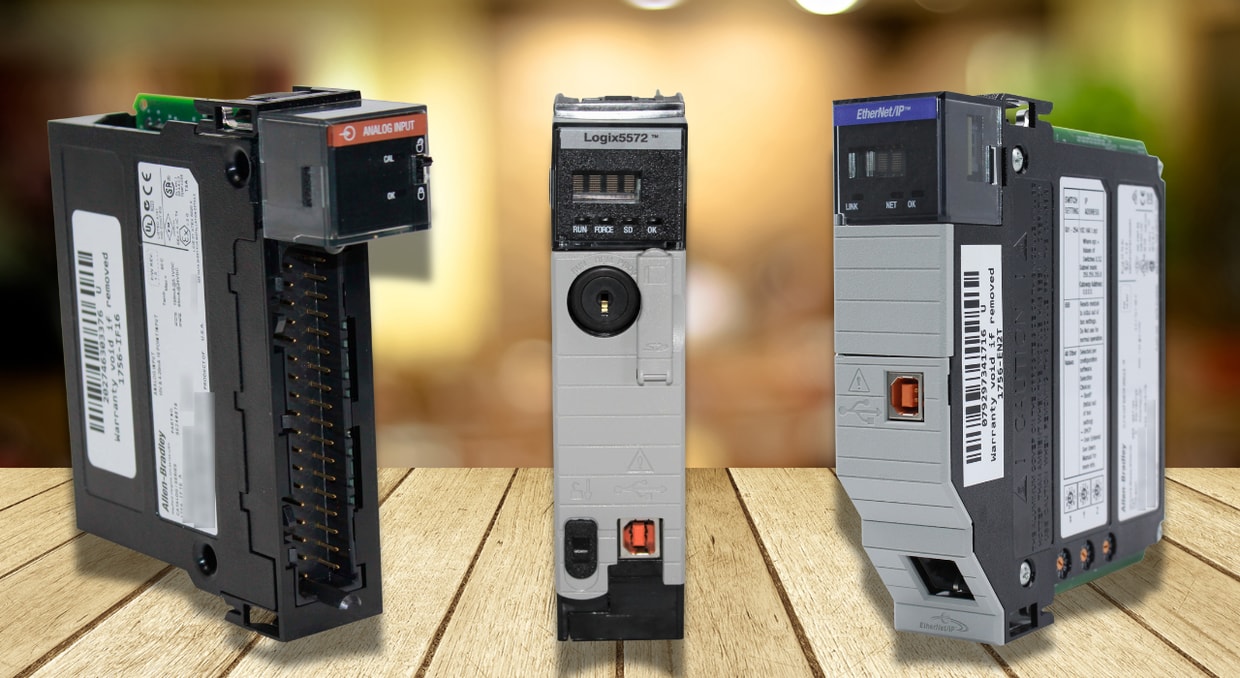
Unplanned downtime is one of the biggest concerns in industrial production. A single control-system failure can stop an entire production line, leading to lost material, idle equipment, missed deadlines, and costly delays.
For this reason, high-uptime ControlLogix systems are designed around more than just the controller itself. Controller redundancy, resilient EtherNet/IP networks, redundant power, distributed I/O, and advanced diagnostics can all help keep a system running when something goes wrong. However, simply installing higher-end hardware does not guarantee reliability. The overall architecture still needs to reduce single points of failure and allow the system to recover quickly when a fault occurs.
High-Availability Control Architecture
High-uptime control systems should be engineered to withstand single-component hardware failures while maintaining continuous operation — without interrupting data execution or process outputs. The ControlLogix platform accomplishes this through a synchronized, redundant chassis pair managed by a dedicated redundancy module (like the 1756-RM2), enabling seamless transfer of control functions to the synchronized hot-standby controller during a primary-controller fault.
Here are the key hardware architectures and supporting configurations used to improve ControlLogix system availability and reduce process interruptions.
Redundancy Mechanics and Cross-loading
A hot-standby ControlLogix system typically consists of two physically independent 1756 chassis: one operating as the primary controller and the other as the synchronized secondary unit. The primary controller cross-loads application data to the secondary controller, enabling control functions to switch over during a primary-controller failure. To maintain synchronization and reliable failover, both chassis should use compatible components, and corresponding modules must meet Rockwell Automation’s compatibility requirements for module type, firmware revision, series, and chassis slot location.
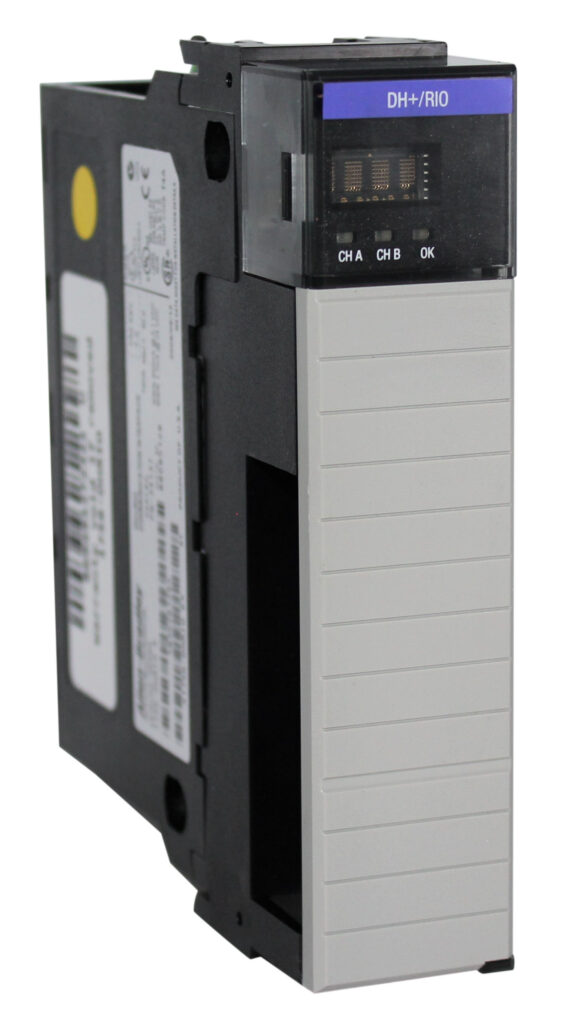
The ControlLogix redundancy system links the primary and secondary chassis through dedicated redundancy modules, such as the 1756-RM3 or 1756-RM2, using high-speed fiber-optic cables and links. Through the fiber connection, the primary controller synchronizes internal timer values, I/O force states, and modified tag values at the end of every scan cycle or program task. This ongoing data transfer, also called cross-loading, synchronizes both controllers so that, in case of a hardware failure in the primary unit, the standby unit takes over instantly.
Switchover Performance and Determinism
The 1756-RM3 module detects hardware faults in the primary chassis and instantly triggers a switchover. The secondary chassis becomes the active primary and takes over operation. Removing an active communication module, network connection failures, and power loss initiate system switchovers. During maintenance, operators can manually initiate switchovers using software commands.
In less than 20 milliseconds, the modern ControlLogix 5580 controller pairs can perform a hardware switchover. Network configuration and the volume of cross-loaded data tags determine the performance. A truly bump-less switchover ensures field devices operate normally throughout the transition. Digital outputs must remain stable without chatter or dropout, and analog values should not fall to zero. Maintaining this continuity requires proper connection hold-time settings on field output modules and remote adapters.
Split Power Supply Topologies
A fundamental requirement of any industrial control system is stable electrical power. High-availability architectures that rely on a single power supply create a single point of failure that can render the entire system inoperable. The redundant power supply, such as the 1756-PB75R for DC systems or the 1756-PA75R for AC applications, mitigates this vulnerability. Mounting these modules adjacent to the chassis and coupling through 1756-CPR2 cables facilitates splitting of the incoming electrical load.
Both redundant power supplies share the chassis load under steady-state conditions. The healthy supply rapidly assumes 100% of the electrical burden if one supply suffers an internal component malfunction or experiences an incoming voltage interruption. This transition causes no disruptive voltage drop on the 1756 backplane, allowing the controller to continue operating without a reset. Connecting both power supplies to separate electrical sources further maximizes safety. The secondary supply should come from a generator-backed circuit or an independent utility, while the primary power supply should connect to a dedicated Uninterruptible Power Supply (UPS).
ControlLogix Network Topology and Communication Resilience
In addition to controller redundancy, high-uptime ControlLogix systems require high-availability network infrastructure to link the ControlLogix processors to PowerFlex variable frequency drives, Point I/O or FLEX 5000 modules, and supervisory SCADA platforms. High-uptime network architectures utilize Parallel Redundancy Protocol (PRP) and Device Level Ring (DLR) topologies over EtherNet/IP to guarantee deterministic communication failover without data loss during a single-point network-device or media failure. This helps reduce process interruptions.
Device Level Ring (DLR) Protocols
In industrial environments, star networks and traditional tree topologies create vulnerable communication points because a damaged Ethernet connection can disconnect an entire section of the industrial plant. The ControlLogix platform addresses this limitation by embedding Device Level Ring (DLR) in its dual-port communication modules.
- Ring Supervisor Functionality: For every DLR architecture to perform the ring supervisor role, a single device must be configured. Stratix industrial switch and the 1756-EN4TR module typically assume this role. The supervisor facilitates rapid network recovery by transmitting beacon packets at high frequency between the Ethernet ports and checking their return on the other interface.
- Single-Fault Healing Performance: When a single node loses power, or its Ethernet cable is severed, the supervisor cannot receive its beacon frames. It converts the network into a linear topology and instantly isolates the failed section. The reconfiguration typically takes about 3 milliseconds, preserving remote I/O connections and ensuring minimal communication disruption.
- Physical Implementation Constraints: Devices such as 5069 I/O adapters, PowerFlex drives, and 1756-EN4TR modules must support the required ring architecture and must feature embedded ports or a DLR network to function properly.
Parallel Redundancy Protocol (PRP)
Even with short network recovery periods of about 3 milliseconds, Device Level Ring may not be sufficient for critical applications such as chemical processing systems and power distribution networks. The Parallel Redundancy Protocol (PRP) eliminates the need for network recovery after a single-point network failure in these processes.
PRP uses two isolated, physically independent networks, LAN A and LAN B, to transmit two identical copies of each data packet simultaneously. Destination devices, such as the 1756-EN4TR card, receive both packets, retain the first frame, and discard the duplicate. LAN B continues with duplicated traffic delivery when LAN A faces a switch failure or physical break, maintaining uninterrupted communication without a recovery delay.
Segregating HMI/SCADA and Producer/Consumer Traffic
Communication modules can be overwhelmed by high data traffic, causing unexpected system outages and intermittent connections. Physically isolating supervisory operations from control traffic can prevent this.
- Dedicated Control Network Modules: Specific ControlLogix slots can be configured for critical control functions such as motion control, consumer data exchange between separate controllers, and remote I/O messaging.
- Dedicated SCADA/Enterprise Modules: Use separate ControlLogix EtherNet/IP communication modules to connect SCADA systems, historians, MES (Manufacturing Execution Systems) platforms, and HMIs while isolating enterprise and supervisory traffic from the I/O and control networks.
- ControlLogix Network Segmentation: Separate EtherNet/IP communication modules can connect the chassis to isolated network segments, reducing the effect of broadcast storms and excessive supervisory traffic on time-critical control and I/O communications. Although these modules share the same ControlLogix backplane, data transfers do not automatically pass between the external networks.
Remote I/O Architecture and Hardware Selection
A robust, high-availability ControlLogix architecture should include distributed field I/O networks that connect field devices to the controller. Carefully select and configure remote I/O platforms, network topologies, communication adapters, and power supplies to reduce single points of network failure and process interruptions.
Comparison of 1756, 5069, and 5094 Remote I/O Platforms
When selecting a remote I/O platform for a ControlLogix system, engineers should evaluate application requirements such as required I/O density, module availability, expansion capacity, backplane communication performance, environmental ratings, installation method, and support for redundancy or fault-tolerant configurations.
Table 3.1: Compafrison of 1756 ControlLogix I/O, Compact 5000 I/O (5069), and FLEX 5000 I/O (5094) Platforms
| Feature/Specification | 1756 ControlLogix I/O | Compact 5000 I/O (Bulletin 5069) | FLEX 5000 I/O (Bulletin 5094) |
| Backplane Speed | High-speed PCI-based architecture | Up to 1 Gbps | High-speed, with 1 Gbps fiber option |
| RIUP Support | Yes, for all I/O modules | Available with removable connection blocks | Supports insertion and removal while powered |
| Density (Channels) | 8–32 channels | 4–16 points per module | 8–32 channels |
| Diagnostics Level | Individual channel isolation | Module-level diagnostics and monitoring | Channel-level diagnostics |
| Environmental Rating | Standard industrial applications | Suitable for standard industrial installations | Extended-temperature and harsh-environment applications |
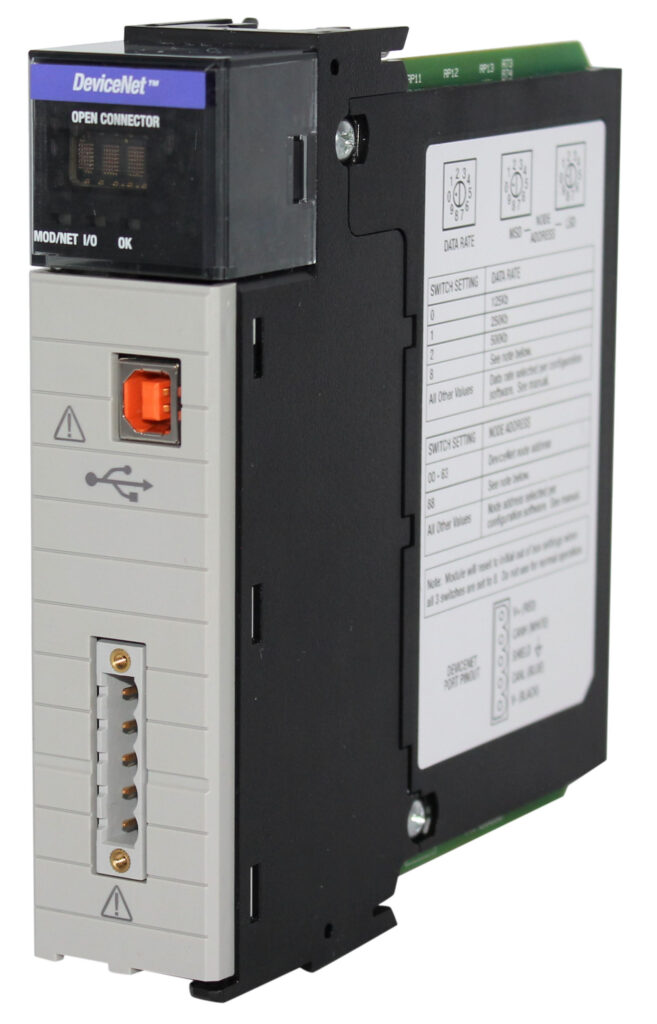
- 1756 ControlLogix I/O: A chassis-based, high-density I/O platform best suited for centralized and remote I/O applications requiring extensive module options, high-performance communication, and advanced diagnostics. Select 1756 ControlLogix I/O modules include onboard electronic fusing and strong channel-to-channel isolation.
- Compact 5000 I/O (5069): This is a compact I/O module that offers dense footprint variations and exceptional local backplane speed, though it lacks inherent RIUP (Removal and Insertion Under Power) support on standard modules. It is an excellent choice for applications requiring reduced panel space, high data throughput, and fast response times. It can be used as a distributed I/O platform with compatible ControlLogix 5580 (1756-L8x) controllers and EtherNet/IP adapters.
- FLEX 5000 I/O (5094): A flexible distributed I/O platform that supports full RIUP capabilities, Parallel Redundancy Protocol (PRP), and extreme temperatures. It is designed for installation near field devices, which reduces wiring and installation requirements. Standard FLEX 5000 I/O modules are intended for protected industrial environments, while conformally coated and XT models support wider temperature ranges and more demanding environmental conditions.
Removal and Insertion Under Power (RIUP)
The FLEX 5000 (5094) and 1756 ControlLogix I/O platforms support Removal and Insertion Under Power (RIUP), allowing the replacement of a failed compatible I/O module while the chassis or I/O system remains energized. For instance, when output transistors or optical isolators fail, the maintenance team can remove the defective unit and replace it without shutting down the rack. RIUP can reduce maintenance-related downtime because unaffected I/O modules continue operating normally; however, the signals controlled by the removed module become unavailable and may transition to their configured fault states. Follow site safety procedures and module-specific instructions, especially in hazardous locations.
During RIUP in a ControlLogix system, the backplane connector pins engage and disengage in a controlled sequence to improve safety and reliability. This arrangement protects the adjacent modules from electrical arcing and data corruption during module replacement. Instead of connecting the wiring to the module housing itself, it is terminated on a Removable Terminal Block (RTB). This lets technicians unlatch the wired terminal block, replace the faulty I/O module, and reinstall the terminal assembly without rewiring the connected field devices.
Advanced Diagnostic and Isolated Modules
High-density ControlLogix I/O modules without channel-level isolation represent significant operational risks. For instance, an electrical short-circuit can compromise an entire 32-point module, stopping operations in multiple control loops. Here is how to address such risks:
- Individually Isolated Channels: Select ControlLogix I/O modules with individual channel isolation such as the ControlLogix 1756-OB16 for digital outputs and the ControlLogix 1756-IF6I for analog inputs. Faults on one device cannot spread to adjacent points because each channel is electrically isolated from the others.
- Electronic Fusing: Digital ControlLogix output modules that feature electronic overcurrent protection and diagnostics, including the 1756-OB16E, should be selected. To alert technicians, the module disables the faulted channel when excessive current flows through a specific terminal.
If you are looking to upgrade to a ControlLogix system, then let us at DO Supply be your one stop shop for ControlLogix PLCs and accessories. We have over 400 different ControlLogix SKUs that are ready to be shipped fast and with our two-year warranty attached for that added reassurance. If you aren’t sure which ControlLogix controller fits your needs, give us a call and we can help you find the right PLC for your system.
DO Supply Inc. makes no representations as to the completeness, validity, correctness, suitability, or accuracy of any information on this website and will not be liable for any delays, omissions, or errors in this information or any losses, injuries, or damages arising from its display or use. All the information on this website is provided on an "as-is" basis. It is the reader's responsibility to verify their own facts.