Choosing Between Modular vs Fixed PLC Architectures
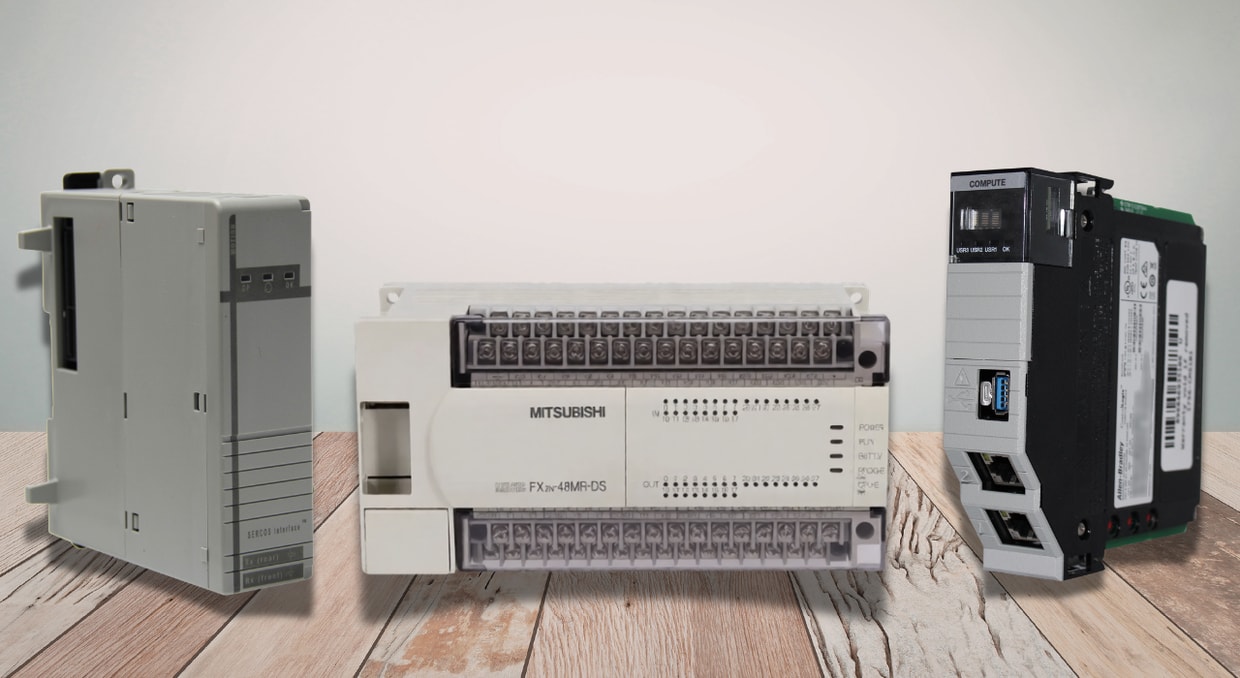
When choosing a PLC, the system’s architecture affects all subsequent engineering work, from how control panels are drawn to the cost of maintaining the system over years of service. Most PLCs fall into one of two competing design philosophies: modular architecture, where the I/O, CPU, and power supply are separate elements on a common backplane, or fixed architecture, where all of these are combined in a single housing. Every major PLC vendor offers product lines that follow both designs, and understanding how each platform is laid out helps an engineer pair architecture to application rather than defaulting to whatever solution is already sitting on the shelf. Comparing the five largest control vendors in Europe, North America, and Asia – Rockwell, Siemens, Schneider Electric, Mitsubishi, and Omron – all of which market modular and fixed models side by side – shows which factors vendors weigh when dividing fixed and modular I/O architectures. The real tradeoffs come down not to brand preference but to I/O scalability, redundancy where high uptime is critical, and the full cost across the system’s useful lifecycle rather than just the purchase price.
What Separates Modular and Fixed PLC Architectures
Modular PLCs have the processor, power supply, and I/O modules as separate products that mount onto a common backplane or chassis. This gives engineers the freedom to scale the system to the job at hand, adding I/O modules where needed without replacing hardware or, worse, adding another PLC, which would double troubleshooting and installation time. Fixed (or compact) PLCs instead integrate the CPU, power supply, and a fixed amount of I/O into a single controller, trading the flexibility of a separate backplane for a smaller footprint and typically a lower unit cost. Fixed PLCs suit standalone machines where I/O counts remain stable over time, rather than those that require endless expansion.
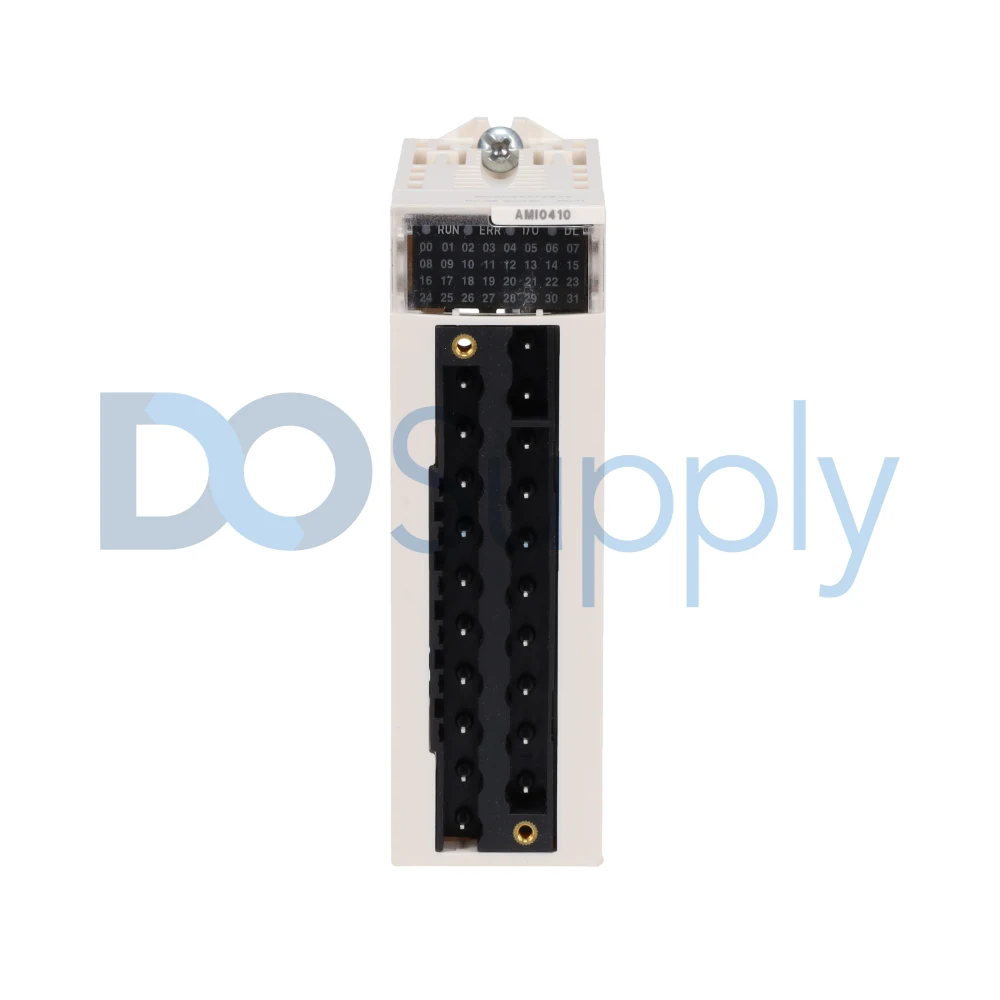
This line is not always clearly drawn. Some fixed-form-factor controllers accept additional plug-in cards for further expansion, creating a grey area and a third path for engineers caught between the extremes. Vendors also organize their PLC families into tiers based on programming environment and capability – the top tiers are chassis PLCs. In contrast, more modest tiers consist of compact models that share the same programming but have less scale. A vendor-by-vendor comparison makes more sense than separating vendors strictly into “modular” and “compact” categories, since programming, peripherals, and software often bridge the two designs.
Modular PLC Platforms Across Leading Vendors
Rockwell Automation: ControlLogix and CompactLogix
The ControlLogix series is Rockwell’s flagship modular PLC, a chassis-based platform that scales to high I/O counts and supports redundant processors where high uptime is crucial. Its programming environment is shared across platforms, helping engineers learn both at once. Unlike chassis-based ControlLogix, CompactLogix connects its modules directly into a compact system, a mid-tier solution for smaller applications that retains the programming options and open architecture of the premium series. Rockwell’s two modular series underscore that modular controllers have a place beyond high-count rack solutions. MicroLogix is also another strong contender for fixed platforms. If you would like to learn more, we have an article going over its applications here.
Siemens SIMATIC S7-1500
Siemens offers the S7-1500 as its high-end, rack-based modular PLC, occupying the same niche as ControlLogix. It offers scalability through separate CPU modules, expansion signal cards, and technology modules similar to those in the ControlLogix lineup. The modular architecture is clearly outlined in their literature, meaning that for those designing across both systems, there is a direct point-for-point comparison when mapping controllers that are ready to meet high requirements without falling back on old standbys not suited to the task at hand.
Schneider Electric Modicon M580 and M340
Schneider’s Modicon M580 is a modular, Ethernet-native PAC with high-availability and redundant-processor capabilities, designed for applications where continuous operation is essential. The smaller Modicon M340 provides mid-range modularity in a smaller form factor for distributed systems, still offering swappable I/O and processor components.
Mitsubishi MELSEC iQ-R
Mitsubishi’s MELSEC iQ-R uses a multi-CPU backplane architecture designed for lower total cost of ownership. With multiple CPUs sharing a single backplane, hardware isn’t duplicated while still partitioning motion, robot, and sequencer logic applications.
Omron Sysmac NX/NJ
Omron’s Sysmac NX and NJ series are EtherCAT-based machine automation controllers with NX I/O expansion capability. Their I/O and EtherCAT-based design makes them a popular choice in motion-intensive industries requiring synchronized movement between axes.
Fixed and Compact PLC Options
Rockwell Micro800 and Legacy MicroLogix
Rockwell’s Micro800 series offers a fixed form factor with some modularity via expansion plug-in cards. The older MicroLogix series, a dedicated, fixed, compact platform, has largely been discontinued, except for the MicroLogix 1400, which is still listed as Active. Rockwell’s migration path now leads toward the CompactLogix 5380 or the Micro800 rather than the MicroLogix. Engineers still running an older MicroLogix system should treat lifecycle planning as an immediate priority.
Additional Fixed PLC Options
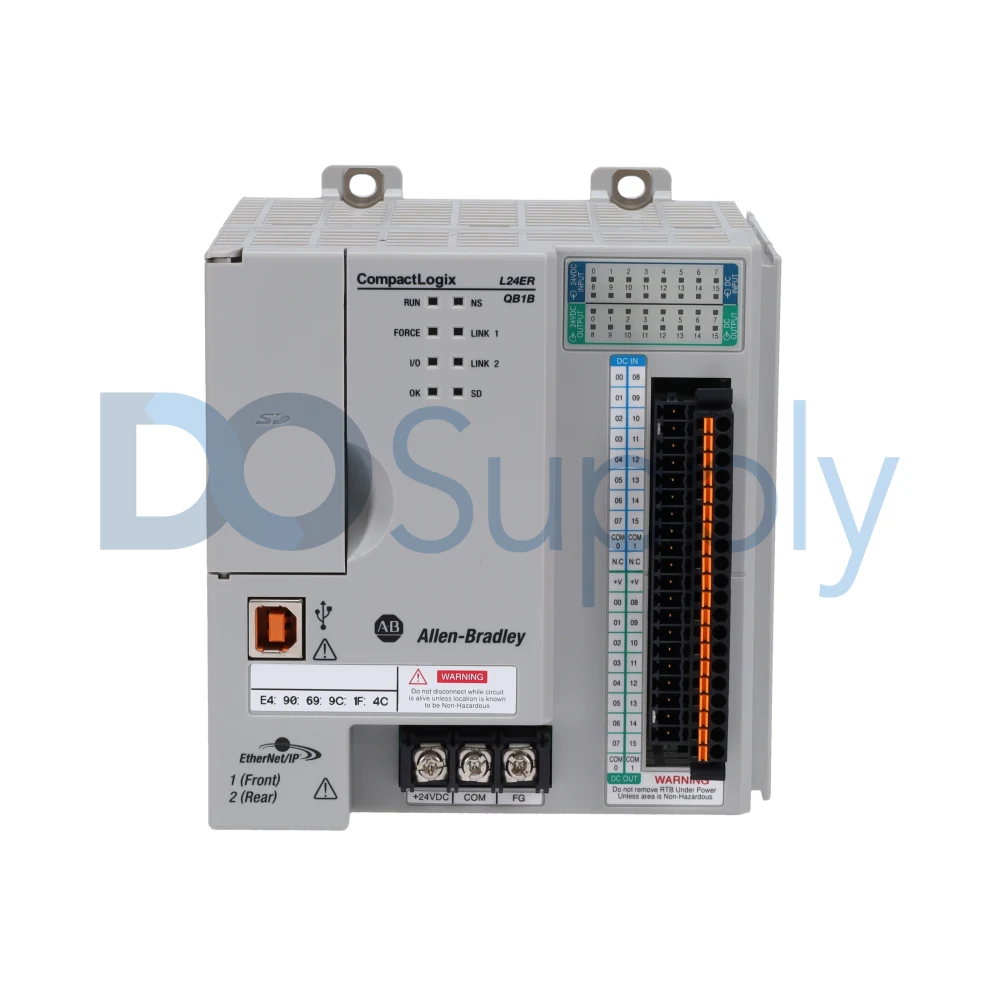
Siemens’ S7-1200 Basic Controller is a fixed-to-compact line similar to CompactLogix, with some modular capability. Schneider’s M221 and M241 are book-style fixed-logic controllers that can integrate optional TM3 expansion I/O for limited modularity, though true modularity requires the full Modicon series. Mitsubishi’s MELSEC iQ-F (FX5U Micro series) uses a fixed form factor, with added functionality via boards and adapters, without relying on a backplane. Omron’s CP2E is a micro-style PLC built for single-run machines, with two Ethernet ports pre-installed.
Programming Standards and Distributed I/O Considerations
Nearly all these platforms are programmed to the IEC 61131-3 standard, which recognizes Ladder Diagram, Structured Text, Function Block Diagram, Sequential Function Chart, and Instruction List as programming languages.
Engineers should also differentiate “modular chassis” from “distributed I/O.” A modular PLC scales by adding modules to its backplane, while distributed I/O scales by using remote I/O nodes connected via an industrial Ethernet network, regardless of whether the controller itself is fixed or modular. Just as a modular PLC model may become unavailable, fixed PLCs can also be discontinued, making it important to select communication infrastructure carefully, since network components follow their own lifecycle schedules.
Choosing the Right PLC Architecture for Your Application
Choosing between a modular and fixed PLC comes down to three factors: I/O scalability, redundancy requirements, and hardware lifecycle. Scale and unexpected I/O growth justify the expense of a ControlLogix or S7-1500, with the Modicon M580 and MELSEC iQ-R also serving high-availability needs as modular chassis. Standalone machines with fixed, well-defined I/O counts are better suited to compact controllers such as Micro800, S7-1200, or M221/M241. The FX5U and CP2E satisfy similar needs, with limited expansion through plug-in cards or add-on I/O.
Choosing the right system doesn’t have to be difficult. At DO Supply, we have our support team ready to help you find the right PLC, no matter a modular or fixed system, for your application. All of our PLCs ship fast and are backed by our two year warranty. Give us a call today and let us help take your automated solution to the next level.
DO Supply Inc. makes no representations as to the completeness, validity, correctness, suitability, or accuracy of any information on this website and will not be liable for any delays, omissions, or errors in this information or any losses, injuries, or damages arising from its display or use. All the information on this website is provided on an "as-is" basis. It is the reader's responsibility to verify their own facts.