Five Signs Your VFD Is Nearing End-of-Life
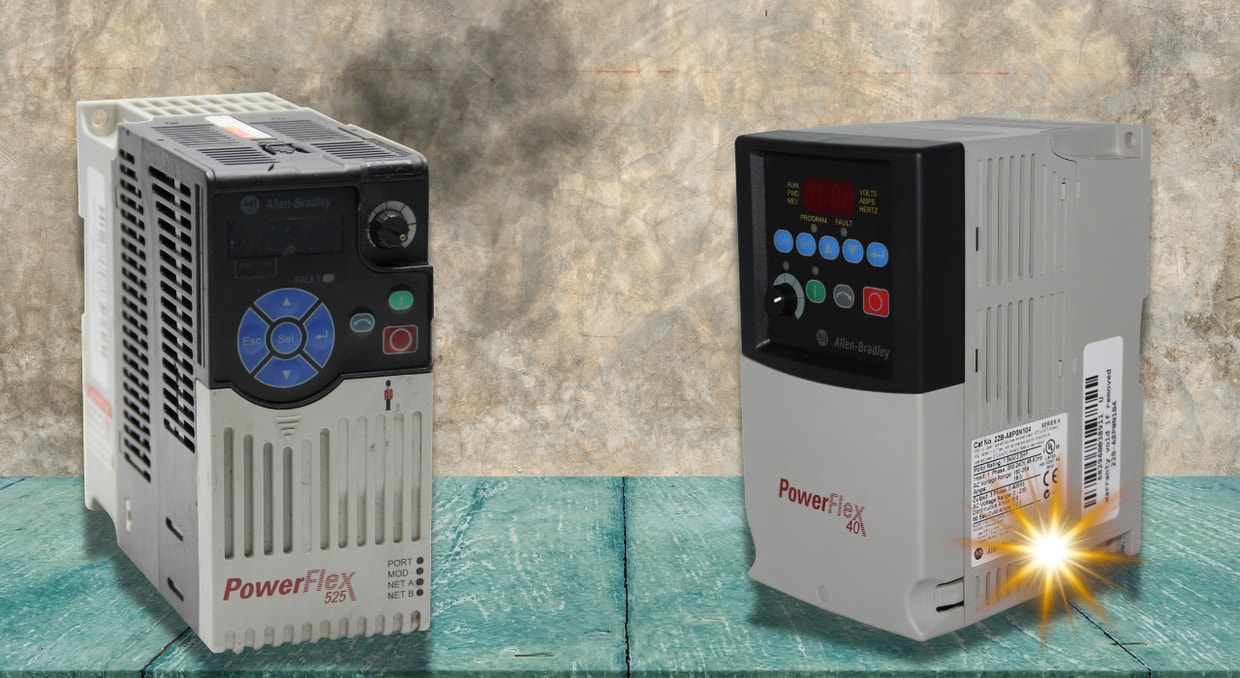
A variable frequency drive (VFD) rarely fails suddenly. Instead, before a VFD stops reliably operating a motor, it will begin to show signs of degradation, starting with symptoms like increasing fault counts, distinct noises, or thermal stress. These eventually culminate in signs of the drive’s aging internal components. If maintenance crews spot those early warnings, they may have time to install a new VFD before failure, keeping production running.
A VFD’s service life is mainly controlled by two wear-limited parts with documented, temperature-dependent life expectancies: the electrolytic capacitor that forms the DC bus, and the cooling fan. Aging in both components is slow — they don’t fail on a fixed date but degrade gradually, so assessing age means understanding behavior, not just install date. ABB’s ACS550 documentation (page 67, section 4) and the ACSM1 VLT FC 302 documentation (page 4, section 2) describe this best.
Sign 1: DC Link Capacitor Degradation
Electrolytic capacitors on the DC-link circuit smooth the rectified DC voltage feeding the drive’s output stage and store it effectively. As a capacitor ages, it loses electrolyte, capacitance, and voltage-storage capability, reducing its ability to ride through line disturbances and making bus faults more common.
Replacing the capacitor often means disassembling the drive, cleaning it, installing the new component, and reassembling it. ABB’s ACS550 documentation lists capacitor replacement on frame sizes R5 and R6 as a ten-year maintenance item, while the fan has a five-year replacement interval.
This raises a related but different issue for idle VFDs. When a capacitor sits idle, its dielectric can partially break down and require reforming. Reforming is when you apply mains voltage to the capacitors for a set period so they return to full operating capacity. Schneider Electric’s Altivar Process manual warns against operating a drive without first letting it charge on mains for an hour if it has been stored at up to 50°C for 24 months at 45°C, or 36 months at 40°C, before use. Skipping this step risks equipment damage or fire, so it’s a worthwhile check for spare or standby drives before commissioning.
Sign 2: Cooling Fan Bearing Wear and Rising Noise
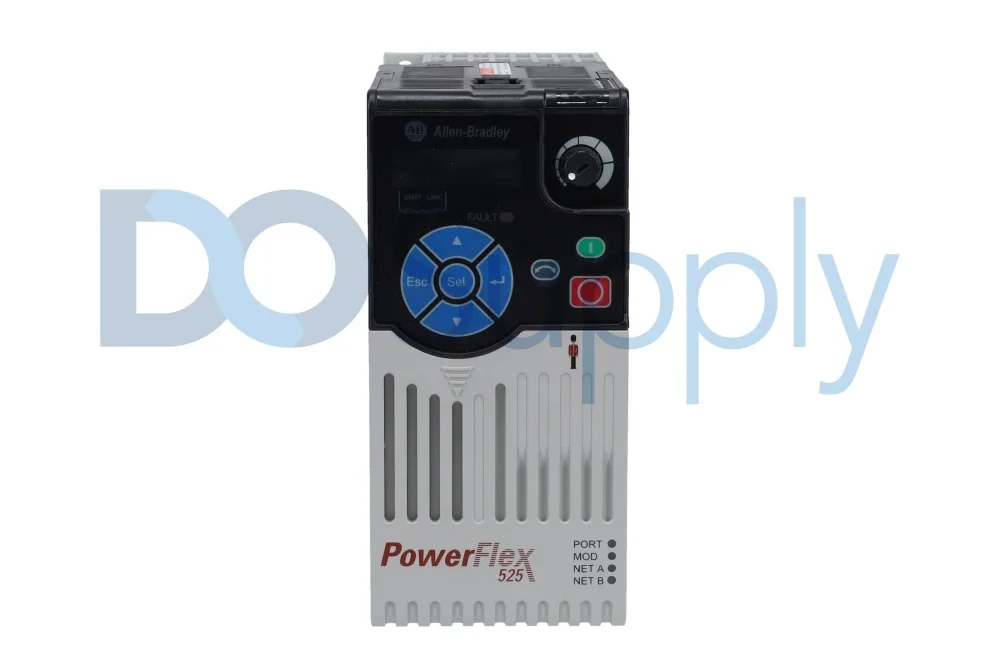
A cooling fan is a wear item with a fixed life that is sensitive to operating temperature. ABB specifies that the ACS550’s largest cooling fan reaches approximately 60,000 running hours before replacement at maximum rated operating temperature and drive load, and that fan lifespan doubles for every 10°C (18°F) drop in average fan temperature. This means a drive in a warm cabinet will need a new fan much sooner than an identical drive in a better-ventilated location, so track fan run hours and log replacement dates. Otherwise, fans fail randomly and often sooner than expected.
Fan failure comes in all different forms, such as progressively louder bearings, a fan that no longer runs reliably at full speed, or one that fails to start when the drive requests it. The fan keeps the heatsink and internal components within their specified temperature range, so as it nears the end of its life, it not only puts itself under additional stress but also accelerates the aging of every VFD component sensitive to heat, including the DC-link capacitors discussed above.
Sign 3: Increasing Number of Recoverable Fault Codes
Most major VFD platforms classify faults into two types: those that clear automatically once the underlying condition resolves and those that require manual intervention. On the Rockwell Automation PowerFlex 525, undervoltage and overvoltage trips are Type 1 faults, typically caused by a line voltage dip, a brief voltage spike (which rarely damages the drive), or aggressive deceleration that pushes the motor into generator mode against the VFD. These causes originate outside the drive, not from internal failure.
A rising total of these faults, especially when line conditions and mechanical load are stable, is one of the most reliable and detectable warnings that a VFD is nearing replacement. It indicates the drive has lost DC-link capacitor capacity for buffering voltage fluctuations and has less tolerance for power changes elsewhere. Reviewing historical fault-queue logs periodically, rather than simply clearing each fault as it arrives, reveals a clearer pattern over time and is more reliable for identifying trends in recoverable faults.
Sign 4: Heatsink Overtemperature From Accumulated Dust
Airborne dust accumulates on heatsink fins over time, and a dusty heatsink dissipates heat less effectively, making overtemperature faults far more likely even with a healthy cooling fan. ABB recommends annual heatsink inspections in moderately dusty environments, clearing collected dust with dry compressed air, and vacuuming at the air outlet. If a VFD trips on overtemperature faults frequently, and there’s no recent work order for heatsink cleaning, its temperature safety margin is shrinking. This shortens the expected service life of everything inside the drive, not just the heatsink.
Sign 5: Vendor Diagnostic Software Flags Component Trends
Beyond the fault codes shown on the keypad, most manufacturers offer PC-based software to monitor long-run health. Diagnostic tools consolidate aggregate running hours, fan service hours, and fault history into one accessible view. For a facility with a fleet of drives rather than a single standalone unit, periodically exporting these reports is an excellent way to predict which drives are approaching component lifespan limits.
Confirming a VFD Is Actually Nearing End-of-Life
No single symptom above should trigger an immediate VFD replacement decision on its own — a single undervoltage trip after a documented grid disturbance, for example, says more about the utility feed than the drive. The stronger signal comes from combining evidence: a VFD approaching or exceeding its manufacturer-documented fan or capacitor service interval, combined with a rising trend of auto-resettable faults, audible fan wear, or overtemperature trips despite a clean heatsink, all indicate the drive’s remaining service margin is narrowing. Cross-referencing actual operating hours against the vendor’s stated maintenance intervals — and pulling diagnostic history from the manufacturer’s own software where available — turns these five warning signs from anecdotal observations into a documented case for scheduling replacement before an unplanned failure takes the line down.
Key Takeaways
- DC-link capacitors and cooling fans are the primary wear items defining VFD service life, with vendor-documented intervals (for example, five years for fans, ten years for capacitors on ABB’s ACS550 R5/R6 frames) that should be tracked against actual running hours.
- VFDs left unpowered in storage past vendor-specified thresholds require a capacitor reforming procedure prior to start-up to avoid equipment damage.
- A rising trend of auto-resettable fault codes, as opposed to any single trip, is often the earliest indicator of narrowing DC-bus tolerance.
- Heatsink dust accumulation degrades cooling efficiency independently of fan condition and should be inspected on a documented schedule.
- Vendor diagnostic software consolidates running-hour and fault trend data that keypad displays don’t readily provide.
If your drive is showing signs of end-of-life or is malfunctioning, contact us at DO Supply and schedule a time for our technicians to repair it, all covered by our two year warranty. We also are a great source of replacements and spare drives for those looking to renew their hardware. On top of that, we are also carry PLCs and accessories to match with drives for a cohesive automation solution. Give our team a call today and let us help you refresh your system!
DO Supply Inc. makes no representations as to the completeness, validity, correctness, suitability, or accuracy of any information on this website and will not be liable for any delays, omissions, or errors in this information or any losses, injuries, or damages arising from its display or use. All the information on this website is provided on an "as-is" basis. It is the reader's responsibility to verify their own facts.