PLC Communication Protocol Trade-offs
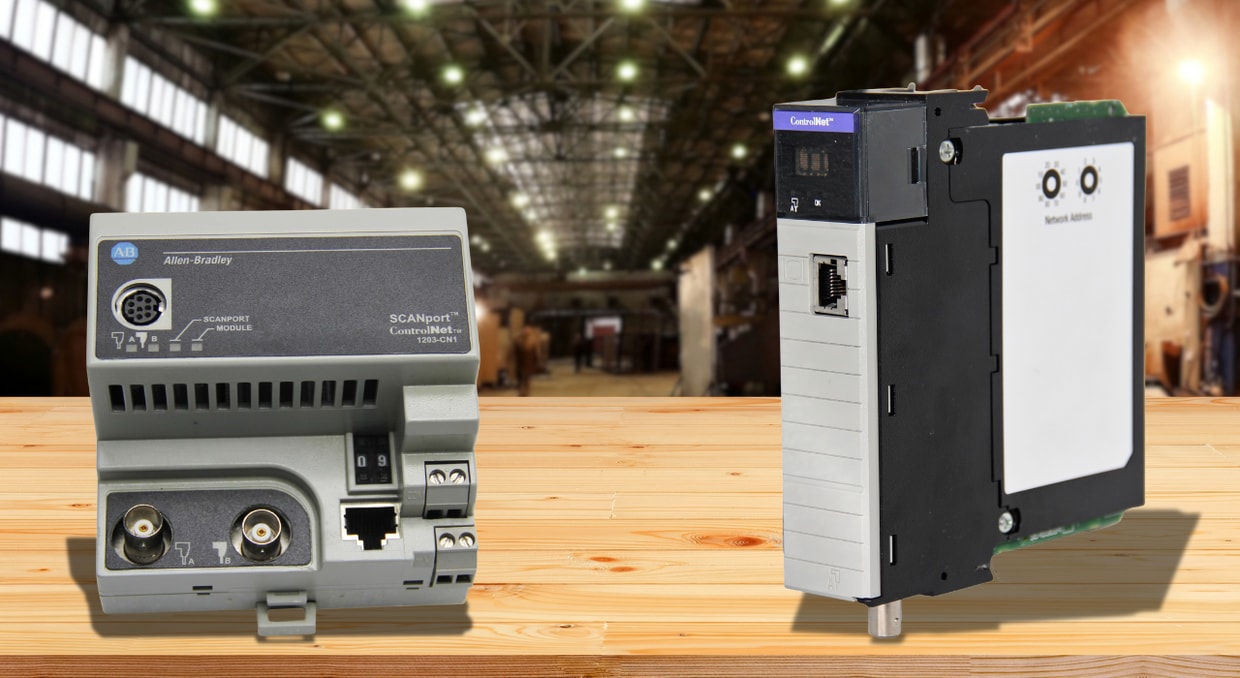
Distributed control systems, essential to modern industrial automation, need distinct hardware components to communicate seamlessly across large facility floors. The Programmable Logic Controller (PLC) is at the core of this system. PLCs execute control logic, process sensor and I/O data, command field devices, and exchange information with HMIs, SCADA systems, drives, remote I/O, and higher-level systems. But a PLC’s effectiveness depends on the communication networks that connect it to company databases, input/output (I/O) modules, human-machine interfaces (HMIs), and supervisory control and data acquisition (SCADA) systems.
Over the last several decades, simple proprietary serial lines have given way to sophisticated, high-speed Ethernet-based protocols. Determinism, bandwidth, distance, setup complexity, and cybersecurity must all be balanced to choose the best protocol, which is seldom a simple technical task. Automation engineers must understand these trade-offs to build industrial networks that are reliable, scalable, and future-proof.
The OSI Model in Industrial Automation: Where Protocols Differ
Engineers map communication protocols against the Open Systems Interconnection (OSI) paradigm to assess them carefully. To provide predictable timing, industrial settings often need specialized handling at Layer 2 (Data Link) and Layer 7 (Application). At the same time, traditional business IT networks mainly rely on TCP/IP at the transport and network levels.
- Layer 1 & 2 (Physical and Data Link): Physical media are handled differently by industrial protocols, which might include wireless, fiber optics, or twisted-pair copper. Data-link layers often use specialized scheduling techniques to prioritize critical safety and control packets over routine diagnostic data.
- Layer 3 & 4 (Network and Transport): Determinism sometimes necessitates abandoning normal TCP stack overhead in favor of optimized UDP versions or specialized MAC-layer handling, despite the growing popularity of standard IP addressing.
- Layer 7 (Application): A PLC’s interpretation of incoming requests is determined by the application layer. Standardized data models (such as tags, objects, and registers) determine how easily a device communicates semantic information with third-party software.
Modbus (TCP/IP and RTU)
Because of its open design and decades of field-proven reliability, Modbus remains one of the most widely used protocols in industrial automation. Its main benefit is its simplicity, whether deployed via industrial Ethernet (Modbus TCP) or serial lines (Modbus RTU/ASCII).
Primary Benefits
Modbus’s simple request-response architecture (Client/Server or Master/Slave) maps directly to memory registers and coils. Nearly all PLCs, flow meters, and drives, both old and new, support Modbus either directly or via low-cost gateway modules.
Potential Drawbacks
Modbus registers are uncontextualized, raw integer or floating-point values. Engineers must keep external address-mapping documentation current. Another limitation is that as the number of connected field equipment increases, network congestion may quickly worsen since Modbus is essentially poll-response.
EtherNet/IP and CIP
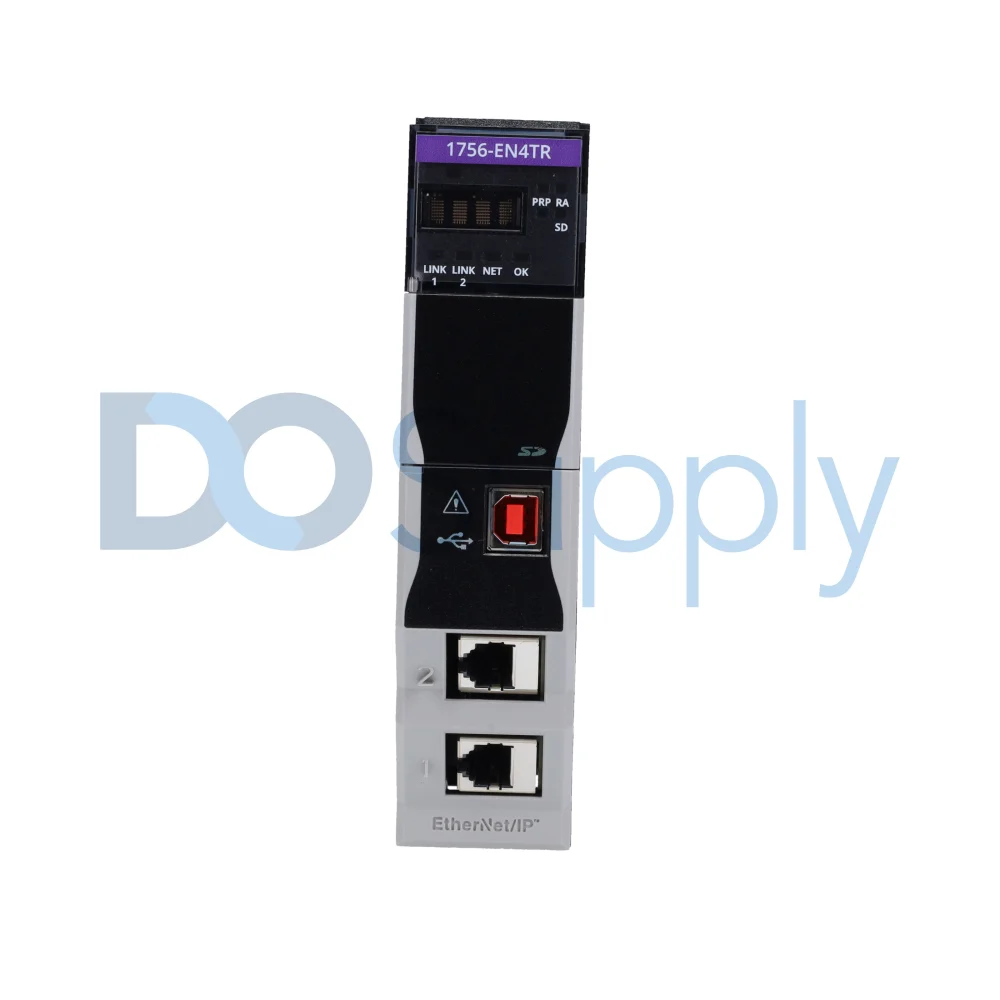
ODVA oversees EtherNet/IP (Ethernet Industrial Protocol), which uses the Common Industrial Protocol (CIP) over standard TCP/IP and UDP to adapt commercial Ethernet (IEEE 802.3) for industrial settings. It is extensively used in production lines that use Rockwell Automation and Allen-Bradley gear.
EtherNet/IPs Strengths
EtherNet/IP combines control, setup, and data collection into one standard Ethernet infrastructure. It supports both unscheduled configuration requests (explicit) and planned, high-priority I/O data transfers (implicit).
Its Limitations
Unfortunately, setting up complex CIP routing, device profiles, and electronic data sheets (EDS) requires specialized technical knowledge. Larger or more demanding EtherNet/IP networks often benefit from managed switches with features such as IGMP snooping and QoS, particularly when multicast I/O, CIP Sync, or CIP Motion traffic is involved. This can increase network design complexity and hardware cost.
PROFINET
PROFINET, a leading industrial Ethernet standard created by PROFIBUS & PROFINET International (PI), is especially used in Siemens-centric ecosystems and European automation industries. To accommodate different speed needs, it divides communication into performance classes.
What It Does Well
PROFINET IRT (Isochronous Real-Time) is perfect for high-speed motion control because it uses specialized hardware synchronization to produce microsecond-level jitter.
It has an integrated Media Redundancy Protocol (MRP) for high availability and supports line, star, tree, and ring topologies.
What to Keep in Mind
Specialized network interface chips and approved switches are needed to optimize PROFINET performance, particularly IRT. To avoid bandwidth saturation, carefully evaluate network design characteristics such as cable length limits and device update ratios.
EtherCAT
By departing from conventional telegram-per-device models, EtherCAT (Ethernet for Control Automation Technology) redefines network efficiency. Slave devices read and write their respective data “on the fly” in a single pass as a data frame travels through each network node.
Why It Works
EtherCAT is the best option for multi-axis robots and high-speed packing equipment because it can update thousands of distributed I/O channels in microsecond cycle periods.
Standard commercial off-the-shelf (COTS) Ethernet gear is often used downstream because of its special “processing-on-the-fly” concept.
Where Compromises Are Made
Although flexible in principle, meticulous preparation during physical installation is necessary to ensure tight device sequencing and optimize cable lengths. Although acceptance is expanding quickly, some popular older automation solutions need specific gateway cards to communicate natively with an EtherCAT master.
PROFIBUS (DP/PA)
PROFIBUS (Process Field Bus) was the robust foundation for decentralized peripherals and process automation before industrial Ethernet took over factory floors. It is still extensively used in heavy process industries using RS-485 physical layers.
Practical Advantages
PROFIBUS DP and PA, which use differential signaling, perform well over long distances without packet loss in electrically noisy industrial settings. PROFIBUS PA uses the same two data-carrying wires to power field instruments in hazardous, explosive process areas (such as chemical plants and oil refineries).
Practical Limitations
PROFIBUS, which normally operates at 12 Mbps, cannot handle modern data-intensive tasks like real-time web server diagnostics or high-resolution machine vision. Network dropouts or sporadic node failures might result from improper cable termination or grounding issues on a PROFIBUS daisy-chain segment.
OPC UA
OPC Unified Architecture (OPC UA) was created to address a distinct issue: secure, platform-independent business data interchange, while conventional protocols excel at deterministic control between a PLC and I/O devices.
Key Benefits
OPC UA sends data objects containing information, units, and structural connections in addition to plain numbers. It is compatible with Linux cloud systems, Windows servers, and embedded microcontrollers.
Important Considerations
OPC UA is often not appropriate for sub-millisecond, closed-loop motion control applications at the fieldbus level, even if it can reach rapid update rates. Compared with lightweight protocols, implementing a complete OPC UA server stack requires a PLC to have much more memory and processing capacity.
CANopen
CANopen offers a standardized application layer for integrating drives, sensors, and intelligent devices into small or modular equipment. It is based on the Controller Area Network (CAN) bus standard, which was first developed for automotive networks.
Key Advantages
CANopen is a standard for mobile devices, medical equipment, and smaller drive systems because it provides reliable error detection, fault containment, and inexpensive transceiver implementation.
Each device exposes its configuration parameters through a standardized object dictionary, simplifying system integration.
Trade-offs and Limitations
Maximum data rates drop substantially as network length approaches physical limits (e.g., to lower kbps over longer kilometer-scale runs). It also cannot handle large bursts of supervisory visualization data because its maximum payload size is limited compared to ordinary Ethernet packets.
DNP3
Distributed Network Protocol 3 (DNP3) is a communication protocol used by PLC systems, remote terminal units (RTUs), and master stations. It is highly optimized for oil/gas pipelines, electrical power grids, and water treatment.
Where It Excels
Unlike protocols that rely heavily on polling, DNP3 devices can report by exception, saving crucial bandwidth on low-speed telemetry lines by transmitting data packets only when values change significantly or alarms occur. Because each data packet is time-stamped at the local device level, master SCADA systems can recreate sequence-of-events logs across large geographic distances.
Where It Falls Short
Compared to straightforward register-based protocols, the protocol stack’s advanced features, such as data fragmentation, multi-layer error checking, and unhandled confirmation routines, make setup more difficult. Rather than high-speed, millisecond execution loops on a discrete production line, DNP3 is designed for wide-area monitoring and control.
Final Thoughts
In conclusion, no single industrial communication protocol fits all applications. The best option depends on system limitations, performance standards, and long-term modernization objectives. Protocols like Modbus RTU or PROFIBUS provide reliable baseline communication for legacy or cost-sensitive retrofits. Deterministic systems like EtherCAT, PROFINET, or EtherNet/IP are essential for fast, precisely timed motion control. DNP3 and OPC UA are the gold standards for wide-area telemetry or vertical integration that securely connects plant-floor data to corporate systems.
Automation engineers can create robust, high-performance communication architectures that enable the contemporary PLC to function effectively, reliably, and securely by carefully weighing these trade-offs at the design stage.
Selecting the right communication protocol is an important part of keeping a control system reliable while having room for future expansion. At DO Supply, we carry PLCs, communication modules, and network adapters for a wide range of industrial protocols to help connect legacy and modern systems alike. If you need help finding compatible hardware for your system, contact us today and our friendly service team can help you find the right gear for your needs. If you would like to learn more about industrial communications, we have an article going over the causes of communications delay in ControlLogix systems.
DO Supply Inc. makes no representations as to the completeness, validity, correctness, suitability, or accuracy of any information on this website and will not be liable for any delays, omissions, or errors in this information or any losses, injuries, or damages arising from its display or use. All the information on this website is provided on an "as-is" basis. It is the reader's responsibility to verify their own facts.