How to Select an AC Drive Based on Load Type
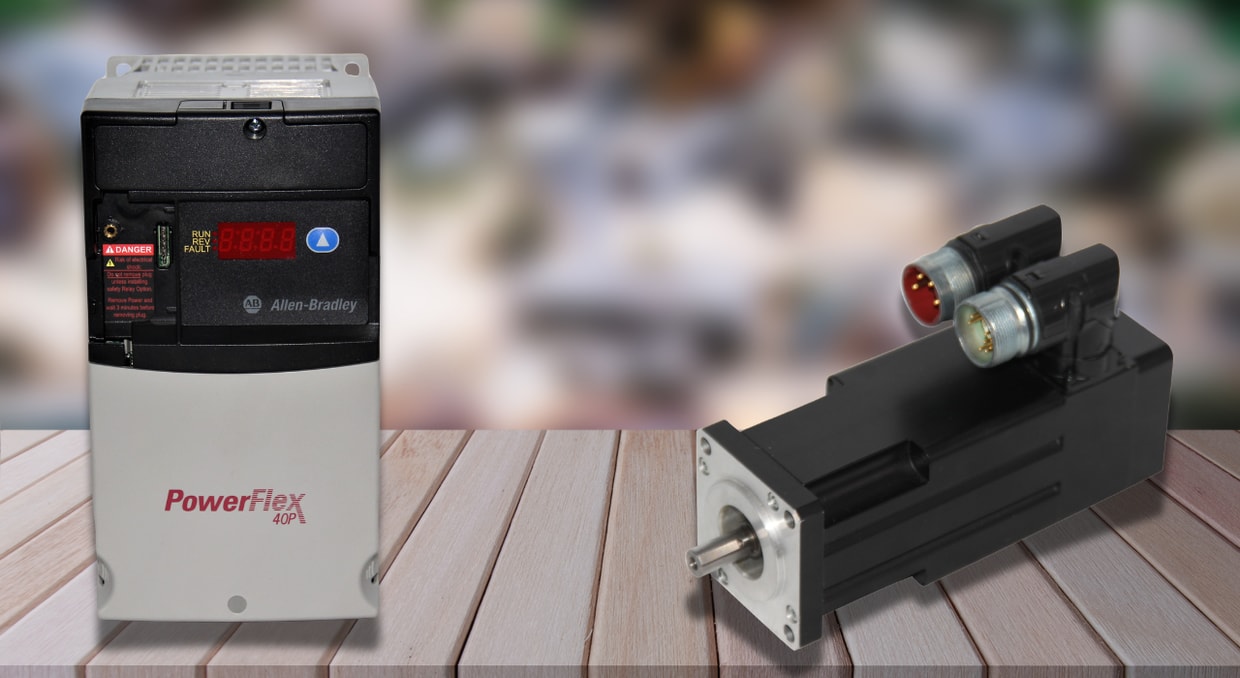
One of the most important decisions in industrial motor control is choosing the right Variable Frequency Drive (VFD), or AC drive, to match your motor and application requirements. Proper AC drive selection begins with understanding the mechanical load characteristics because the load type determines the current and torque requirements the selected AC drive and connected motor must meet across all operating speeds. An appropriately sized AC drive provides adequate continuous and overload current capability to generate the required motor torque while operating reliably.
Selecting an incorrectly configured or improperly sized AC drive often results in insufficient starting or accelerating torque, excessive drive or motor heating, reduced efficiency, nuisance trips, and premature equipment failure. In contrast, an AC drive that is correctly matched to the specified load type helps improve motor performance, operation reliability, energy efficiency, and overall system lifespan. Because of this, load type is a fundamental consideration in AC drive selection, though it should be evaluated alongside other application requirements, including the motor’s full-load amperage (FLA), rated speed, rated voltage & frequency, and motor kilowatt or horsepower rating.
This article provides a systematic approach to selecting an appropriate AC drive based on the fundamental characteristics of the applied mechanical load. By matching the control capabilities and electrical ratings of the selected AC drive to the motor and load requirements, system integrators and engineers can achieve efficient use, appropriate performance, and reliable operation of the AC drive system.
The Fundamental Principle: Load Types
Most AC drive applications fit into one of these three primary load types: variable torque, constant torque, and constant power. These load-type classifications describe the relationship between motor speed and load torque, and are fundamental in determining the appropriate AC-drive configuration and electrical ratings.
Understanding how the applied mechanical load behaves throughout the rated operating speed range is particularly important for proper AC drive selection, because different load types require different AC drive capabilities. For example, constant-torque applications like positive-displacement pumps and conveyors demand considerably constant torque across their operating speed range, whereas variable-torque loads like centrifugal pumps and fans generally require torque that increases with speed. Constant-power AC drive applications require decreasing torque as speed increases. These load-type characteristics directly influence the required torque, current rating, control features, and overload capacity of the AC drive to be selected.
Therefore, do not select an AC drive independently of the motor and load requirements. The AC drive, connected motor, and driven load should all be considered as an integrated system. To meet the torque requirements of the applied mechanical load across all operating speeds, the selected AC drive must have sufficient current rating, overload capacity, and rated voltage to operate the connected motor under the specified load conditions.
Variable-Torque Loads
Variable-torque loads are common in a wide range of AC drive applications such as centrifugal pumps and fans, and they offer significant potential for energy savings through speed reduction.
For these types of loads, the power required increases at the rate of the speed cubed ( , while the required load torque varies proportionally to the square of the speed ( . For instance, if the motor speed increases by a factor of 3, the torque increases by a factor of 9. Similarly, a threefold increase in motor speed results in approximately a 27-fold increase in power. Conversely, reducing motor speed by 10% yields a 27% reduction in power, offering substantial potential for energy savings.
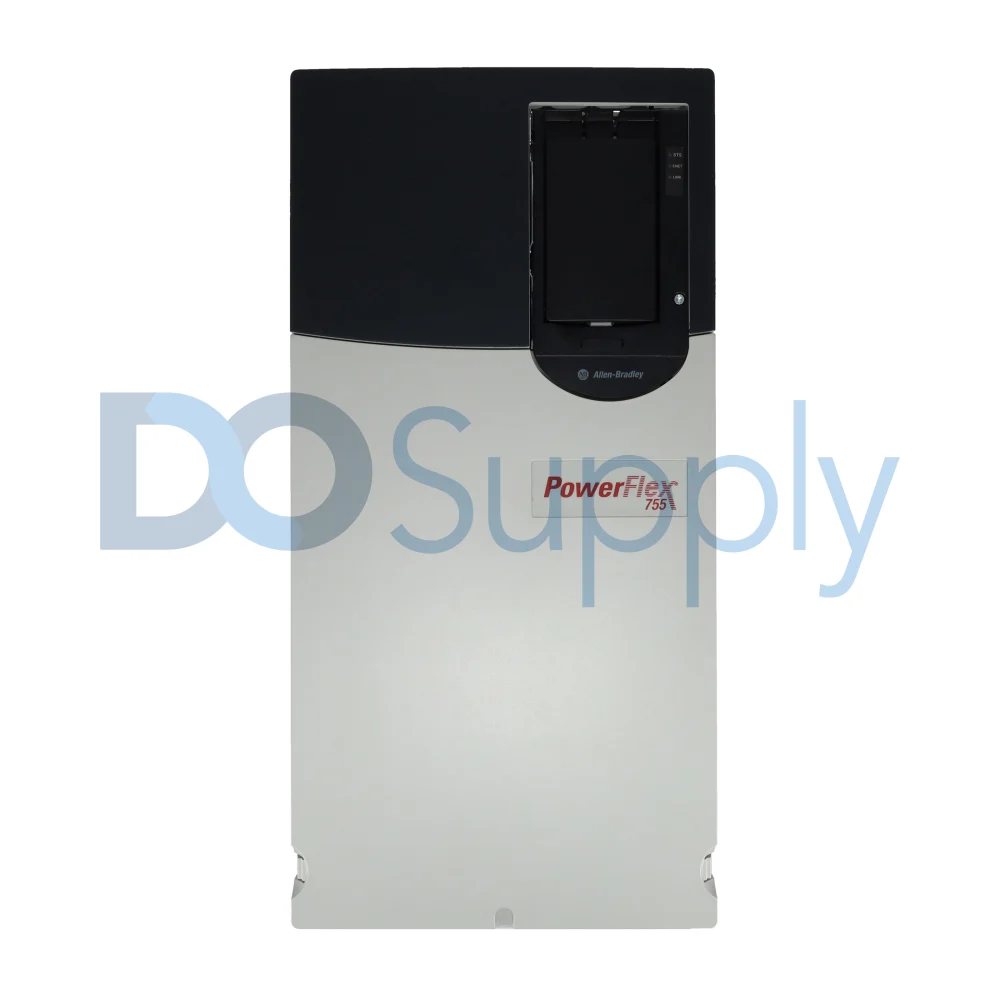
Examples of Variable-Torque Loads are:
- Centrifugal fans and blowers
- Centrifugal compressors
- Centrifugal pumps, including HVAC, process, and water pumps
- Air-handling and ventilation systems
- Cooling-tower fans
- Forced-draft fans and induced-draft fans
- Chillers
AC Drive Selection Criteria
In variable-torque load-type applications, the AC drive does not need large overload capacity or high starting torque. The motor normally starts under a “soft” load, which means the AC drive should be sized close to the motor’s continuous rating. In most cases, the basic V/Hz (volts-per-hertz) control is cost-effective and sufficient. For process regulation, select variable-torque AC drives with PID control, soft-start capabilities, and integrated energy optimization functions. HVAC applications should have advanced features that respond promptly to flow sensors, such as built-in PID control.
Key Consideration
When selecting an AC drive for a variable-torque application, evaluate the motor’s cooling capability and required operating speed range. Standard general-purpose AC motors can be used with AC drives for variable-torque applications, provided they operate within the manufacturer’s specified speed, voltage, and thermal limits.
However, if these motors operate at very low speeds—such as below approximately 20% of the rated motor speed—they are highly likely to overheat because the shaft-mounted cooling fan also runs more slowly, reducing airflow and the motor’s ability to dissipate heat. This may require additional cooling, depending on the type of AC motor and load conditions. For continuous low-speed operation, you may need to install a separately powered forced-ventilation system or use an inverter-duty motor specifically designed and rated for operation with an AC drive.
Constant-Torque Loads
Regardless of speed, constant-torque loads inherently require constant torque. This means the motor current remains constant across the full operating speed range, subjecting both the AC drive and the motor to continual thermal stress. At low speeds, thermal stress is particularly difficult because of low fan airflow.
Typical Applications of Constant-Torque Loads:
- Feeders and conveyers
- Compressors (reciprocating and screw)
- Agitators and mixers
- Shaping and forming machinery
- Fluid displacement pumps
- Winding machinery and web handling
AC Drive Selection Criteria
For constant-torque applications, AC drive selection requires a thorough evaluation of the motor’s continuous and overload current requirements across the entire operating speed range. Unlike variable-torque applications, constant-torque loads can require substantial torque—and therefore substantial current—even at low speeds. The primary limiting factor in these applications is the motor’s ability to dissipate heat at low speeds.
The selected AC drive should have a continuous output-current rating that’s sufficient to meet the connected motor’s nameplate full-load current (FLA) as well as an overload-current capacity appropriate for the application’s transient, starting, and accelerating torque requirements. The AC drive selection should therefore be based on the application’s actual torque, overload, and speed requirements and the motor’s nameplate current, not horsepower alone.
Speed Range Considerations
For constant-torque applications, the allowable speed range of a standard TEFC motor operated by an AC drive is limited by the motor’s ability to provide adequate cooling at low speeds. A typical standard TEFC motor can provide a limited constant-torque operating speed range, usually around 4:1, although you should verify the actual range in the motor’s manufacturer specifications. For sustained operation over a wider low-speed range, you may need an inverter-duty AC motor with appropriate low-speed thermal capability, such as independent forced ventilation. Always evaluate the required cooling method and allowable low-speed operating range based on the AC drive and motor manufacturer’s ratings.
Control Mode Selection
For simple conveyor applications, basic V/Hz control may suffice because it does not require accurate speed regulation. Closed-loop vector control or Sensorless Vector Control can be deployed in applications that require precise speed control, high acceleration rate, or high torque during start-up. Vector control lets the AC drive independently regulate the torque and magnetic-field currents of the connected motor.
Overload Capacity
Many constant-torque AC motor/drive systems often require high starting torque or face shock loads. The AC drive readily handles brief overloads of up to 60 seconds at 150% of the motor’s rated current capacity. For heavy conveyors, mixers, or crushers with extended acceleration times, size the AC drive accordingly for prolonged overload capacity.
Constant-Power Loads
To maintain a steady power output, constant-power loads demand low torque at high speeds and high torque at low speeds. As the motor speed increases, the required load torque reduces proportionally; on the other hand, as speed decreases, the load torque increases. Thus, constant-power loads exhibit an inverse relationship between motor speed and load torque.
When selecting an AC drive for a constant-power application, the selected AC drive and connected motor should be able to provide the required current, power, and load torque throughout the specified speed range.
Typical Applications of Constant-Power Loads
- Unwinding and winding machinery (cable, wire, paper)
- Spindles on machine tools
- Certain types of rolling mill applications
- Printing and converting equipment
- Certain extruders — depending on the process requirements and specified operating speed range
- Traction and propulsion systems
- Web-handling systems
- Drilling equipment
AC Drive Selection Criteria
For constant-power applications, select the AC drive based on the required power level, load torque, operating speed range, and control-performance requirements. Carefully evaluate the required constant-power operating speed range when selecting the AC drive and motor to ensure reliable performance. The selected AC drive must provide sufficient current, voltage, and control capability to maintain the required power and torque throughout the specified operating range while remaining within the motor’s speed and thermal limits.
Beyond Load Type: Additional AC Drive Selection Factors
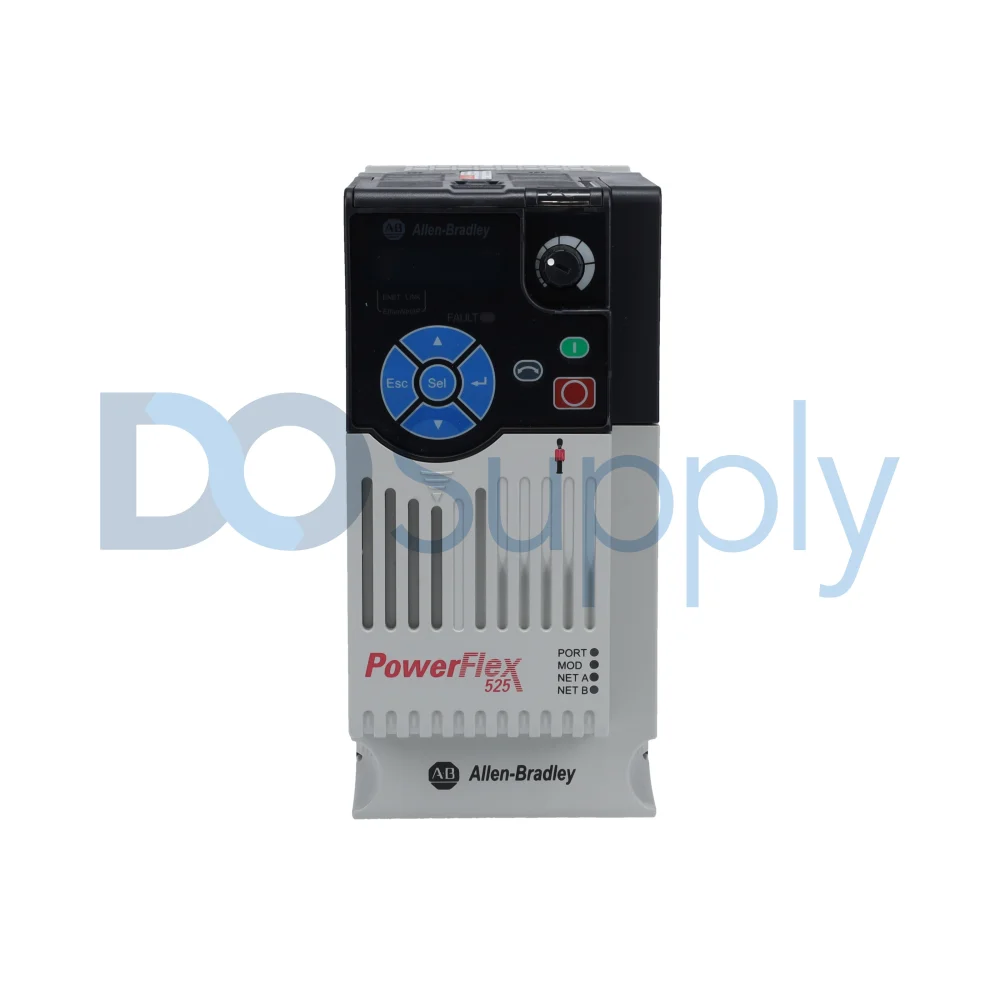
Although load type is a fundamental consideration in AC drive selection, proper drive sizing and configuration also depend on several other application, motor, and operating requirements. Evaluate these factors alongside the specified load requirements to ensure the selected AC drive can meet the performance, electrical, and thermal demands of your drive/motor system. These differences can be found within different tiers of drives, and if you would like to learn more about entry level and high performance PowerFlex drives, we have an article here. These additional factors include:
- Motor Nameplate Data: The full specifications of the motor should be evaluated, including the speed, insulation class, horsepower, FLA, and the voltage class (480V, 208V, 230/240V for North American three-phase systems). Always size the AC drive based on the motor current rating, not just horsepower. For permanent magnet motors, this is critical because they have distinct current behaviors compared to induction motors.
- Duty Cycle: It is important to consider how the application runs, whether cyclically, intermittently, or continuously. To avoid overheating, applications running continuously require derating or larger AC drives. For cyclic loads with short overload spikes, factor in the thermal time constant of the selected AC drive, which is about 4 to 6 minutes. The motor typically takes 15 minutes to several hours to adjust temperatures, while the drive heats and cools much faster.
- Braking Requirements: In high-inertia loads such as elevators, centrifuges, and large fans, there is regeneration of power when decelerating. Unmanaged, this power can cause overvoltage trips because it flows back to the AC drive’s DC bus. The regenerative energy can be absorbed by adding a dynamic brake resistor, or dissipated gradually by extending the deceleration time. In vertical loads such as elevators and hoists, adding a mechanical brake is crucial to hold the load at zero speed.
- Motor Type Compatibility: The selected AC drive must be compatible with the application’s motor type and its required control method. Induction motors can typically be operated using Sensorless Vector Control, closed-loop vector control, or V/Hz (Volts-per-Hertz) control. Permanent-magnet motors generally require an AC drive specifically designed for PM motor operation and commonly use field-oriented control or other vector-based control techniques.
Synchronous reluctance motors also require a compatible AC drive and control algorithm, often incorporating vector-based control and motor parameter identification. Therefore, consider the motor type, control techniques, feedback requirements, and the drive manufacturer’s compatibility specifications together when selecting an AC drive.
- Speed Control Requirements: Determine the required speed regulation accuracy and dynamic performance of your application. Volts-per-Hertz (V/Hz) control is generally suitable for basic speed-control applications such as fans and pumps, where high torque or speed regulation accuracy is not required. In contrast, vector control, either open-loop (sensorless) or closed-loop with feedback, provides precise speed regulation, torque control, and dynamic response for more demanding applications.
- Control Mode Selection: The AC drive’s control mode determines how the drive regulates voltage, frequency, speed, and torque of the connected AC motor. Select the drive’s control mode based on the application’s load characteristics, specified operating speed range, required speed regulation accuracy, torque response, and feedback requirements. Here are the three primary AC drive control modes:
- V/Hz (Volts/Hertz) Control: This is the simplest control technique, and it involves keeping a fixed voltage-to-frequency ratio. It is suitable for constant- and variable-torque loads that do not require precise speed regulation.
- Sensorless Vector Control: This control method estimates the motor’s rotor position and determines its speed without an encoder. Compared with V/Hz mode, it provides better torque response and more precise speed control. It is ideal for applications that need high torque during startup and have dynamic load changes.
- Closed-Loop Vector Control: To precisely regulate torque and speed, this setting utilizes the encoder feedback. Use it for tasks that demand precise positioning or holding steady force at zero speed.
Practical AC Drive Selection Checklist
Use the following checklist to ensure that the selected AC drive meets the motor, load, and application requirements.
- Classify the load type as either constant power, variable torque, or constant torque. Determine whether the application requires high starting torque, handles shock loads, or has other transient torque demands.
- Determine the required operating speed range. Consider the torque derating at high speed and cooling restrictions at low motor speeds.
- Document the key motor nameplate data required for AC drive selection, including rated voltage, rated horsepower (or kW), full-load current (FLA), frequency, rated speed, and insulation class.
- Based on the required motor performance, select the appropriate AC drive control mode proper control mode of the drive, such as V/Hz, closed-loop vector control, or sensorless vector control.
- Select an AC drive with a continuous output-current rating sufficient for the motor’s full-load amperage (FLA) and an overload capacity that satisfies the application’s requirements. For instance, some AC drives provide 150% of rated current for 60 seconds; however, the applicable overload rating varies by application and AC drive model and should be verified in the manufacturer’s specifications.
- For high-inertia loads, assess the deceleration and braking requirements and determine whether dynamic braking, mechanical braking, or another braking method is required.
- Environmental factors such as altitude, operating temperatures, and enclosure (IP) ratings are also key considerations.
- Ensure that the selected AC drive meets all applicable safety requirements and provides the necessary safety features, such as Safe Torque Off (STO), where needed by the application.
- Evaluate the AC drive’s networking and communication capabilities, particularly where networked monitoring, control, or diagnostics are required.
Once you have narrowed down your choice of AC drive type, its time to narrow it down to one that will fit your application. On our site, we carry hundreds of different drives from brands you can trust, including Allen-Bradley and Mitsubishi. There you can find the drive with the right specifications and have it shipped fast to your facility. We also have PLCs, motors, and accessories to pair with your new drive. If you still need help finding what you need, give us a call and our friendly support will help find the right drive for the right job.
DO Supply Inc. makes no representations as to the completeness, validity, correctness, suitability, or accuracy of any information on this website and will not be liable for any delays, omissions, or errors in this information or any losses, injuries, or damages arising from its display or use. All the information on this website is provided on an "as-is" basis. It is the reader's responsibility to verify their own facts.