When to Use Allen-Bradley ControlLogix in Process Control Applications
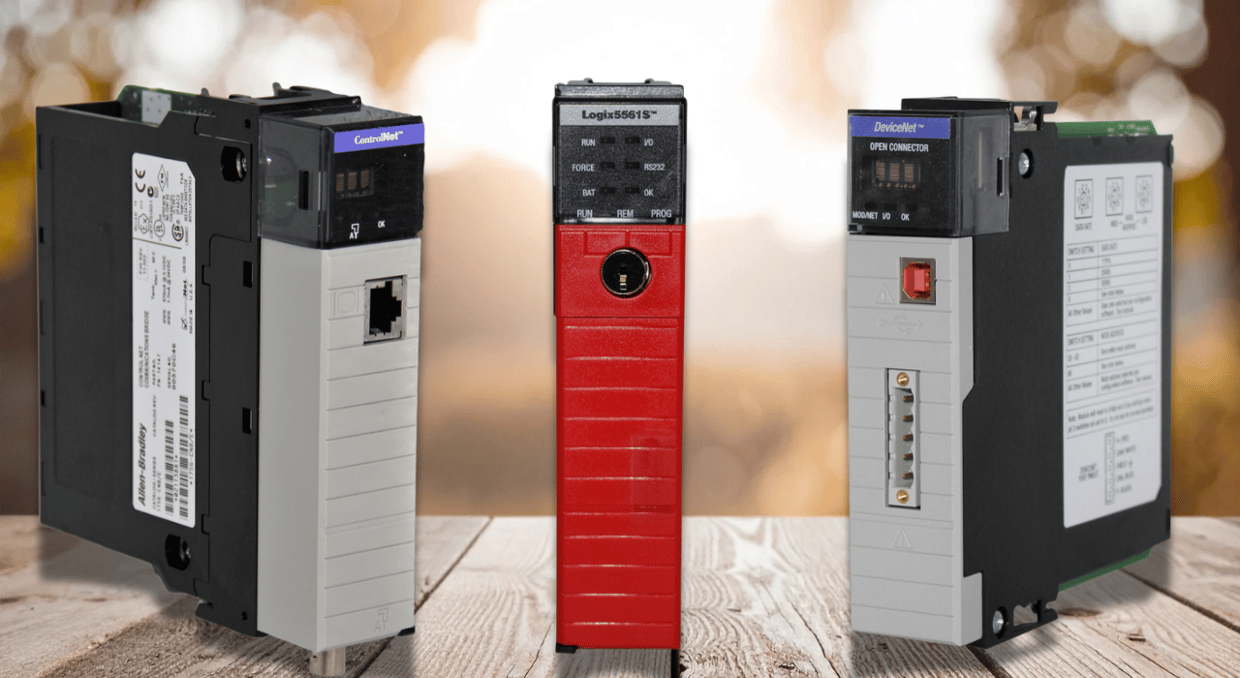
Industrial process control systems coordinate equipment across a production facility while maintaining operating variables within specified limits. In chemical processing and water treatment facilities, these systems rely on precise measurements of liquid levels, flow, temperature, and pressure to regulate processes through variable frequency drives, control valves, and pumps. Selecting an appropriate industrial controller is therefore a critical design decision as it directly influences system performance, ease of maintenance, and future expansion.
The Allen-Bradley ControlLogix is a programmable automation controller (PAC) platform particularly designed for industrial applications that demand extensive integration with industrial devices and networks. Various ControlLogix controllers also handle continuous process regulation and equipment sequencing depending on the selected controller model. Its chassis-based modular architecture lets engineers select and configure ControlLogix controller models, communication modules, and distributed or local I/O modules that best match application requirements. Available ControlLogix capabilities depend on the selected hardware model, firmware, and software.
Despite being highly capable, the ControlLogix platform is not the most cost-effective solution for every process control application. Industrial process control systems with straightforward logic, limited I/O, and modest communication requirements can be better served by more compact Allen-Bradley controller options. Before selecting controller hardware, engineers should carefully evaluate the process requirements. This article explores the specific operational and engineering requirements that make the Allen-Bradley ControlLogix an excellent choice for industrial process control.
Understanding the Allen-Bradley ControlLogix Platform
The Allen-Bradley ControlLogix platform is part of Rockwell Automation’s Logix family and uses a modular, chassis-based architecture. You can configure compatible processors, I/O modules, and communication modules within a ControlLogix chassis to meet process control requirements. The platform supports both local I/O and remote I/O modules connected through supported industrial networks, depending on the selected controller hardware and configuration. This exceptional versatility simplifies the design and scalability of control systems in complex production facilities.
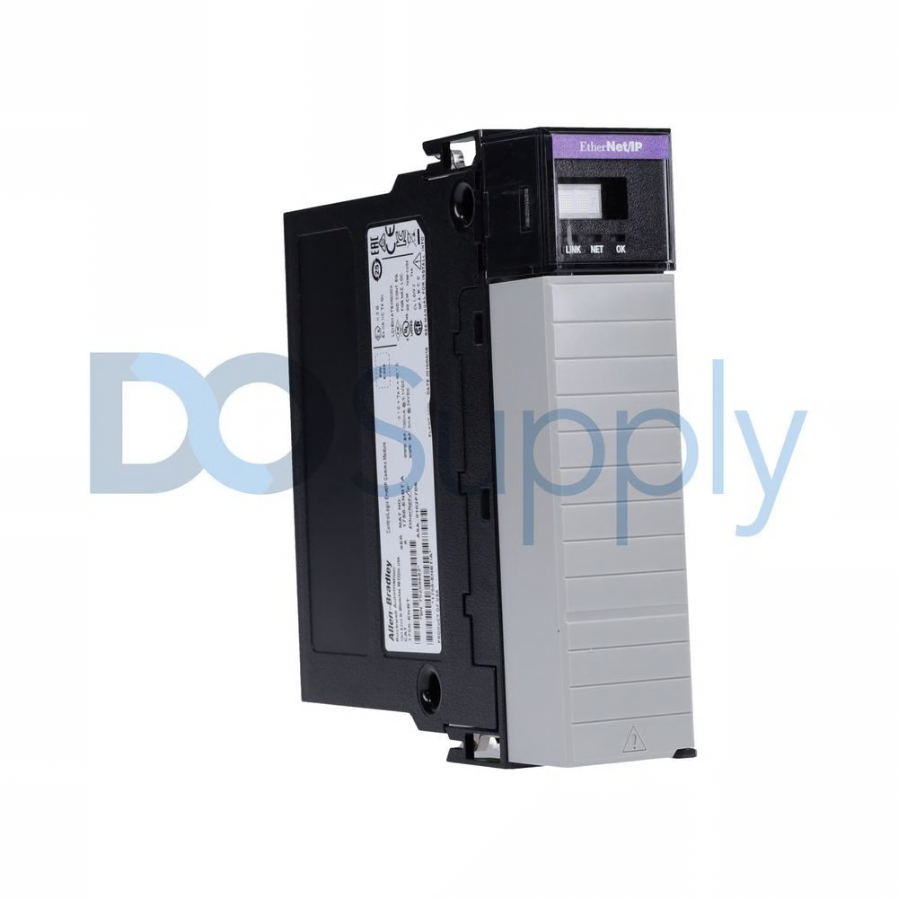
During operation, the ControlLogix controller receives input data through field I/O modules and communication interfaces and executes the programmed control logic to control the connected outputs. The input data to a ControlLogix controller may include temperature and pressure measurements, motor-running status, and valve-position feedback. The controller processes these inputs against programmed sequences and setpoints to generate commands for connected field output devices such as variable frequency drives, motor starters, and control valves.
For instance, the Allen-Bradley ControlLogix can automate chemical dosing sequences and regulate tank levels in an industrial water treatment facility. The controller continuously tracks flow measurements and strictly enforces safety interlocks. It can also transmit process information to a human-machine interface (HMI), allowing individual equipment to operate as a synchronized plant rather than as isolated machines.
As mentioned earlier, available ControlLogix capabilities and configuration options vary by controller model, associated hardware and software, and firmware revision. Before finalizing an industrial process control system design, one should cross-reference compatibility requirements and relevant specifications against the official Rockwell Automation ControlLogix technical documentation.
Where the Allen-Bradley ControlLogix Fits in Modern Industrial Automation
The ability to coordinate disparate control functions within a single process is a primary driver for selecting the Allen-Bradley ControlLogix platform. Advanced industrial processes often demand a combination of safety interlocks and equipment sequencing. These operations must respond predictably to changing plant variables and are inherently interdependent.
Consider an automation system in a chemical processing plant that governs feed flow while simultaneously regulating vessel pressure and reactor temperature. The cooling loops should remain operational during designated operating stages. Product transfer valves should open only when all required permissive safety conditions are satisfied. If a cooling pump trips, the selected control system should generate an alarm and execute the protective actions defined by your process requirements. All safety-related functions should be implemented using an appropriately designed and validated safety-related control system.
You can logically organize applications by equipment function or process area through the hierarchical task-and-routine structure of the Allen-Bradley ControlLogix. This means dedicated routines can independently govern valve control and pump operation. This modular programming architecture enhances code readability. The controller’s required execution performance should be thoroughly assessed before hardware selection. One must consider the processing overhead generated by communication loops and the number of control functions. A large control program alone does not inherently justify a ControlLogix deployment. A ControlLogix platform becomes a stronger choice when the application’s control complexity, integration needs, and expansion requirements justify its capabilities and cost.
When Multiple PID Control Loops Are Required
To maintain precise operating windows, multiple industrial processes rely on continuous control rather than basic on-off logic. Even amidst fluctuating production demands, temperature and pressure should remain within designated limits. To continuously modulate the process variable toward a desired setpoint, these systems often rely on proportional-integral-derivative (PID) control. The Allen-Bradley ControlLogix supports complex process control applications driven by related equipment logic and multiple concurrent PID loops. Engineers use appropriate control instructions to adjust outputs in response to real-time process data, based on the software and controller configuration. The controller can also align these loops with operating sequences and safety interlocks.
For instance, a heated mixing tank demands distinct regulation of temperature and fluid volume. One sensor tracks the liquid temperature, while the other monitors the tank’s fill level. The controller modulates the relevant control outputs after computing these data inputs. Safety interlock logic ensures that the heating element is deactivated when the tank does not contain enough liquid.
Effective process control relies not primarily on controller selection alone, but on sound engineering practices. While validating sensor precision, automation professionals must configure the output ranges and input scaling accurately. The actuator response and sensor accuracy must also be verified. PID loop must be tailored to account for disturbances and process dynamics. ControlLogix is highly effective, particularly when several loops interface tightly with other process functions.
When High Analog and Digital I/O Counts Are Required
Industrial plants may require numerous I/O points to connect field instruments and equipment status signals. Digital inputs receive discrete signals such as motor-running status and limit-switch states. Process variables such as pressure and flow are measured by the analog inputs, while the output modules distribute control signals to motors, valves, and downstream managed equipment. The ControlLogix platform inherently interfaces with compatible local 1756 I/O modules and distributed I/O through supported networks. The following factors should be considered when selecting an appropriate I/O module: electrical ratings, signal type, electrical isolation, and diagnostic requirements. The final design should also accommodate the selected controller’s processing capabilities, network communication limits, and required I/O update rates.
This design principle is illustrated by a wastewater treatment plant. The installation features geographically isolated process zones such as sludge processing and aeration basins. You can wire motors and sensors closer to the equipment by using distributed I/O. This minimizes the long-distance field wiring runs back to the central control cabinet.
Engineers must first audit the current I/O count and project future additions before hardware selection. Network update time (RPI) constraints and module loading should also be evaluated. Electromagnetic interference (EMI) and ambient temperatures should be mitigated prior to deploying a remote I/O chassis. When the plant requires extensive I/O integration across different and coordinated areas, the ControlLogix platform emerges as an ideal solution.
When Multiple Process Areas Require Coordination
Many industrial facilities contain interconnected production stages that rely on inter-stage control data and status exchange. Each stage may operate independently, but its ability to start or continue processing can depend on the availability of downstream or upstream equipment. A seamlessly integrated control system coordinates these dependencies through operating prerequisites, interlocks, and sequencing logic to prevent conflicting operations.
Prior to thermal processing and final packaging, a food processing plant typically sequences blending and raw ingredient preparation. If the receiving tank is already full, automated interlocks should suppress the transfer pump operation. Similarly, the heating stage should first confirm that the exact batch volume is available before starting the heating cycle.
The ControlLogix platform utilizes a structured application logic to manage operating prerequisites and equipment states. Control Engineers organize the software around distinct process zones and define the conditions for interaction. Through supported configurations, communication links exchange command information where several controllers are installed.
A well-designed architecture must clearly assign function ownership of each controller. During communication interruptions, it should dictate the system’s fail-safe behaviors. These measures prevent faults in a part of the factory from causing unnecessary disruption elsewhere. For applications requiring coordinated operation across multiple machine groups, ControlLogix is the best fit.
When HMI and SCADA Integration Is Required
Modern industrial facilities rely heavily on comprehensive visibility into process conditions. Operations staff can manage alarms and track process variables by utilizing HMI and SCADA platforms. Maintenance personnel can easily investigate asset failures using the diagnostic information.
ControlLogix offers data exchange between supervisory platforms and compatible operator interfaces. In Rockwell Automation environments, applications such as process visualization utilize FactoryTalk software and PlantPAx components. The supervisory system enables authorized personnel to issue permitted commands. In contrast, the controller drives the active control logic.
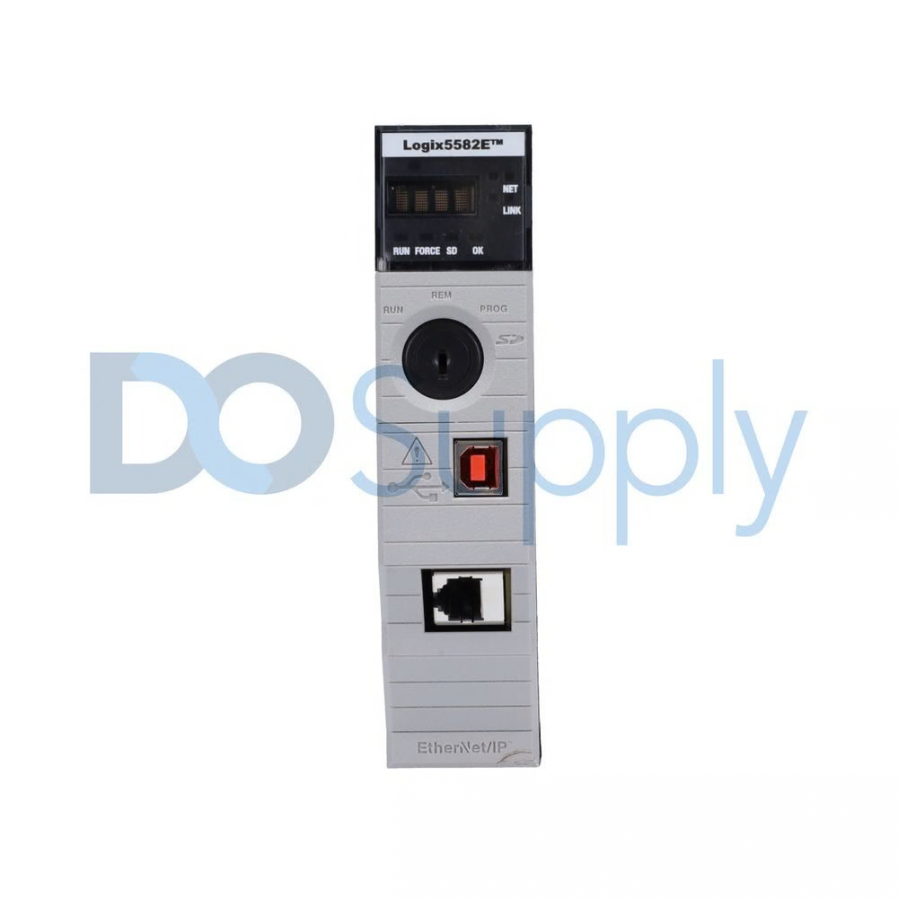
For instance, feedwater flow and steam pressure monitoring are crucial in a boiler installation. These values are displayed by the HMI alongside active alarms and burner status. The operator interface provides a view of real-time system performance while the controller runs its programmed logic in the background.
The interface between the supervisory system and the controller must be carefully designed by automation professionals. Alarms must have appropriate priorities, and tag names should also be consistent. During commissioning, communication must be considered. When supervisory integration is woven into a larger control architecture, ControlLogix is particularly useful in these systems. Selecting a high-capacity controller is not justified by the mere inclusion of an HMI.
When High Availability and Controller Redundancy Are Required
Unexpected controller failures can interrupt production and lead to costly restart procedures. In continuous industrial processes, even a brief production interruption may require process conditions to be stabilized again and can affect end-product quality. Controller selection should therefore account for system availability requirements and whether controller redundancy is needed to reduce production downtime following a controller failure.
Rockwell Automation supports controller redundancy in compatible ControlLogix configurations. The primary controller performs standard process control functions while the secondary controller is synchronized and prepared to take over. If a qualifying fault occurs, the control system switches over to the secondary ControlLogix controller. Switchover time and its effect on the process depend on the selected control hardware, system configuration, and application.
Unscheduled outages trigger prolonged startup sequences and material losses in chemical processing facilities. Downtime caused by certain controller failures can be minimized with a well-engineered redundant controller system. The actual value depends on the supported hardware configuration and the unique demands of the process requirements.
Redundancy requires a precise selection of communication components and processors. Both remote I/O architecture and power supplies should be carefully designed. Redundant controllers do not eliminate all vulnerabilities, although they mitigate processor faults. Final control elements and field instruments may fail independently. To verify the supported arrangement, consult the official ControlLogix high-availability manuals.
For those looking into designing a ControlLogix system for their facility, let us at DO Supply be your supplier! We carry all things ControlLogix, including controllers, accessories, communication modules and more. We also offer repair services for broken automation equipment as well, all backed by our two-year warranty. When getting into a ControlLogix system, it also helps to know their common failure points.
DO Supply Inc. makes no representations as to the completeness, validity, correctness, suitability, or accuracy of any information on this website and will not be liable for any delays, omissions, or errors in this information or any losses, injuries, or damages arising from its display or use. All the information on this website is provided on an "as-is" basis. It is the reader's responsibility to verify their own facts.