How Soft Starters Reduce Mechanical Wear
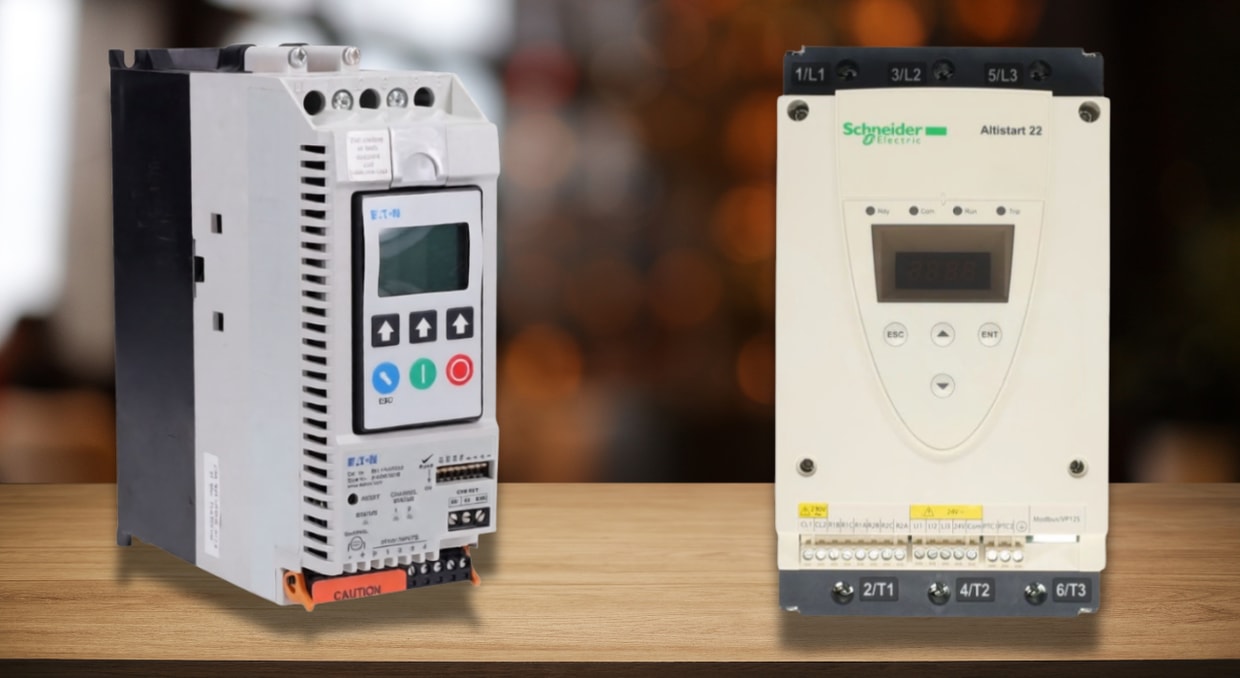
Say a conveyor drive keeps eating couplings. Somebody checks the motor (fine), checks the supply (fine), and swaps the coupling again. Three months on, same story. What rarely gets questioned is the start itself, those first moments when a motor with nothing to hold it back slams its torque into the shaft. Soft Starters exist largely to take the edge off that moment, and even ABB lists reduced wear and tear on mechanical equipment as one reason to fit them.
Today we will go through what the manufacturer documentation actually says about this: the electrical trick underneath, the machines where it shows up most, and the cases where a soft starter is the wrong call.
The Hit Your Couplings Take on a Direct Start
An induction motor can develop a high starting torque when started across the line, and this torque may result in a shock load on some part of the chain from the shafts, couplings, gearboxes to the belt, depending on what it is driving; though the motor is not affected.
That’s why a motor can look healthy on paper while the parts list for the driven machine says otherwise. Anyone reading maintenance records for a belt-driven line should ask how many of those replacements trace back to how the line starts.
What Soft Starters Do to the Voltage
The firing angles of the thyristors get adjusted to change the amount of voltage that ultimately goes to the three-phase induction motor. Without this, the motor would shudder, but now it gradually increases or decreases speed. All of this can be reverted efficiently.
Belts, Gearboxes and the Machines Behind Them
Sudden accelerations show up in the belts, couplings, and gearboxes of compressors and conveyors, since they transmit motor torque through them as tension surges and mechanical shocks. Slowing the acceleration eases both effects, which may translate to less wear and a lighter maintenance load. “May” is the right word. Mixers and crushers face high transient loads at start-up, and a properly configured soft starter makes acceleration more gradual, reducing the severity of some of those loads, as the source material is careful to put it.
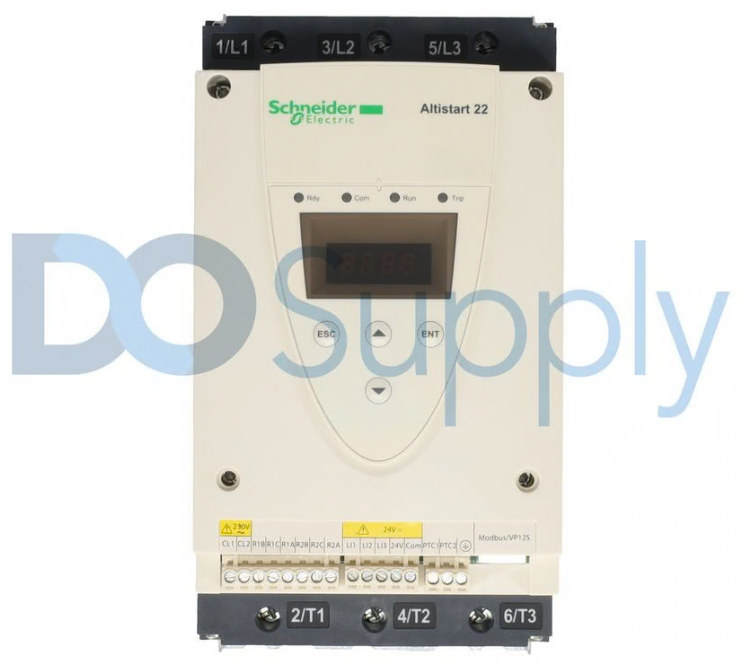
Schneider Electric gives a decent sense of reach. Its Altistart 01, 22 and 480 families are documented for pumps, fans, compressors, conveyors, mixers and centrifuges, with reduced mechanical stress named among the benefits. That’s a fairly wide spread of equipment for one category of starter, and it also shows why the same ramp setting can’t be copied from a fan to a centrifuge without thought.
Water Hammer Is not Starting Shock. People lump these together, and they shouldn’t in pump systems.
Starting shock is torque: a mechanical event inside the drivetrain. Water hammer is a pressure transient that develops when fluid velocity changes rapidly, and it can damage pumps, valves, and piping. A pump station can have either problem or both, and fixing one leaves the other untouched.
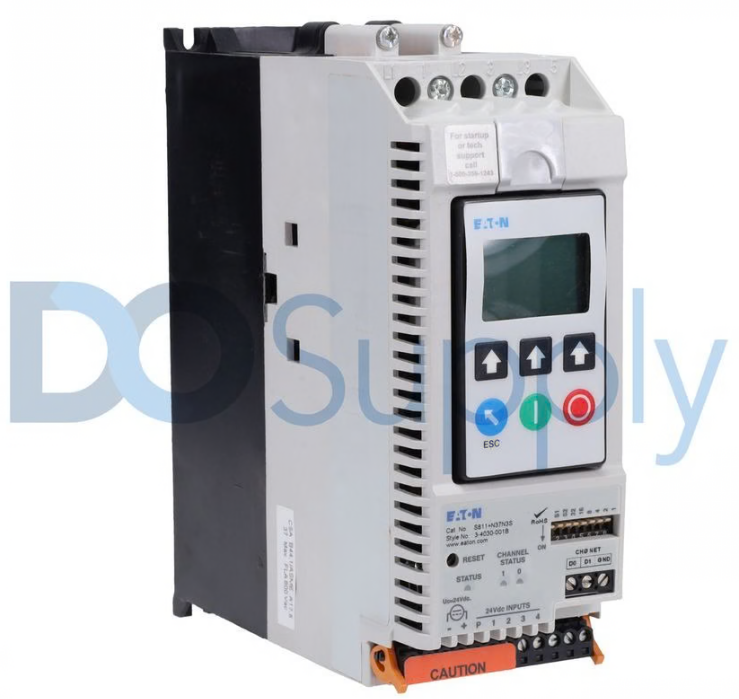
Eaton’s S811+ is the clearest documented example of a soft starter built with this in mind, since it includes pump-control functionality to reduce water hammer during stopping. Notice where that sits: the stop, not the start. With an appropriate soft-stop or pump-control function and the right operating conditions, a soft starter can reduce these transients, though nobody should read that as a promise that every system will behave.
Rockwell Automation’s Allen-Bradley SMC-50 approaches pumps from another angle. It’s a solid-state smart motor controller offering several starting and stopping modes, and Rockwell highlights smoother pump starts and stops. Several modes matter because a lightly loaded pump and a heavy mixer don’t want the same ramp.
Stopping Hurts Too
Abrupt stops put stress on driven equipment, particularly pumps and anything with substantial inertia, so a starter with suitable stopping functionality can reduce the severity of some stopping-related transients. Siemens frames its SIRIUS 3RW range around exactly this: preventing mechanical stress when starting and stopping three-phase motors, with performance levels covering standard and demanding duties. For more demanding applications, the 3RW55 is a fantastic model when starting-and-stopping control needs to be more sophisticated.
Choosing Where on the Range to Land
Nobody sells one soft starter. ABB has the PSTX as its advanced range and the PSE as the general-purpose option; Siemens divides 3RW by standard and demanding applications; Schneider’s three Altistart families illustrate how the choice shifts between basic and more advanced duties.
So what decides it? Roughly: how the load behaves when it starts, how much inertia it carries, how often it starts, and whether the stop needs shaping at all. A pump with a water hammer problem needs stopping control more than anything. If a conveyor runs on belts, the acceleration must be slow. Thus, a soft start helps maintain smooth operation. Heavy-duty inert loads, high torque demands, and frequent starting are cases where you can look beyond soft starters when selecting motors and drives.
Protection, Monitoring and Bypass
Schneider Electric claims to produce integrated motor protection devices with the utmost reliability. Rockwell’s SMC-50 also claims to provide protection and monitoring of mechanical and electrical machines to identify faults. Siemens uses integrated bypasses to cut operating losses, while Schneider offers motor protection and supports industrial operations; both use these features to their advantage. The environment in which the soft starter is installed will also affect performance. We have a dedicated article on that as well if you would like to read more.
When a VFD Is the Better Tool
A soft starter works on voltage during start and stop. It does not continuously adjust speed. Applications that demand ongoing low-speed operation or accurate speed control need VFDs, and no smart ramp adjustment can change that. The second constraint is subtle: because outcomes depend on the motor, load, and settings, you must confirm wear reduction on the specific machine, not infer it from a datasheet.
Conclusion
Soft starters mitigate mechanical wear by timing the torque delivery. The thyristor firing-angle control ensures a gradual increase and decrease in motor voltage during startup and shutdown, respectively, providing shafts, couplings, gearboxes, and belts a soft ramp, not a harsh blow. Points to heed: the benefit is contingent; starting torque is distributed, not obviated; water hammer, a distinct pressure issue, is managed by specialized functions like Eaton’s S811+; the stopping profile is equally vital as the start; and for actual speed control, a VFD is the solution. If a driven machine wears out belts or couplings quickly, inspect its startup procedure before obtaining replacements and consider a soft starter as a possible remedy.
If you’re looking to upgrade your systems with a soft starter, we at DO Supply have what you need! Visit our site to browse soft starters from industry-leading companies such as Allen-Bradley, Eaton, Schneider Electric, and more. We also stock VFDs, PLCs, and other automation equipment you might need along the way. So visit our site today or give our amazing customer support team a call, and let us help you find the right tool for your job.
DO Supply Inc. makes no representations as to the completeness, validity, correctness, suitability, or accuracy of any information on this website and will not be liable for any delays, omissions, or errors in this information or any losses, injuries, or damages arising from its display or use. All the information on this website is provided on an "as-is" basis. It is the reader's responsibility to verify their own facts.