Soft Starters in HVAC Systems: Where They Fit
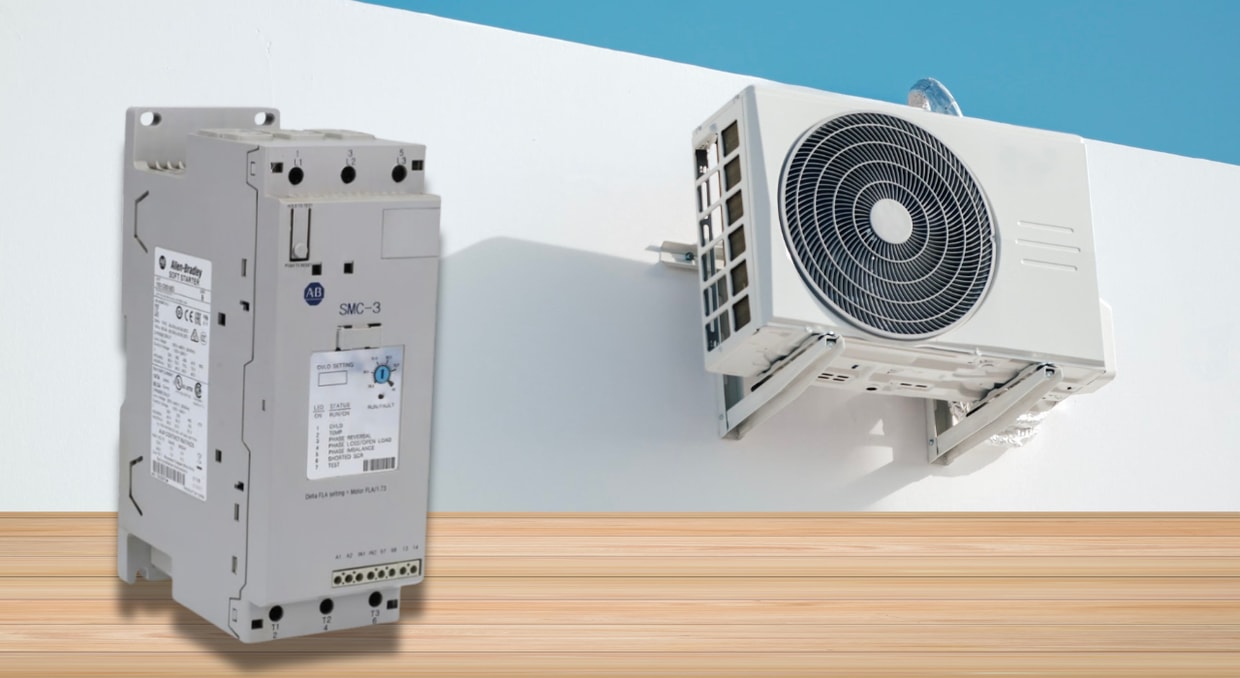
Heating, ventilation, and air conditioning (HVAC) systems are something we take for granted until they stop working. Made up of electric motors, ventilation fans, chilled water pumps, and condensers, HVAC systems extract warm, humid air from the building and replace it with cooler, drier air at a comfortable temperature.
When these systems turn on, the electric motor starts directly across the line, often drawing several times its normal operating current and placing considerable stress on the equipment it drives. For larger HVAC systems, this sudden demand can introduce unnecessary wear and even cause voltage dips that affect nearby equipment. Fortunately, there are ways to make this process a little less demanding.
Soft starters are a relatively simple solution for reducing unnecessary stress from inrush current by gradually increasing voltage instead. However, with variable frequency drives offering greater control over motor operation, where exactly do soft starters fit into HVAC systems? As it turns out, many applications don’t need that extra control.
Electric Motors: The Heart of the HVAC System
To better understand where soft starters fit into HVAC systems, it helps to get a general picture of how they work and what components drive them. While most of us are fairly familiar with residential AC units used to cool our homes, larger commercial and industrial HVAC systems can be much more complex. These systems often rely on multiple pieces of equipment working together to regulate temperature, humidity, and airflow throughout the entire facility.
Depending on the size and design of the system, several motor-driven components may be involved:
- Air Handling Units (AHUs): These units are responsible for circulating and conditioning air throughout a building. Large electric motors drive supply and return fans, moving air through heating and cooling coils before distributing it through ventilation ducts.
- Chillers and Compressors: Larger facilities may use centralized chillers to produce chilled water for cooling. These systems typically rely on motor-driven compressors to circulate refrigerant and transfer heat away from the water.
- Chilled Water and Condenser Water Pumps: Instead of cooling air directly at a single unit, chilled-water systems circulate cooled water through piping to air handling units located throughout a facility. Water-cooled chiller systems also use condenser-water pumps to transfer heat from the chillers to cooling towers.
- Cooling Towers and Ventilation Fans: Cooling towers use large fans to help reject heat from condenser water into the outdoor environment. Meanwhile, ventilation and exhaust fans help introduce fresh air and remove unwanted stale air from the building.
All these fans, pumps, and compressors rely on motors, each with its own operating requirements. Some motors run at fixed speeds, while others adjust their output throughout the day to meet changing heating and cooling needs. This distinction is important when determining where a soft starter can be fit into the system. For motors that see changing loads and speeds, a variable frequency drive is often used. Soft starters, on the other hand, pair well with most motors that run at a set speed during operation.
Where Soft Starters are Beneficial
In each HVAC system, multiple motors work tirelessly to keep occupants comfortable. The right starting method depends on what each motor is expected to do, whether it needs precise speed control or needs to get up to speed.
Air Handling Units and Ventilation Fans
Air handling units and ventilation fans are among the more common applications where soft starters can make sense. These fans move large volumes of air throughout a facility to supply conditioned air to occupied spaces, exhaust stale air, or circulate air through heating and cooling equipment.
One challenge with larger fans is their rotational inertia. Depending on their size and construction, these fans can take considerable time and torque to accelerate to their operating speed. When starting fan motors directly across the line, they cause a sudden, sharp current inrush that also spikes torque and can unnecessarily stress mechanical components. For belt-driven fans, this sudden acceleration can also contribute to belt slippage and premature wear.
Soft starters help address these problems by gradually increasing the voltage supplied to the motor during startup. Instead of subjecting the fan to abrupt acceleration, the motor develops torque more gradually, reducing shock on belts, bearings, and other drivetrain components. However, the starter must still provide enough torque to accelerate the fan within its allowable starting time.
Chilled Water and Condenser Water Pumps
Soft starters can also be particularly useful in chilled-water and condenser-water pumping systems. Larger commercial HVAC systems rely on networks of pipes to circulate chilled water throughout a facility or transfer unwanted heat from chillers to cooling towers. Keeping this water moving requires powerful electric pumps, which can introduce challenges during startup and shutdown.
One common challenge is water hammer. Water hammer occurs when water flow changes too abruptly; pressure waves can travel through the piping system, potentially damaging valves, pipe connections, and other components. This is another problem soft starters address. They do so by gradually accelerating the pump motor to reduce the starting current and sudden changes in water flow.
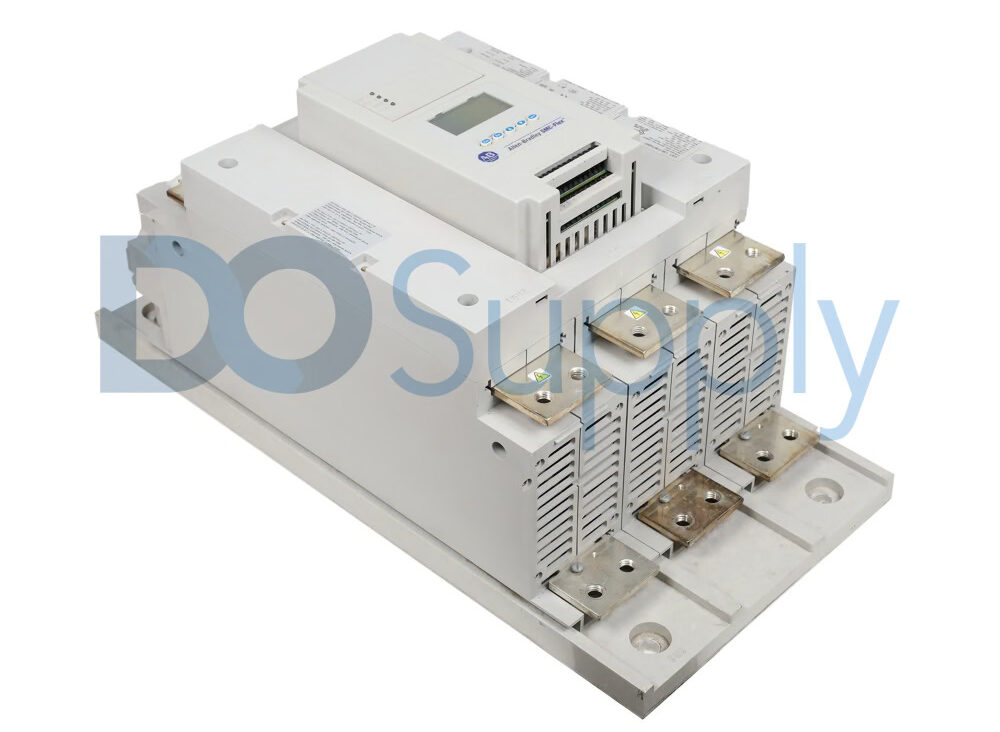
Some soft starters also feature specialized pump-control functions that manage motor torque during shutdown to help minimize pressure surges. A good example is the Allen-Bradley SMC Flex series, specifically models equipped with the Pump Control option, such as the 150-F201NBDB. These soft starters are designed to provide controlled acceleration and deceleration for centrifugal pumps.
However, not every pumping application suits a soft starter. Systems requiring variable water flow to accommodate changing cooling demands are generally better suited for VFDs. On the other hand, constant-speed pumps may benefit from the simpler starting control soft starters offer.
Chillers and Compressors
Chillers and compressors present a slightly different challenge compared to fans and centrifugal pumps. Depending on the compressor design and operating conditions, considerable starting torque may be required to overcome the pressure difference between the suction and discharge sides. Because of this, selecting the appropriate starting method is important, as insufficient torque can prevent the motor from accelerating properly.
For larger compressor applications, the Allen-Bradley SMC-50 series is a good option. They offer advanced starting methods, motor protection, and diagnostic capabilities. However, not every compressor is compatible with reduced-voltage starting. Some require unloading mechanisms or specific starting arrangements to avoid excessive mechanical and electrical stress. The compressor manufacturer’s requirements should determine whether a soft starter is appropriate.
Other Soft Starter Benefits
While soft starters are primarily used to manage motor startup and shutdown, their benefits can extend beyond reducing electrical and mechanical stress. While VFDs have their place in HVAC systems, choosing a soft starter when applicable can offer its own advantages.
- Lower Upfront Costs: Soft starters are generally less expensive than comparable VFDs, making them an economical choice for constant-speed fans, pumps, and other HVAC equipment. Their simpler installation requirements can also help reduce overall project costs.
- Reduced Heat Generation: Many soft starters feature built-in bypass contactors that allow current to flow directly to the motor once it reaches operating speed. This reduces power losses across the starter’s semiconductor components, generating less heat within the electrical enclosure.
- Reduced Maintenance Costs: By limiting the mechanical shock associated with frequent starts, soft starters can help reduce wear on belts, couplings, and other drivetrain components. Over time, this may mean fewer repairs and a longer service life.
- Potential Energy Savings: Unlike VFDs, soft starters don’t normally regulate motor speed during operation, meaning they offer little opportunity for continuous energy savings. However, certain models feature energy-saving functions designed to reduce motor losses under lightly loaded conditions. For most HVAC applications, the greater financial benefit comes from lower equipment and maintenance costs than from electricity savings.
When a Soft Starter Isn’t the Right Choice
Despite their obvious advantages, soft starters aren’t always the right choice, as we’ve alluded to. Their primary limitation is their inability to continuously regulate motor speed, which matters in systems with changing heating and cooling demands.
One example is an air handling unit that needs to adjust airflow throughout the day. A VFD can regulate the motor based on demand, whereas a soft starter keeps the motor pegged at a set speed. This also applies to variable-flow chilled-water pumps, as reducing motor speed can significantly lower energy consumption. In these situations, a VFD’s added control can justify the higher upfront cost in the long run.
Final Thoughts
Soft starters may not have the feature set of VFDs, and in some cases, that’s why they’re chosen for specific applications. HVAC systems offer many opportunities for soft starters, whether with ventilation fans, chilled-water pumps, or compressors. In these situations, a soft starter can provide a cost-effective solution that reduces starting stress without introducing unnecessary complexity.
Choosing the right soft starter also requires understanding the equipment’s operating requirements. A VFD may be the better investment for systems with constantly changing demands, but a soft starter can be all that’s needed for suitable fixed-speed applications. If you would like to learn more about selecting soft starters, we also have a guide.
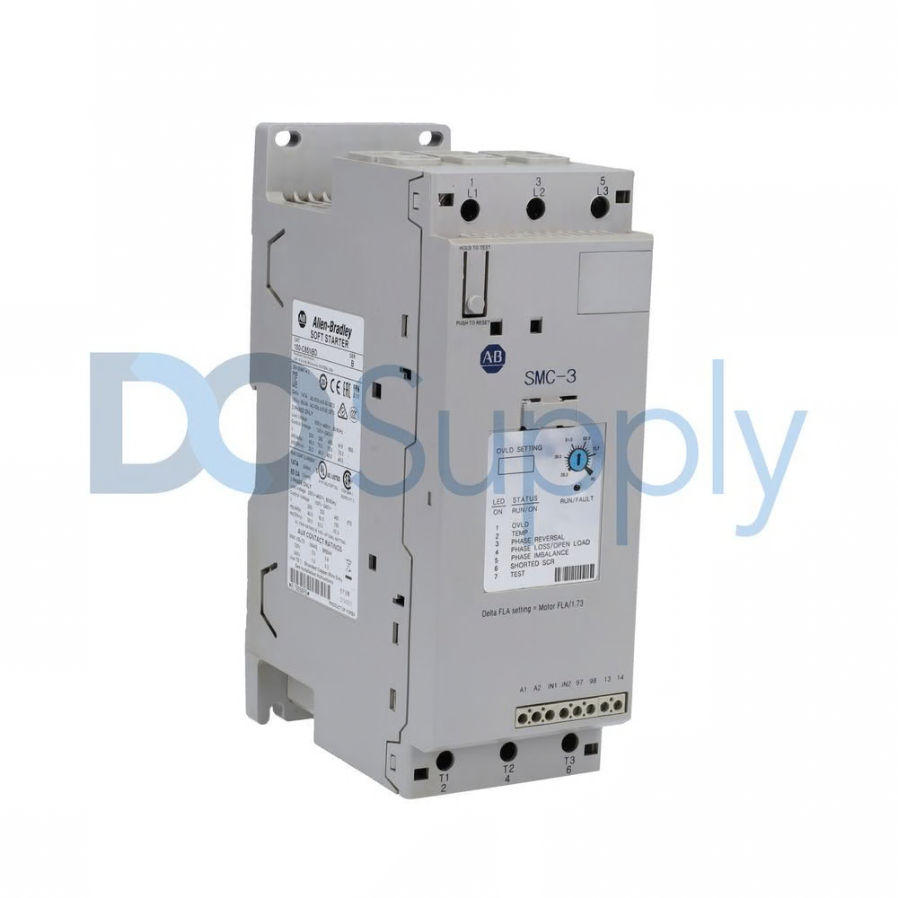
If you’re looking to replace an existing soft starter or upgrade your HVAC equipment, we at DO Supply offer a wide selection of industrial soft starters, including the Allen-Bradley SMC-3, SMC Flex, and SMC-50 series. Contact our team to source available replacements and find the right equipment for your application, all backed by our two-year warranty.
DO Supply Inc. makes no representations as to the completeness, validity, correctness, suitability, or accuracy of any information on this website and will not be liable for any delays, omissions, or errors in this information or any losses, injuries, or damages arising from its display or use. All the information on this website is provided on an "as-is" basis. It is the reader's responsibility to verify their own facts.