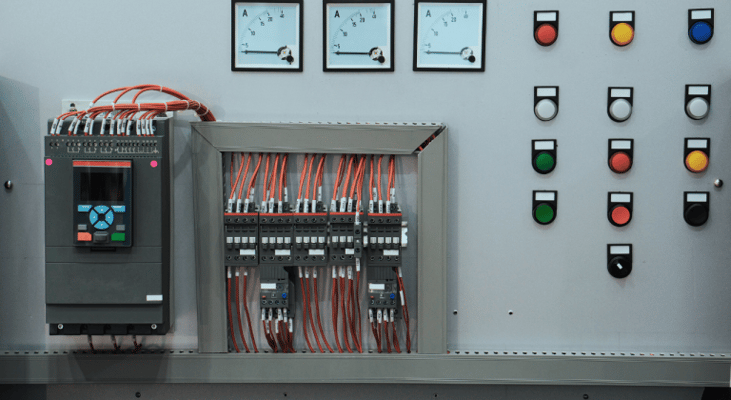
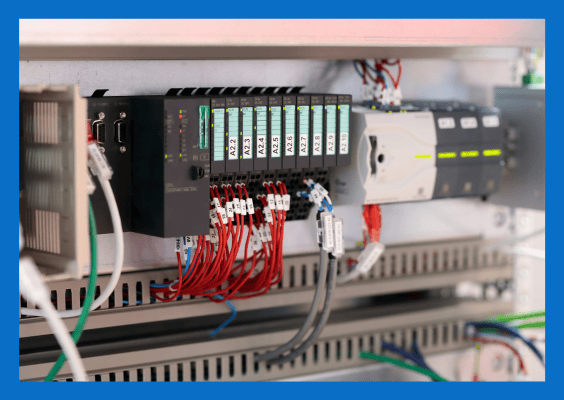
Omron is a well-established player in the industrial automation space, having made significant contributions to the industry early on. Their specialized electronic devices, called programmable logic controllers, have a frequent role in automated production applications. These PLCs continually gather data from peripheral input devices such as push buttons, limit switches, and sensors. Since its founding in 1933, Omron has shaped the industrial automation sector, making it a trailblazer in the field. Omron’s dedication to technological advancements has made it a reliable choice in manufacturing and industrial processes, with a global network spanning 80 countries. The Omron 3G2 series is the foundation of Omron’s innovations. Its product line demonstrates dedication to flexibility and offers a user-friendly platform for a wide range of applications. Examining the details of its components, such as the Omron 3G2A6-LK201-EV1 and 3G2A6-PRO15-E, allows us to understand their functions in...
Mitsubishi Electric, a prominent force in manufacturing and technology on a global scale, meets essential industry requirements through its state-of-the-art Variable Frequency Drives (VFDs) within the FREQROL FR series. This article intricately examines how Mitsubishi’s FREQROL FR series empowers various sectors by delivering precise control and significant energy savings, establishing a harmonious balance between performance and sustainability. We will delve into the diverse models of VFDs within the FREQROL FR series, exploring their distinctive attributes and contributions to the automation industry regarding precision, energy efficiency, and accuracy. Mitsubishi Electric’s original anti-sway control technology redefines the standards for crane operations. This feature enhances operational efficiency by suppressing an object’s swinging during crane stops without requiring operator adjustments. This significantly reduces tact time, ensuring fast, robust, and smooth crane operations...
In many different sectors, choosing the right control solution is crucial since it affects automated systems’ accuracy, efficiency, and flexibility. Microcontrollers and Programmable Logic Controllers (PLCs), each with unique features and advantages, are two well-known competitors in this field. PLCs are essential to large-scale production and process management because they are designed for industrial automation and have resilience, real-time processing capabilities, and broad input/output (I/O) handling. Conversely, microcontrollers provide adaptability, personalization, and low power consumption, making them appropriate for various uses, including consumer electronics, embedded systems, and Internet of Things (IoT) gadgets. Several variables affect this comparison, like programmability, processing speed, power consumption, security features, and integration possibilities. Here, we will discuss the following features of PLCs and microcontrollers. “EPROM-Microcontrollers Intel...
Omron is a global leader and revolutionizes contemporary manufacturing processes through industrial automation. Since 1933, Omron has offered automation products, including PLCs, sensors, robotics, and safety components. At the forefront of this transformation is the Omron CPM1 series, high-speed PLCs that meet the demands of modern automation. This guide navigates the intricacies of selecting the right PLC within the Omron CPM1 series. As we delve into the features of key products like the CPM1-CIF01, CPM1A-20CDR-A-V1, CPM1A-40EDR, CPM1A-8ER, and CPM1A-TS001, this guide empowers users to make knowledgeable decisions tailored to their automation needs. Each product is meticulously crafted to enhance automation efficiency, from the compact and resilient Communications Adapter to the versatile Temperature Sensor Unit. Omron is a global industrial automation leader. It is reshaping the contemporary manufacturing processes. Omron has a long history, having been at the forefront of...
Programmable logic controllers (PLCs) are designed to automate and control industrial machinery and processes. A safety PLC incorporates all the applications of a standard PLC but is equipped with integrated safety functions, allowing it to control safety systems. The primary goal of a safety PLC is to ensure reliability by avoiding failures, and if a failure is unavoidable, the PLC ensures it occurs safely and predictably. This article will explore the workings of safety PLCs, including their principles, applications, benefits, and challenges. In safety programmable logic controllers (PLCs), two distinct programs exist, one dedicated to the normal operation of the process and the other solely focused on safety functions. Both of these programs operate simultaneously within the PLC. The safety program is executed multiple times during a single execution of the standard PLC code and occasionally pauses the normal operation to check and guarantee safety functions. After this check, it...
Imagine this scenario: You’re lying on your garage floor under your vehicle, tightening the last bolt on the shiny new part you’ve just replaced. As you apply pressure, striving for that perfect snug fit, the unexpected happens—the head of the bolt snaps off right past the snug point. This moment of frustration highlights the delicate balance of force and precision. It echoes a concept that has intrigued minds since the days of Archimedes, who famously claimed he could move the world with a lever if given a fulcrum to place it on. This ancient idea of leveraging force to manipulate the physical world lays the groundwork for understanding the complexities and nuances of torque in modern engineering and, by extension, the sophisticated realm of industrial automation. In today’s industrial landscape, the principles of force and torque have transcended the simple mechanics of levers and bolts to become fundamental elements of sophisticated automation systems. Force torque sensors...
PowerFlex drives are a series of Variable Frequency Drives (VFDs) manufactured by Allan Bradley. They control the speed and torque of AC motors in various industrial applications, such as pumps, fans, conveyors, centrifuges, extruders, compressors, and chippers. PowerFlex 7 drives are a line of advanced drives for high-performance applications. This guide provides the technical nuances of PowerFlex 7 drives, covering aspects such as input and output specifications, motor control, communication interfaces, safety features, and diagnostic capabilities, so industrial professionals can make informed decisions when integrating PowerFlex 7 drives into automation systems. PowerFlex 70 Series Here are some of the unique features that these drives offer. Electrical specifications refer to a range of electrical parameters, including voltage range, power ratings, frequency tolerance, input phases, power factor displacement, and efficiency. Each factor provides important information about how the...
The Mitsubishi HG-Series is a line of servo motors known for their accuracy, dependability, and versatility. The Mitsubishi HG-Series modules will be covered in this article, which will serve as a complete guide followed by a discussion of several common characteristics such as Rated Torque, Operating Voltage, Output Power Capacity, Protection Ratings, and their rated and maximum speed. First of all, let’s discuss some modules: A High-performance AC brushless rotary servo motor for accurate industrial automation is the Mitsubishi HG-JR534K. This 500W (0.5kW) rated output motor has a 22-bit resolution feedback mechanism, providing precise position control. It efficiently balances power and speed, delivering a rated torque of 1.6 Nm at a rotating speed of 3000 RPM while operating on a 400V AC class supply voltage. The motor’s IP67 environmental protection classification ensures durability against dust and water, making it perfect for demanding industrial situations. Its 90×90 mm flange...
Selecting the right Programmable Logic Controller (PLC) is more than a technical decision; it’s a pivotal choice that impacts operational efficiency and system reliability. In our comparison, two notable PLC lines take center stage: Allen Bradley’s Micrologix and Panasonic’s FP PLC. Renowned for their robust performance, these series stand out with their innovative features and practical functionality. Both Allen Bradley and Panasonic have shaped the automation technology landscape, and their PLC series reflect this expertise, designed to meet a wide range of industrial applications. We’re focusing on their technical specifications, system compatibility, adherence to safety standards, and effectiveness across various industrial environments. We aim to offer clear, informative, and directly applicable insights, guiding you toward an informed PLC selection. By closely examining each series, we intend to highlight the unique attributes that can enhance the performance and safety of your...
Warehouse automation is the process of using advanced technologies, software, and machines to perform repetitive, time-consuming, and labor-intensive warehousing tasks traditionally carried out by human workers, such as receiving and stowing inventory, packing goods, sorting items, palletizing, picking orders, tracking inventory, data entry, and shipping products. It is a strategic approach for companies seeking to streamline their warehouse operations, optimize workflows, improve operational accuracy, save costs, boost overall warehouse productivity, and stay competitive in the rapidly evolving world of e-commerce and global trade. In recent years, warehouse automation, powered by innovative automation solutions and cutting-edge technologies, has emerged as a transformative force, revolutionizing how goods and materials are stored, handled, and distributed. In this article, we’ll look at several innovative technologies that are driving efficiency, accuracy, and productivity in...
Automation has become vital to improving recovery and response to disasters, completely changing how we handle these crucial stages. It is more important than ever to have quick, effective, and efficient response and recovery techniques in the face of more frequent and severe natural catastrophes. The disaster management field is changing significantly due to automation in all of its manifestations. Utilizing cutting-edge technology like robots, automated data processing systems, and drones characterizes the incorporation of automation in disaster response. For example, drones are now widely used to inspect regions affected by disasters. They offer real-time data and pictures for estimating damage and organizing rescue activities. Inaccessible to people in the early aftermath of a disaster, this airborne viewpoint enables a quicker and more thorough knowledge of the situation, resulting in a more efficient deployment of troops and resources. Another aspect of automation is robotics...
In the 21st century, the global economy thrives on speed, precision, and efficiency. Industries worldwide depend on automation to meet the demands of a rapidly evolving market. From manufacturing to logistics, automation has proven to be a cornerstone of success, enabling companies to increase output, reduce costs, and maintain a competitive edge. However, what truly sets this era apart is the profound shift towards human-centric automation—a new way of thinking that places humans at the center of technological innovation. This shift represents a departure from the traditional view of automation, where machines often replaced human labor. Instead, it’s about creating an environment where humans and robots work together, each contributing their unique strengths to achieve remarkable results. The implications of this shift are far-reaching, touching every corner of industry, from automotive to healthcare, agriculture to aerospace. Automation has been a constant presence in our...
Adaptive manufacturing is a noteworthy development in the industrial landscape because of its dynamic capacity to adjust to changing conditions and client requirements. Artificial Intelligence (AI) is at the vanguard of this revolution, a force that is transforming product design, production, and distribution. This overview of AI and adaptive manufacturing aims to lay out the whole process and possibilities brought forth by this creative combination. High efficiency and homogeneity were prioritized in the linear mass-production paradigm that characterized manufacturing in the past. However, digitization and customer desire for customization have sparked a move toward more adaptable and responsive production techniques. The answer is adaptive manufacturing, which combines advanced AI technology with conventional manufacturing techniques to create a more flexible, customer-focused production environment. AI plays a variety of roles in this paradigm change. The first step is using...
Selecting the most suitable PowerFlex drive for your application is essential to guarantee its effectiveness, dependability, and smooth functioning. There are a number of different PowerFlex drive series available, and each one has special characteristics and capabilities. Knowing the features and subtle differences of every drive is crucial to helping you make an educated choice. These features, including voltage classes, control algorithms, protection classes, and power ratings—are essential in helping you choose the suitable PowerFlex drive. Factors such as enclosure type, communication interfaces, and environmental conditions must also be properly taken into account to guarantee compatibility and lifespan. In this article, We’ll go over the main features of different PowerFlex drive series, enabling you to choose the one that best suits your application. We will be discussing PowerFlex 40, PowerFlex 525, PowerFlex 700, PowerFlex 400, PowerFlex 755, PowerFlex 4, PowerFlex 527...
Mitsubishi A Series Inverters are renowned for their robust reliability, high performance, and exceptional versatility in industrial applications. Tailored for smooth and precise motor control, they excel in durability with robust components and advanced cooling. The series offers compatibility with various AC motors and communication protocols, ensuring seamless integration. Beyond toughness, these inverters feature advanced capabilities, including built-in PLCs, PID control, and comprehensive fault protection. The A Series encompasses a range of models with varying power ratings, functionalities, and application focus. Here’s the breakdown The Mitsubishi A700 Inverters feature advanced control methods, including Soft-PWM control, high carrier frequency PWM control (selectable for V/F control, advanced magnetic flux vector control), and vector control. With an output frequency range of 0.2 to 400Hz, the A700 series offers versatile adaptability for various operational needs. Analog...