How the Stratix 5900 Enhances Security in Industrial Automation Systems

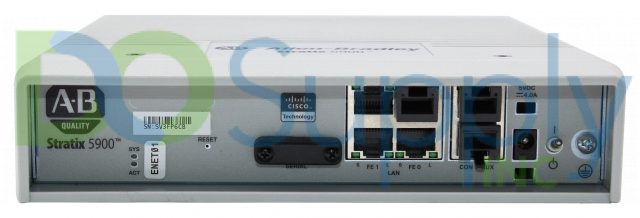
The Stratix 5900 is a service router developed by Rockwell Automation. The Stratix 5900 simplifies configuration with embedded software and offers robust connectivity for industrial networks. To assist manufacturers in establishing a safe and cohesive environment from the enterprise level down to end devices, it plays a critical role in industrial automation control systems. In this article, we will discuss some of the security-related features of Stratix 5900 that will show us how it protects industrial automation systems from harm. These features include One Step Router Lock-down, Firewall (Zone Based and CBAC), Security Audit of the Router, VPN and Advanced VPN Functions, Intrusion Prevention System, Content Filtering, Port Security and MAC Address Filtering, Role-Based Access Control, and Intellectual Property Protection.
One Step Router Lock-down
Network administrators may quickly and easily protect a service router against possible security risks or unauthorized access using the “One-step router lock-down” function with only one command or action. Industrial network security has historically required intricate setups and several procedures, which has left space for vulnerabilities and human error. However, this procedure is streamlined by the “One-step router lock-down” function, which enables administrators to put strong security measures in place quickly and simply. This feature allows the router to automatically implement several pre-configured security policies, such as intrusion detection systems, firewall rules, and access control lists. Because of this security feature, there is a far lower chance of errors or oversights, which keeps the network safe from online attacks. Moreover, the router lock-down function of the Stratix 5900 may be tailored to meet certain security needs and compliance guidelines, offering flexibility without compromising performance.
Firewall (Zone Based and CBAC)
The Stratix 5900 services router’s firewall capability, which includes both Zone-Based Firewall (ZBF) and Context-Based Access Control (CBAC), is essential for improving security in Industrial Automation Systems (IAS). Based on logical groupings of devices or subnets, the Zone-Based Firewall (ZBF) divides the network into discrete security zones, offering a strong protection mechanism. Specific security rules are allocated to each zone, governing the kinds of traffic permitted or prohibited across zones. This network segmentation prevents attacks from moving laterally inside the system and aids in containing any security breaches. ZBF efficiently reduces the danger of illegal access and data exfiltration by applying stringent access rules across zones.
Context-Based Access Control enhances the firewall’s functionality by conducting a more thorough network traffic inspection. CBAC looks at the packet’s source, destination, protocol, and condition to make wise choices about permitting or prohibiting traffic. The firewall can respond to shifting network circumstances and defeat complex cyber threats, including protocol-based assaults and application-layer vulnerabilities, due to this dynamic methodology. The firewall of the Stratix 5900 services router assists in protecting vital assets and activities in industrial settings by reducing the effect of security incidents, blocking unauthorized access, and guaranteeing compliance with industry rules. Furthermore, because of its scalability and flexibility, businesses may customize security policies to meet their unique requirements while preserving operational resilience.
Security Audit Function
A key component to enhancing security in Industrial Automation Systems (IAS) is the “Security audit of the router” capability in the Stratix 5900 services router. This function makes it easier to continuously monitor and assess the router’s security settings, configurations, and operations to find possible weaknesses and security holes. The security audit feature thoroughly evaluates the router’s security posture, which looks at several aspects, including firewall rules, firmware versions, authentication methods, access control lists (ACLs), and system logs. By performing routine audits, administrators may learn about any unauthorized modifications, unusual activity, or departures from established security rules that might indicate a security breach or attempted incursion. Additionally, the Stratix 5900 router’s security audit capability makes it possible to proactively identify and fix security flaws before hackers can use them. Organizations may strengthen their defenses and lower the probability of successful operational interruptions by swiftly resolving detected vulnerabilities and implementing the appropriate security measures. Additionally, the security audit tool supports compliance management by assisting companies in adhering to industry standards and laws, including ISO 27001, ISA/IEC 62443, and the NIST cybersecurity framework. Organizations may exhibit regulatory compliance and guarantee responsibility in the case of security incidents or audits by keeping a thorough audit trail of security-related events and activities.
VPN and Advanced VPN Functions
The Stratix 5900 services router’s “VPN and Advanced VPN Functions” provide a reliable way to protect Industrial Automation Systems communications across unreliable networks like the internet. Virtual Private Networks (VPNs) provide private, encrypted tunnels between distant sites, reducing the possibility of unwanted parties intercepting or altering data while facilitating remote access and secure data transfer. With support for many VPN protocols, including IPsec (Internet Protocol Security) and SSL/TLS (Secure Sockets Layer/Transport Layer Security), the Stratix 5900 router offers versatility to meet a range of network scenarios and security needs. Strong authentication and encryption features provided by IPsec VPNs guarantee the authenticity, integrity, and secrecy of data sent between linked endpoints. SSL/TLS VPNs use web-based protocols to create secure connections, making them appropriate for remote access situations when installing client software may not be feasible. The Stratix 5900 router’s advanced VPN functions, which need passwords in addition to numerous levels of verification, greatly increase security by implementing multi-factor authentication. By automating the construction of tunnels in response to network changes, dynamic VPN tunnel setup improves scalability and minimizes the need for human configuration. For VPN tunnels, real-time notifications and ongoing monitoring allow quick identification and remediation of security breaches.
Intrusion Prevention System
Industrial Automation Systems have an essential line of protection against cyberattacks due to the Intrusion Prevention System capability of the Stratix 5900 services router. To watch for any security breaches or malicious activities, intrusion prevention systems continually monitor network traffic for odd patterns. First, intrusion prevention systems use signature-based detection to find patterns linked to frequent issues, including malware, denial-of-service assaults, and infiltration attempts. Using a database of pre-established signatures, intrusion prevention systems can quickly identify and stop hostile traffic before it can infect sensitive systems or devices connected to the industrial network. Moreover, anomaly-based detection techniques are included in the IPS function to identify zero-day or previously undiscovered threats. IPS can recognize patterns that deviate from the usual and might be signs of malicious or abnormal activity by creating baseline behavior profiles for network traffic. Even when precise attack fingerprints are unknown, IPS can identify and neutralize developing threats in real-time. Malicious traffic may be automatically blocked or quarantined by IPS, alarms or notifications can be sent to security staff, and security rules can be constantly adjusted to suit new threats.
Content Filtering
The Content Filtering feature in the Stratix 5900 services router enhances security within Industrial Automation Systems. With the help of this function, administrators may control and keep an eye on the kinds of material that are accessible over the network and can be transferred over it. This reduces the possibility of cyberattacks and guarantees adherence to company policy and legal obligations. Content filtering works by examining data packets as they go over the network and applying predetermined rules or policies to decide whether certain information is acceptable or has to be restricted. Depending on variables like file type, website category, or content keywords, administrators may use this feature to limit online surfing, file downloads, email attachments, and other kinds of information sharing. The Stratix 5900 router assists in preventing the infiltration of malware, phishing scams, etc, into the industrial network by screening out potentially harmful or illegal information. Additionally, by limiting access to prohibited websites or content categories, content filtering helps to avoid data leaks and preserve the integrity of important information. Additionally, content filtering helps with compliance efforts by allowing businesses to enforce use guidelines on appropriate online behavior, data privacy, and legal requirements like GDPR and HIPAA. This feature improves security in Industrial Automation Systems overall by offering fine-grained control over information access and transmission. It lowers the risk of cyber events and guarantees the integrity and safety of vital industrial assets and activities.
Port Security and MAC Address Filtering

The Stratix 5900 services router’s Port Security and MAC Address Filtering function are fundamental to improving security in IAS. The Media Access Control (MAC) addresses of the devices connected to the network ports may be used by administrators to limit and manage network access. Administrators may choose which MAC addresses can interact across which network port using port security. Unauthorized devices are prevented from connecting to the network port by blocking their attempts, averting possible security breaches and unauthorized access. Administrators may lower the likelihood of illegal devices connecting to the network by configuring Port Security to restrict the number of MAC addresses permitted per port. By controlling network traffic based on MAC addresses, MAC Address Filtering enhances port security. Administrators may enforce access restrictions and reduce the risk of malicious activity or unauthorized access by creating whitelist or blacklist rules that permit or prohibit communication from certain MAC addresses. This feature protects vital industrial processes, data, and assets against unwanted access, guaranteeing industrial operations’ availability, integrity, and confidentiality.
Role-Based Access Control
Selective control over user access rights and permissions is provided by the Stratix 5900 services router’s sophisticated security feature, Role-Based Access Control (RBAC), which improves the protection of IAS. With RBAC, administrators may designate roles according to the duties or obligations of their jobs and provide distinct permissions to each position. Rather than individual user IDs, RBAC bases access to network resources and capabilities on the role allocated to the user. This method simplifies access control and lowers the risk of illegal access by guaranteeing that users only have access to the tools and resources required for their job duties. This functionality makes it possible to manage network resources effectively and securely in industrial automation settings while also assisting in protecting important assets, processes, and data.
Intellectual Property Protection
The Stratix 5900 services router’s “Intellectual Property Protection” feature is an essential component that improves Industrial Automation Systems security by protecting confidential data and important intellectual property from theft and unauthorized access. This feature includes several security measures to protect private information and intellectual property sent or stored over an industrial network. Advanced Encryption Standard (AES) and Transport Layer Security (TLS) are two examples of encryption technologies that guarantee data-in-transit stays private and unalterable while preventing eavesdropping or interception by unauthorized parties. The Stratix 5900 router strengthens the security posture of Industrial Automation Systems by putting strong intellectual property protection methods in place, protecting sensitive data and valuable assets from hackers, espionage, and unwanted access.
Industrial Demilitarized Zone (IDMZ)
The Stratix 5900 services router’s Industrial Demilitarized Zone (IDMZ) feature, which establishes a secure boundary between the industrial network and external networks like public or corporate networks, is vital to IAS security enhancement. IDMZ creates an isolated network segment that serves as a safety net between the external networks that might harbor security risks and the industrial network that houses vital assets. This division regulates the traffic flow between the industrial and external networks, reducing the danger of cyberattacks, virus transmission, and illegal access. By imposing stringent security regulations, IDMZs prevent unauthorized parties from directly accessing critical industrial assets. This permits authorized communication for necessary tasks like remote monitoring and repair. Additionally, by offering regulated access points and VPN connections, IDMZ makes possible safe connectivity for third-party integrations and remote access. By doing this, industrial systems may safely communicate with outside users or devices without compromising security or creating new vulnerabilities.
Conclusion
In conclusion, the Stratix 5900 services router is vital in protecting Industrial Automation Systems (IAS) against a wide range of possible security lapses and cyberattacks. This router ensures the smooth functioning of industrial networks and provides strong protection with sophisticated security features. By reducing the possibility of human mistakes and vulnerabilities, the “One Step Router Lock-down” function speeds up the process of putting strong security measures in place. Context-Based Access Control (CBAC) and the Zone-Based Firewall (ZBF) provide an organized security system that separates network traffic and hinders efforts by unauthorized users to access the system. Additionally, the router’s “Security Audit” feature allows ongoing security configuration evaluation and monitoring, making finding and fixing vulnerabilities proactively easier. Sensitive data transfer is protected by the addition of VPN and Advanced VPN Functions, which provide secure connection across erratic networks. The Intrusion Prevention System (IPS) quickly identifies and eliminates cyber threats, and content filtering improves security by limiting the kinds of information that may get through the network. To prevent illegal devices from jeopardizing network integrity, access control is strengthened via port security and MAC address filtering. The role-based access control (RBAC) gives users more precise control over their rights and reduces the possibility of unwanted authorization. The Industrial Demilitarized Zone (IDMZ) also establishes a protective barrier between external and industrial networks, lowering the possibility of illegal entry and cyberattacks while enabling secure connection for essential functions.
DO Supply Inc. makes no representations as to the completeness, validity, correctness, suitability, or accuracy of any information on this website and will not be liable for any delays, omissions, or errors in this information or any losses, injuries, or damages arising from its display or use. All the information on this website is provided on an "as-is" basis. It is the reader's responsibility to verify their own facts.