Regenerative vs Non-Regenerative DC Drives
The electronic device that captures and regulates the electrical energy sent to the motor is known as a drive. The drive modifies the amount and frequency of energy fed to the motor, which indirectly controls the motor’s speed and torque. Based on the voltage type, the two main categories of drives are; AC drives and DC drives.
DC drive is one of the most reliable, efficient, inexpensive, user-friendly, and easy technology to implement. They also have many advantages over AC drives especially for regenerative and higher power applications. They have many industrial uses as they can give us very precise control. While in some applications we can see VFDs and AC drives as an alternative, in applications like cranes, hoists, elevators, spindle drives, winders, paper manufacturing machines, crushers, etc., we still have to use them.
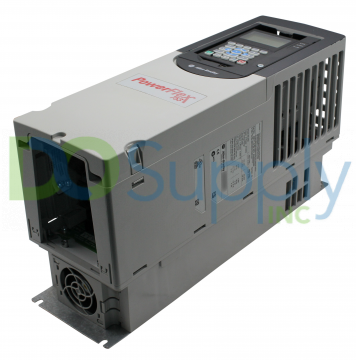
What Are DC Drives?
DC drive is a speed control system that gives the motor the potential difference to operating it at a given speed. The following are the components of the DC drive:
A) DC Drive Input
The DC drives which are based on thyristors work on single-phase supply and have four thyristors for full wave rectification. If we have larger motors, we have to use a three-phase supply voltage as the rectified voltages are much smoother. In the case of three phase supply, we have to employ six thyristors to fully rectify the wave.
B) Rectifier Bridge
The rectifier bridge is present in the drive for full wave rectification and as mentioned, the number of thyristors of the rectifier depends on the type of input voltage which depends on the application. The firing angle of the thyristor is set such that it can vary the voltage of the motor.
C) Field Supply Unit
In order to maintain a constant field or flux inside the motor, the field supply unit’s function is to provide a constant voltage to the field winding. Since the field winding power is significantly smaller than the armature power, we often employ a single-phase supply.
To power the motors’ field winding, we must utilize a diode rectifier circuit or another thyristor badge. In some instances, the armature supply unit’s field excitor is already there, so a two-phase supply is derived from the armature’s three-phase voltage waveform. When using permanent magnet DC motors, the field supply unit is bypassed.
D) Speed Regulation Unit
This unit of DC drive is responsible for comparing the desired speed with the feedback waveform and sending the required signals to the firing unit. In analog drives, both voltage and current regulators are present in them, and the voltage regulator is used for accepting the errors in speed and then producing a voltage output that can be given to the current regulator. The current regulator is responsible for producing the required firing current based on the received signal for the firing circuit. If greater speed is needed, it is adjusted from the voltage regulator, and so the thyristors start conducting for more duration of time. This regulation is done with the help of PID controllers.
E) Firing Circuit
The firing circuit is responsible for sending gate pulses to the thyristor so they can be on for a given duration of time for producing changing armature voltage. We have to isolate it in this gate drive circuit.
These Drives are preferred because of the following reasons;
- They are cheap because they only have to convert AC to DC once.
- They offer less interference.
- They are self-starting machines and have high starting and accelerating torque.
- Easy installation
- Quick start, stop, and reverse.
- Wide range of speed control
- Linear speed-torque curve
Types of DC Drives
Following are the types of DC drives:
Non-Regenerative DC Drive
These drives are also known as single quadrant drives as they rotate in a single direction only and do not have the capability of inherent braking. We have to remove the voltage to stop the motor. They are mostly used for loads that have more friction like mixers, and where the load itself is exerting a strong natural break. In the application where we require supplemental quick braking or where we have to reverse the motor, we can provide dynamic braking and forward and reverse circuits by external means. For dynamic braking, there is a need for a DB contractor and DB resistors that continuously dissipates the braking energy in the form of heat. We can reverse or change the direction of the motor’s armature by adding a magnetic reversing contractor or manual switches which allow reversing the controller polarity. We can also install additional field contractor reverse kits for providing dual rotation by changing the polarity of the shunt field.
Regenerative DC Drives
The speeds of these drives can be adjusted and are commonly known as four-quadrant drives. They can control not only the speed of the motor but also its direction. The regenerative term in the name tells the ability of the driver to convert braking energy to mechanical energy of the motor under braking conditions and when connected to load, convert it to electrical energy which is then returned or in other words, regenerated back towards the AC source. We can also say that they recover the energy by slowing the motor and then recycling the energy.
For the motor to be able to regenerate the drive must be in running form and energized. If we use the normal command for slowing down the speed of the motor the regenerative stopping ends. This is known as ramp stop and it means that the motor regenerated and deaccelerates according to the requirement to follow the decel ramp. Some of these also have a mode for a current limit stop so the decel ramp is bypassed and the deceleration of the current limit occurs.
In regenerative control, the energy which is regenerated from the rotation is not dissipated but converted for using it somewhere else. Both the drive and motor can handle a given amount of regeneration without damaging each. Normally, the drives which have regeneration functions have double the amount of circuitry and power components than a non-regenerative drive and so it is much more costly but we can compensate for this cost by saving time, energy, and material and so it is a better investment in many industries.
When a regenerative drive works in quadrants I and III then the rotation of the motor and its torque are both in the same direction. In these quadrants, this drive functions similarly to a non-regenerative drive. The change in characteristics of both these drives happens in the other two quadrants which are II and IV in which the torque of the motor opposes the direction of rotation of the motor which gives us a braking force which is also known as retarding force. A regenerative drive with high performance can switch quickly from motoring to braking modes and in the meanwhile also control the direction of the rotation.
A regenerative drive is a combination of two coordinated DC drives which have been integrated into a similar package. One of these two drives works only in quadrants I and III while the other works in quadrants II and IV. For more reliable control over the direction of the motor’s torque and rotation, the circuit has interlocking between both drives which are opposing each other.
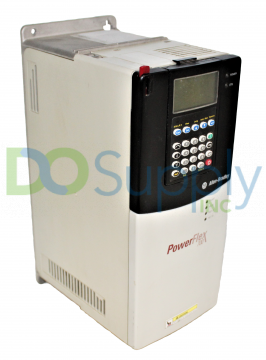
Comparison Between Non-Regenerative and Regenerative DC Drives
This section compares the generative drives and non-regenerative drives to help you choose the best drive for your application.
Following are some of the differences between these types of DC drives:
Braking
In non-regenerative drives, there is no inherent capability of braking. They need an additional dynamic braking circuit that helps dissipate the braking energy in the form of heat energy in the resistor. The braking effort increases exponentially with the initial torque. This braking effort may reduce to zero at zero speed. These braking circuits are solely intended for stopping; they cannot be used as a holding brake or to hold back continuously.
Regenerative drives have the capacity to brake inherently. Regenerative braking is supported by these drives, which transfer the kinetic energy of the motor and the machine it drives back to the AC supply. The braking torque can be adjusted so that it is zero. They can typically provide continuous braking torque to motors in applications that require holding back.
Reversing
In non-regenerative drives, there is no capability of reversing. These drives need reversing contact or switches which reverse the polarity of the power applied to the motor. They are normally rated for occasional reversing.
In regenerative drives, there is an inherent capability of reversing. The polarity of the machine can be changed electronically without the help of any contact, arcs, burns, or wear. They are mostly used in applications that need reversing often.
Simplicity
The non-regenerative drives are not as complex as regenerative drives. Regenerative drives are much more complex because they have double the non-regenerative circuit.
Efficiency
For both of them, the controller efficiency goes up to 99%, and with complete drive and motor, the efficiency is 87%. The speed range is up to 50:1 without any feedback tachometer and with a feedback tachometer or any encoder, it is 200:1.
Costs
The non-regenerative drives are much cheaper than the regenerative drives. This is because they have lesser circuitry as mentioned above. For regenerative drives, we know that they have more circuitry because of the full wave rectifier in them and also, they are double the non- regenerative drive.
However, as regenerative drives do not require any extra machinery costs and can reduce time and energy, they are often considered a better investment than non-regenerative drives. Their costs are also hugely justified when they recover a huge amount of energy.
Machinery
A non-regenerative drive that runs only in one quadrant has only a single power bridge and 6 SCRs (Silicon controlled rectifiers) which are used to control the voltage applied to the armature of the motor. These drives can operate only in motoring modes and would need someone to physically switch armature or field leads for reversing the direction of the torque.
Whereas a regenerative drive that can operate in four quadrants has two sets of power bridges and twelve con SCRs that are connected in inverse parallel. One of the bridges is responsible for controlling the forward torque whereas the other one is responsible for controlling the other set. Where they are working, only a single set of bridges remains active at the time. For the operation of the motor to be straight in the forward direction, the forward bridge remains in control to supply power to the motor whereas, for the straight operation of the motor in the reverse direction, the reverse bridge remains in control.
Stopping Time and Controllability
Both the processes of regeneration and dynamic braking which are used for similar tasks, slow the speed of the motor. There are some major differences in stopping time and controlling during stopping in both these drives. For safety conditions, we have to select the type of drive to remember it. Regenerative braking ceases the motor much more smoothly and quickly than the dynamic brake so it can be used for fast stopping and emergencies. The regenerative braking also renews power to the AC source if the load overhauls.
Regenerative drives are mostly seen in applications that need to start and stop very often and would also involve continuous deceleration or overhauling loads. An example of such an application is downhill conveyors which need constant deceleration, elevators, and flywheels. In cranes and hoists, the inertia of the motor is more than the inertia of the rotor and the load drives the motor and is known as the hauling load so when the load is coming down, the motor turns itself into a generator as it gives us electrical energy instead of consuming it. Using a regenerative drive, we can feed this energy back to the AC source.
Non-regenerative drives can be used in cost-cutting applications where we do not need the reverse direction more often, or where a precise and timely stopping time is not very necessary.
DO Supply Inc. makes no representations as to the completeness, validity, correctness, suitability, or accuracy of any information on this website and will not be liable for any delays, omissions, or errors in this information or any losses, injuries, or damages arising from its display or use. All the information on this website is provided on an "as-is" basis. It is the reader's responsibility to verify their own facts.