We found 171 posts about Comparison Guides from DO Supply, a global automation parts
reseller focused on hard-to-find and obsolete industrial automation products.
One of the most important decisions in industrial motor control is choosing the right Variable Frequency Drive (VFD), or AC drive, to match your motor and application requirements. Proper AC drive selection begins with understanding the mechanical load characteristics because the load type determines the current and torque requirements the selected AC drive and connected motor must meet across all operating speeds. An appropriately sized AC drive provides adequate continuous and overload current capability to generate the required motor torque while operating reliably. Selecting an incorrectly configured or improperly sized AC drive often results in insufficient starting or accelerating torque, excessive drive or motor heating, reduced efficiency, nuisance trips, and premature equipment failure. In contrast, an AC drive that is correctly matched to the specified load type helps improve motor performance, operation reliability, energy efficiency, and overall system lifespan. Because of...
When choosing a PLC, the system’s architecture affects all subsequent engineering work, from how control panels are drawn to the cost of maintaining the system over years of service. Most PLCs fall into one of two competing design philosophies: modular architecture, where the I/O, CPU, and power supply are separate elements on a common backplane, or fixed architecture, where all of these are combined in a single housing. Every major PLC vendor offers product lines that follow both designs, and understanding how each platform is laid out helps an engineer pair architecture to application rather than defaulting to whatever solution is already sitting on the shelf. Comparing the five largest control vendors in Europe, North America, and Asia – Rockwell, Siemens, Schneider Electric, Mitsubishi, and Omron – all of which market modular and fixed models side by side – shows which factors vendors weigh when dividing fixed and modular I/O architectures. The real tradeoffs come down not to...
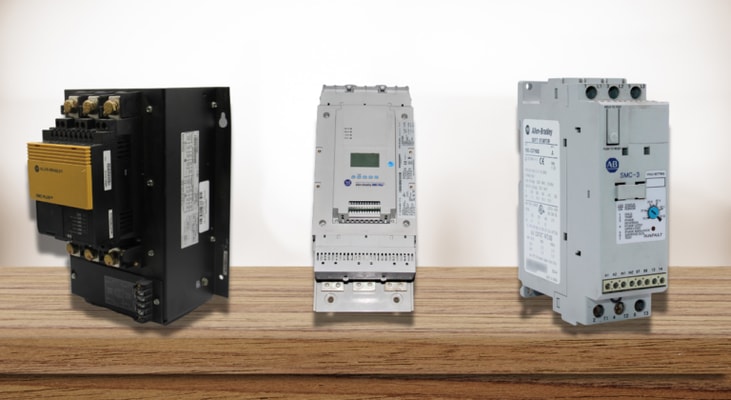
When selecting a soft starter for your motor control application, it helps to know what each setting does and how it affects your motor’s behavior. However, as different modes and features are added to a soft starter, it can be a bit overwhelming to determine the optimal choice for your application. After all, there is kick start, current ramp, torque control, linear acceleration, full-voltage start, and more. Today we will narrow down this list and go over the two more popular starting modes, voltage ramp and current limit start, explain what makes them different, and even why they might be used together. Order SMC Flex Soft Starters Here Before we dive into how these soft starter features work, it helps to first briefly go over what a soft starter is and does. If you would like a much more in-depth explanation and overview, we encourage you to read our full guide to soft starters here . The general idea of a soft starter is to place this device between an induction motor and its...
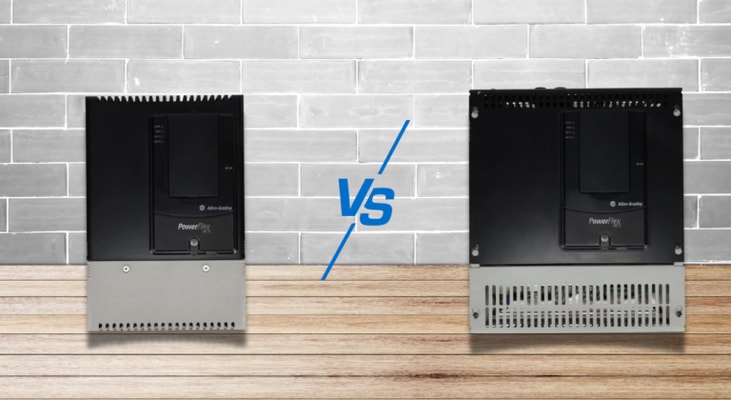
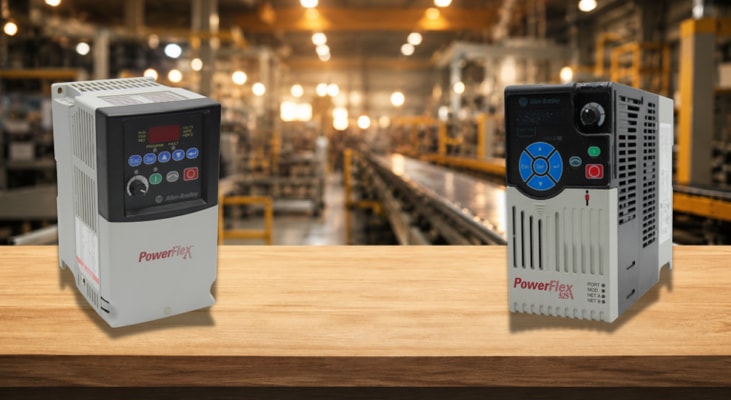
When it comes to PowerFlex drives, the gap between the most cost-effective model and the most technologically advanced unit is quite significant. From the humble PowerFlex 4M and 520-series controllers offering simple and dependable motor control, to the flagship PowerFlex 755T family built with smart features in mind for demanding applications. Technically speaking, both ends of the lineup are doing the same basic job. They take incoming electrical power and control how it’s delivered to the motor. But that’s like comparing a 20-year-old work truck and a newer, fully equipped heavy-duty model. Sure, both can get you down the road, but one is designed to handle a much wider range of conditions, loads, and specialized tasks. It’s this gap that makes the PowerFlex line interesting to compare. Moving from an entry-level drive to a high-performance model doesn’t just add a few settings or a larger enclosure, but rather more sophisticated motor control, beefed-up hardware, and a suite of...
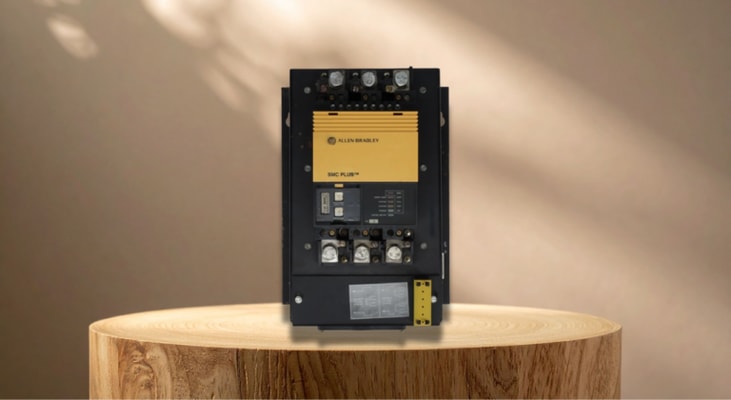
Automation equipment gets phased out all the time. We see it with PLCs, drives, and everything in between. However, obsolescence doesn’t mean the equipment is unusable or should be replaced immediately. This is the case for the SMC Dialog Plus soft starter family. Discontinued in 2014 as Rockwell phased out the mature product family, the successor to this soft starter family is the SMC-3 , SMC Flex , or the SMC-50 . The question is now whether the SMC Dialog Plus is still worth using or if its newer replacements are a better buy. There are many reasons why someone would want a legacy product over a newer offering. Sometimes it’s just easier to get the same product you know will be reliable and work for your system. Other times the cost of upgrading might not be worth the potential productivity increase of a newer system. Often, a facility needs a direct replacement as soon as possible when their old one breaks. There is no time to fit, program, and upgrade to newer hardware when every...
In a VFD-dominated industrial world, soft starters still have their place in motor control. They are a reliable way to protect your motors, the loads they move, and the systems they’re attached to. On top of that, they fit nicely into a budget-conscious build when a facility doesn’t need the extra features or programming that VFDs offer. Not every soft starter is built for the same job. Some are basic starters designed for simple start-and-stop control. Others are more advanced units with stronger protection features, better diagnostics, communication options, and more control over how the motor starts and stops. Each type has its own advantages, limitations, and best-fit applications. A variable frequency drive, or VFD, is the more common component to pair with a motor for industrial control. VFDs can control motor speed, improve efficiency in variable-speed applications, support advanced diagnostics, and, in higher-end models, offer features such as regenerative operation and...
DC drives continue to play a crucial role in heavy industrial applications that need outstanding starting torque, accurate speed control, and quick dynamic response, even though AC variable frequency drives have significantly increased their market share. DC drive technology is still used in a number of industries, including material handling, elevator systems, crane operations, paper making, and metal processing. Performance capabilities, energy efficiency, hardware complexity, and long-term operating costs are all determined by the basic differences between regenerative and non-regenerative DC drives. This page offers a thorough technical comparison of these drives, backed by up-to-date performance measures and industry statistics. The operational quadrant capability represents the most fundamental distinction between these drive types. Source Regenerative PowerFlex DC Drives Non-regenerative drives are commonly one- or two-quadrant converters. A one-quadrant drive provides motoring...
In the modern age, motor control isn’t as simple as it looks. There’s matching nameplate specifications, determining if the load you’re driving needs certain features like regeneration, or even figuring out if it’s worth futureproofing. With VFDs being so common today, it is easy to assume they are always the better answer. But that’s not always the case. Sometimes, less really is more. If the application only calls for smooth starting and stopping, a soft starter could be the cheapest, simplest, and most cost-effective choice. A soft starter, as the name implies, is a motor controller that gradually and smoothly increases a motor’s speed until its desired RPM, rather than slamming voltage into it all at once. This is a desired feature as its ability to reduce inrush current and limit peak electrical demand on motor start-up reduces mechanical stress on the system and prevents overcurrent scenarios. Source SMC Plus Soft Starters Here To achieve this, soft starters use thyristors, or...
A new installation is not the same as a retrofit project. The selection logic for a ControlLogix processor must take into consideration elements that are absent from a greenfield project, and the risks and constraints are different. A processor must fit into a panel sized for a PLC-5 or SLC 500 chassis, communicate with devices never intended for EtherNet/IP, coexist with existing wiring, and be maintainable by a team that has worked on RSLogix 500 for years. A predetermined set of technical criteria must be followed to make the proper choice. That approach is covered from the start in this article. The first task on any ControlLogix retrofit is documenting the full scale of the legacy system, not just the I/O count, but everything the existing controller manages. A practical first pass is to group the 5580 processors by memory class: 1756-L81E for smaller systems, 1756-L82E or 1756-L83E for moderate retrofits, and 1756-L84E or 1756-L85E for larger PLC-5 migrations, high tag counts...
Conveyor systems serve as crucial circulatory networks in warehouses, airports, mining operations, food processing plants, and manufacturing industries. Well-designed conveyors drastically reduce manual material handling while improving operational efficiency and ensuring consistent output quality. Allen-Bradley PowerFlex drives are essential components of modern conveyor systems, whose performance relies heavily on precise control of the connected motors. PowerFlex drives utilize advanced control modes, including Sensorless Vector Control (SVC), Volts/Hertz (V/Hz), and TotalFORCE technology (available on the PowerFlex 755T series), to deliver high-precision regulation of motor speed and torque. This highly precise motor control enables smooth acceleration and deceleration of conveyor systems, significantly reducing wear and tear on conveyor belts, gearboxes, and bearings by minimizing mechanical shock. Selecting the correct PowerFlex drive helps minimize system downtime, enhance...
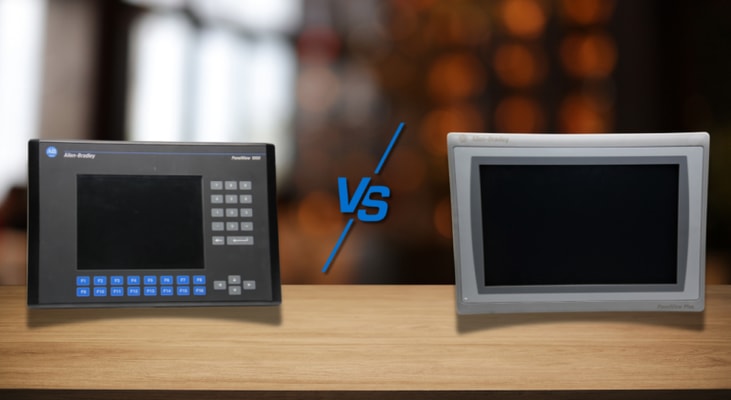
Choosing the right PanelView HMI is no easy task; it’s not just about the screen size or the communication protocol. A major choice is whether a PanelView terminal will be equipped with a keypad, a touchscreen, or both. PanelView models with a keypad enable a variety of functions under harsh operating conditions that touchscreen interfaces cannot. By understanding the true costs and benefits of these input methods, engineers, operators, and maintenance personnel can select the most appropriate PanelView solution for their application. Modern PanelView families vary widely in the input options available. PanelView 5310 and 5510 terminals use touchscreen input, while PanelView 800 and legacy PanelView Plus 6 models include keypad, touchscreen, or keypad/touchscreen options depending on the model. PanelView Plus 7 Standard terminals are primarily touchscreen-based. The choice of interface affects the operator’s efficiency, navigation speed, maintenance requirements, system reliability...
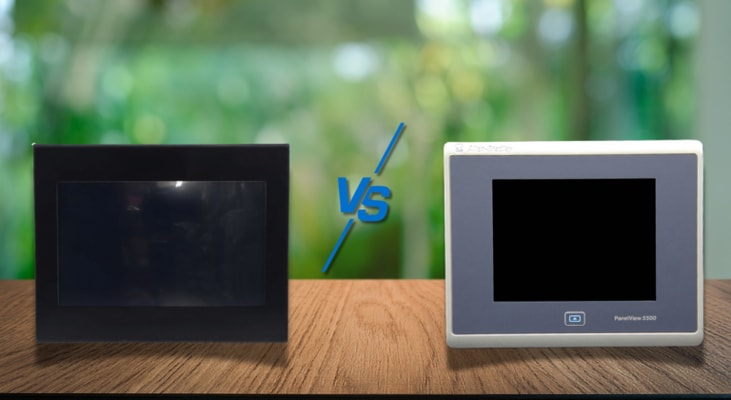
A graphic terminal remains an invaluable asset within most automated systems. It gives operators a practical way to see what a machine is doing, respond to alarms, adjust process values, and keep production moving without needing to dig through the control cabinet every time something changes. Of course, the effectiveness of the terminal varies depending on factors such as screen size, graphic design, responsiveness, and so on. Because of this, it can get a bit overwhelming trying to spec the perfect HMI for your setup. Today, we’re here to narrow down your search with two popular offerings on the market: The Mitsubishi GOT2000 series and the Allen-Bradley PanelView 5500 series. Both of which are built for a serious industrial environment, yet lean into their own strengths that we will go over to help you make a more informed decision. Before diving into the comparisons, it’s best to go over what each HMI’s family is trying to accomplish. While the Mitsubishi GOT2000 and the...
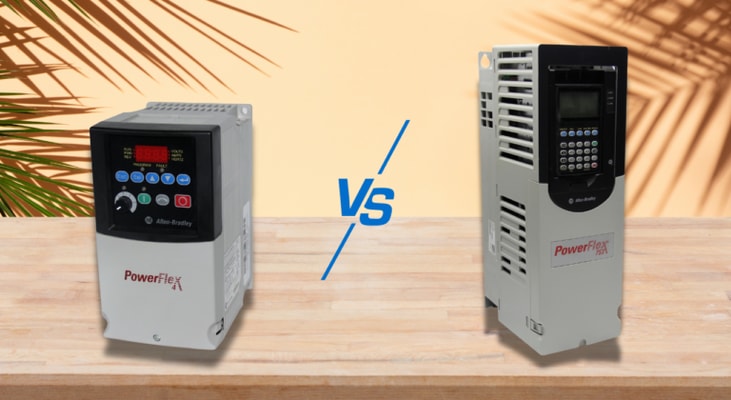
The PowerFlex product family from Rockwell Automation spans one of the broadest drive portfolios in industrial automation. Engineering the right selection from within that portfolio requires understanding precisely where Rockwell draws the line between its compact and full-size (architecture-class) drive categories, and what technical capabilities exist on each side of that line. PowerFlex drives are broadly categorized into compact-class and architecture-class: compact drives are smaller, cost-effective units for simpler applications, while architecture-class drives are high-performance, feature-rich units for demanding industrial requirements. Here, we will discuss some parameters for comparing the two types of drives. Source PowerFlex 755 Drives Here Rockwell Automation organizes the PowerFlex family into three tiers: compact (component-class), standard, and architecture-class. The compact tier encompasses the PowerFlex 4 , 40 , 523 , 525 , and 527 series. The architecture-class...
An AC drive is basically a device that lets you control how fast and how hard an AC motor runs. It does so by changing the frequency and voltage of the power supplied to the motor. And knowing the difference between a general-purpose AC Drive and a high-performance AC Drive really matters if you’re into modern industrial automation. General-purpose VFDs are widely used because they handle most industrial tasks. But there are times when you need something more powerful and precise; that’s where high-performance drives step in. If you’re an engineer or have to make purchasing decisions, you need to know how these two stack up before you spend a dime. Shop for Allen-Bradley PowerFlex 525 Drives Here A general-purpose AC Drive is designed to suit a wide range of settings, including factories, businesses, and full-scale industrial environments. They’re flexible, so people tend to use them almost everywhere. Maybe you work somewhere that needs a motor control system that’s ready to scale up...
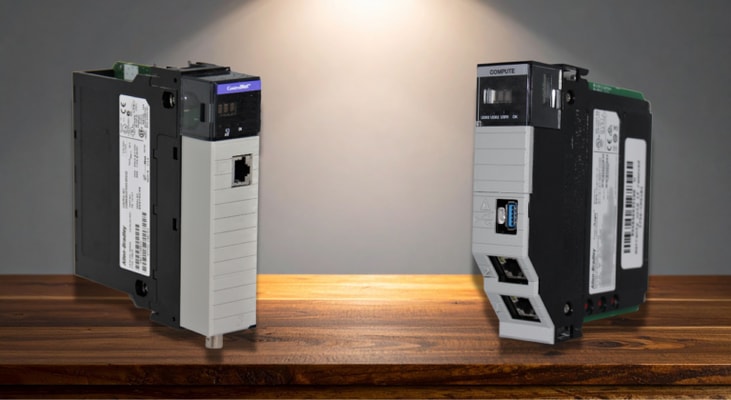
Allen-Bradley CompactLogix and ControlLogix controller platforms play a key role in modern industrial automation. ControlLogix controllers are configurable for safety, standard, Logix SIS, and redundancy applications, facilitating faster system performance, high I/O capacity, enhanced productivity, and improved security for enterprise-level and large-scale automation systems. CompactLogix platforms offer the same core processing capabilities as ControlLogix platforms, but for cost-sensitive, mid-range, or standalone automation applications — often at a fraction of the total ControlLogix investment. Selecting the correct Allen-Bradley controller between the ControlLogix and CompactLogix platforms requires balancing cost, I/O capacity, performance, complexity, and scalability to avoid oversized control panels, redundant programming complexity, and inflated hardware costs. This article explains the technical differences between the two platforms and provides a clear selection criterion...