What PLC Manufacturers Mean by “Industrial Grade”
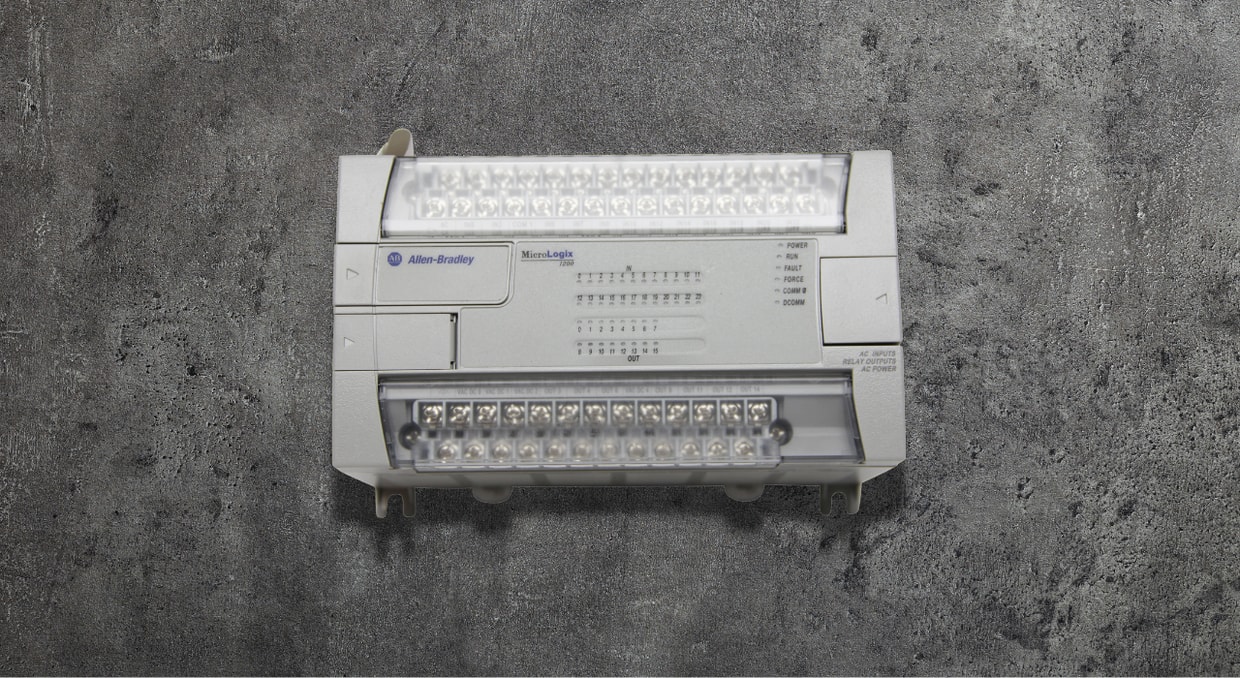
When it comes to selling products, there are a few marketing terms we’ve all become familiar with. Heavy-duty, military-grade, high-performance, next-generation, and so on. On paper, those phrases sound meaningful, but most of the time, they exist purely to catch your eye rather than explain anything measurable.
Automation is one of those areas where this pattern starts to break down. In this space, “industrial grade” is usually shorthand for real design decisions, environmental ratings, and long-term reliability expectations that consumer hardware never has to meet. Though there is much more to it than that, so join us as we unravel the facts between marketing and what truly makes a product industrial grade.
Why “Industrial Grade” Exists at All
To understand why industrial grading is needed, it’s best to start by looking at the industry as a whole. Industrial automation covers a broad spectrum, from marine and offshore plants to chemical and fertilizer plants.
Each presents its own set of hazards, some of which are:
- Vibrations
- Electrical noise
- Salt water
- Humidity
- Fluctuating temperatures
Sure, a PLC manufacturer could make a simple computer in a cheap 3D printed enclosure to use, but it wouldn’t last nearly as long as the plant manager would want. While replacing them is an option, shutting down the line to do so causes downtime, and that alone could be more expensive than buying a better, properly rated PLC. That’s why PLC manufacturers and other industrial players have developed an industrial grading system.
What Industrial Grade Is Not
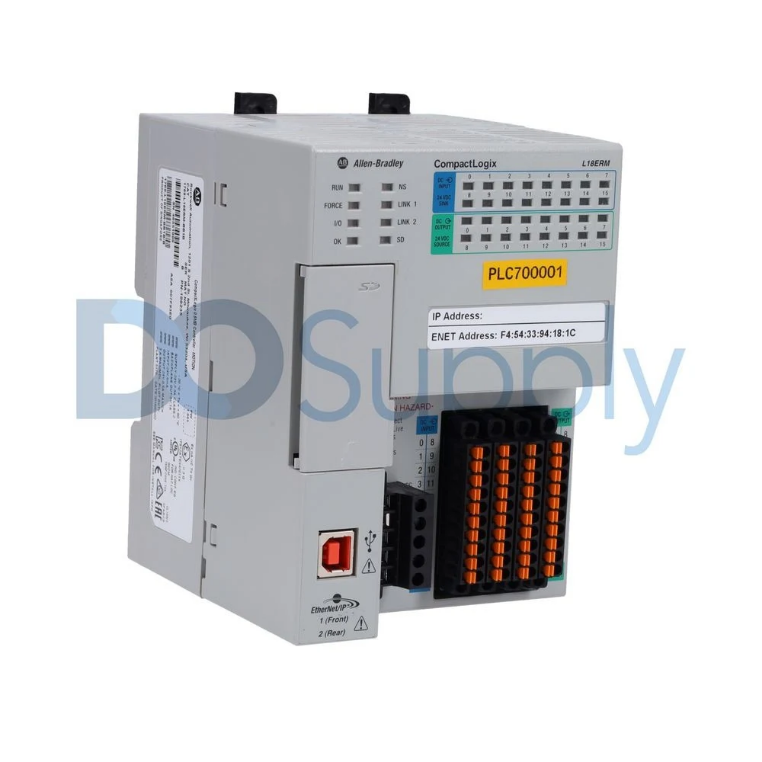
The term “industrial-grade” can be a bit misleading, as it can sound very authoritative, leading consumers to believe the product is superior in every situation. The reality is that a PLC manufacturer uses this term to describe a product’s suitability for a particular set of environments, just as commercial-grade hardware is used for enterprise settings.
A good rule of thumb is not to associate “industrial grade” with:
- Overbuilt hardware
- One size fits all solutions
- Exclusively for industrial settings
- The most powerful hardware
It is easy to get confused by marketing terms that don’t seem to provide the buyer with quantifiable data. Industrial-grade also does not mean a PLC manufacturer is charging more for the label; rather, it reflects design choices, higher-quality components, longer validation cycles, and extended product lifecycles.
How PLC Manufacturers Define Industrial Grade in Specifications
When a PLC manufacturer uses the term “industrial grade”, the definition isn’t found in the product description, but in its specifications through a collection of design limits and operating assumptions. Each one focuses on the conditions under which the controller can survive without becoming unreliable.
Operating Temperature Range
One of the first indicators is temperature. A PLC manufacturer assumes the controller will be installed in an enclosure that may not be perfectly cooled or may be exposed to seasonal swings in ambient conditions.
Typical specifications focus on:
- Guaranteed operation across a wide temperature range
- Stable timing and logic execution in extreme temperatures
- Controlled heat dissipation under continuous load
This is very different from consumer electronics, which often rely on ideal ambient conditions to stay within tolerance.
Electrical Noise and Interference Immunity
Industrial environments can get very noisy electrically due to interference from motors, variable-frequency drives, solenoids, and other electrical equipment. A PLC manufacturer designed industrial-grade hardware to remain stable in the presence of this noise.
Specifications here often describe:
- Immunity to electromagnetic interference
- Resistance to electrical transients and voltage spikes
- Input filtering to prevent false state changes
Without these protections, even a small amount of noise can lead to unpredictable behavior.
Power Supply Tolerance and Stability
Power quality on the factory floor is rarely perfect. A PLC manufacturer expects voltage dips, brownouts, and brief interruptions, and designs accordingly.
You will typically see:
- Wide input voltage tolerance
- Ride-through capability during short power disturbances
- Internal regulation to protect logic and I/O circuits
These characteristics are often invisible during normal operation, but critical during abnormal conditions.
Continuous Duty and Scan Stability
A PLC manufacturer does not assume the controller will ever be “idle”; instead, it assumes the controller will execute its scan cycle continuously without timing drift or degradation.
Because of this, PLC manufacturers build their products accordingly:
- Guaranteed scan performance under sustained load
- Deterministic execution timing
- Thermal stability over extended operating periods
The emphasis is not speed, but consistency. That’s why you will usually find that PLCs aren’t made to be as fast as possible, but rather to be exceptionally predictable.
Mechanical and Environmental Ratings
Another way PLC manufacturers grade their PLCs is by physical qualities. Controllers may be mounted in cabinets attached to moving machinery or installed in less-than-ideal enclosures, and as a result, may need specialized hardware to withstand mechanical or electrical stress.
Specifications in this area typically cover:
- Vibration and shock tolerance
- Humidity and dust resistance
- Enclosure or mounting requirements
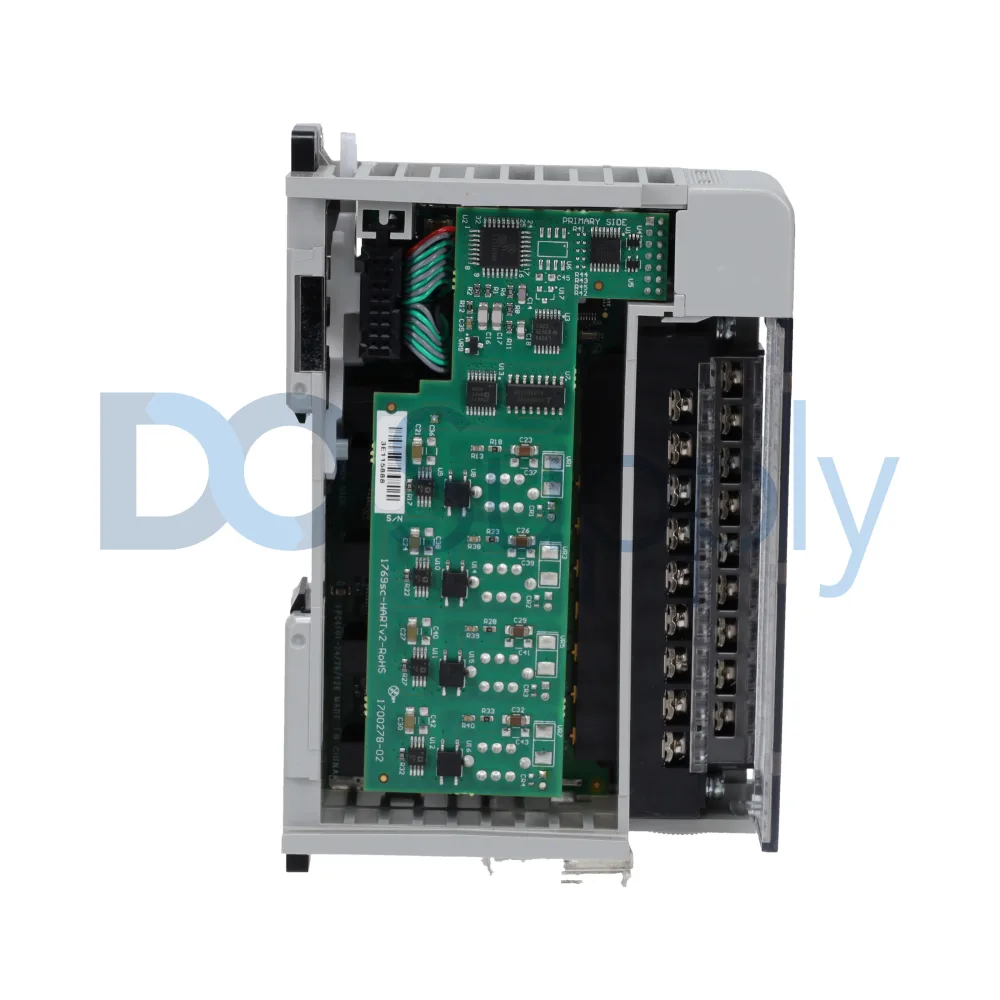
These details determine whether a controller survives the real world or slowly fails over time.
Conformal Coatings
One common way to prevent moisture, humidity, and airborne contaminants from damaging a PLC is to coat its PCB with a layer of polymer, a process known as conformal coating. These coated PLCs are commonly employed in industries such as food and beverage, wastewater, and chemical processing.
For example, Allen-Bradley offers conformal-coated variants of certain CompactLogix and ControlLogix modules specifically for applications like these. The underlying controller might be the same, but the environmental survivability is not.
Why Two Industrial-Grade PLCs Can Still Be Very Different
When seeing the words “industrial grade” on two different controllers, one might reasonably get the impression that they are roughly interchangeable. In practice, this is rarely true. While both may meet a PLC manufacturer’s baseline definition of industrial suitability, the paths each controller takes to get there can be very different. For example, some PLC manufacturers may design around a specific set of priorities, while some focus on compact machines with limited I/O, others on large systems that run continuously. Because of this, two industrial-grade PLCs may survive on the factory floor but excel in completely different roles.
One of the biggest differences is the environment in which the PLC will operate. A PLC manufacturer may rate two controllers for industrial use, but one might be designed for enclosures while another is built to withstand temperature swings.
Another area of variation is workload expectation. Not every PLC manufacturer assumes the same scan complexity or I/O density. Some controllers are intended for simple logic and basic sequencing, while others are designed to manage large programs, frequent communications, or motion-related tasks.
How to Evaluate an Industrial-Grade PLC for Your Application
By this point, we should know that “industrial grade” is neither a single feature nor a guarantee, but a baseline marketing assumption that still leaves room for major differences between platforms. For that reason, choosing the right PLC means looking past the label and focusing on how well the controller aligns with the realities of the application.
Where the PLC Will be Installed
One of the first questions to ask is where the PLC will live, as environmental exposure alone can significantly narrow the choices. After all, a controller installed deep inside a sealed cabinet has different requirements than one mounted near a washdown area or high-vibration equipment.
Some key considerations include:
- Proximity to moisture, dust, or corrosive agents
- Expected ambient temperature range
- Electrical noise from nearby motors or drives
PLC Workload
Next comes workload. Not all industrial-grade PLCs are designed to handle the same number of tasks or to communicate using the same protocols. A PLC manufacturer typically offers multiple PLC lines optimized for different control tasks.
It’s important to understand your project’s needs, including:
- Program size and execution complexity
- Number of I/O points and update rates
- Communication demands with HMIs, drives, or other controllers
Expected Lifecycle
Industrial automation systems are very rarely short-term investments. A PLC manufacturer that supports long product lifecycles, backward compatibility, clear migration paths, and end-of-life support for discontinued products is worth investing in.
This becomes especially important when considering:
- Replacement hardware availability
- Long-term support and documentation
- Upgrade paths that minimize system redesign
- Third-party repair options
Final Thoughts
“Industrial grade” is one of the few marketing terms that actually has substance, but only if understood in the right context. When a PLC manufacturer uses it, they’re not guaranteeing that their product is superior in every way, but rather that it’s designed to withstand the demanding conditions of industrial automation and to operate continuously without downtime or malfunctions. Another type of industrial equipment also subjected to harsh environments is AC drives. If you would like to learn more about that, we made a blog here!
Finding the right PLC doesn’t need to be difficult either. Here at DO Supply, we offer industrial-grade PLCs from trusted manufacturers! We have an assortment of Allen-Bradley Logix PLCs, Mitsubishi FX series, and more. All of our products also ship out the same day and are backed by our two-year warranty. So stop by today and find the perfect PLC for your automated system!
DO Supply Inc. makes no representations as to the completeness, validity, correctness, suitability, or accuracy of any information on this website and will not be liable for any delays, omissions, or errors in this information or any losses, injuries, or damages arising from its display or use. All the information on this website is provided on an "as-is" basis. It is the reader's responsibility to verify their own facts.