ControlLogix Selection for High-Speed Manufacturing
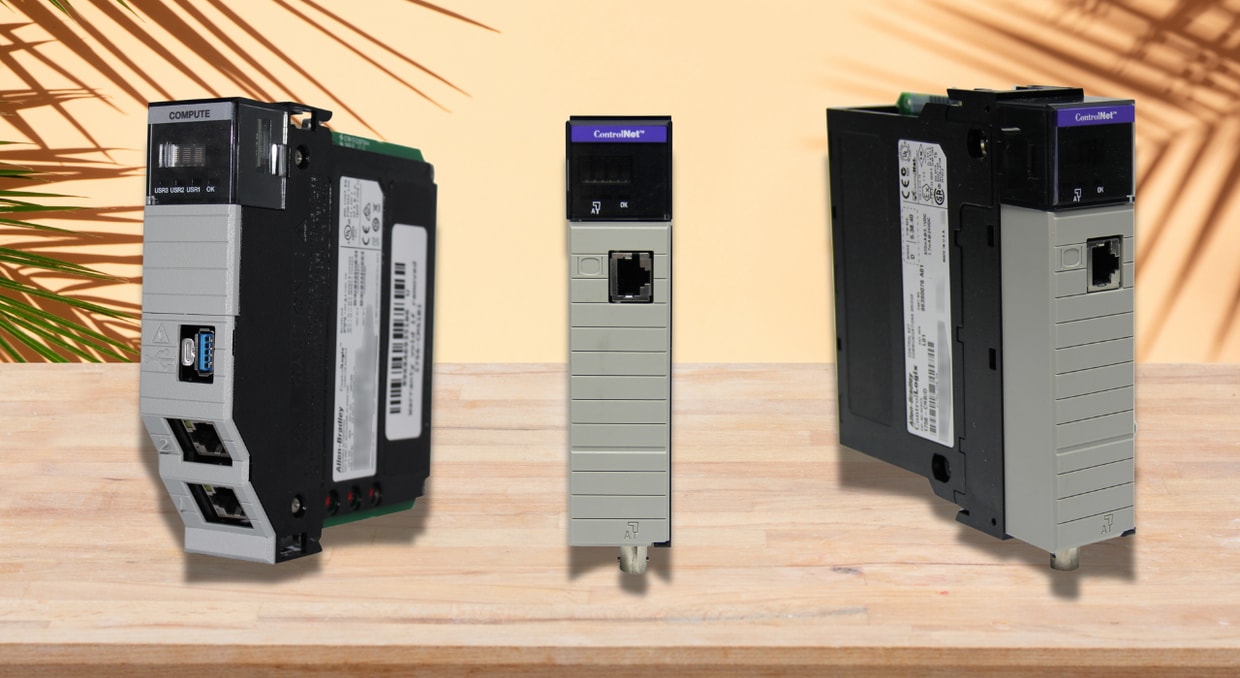
General-purpose automation just cannot meet the demands placed on a control system by high-speed production. A vision-guided robotic cell that makes accept/reject decisions in less than two milliseconds, a packaging line that produces 1,200 units per minute, or a multi-axis servo system that coordinates ten simultaneous motion profiles are all unable to withstand the scan time variability, communication latency, or processing constraints that are acceptable on a typical discrete manufacturing line. A system that operates at line speed or one that becomes a bottleneck depends on the choice of processor generation, motion architecture, task structure, and communication topology within Rockwell Automation’s ControlLogix platform, which is specifically designed for this environment. This article discusses each of those selection decisions in the context of high-speed manufacturing requirements.
Why ControlLogix Is the Architecture of Choice for High-Speed Applications
Controllers that offer complex automation, integrated safety, motion control, and scalable architectures, such as CompactLogix and ControlLogix, carry out the scan cycle in high-speed applications spanning machine-level and plant-level systems. Because of the 1756 chassis architecture’s mix of connection capacity, motion axis support, multi-task execution, and option slot expandability, ControlLogix, rather than CompactLogix or Micro800, dominates high-speed production.
In integrated control topologies, the ControlLogix 5580 performs exceptionally well as a central controller. It eliminates the need for separate controllers and lowers system complexity by natively supporting process control, motion control, and safety applications inside the same chassis, going beyond conventional logic and sequential control. This multidisciplinary competence is an architectural need rather than a convenience for a high-speed packaging or assembly process. Coordinated machine performance is negatively impacted by inter-controller communication delays caused by separating motion control, safety, and discrete I/O into separate controller platforms.
The 5580 vs 5590 Decision for High-Speed Applications
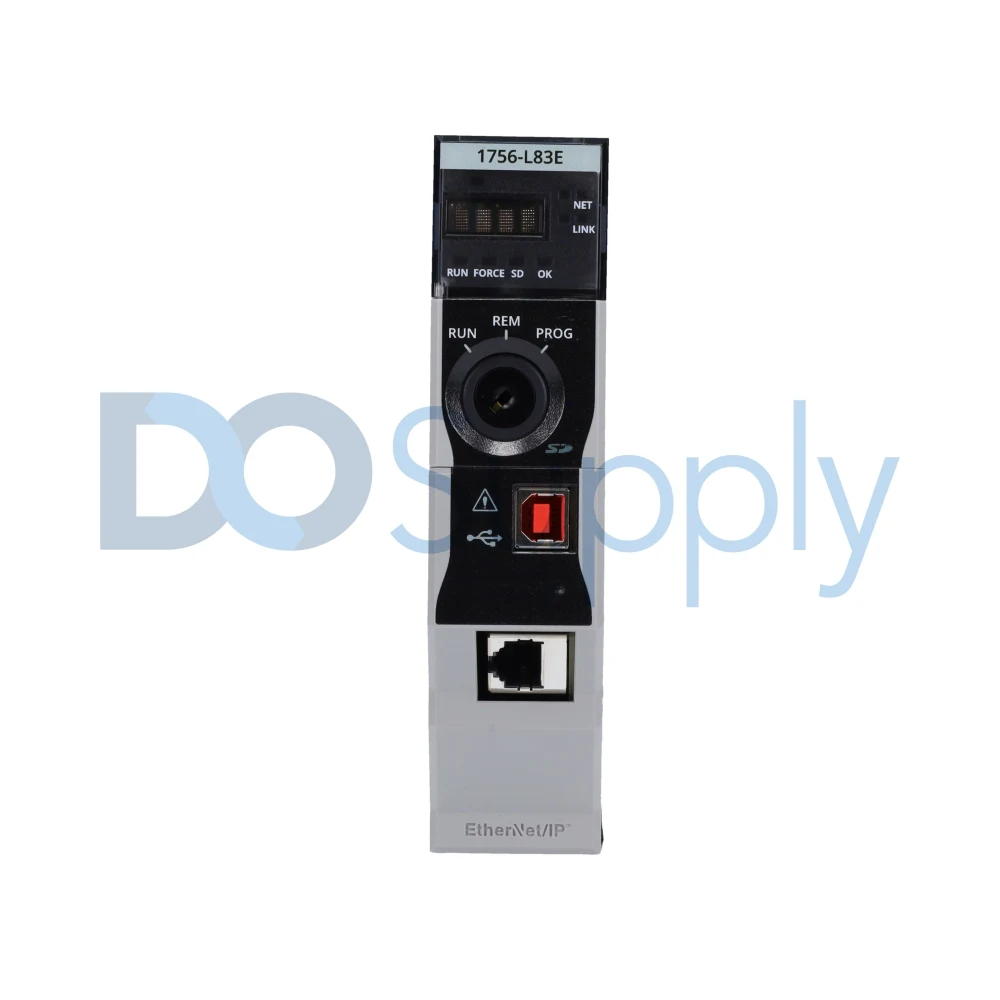
Choosing between the ControlLogix 5580 and the recently announced 5590 is the most important processor choice for any new high-speed production project in 2025 and beyond. Compared to the previous 5580 generation, the ControlLogix 5590 has greater memory, more motion capacity, twin embedded 1 Gb Ethernet connections, stronger built-in safety, and wider communication support. The ControlLogix 5590 supports 512 axes, has two Ethernet ports, and greater memory (up to 80 MB). On the other hand, the ControlLogix 5580 features one Ethernet port and less memory (up to 40 MB).
Building on the capabilities of the ControlLogix 5580, the ControlLogix 5590 provides high-performing, multidisciplinary control that satisfies the needs of large-scale industrial applications, redundant systems, and complicated motion. The ControlLogix L9 controller’s integrated safety and security features, along with its sophisticated connectivity, processing, and motion capabilities, enable scalable, secure, and connected operations throughout your organization.
In high-speed manufacturing, in particular, the 5590’s 512-axis capacity versus the 5580’s 256-axis limit is crucial for large coordinated systems, automotive body assembly, multi-lane packaging, and robotic palletizing cells where axis counts rapidly build up within a single controller domain.
Scan Time and Processor Speed: The Core Performance Metric
Scan time is an actual engineering limitation in high-speed production rather than an abstract specification. For example, one part in a factory is produced every 50 milliseconds by a machine operating at 1,200 pieces per minute. The control loop has five chances to react every product cycle if the controller scan time is 10 ms. It has two chances to react per product cycle if the scan time is 25 ms. At that resolution, a single missed scan immediately results in a machine malfunction or a damaged product.
Compared with the previous ControlLogix 5570 generation, the 5580 provides up to 45% more application capacity. Its faster processor architecture can also shorten execution times, although the actual improvement depends on the program, task configuration, communications, and motion workload. The ControlLogix 5580’s Integrated Motion feature provides synchronized and scheduled motion updates. This is further enhanced by the 5590’s higher-performance CPU design.
Even as automation technologies become more sophisticated, control ultimately boils down to dependability and clarity. Engineers desire a system that is secure, operates quickly, and doesn’t complicate their work. In a framework people are already familiar with, the ControlLogix 5590 conveniently fits that thinking by adding processing headroom, built-in safety, and strengthened security.
Task Structure: Periodic, Event, and STI Tasks in High-Speed Programs
When a ControlLogix controller runs a high-speed manufacturing program, it doesn’t conduct a single monolithic scan; instead, it runs several concurrent jobs with separate priorities and durations. To achieve the scan performance required by a high-speed application, proper task architecture is just as crucial as processor selection.
The Selectable Timed Interrupt (STI) job runs separately from the continuous task scan since it is set up as a Periodic job with a specified period. Time-critical operations in high-speed manufacturing must be divided into periodic tasks with durations that correspond to the application’s response requirements: motion update loops at 1-2 ms, high-speed counter processing at 5 ms, and quality-gate logic at 10 ms. Less time-sensitive operations like HMI data preparation, recipe management, and alarm logic are handled by the continuous task without interfering with the periodic tasks’ predictable execution.
Integrated Motion over EtherNet/IP: Axis Count and Update Rate
For high-speed motion applications, Integrated Motion over EtherNet/IP is managed using the ControlLogix 5580 framework. Integrated Motion over EtherNet/IP (IME) greatly simplifies cabling while preserving the predictable performance required for high-speed motion by substituting common EtherNet/IP infrastructure for the specialized SERCOS III motion network utilized by earlier ControlLogix motion systems.
Axis count and coarse update period (CUP) are important IME parameters for a high-speed manufacturing system. The CUP specifies how frequently the controller updates position, velocity, and torque inputs to each servo drive. To maintain trajectory accuracy at full line speed, a multi-axis coordinated packing machine with cam-profile synchronization between servo axes usually needs a 1-2 ms CUP. The 5580 is the right choice for large-format systems where axis count alone would require controller partitioning and cross-controller coordination logic, since it supports up to 256 axes within a single controller domain; the 5590 expands this to 512 axes.
EtherNet/IP Network Architecture for Deterministic High-Speed I/O
The ControlLogix 5580 includes one embedded 1 Gb EtherNet/IP port, while the ControlLogix 5590 includes two embedded ports that support linear and Device Level Ring topologies. Network architecture directly impacts I/O update determinism in high-speed manufacturing. I/O update consistency is deteriorated under load by contention in a flat network where drives, distant I/O racks, HMI nodes, and SCADA systems all share the same physical infrastructure.
The motion network, which transports IME communication between the controller and servo drives, is kept apart from the process I/O network and the plant information network in the proper design for high-speed production. Different network interfaces with distinct MAC addresses and different CIP connection pools are provided by additional 1756-EN2TR modules placed in the ControlLogix chassis. To avoid connection scheduling interference that adds jitter to the motion update cycle, discrete I/O and HMI traffic must be separated from servo drive traffic, which produces high-frequency cyclic connection loads at the CUP rate.
Safety Integration: GuardLogix 5580 and 5590 for High-Speed Lines
High-speed production lines usually need integrated functional safety that satisfies SIL 2/PLd or SIL 3/PLe under IEC 61800-5-2 and EN ISO 13849, especially in the automotive, food processing, and pharmaceutical industries. A safety-enabled ControlLogix 5590 can eliminate the need for a separate safety PLC by running standard and safety control within the same platform. Safety-rated I/O and devices are still required, but they can communicate through CIP Safety over the facility’s EtherNet/IP architecture rather than requiring an entirely separate proprietary safety network.
Up to SIL 2/PLd (Category 3) may be accomplished with a single ControlLogix 5590 controller. A ControlLogix 5590 controller may reach SIL 3/PLe (Category 4) when utilized in conjunction with a ControlLogix 5590 safety partner. The GuardLogix 5590 removes the need for a separate safety PLC, separate safety I/O network, and cross-controller safety data exchange on a high-speed packaging line with operator access zones that require Safe Limited Speed (SLS) and Safe Door Monitoring (SDM). These components would add more latency and failure points to the safety response path.
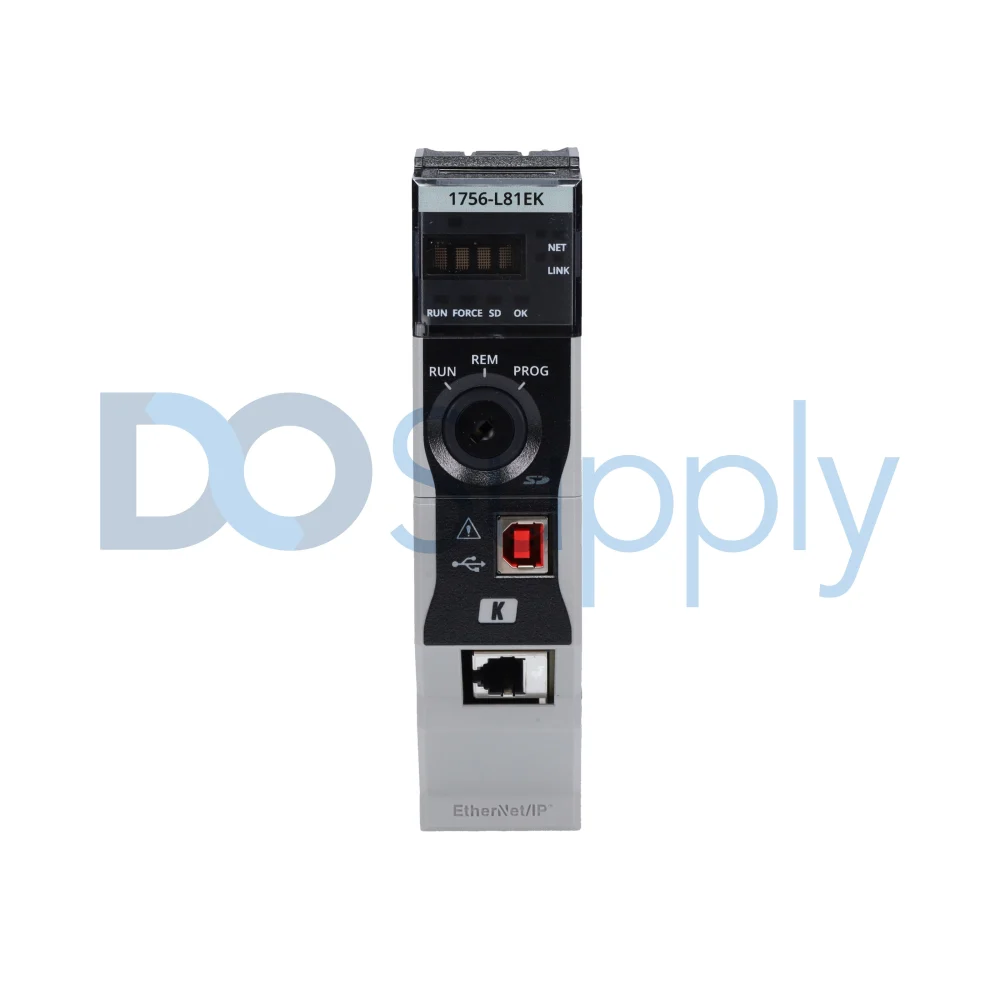
The ControlLogix 5590: The Current Generation Platform for High-Speed Manufacturing
The ControlLogix 5590 was created for demanding industrial applications. It offers modernization and migration with a smooth transition from ControlLogix 5570/5580 controllers, backward compatibility, faster development with contemporary tools and team-based processes, and an improved hardware experience with integrated troubleshooting support to reduce downtime.
The ControlLogix 5590 is the appropriate platform specification for new high-speed manufacturing projects commissioned in 2025 and beyond. It comes in Standard and XT versions for corrosion-resistant environments and has the same interface philosophy and development workflow that engineers are already familiar with. For new high-speed lines where axis count, memory, network bandwidth, and processing headroom are all at a premium, the 5590’s expanded specifications across every dimension eliminate constraints that would otherwise force architectural compromises on the largest and fastest applications. The 5580 is still available, supported, and the right choice when matching an existing in-plant standardized architecture.
Final Thoughts
From CPU generation to task architecture, motion axis budget, and more, choosing the appropriate ControlLogix for a high-speed manufacturing application is a multi-layered technical choice. With its 256-axis and 40 MB memory envelope, the ControlLogix 5580 continues to be a competent and up-to-date platform for high-speed applications. The ControlLogix 5590 extends that envelope to 512 axes and 80 MB, adds dual embedded Gigabit Ethernet ports, and introduces OPC UA natively, making it the correct specification for the most demanding high-speed manufacturing systems now being designed. In both cases, the platform’s multi-discipline integration of motion, safety, discrete, and process control is what makes ControlLogix the dominant architecture in high-speed manufacturing, not any single specification in isolation, but the combination of all of them in one coherent, scalable system. For those interested in retrofitting their old equipment with ControlLogix, we have an article here that may help!
If you are looking to upgrade your system to a ControlLogix ecosystem, let us at DO Supply be your one-stop shop for automation equipment. We carry hundreds of ControlLogix controllers, expansion modules, power supplies, and matching accessories. We also offer our two-year warranty with our products for a worry-free purchase. Give our team a call to start spec’ing your system today.
DO Supply Inc. makes no representations as to the completeness, validity, correctness, suitability, or accuracy of any information on this website and will not be liable for any delays, omissions, or errors in this information or any losses, injuries, or damages arising from its display or use. All the information on this website is provided on an "as-is" basis. It is the reader's responsibility to verify their own facts.