Selecting the Right ControlLogix for Retrofit Projects
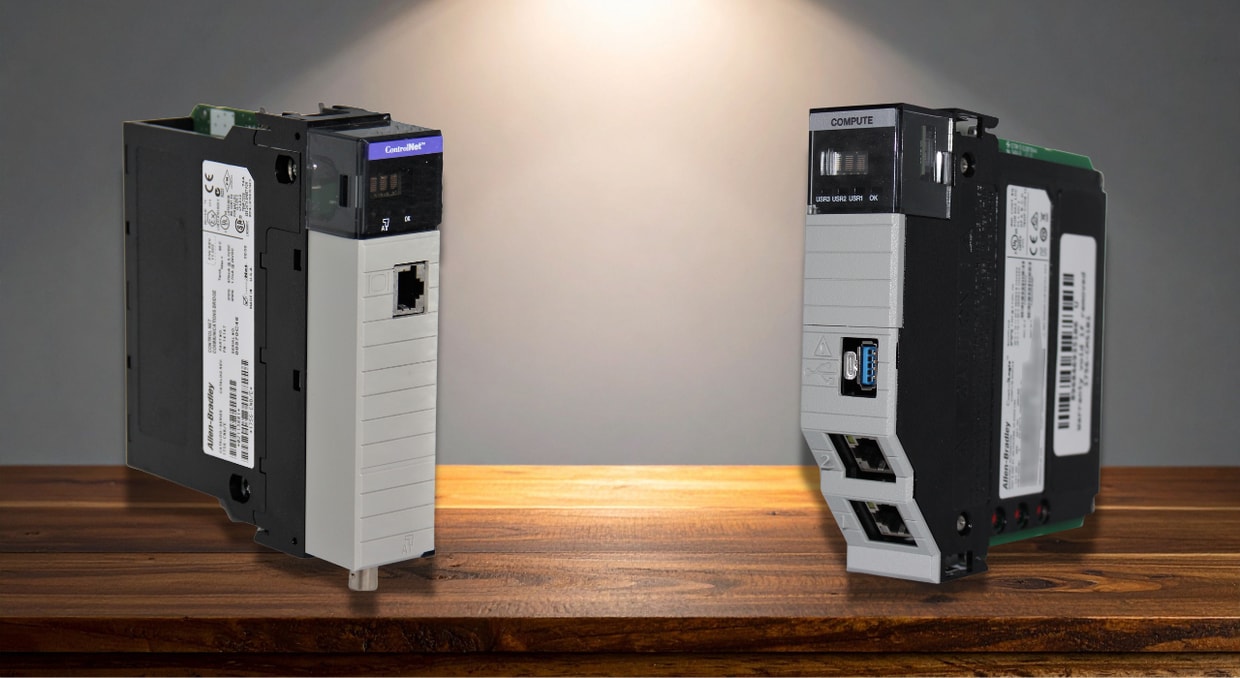
A new installation is not the same as a retrofit project. The selection logic for a ControlLogix processor must take into consideration elements that are absent from a greenfield project, and the risks and constraints are different. A processor must fit into a panel sized for a PLC-5 or SLC 500 chassis, communicate with devices never intended for EtherNet/IP, coexist with existing wiring, and be maintainable by a team that has worked on RSLogix 500 for years. A predetermined set of technical criteria must be followed to make the proper choice. That approach is covered from the start in this article.
Establish the Scale of What You Are Replacing
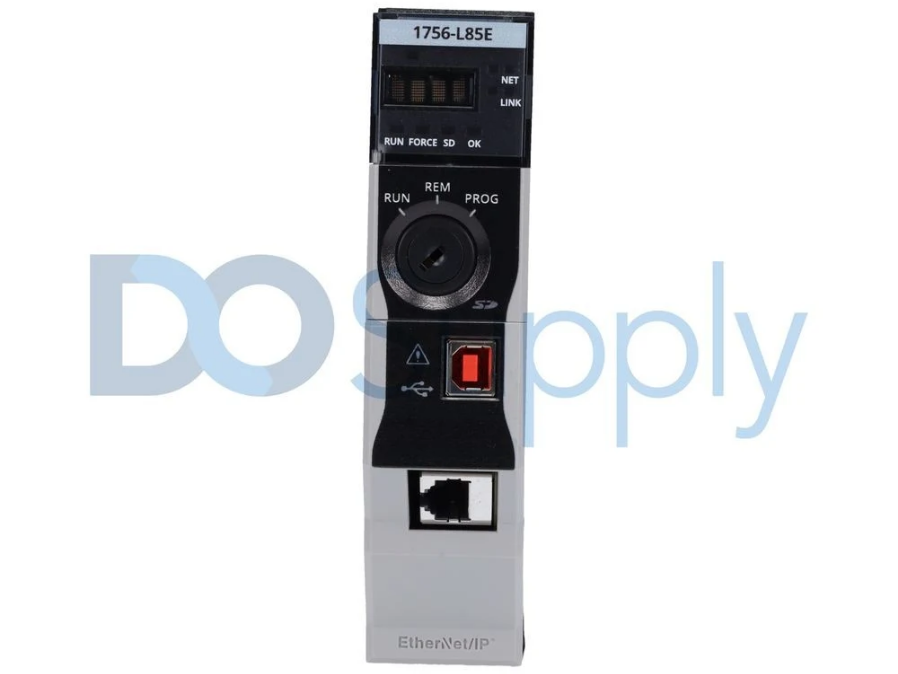
The first task on any ControlLogix retrofit is documenting the full scale of the legacy system, not just the I/O count, but everything the existing controller manages. A practical first pass is to group the 5580 processors by memory class: 1756-L81E for smaller systems, 1756-L82E or 1756-L83E for moderate retrofits, and 1756-L84E or 1756-L85E for larger PLC-5 migrations, high tag counts, or systems with heavier communication requirements. Documenting the following before touching the selection guide prevents undersizing:
- Total discrete I/O points separated by 24 VDC, 120 VAC, and relay output types
- Total analog channels and signal types: 4–20 mA, 0–10 V, thermocouple, RTD
- Number of remote I/O racks and their physical distances from the processor
- Active communication links , DH+, DH-485, Remote I/O, ControlNet, serial DF1
- HMI, drive, and instrument node connections are currently handled by the legacy processor
Rockwell’s Integrated Architecture Builder handles this inventory. Before committing to a model, IAB verifies processor size, chassis count, and EtherNet/IP node budget by automatically generating the comparable ControlLogix BOM from a PLC-5 or SLC 500 bill of materials. Instead of running it during panel fabrication, run it during design.
The 5570 vs 5580 Decision
The ControlLogix 5580 (L8xE series) is the ideal place to start for new retrofit projects in 2025 and beyond. While the 5570 (L7x series) is still supported for parts and occasionally meets an existing in-plant requirement, the 5580 is the superior platform for new retrofit work in every aspect that matters in the long run.
The key differences are concrete:
- Ethernet speed: 5580 has a built-in 1 Gbps port; 5570 tops out at 100 Mbps and requires a separate 1756-EN2T module for any Ethernet connectivity
- Memory: 5580 reaches 40 MB on the L85E; 5570 tops at 8 MB on the L75
- Scan performance: the 5580 delivers up to 20 times faster program scanning than 5570 equivalents, directly reducing cycle time on large migrated PLC-5 programs
- Security: 5580 supports digitally signed firmware, OPC UA, CIP Security, and audit logging, none available on 5570
Chassis Sizing and Slot Allocation
There are four, seven, ten, thirteen, and seventeen slot variants for the ControlLogix chassis. Both current and future requirements influence the chassis size for a refit. With the help of several EN2T modules, a 17-slot chassis allows for network segmentation and growth, enabling distinct EtherNet/IP segments for drives and process I/O. For medium-to-large retrofit applications, the L71 processor’s ability to manage more than 500 connections, compared to the CompactLogix L33ER’s 32, is a compelling argument for keeping ControlLogix rather than downsizing.
The processor, EtherNet/IP modules, local I/O modules, any old bridge modules kept during phased migration, and, if GuardLogix is used, a safety partner slot must all be taken into consideration when allocating slots. Make sure there are always at least two empty spots. Basic spare-slot discipline at the original design stage completely prevents retrofits, process changes, or new instrumentation that would necessitate a chassis update six months after commissioning.
Handling Legacy Networks During Phased Migration
The inability to fully shut down the old system during new hardware installation is the most challenging technical limitation in most ControlLogix retrofit efforts. Production is still going on. During the transition, the ControlLogix processor must interact with devices still connected to the old network, and the retrofit must be phased in. Up to 32 stations at 57.6, 115.2, or 230.4 kbps can exchange data with PLC-5 processors that still use the same connection, thanks to the 1756-DHRIO module, which provides the ControlLogix processor with a DH+ port for DH+ retention.
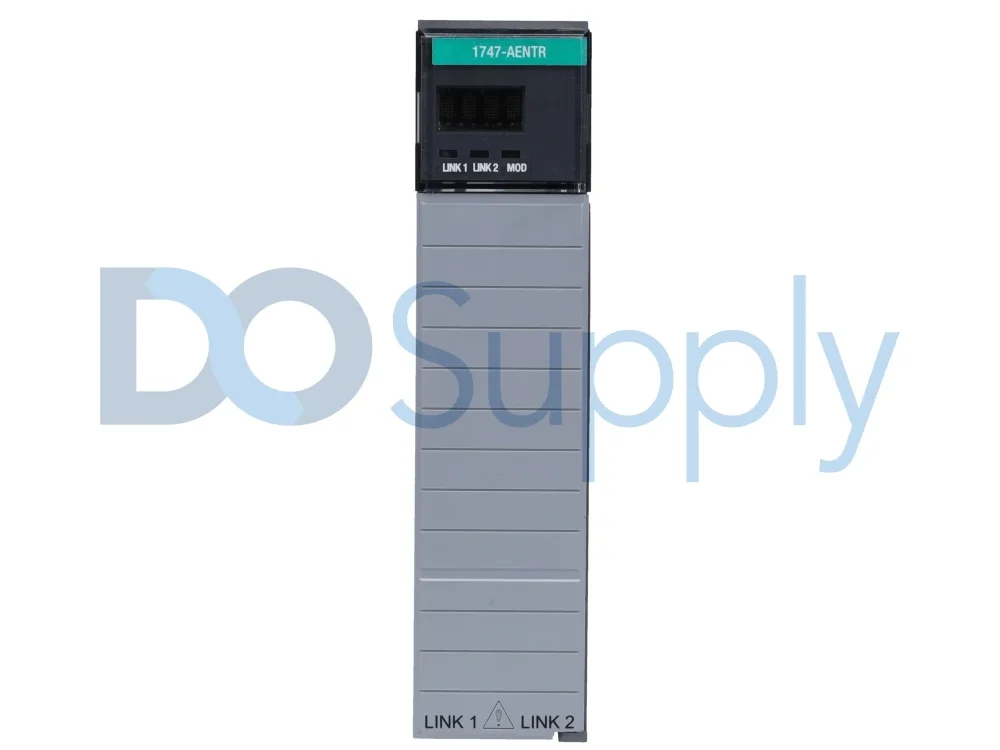
Additionally, the 1756-DHRIO manages remote I/O scanning, maintains all current field wiring during the phased cutover, and treats current 1771 or 1746 racks as distant nodes from the new ControlLogix chassis. The 1747-AENTR EtherNet/IP adapter, specifically designed for SLC 500 rack preservation, transforms an existing 1746 chassis into an EtherNet/IP remote I/O node that the ControlLogix processor directly scans. Field wiring remains intact while the control logic moves above it, zone by zone, over several maintenance windows.
Memory Sizing for Migrated Programs
As a general guideline, add RAM for additional features, HMI tag structures, and EtherNet/IP produced/consumed tags for drive communication after assuming that the original program’s instruction count would increase by 30–40% after conversion. The 1756-L83E at 10 MB is sufficient for most SLC 5/05-to-ControlLogix retrofits. The 1756-L85E at 40 MB completely removes the memory limitation for PLC-5/40 or bigger systems with high data table utilization. It eliminates a risk that is difficult to manage after commissioning.
GuardLogix for Safety-Integrated Retrofits
The GuardLogix 5580 is the appropriate processor instead of the conventional ControlLogix 5580 if the retrofit scope calls for replacing hardwired safety relays with a safety PLC architecture and improving the machine safety system. Standard control and safety coexist within a single project; the safety partner doesn’t need to be set up separately, as it is automatically established.
SIL 3/PLe (Category 4), which is required for press guarding, robot cell access control, and crane operator protection, is achieved with the GuardLogix 5580 and a safety partner. The GuardLogix 5580 uses the safety task and safety I/O to achieve SIL 2/PLd (Category 3) without a safety partner, which is sufficient for most conveyor and general equipment applications. The GuardLogix controller’s standard side performs all of the same tasks as a conventional ControlLogix 5580. EtherNet/IP connectivity, HMI integration, and the standard software remain unaltered.
Communication Module Selection
For basic retrofit applications, the 5580’s integrated Ethernet port manages EtherNet/IP connectivity well. An additional 1756-EN2TR module, mounted in the same chassis, offers independent network interfaces with distinct MAC addresses and separate connection pools for larger systems with multiple network segments, isolating process I/O traffic from drive communication and SCADA data. The usual choice for EtherNet/IP networks that transport drives, remote I/O adapters, and HMI nodes on the same physical infrastructure is the 1756-EN2TR, which has two copper ports and supports both linear and ring (DLR) topologies.
Drive cyclic traffic is kept on a separate segment to avoid connection conflict with I/O update traffic, which can occur sporadically under load and is challenging to analyze after the system is operational. The 1756-CN2/B offers 128 network connections and incorporates current ControlNet I/O nodes without requiring field wiring modifications for ControlNet systems that cannot be changed within the refit budget.
Redundancy
The 1756-RM2 redundancy module, which synchronizes primary and secondary chassis with a switchover time of less than 100 ms in the event of a processor or communication failure, allows ControlLogix to offer controller redundancy. Not all retrofits are suitable for redundancy. When it is specified where it is not required, the hardware cost of the processor chassis increases by about 80–100%.
The selection criteria for redundancy on a retrofit project are limited to continuous-process applications where an unplanned controller stop results in batch loss or product-quality failure; regulatory-mandated availability requirements in pharmaceutical or oil and gas production; or applications where the cost of an unplanned eight-hour outage exceeds the redundancy system’s total hardware cost. Rarely do packing machine retrofits, conveyor retrofits, and ordinary discrete manufacturing satisfy this need. Redundancy in applications that don’t warrant it is a budget mistake, not a gain in safety or dependability.
Final Thoughts
In conclusion, legacy network handling, processor generation, memory sizing, chassis planning, safety architecture, communication topology, and firmware compatibility all play a role in choosing the best ControlLogix for a refit project. The ControlLogix 5580 is the right platform for most PLC-5 and SLC 500 retrofits in 2025. In every application area, the increase in marginal cost is justified by built-in Gigabit Ethernet, 40 MB of RAM, 20x scan improvement, and CIP security. Program memory, connection count, and safety scope are then used to identify the particular model within the 5580 family. Accurately record those characteristics from the outset, and the choice is made right away. For information about ControlLogix integration with PowerFlex drives, check out this article here!
For sourcing both ControlLogix and SLC systems, visit us at DO Supply! We carry both families of PLCs, accessories, and hardware to support your retrofit projects. We also carry a wide selection of industrial motor control equipment to pair with your PLCs. Not only that, but all of our open-box items are inspected, and all come with our two-year warranty. Come shop with us today!
DO Supply Inc. makes no representations as to the completeness, validity, correctness, suitability, or accuracy of any information on this website and will not be liable for any delays, omissions, or errors in this information or any losses, injuries, or damages arising from its display or use. All the information on this website is provided on an "as-is" basis. It is the reader's responsibility to verify their own facts.