We found 171 posts about Comparison Guides from DO Supply, a global automation parts
reseller focused on hard-to-find and obsolete industrial automation products.
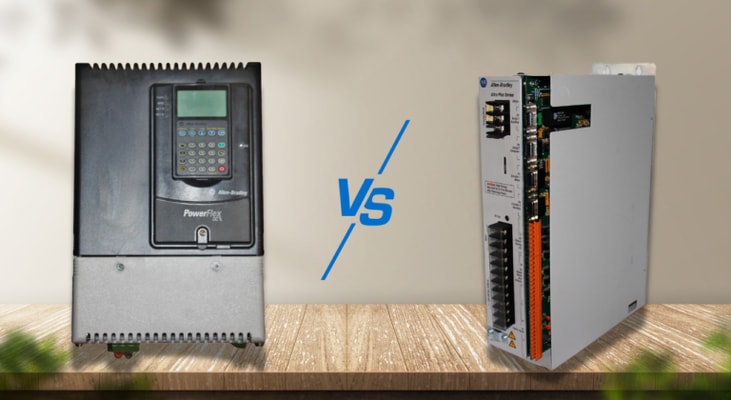
DC drives and servo drives are two distinct types of motor control devices. DC drives are commonly used for steady-speed and torque control, while servo drives are designed for precise, responsive control of position, speed, and torque. If you want to really get what sets them apart, you have to dig into how they work, what motors they run, and the sorts of things they’re actually used for. A DC drive converts incoming AC power into DC, ensuring the motor receives the correct voltage and current. In many cases, the controller and drive are combined, so commands and motor output go hand in hand. Inside, it all comes down to how the drive handles AC. Many traditional DC drives use SCR-based rectifier circuits to convert incoming AC power into a controlled DC output for the motor armature. Smaller drives may use single-phase rectifier designs, while larger industrial DC drives often use three-phase, six-pulse SCR bridges for smoother and higher-power DC output. This is why you will see...
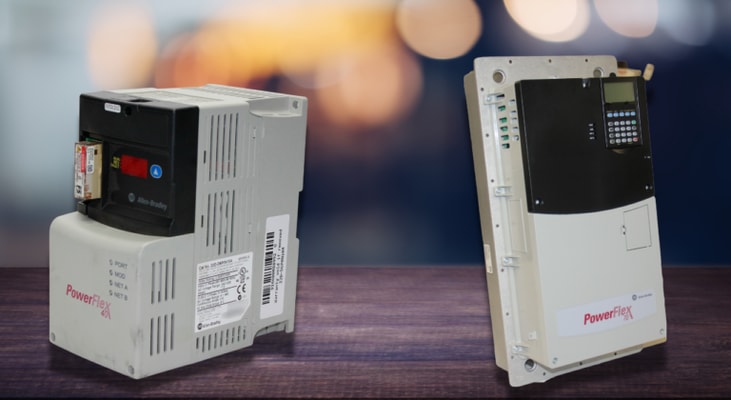
Selecting a Variable Frequency Drive for a harsh environment application is not simply a matter of matching horsepower and voltage. Ambient temperature, particulate contamination, corrosive atmospheres, moisture exposure, hazardous area classification, and physical installation constraints all impose requirements that eliminate drives from consideration before a single control parameter is evaluated. The Allen-Bradley PowerFlex family spans a wide range of drive architectures, enclosure ratings, and environmental specifications. Understanding which PowerFlex variant is engineered for a given harsh environment determines whether the installation delivers a decade of reliable service or becomes a recurring maintenance liability. A harsh environment for a VFD is any installation condition that exceeds the standard assumptions of a clean, temperature-controlled indoor panel: Ambient temperatures above 40°C or below 0°C Relative humidity approaching saturation Airborne conductive or...
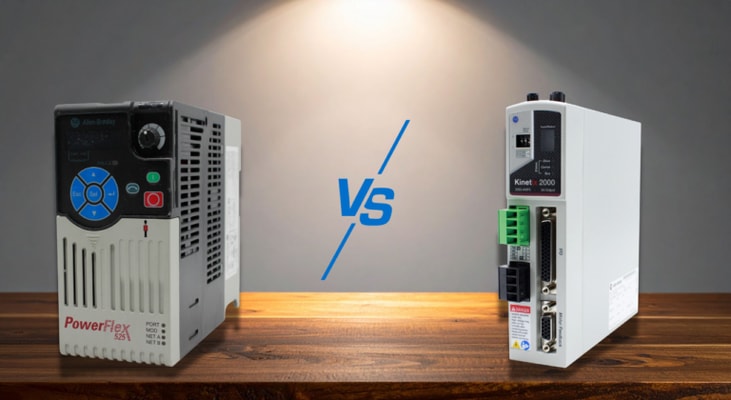
In today’s industrial automation, selecting the most appropriate motion control technology is critical for achieving high system performance, with servo and AC drives leading as the top choices. While they both control electric motors, they operate on distinct principles designed for different industrial applications. AC drives are optimized for energy-efficient, variable-speed, open-loop, or simple closed-loop control of speed and torque. On the other hand, servo drives are engineered for fast response times and high-precision, closed-loop dynamic positioning. Therefore, system engineers need to select a motor control technology that precisely matches the specific requirements of a given application. This article explores the unique operating principles, key strengths, and specific limitations of AC and servo drive technologies to guide your selection process. AC drives, commonly known as Variable Frequency Drives (VFDs), are electronic devices that regulate the torque and speed of...
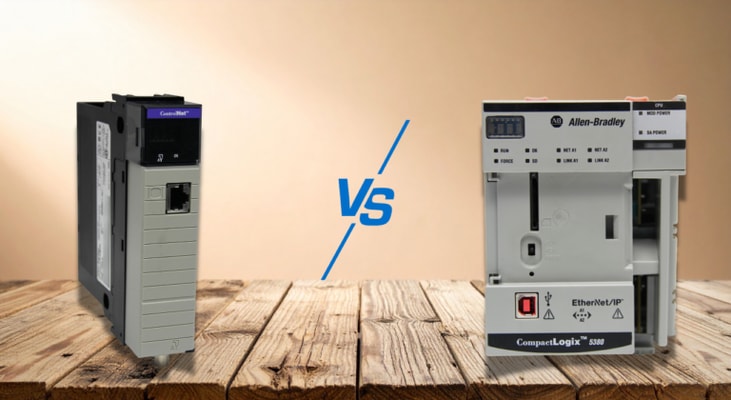
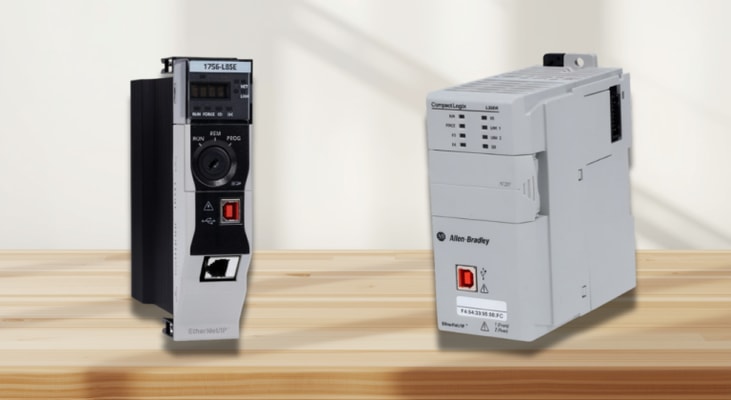
Industrial automation engineers selecting between the Allen-Bradley ControlLogix 5580 and CompactLogix 5380 rarely face a straightforward decision. Both support EtherNet/IP-based motion and safety and carry the Logix that makes them interoperable within Rockwell’s Integrated Architecture. Beneath that shared surface, however, the two platforms diverge in capacity, scalability, environmental tolerance, and application scope. Understanding where that gap actually matters determines whether a system is appropriately specified or quietly undersized. The CompactLogix 5380 was designed for compactness and self-contained machine control. Its architecture assumes a bounded application, a defined axis count, manageable I/O, and a system that runs on a single machine or in a production cell. The ControlLogix 5580 was designed for a different problem: applications that grow, where multiple disciplines coexist in one program, and where the controller serves as the backbone of a plant-wide...
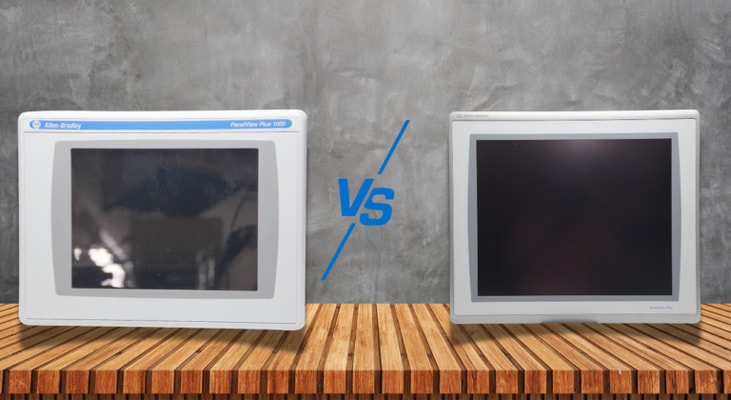
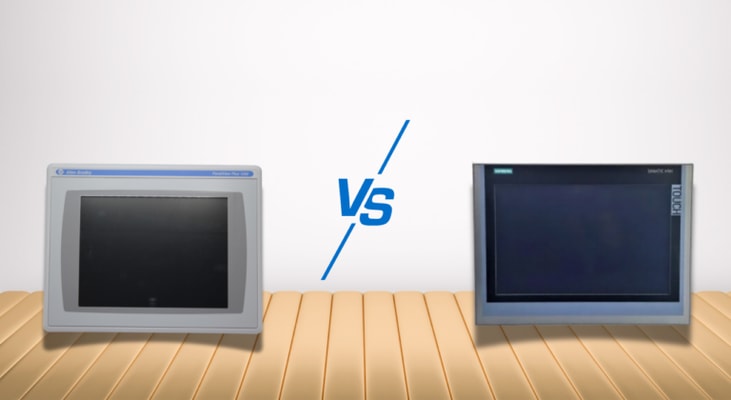
Upgrading your hardware always feels like a special occasion, especially if it’s for something you handle every day. After all, who doesn’t like faster hardware, more refined software, and a more responsive user interface? The reality becomes a little more complicated when the equipment in question is tied directly to production. In industrial automation, replacing hardware is rarely as simple as unplugging one terminal and mounting another in its place. This hesitation is part of the reason you will still see the PanelView Plus 6 in so many facilities, even with the newer PanelView Plus 7 series on the market. This boils down to compatibility concerns, retrofit cost, downtime windows, network architecture, and operator familiarity. In some situations, moving to a Plus 7 terminal can modernize an entire machine interface. In others, it can create more work than value. Before we get into comparing specifications and features, it helps to understand where these terminals are typically...
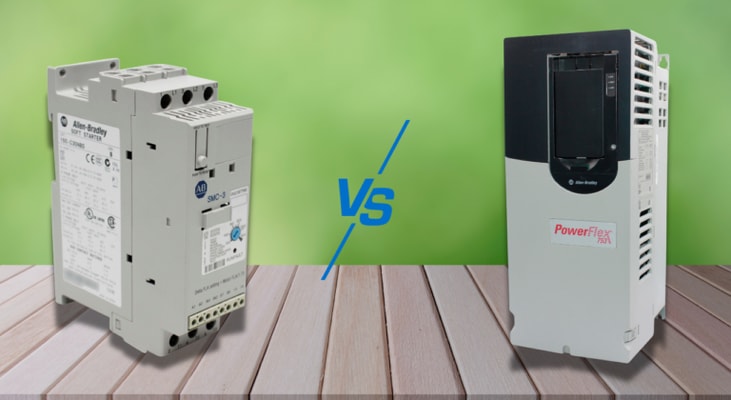
In industrial motor control applications, choosing the right starting and control method for high-inertia loads is a decision with significant consequences for equipment longevity, process stability, and energy efficiency. Soft starters and Variable Frequency Drives (VFDs) are the two dominant technologies for this purpose. While both reduce mechanical stress during motor starting, they differ fundamentally in operational scope, torque-control capability, and suitability for specific load profiles. Understanding these distinctions is critical when specifying drive systems for conveyors, centrifuges, fans, pumps, and compressors that impose substantial inertia on the drivetrain. High-inertia loads are characterized by a large moment of inertia (J, measured in kg·m²) relative to the motor’s rated torque. These loads require extended acceleration times to reach synchronous speed and impose prolonged mechanical and thermal stress on both the motor and the driven equipment. Common examples...
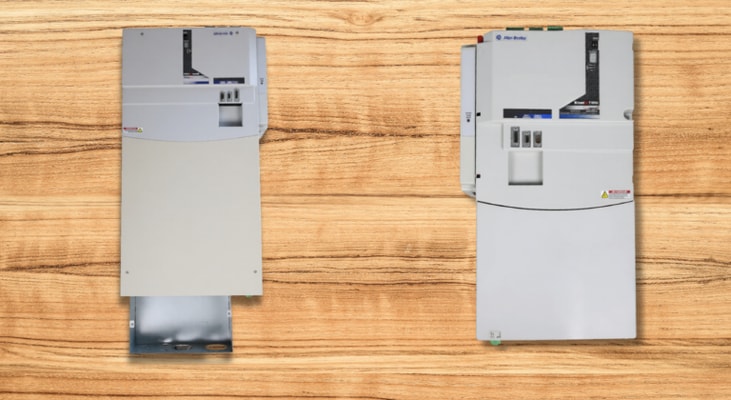
Servo control systems are critical to modern industrial automation, as they deliver the high-speed, precise motion required by a variety of complex applications such as semiconductor manufacturing, CNC machining, and robotics. Servo control systems are essentially closed-loop mechanisms that continuously compare the desired input commands against real-time feedback to provide precise motion control, enabling operational consistency, improved productivity, and energy efficiency. As industries continue to demand higher operational efficiency, high-power servo drive solutions like the Allen-Bradley Kinetix 7000 stand out for their ability to manage demanding motion control tasks that require fast response and high torque. The Kinetix 7000 is designed for high-performance, high-power, single-axis integrated applications, offering superior integration with Allen-Bradley Logix platforms and robust built-in safety features, including SIL3-certified Safe Torque Off. It is engineered to...
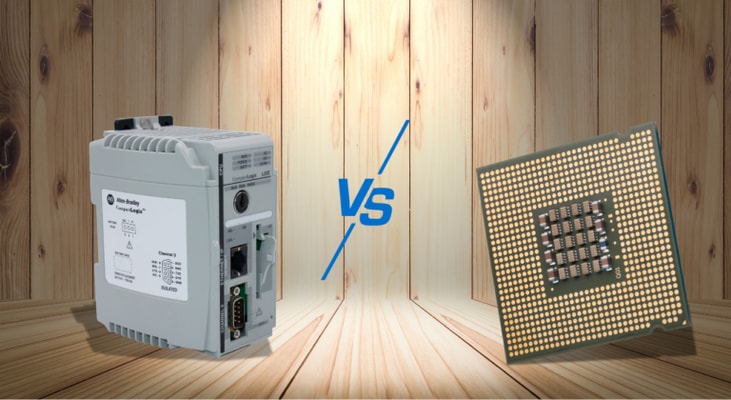
In discussions of CPU vs. Processor, every automation engineer has encountered both terms in the same conversation. In PLC documentation, hardware manuals, and system design discussions, they appear side by side, sometimes interchangeably, sometimes with conflicting meanings. For engineers selecting controllers, writing ladder logic, or troubleshooting scan cycle delays, the distinction is very basic. Understanding exactly what a processor chip is, what a CPU module is, and how they relate inside a PLC gives you a clearer model for hardware selection, performance optimization, and fault diagnosis. This is exactly what we will be discussing in this article regarding CPU vs. Processor. In correct PLC hardware terminology, the processor is the physical silicon chip that executes instructions. It is a discrete integrated circuit mounted on the circuit board inside the controller module. This chip fetches each instruction from memory, decodes it, and executes it, one operation at a time...
PLCs are an important part of modern industrial automation. There are a few more common and popular PLC brands that consistently hold the majority of the global market. Some of the best manufacturers in the industry include Siemens, Rockwell Automation (Allen-Bradley), Schneider Electric, Mitsubishi Electric, and Omron. The PLC software market is in very good health and offers many good options for your automation needs. PLCs are rugged computers built for the factory floor, designed to operate machines and processes with extreme reliability. Each PLC runs a continuous loop called a scan cycle: it reads from inputs, executes a user program, and updates outputs. This process repeats thousands of times every second. CPU: the processor that runs the application I/O Modules: connect the system to field devices such as sensors, motors, and valves Memory: stores the control program and runtime data Power Supply: provides stable DC voltage to the system Communication Links: allow the PLC to...
Industrial control panels have relied on discrete pushbuttons, selector switches, and indicator lights for decades, and in many applications, they still get the job done. But as process complexity scales, the demand for real-time visibility, operator guidance, and structured data logging outgrows what a row of pilot lights can deliver. The Allen Bradley PanelView family, spanning PanelView 800 , PanelView Plus 7 , and PanelView 5500 , sits precisely between basic hardwired operator interfaces and full SCADA systems, and understanding where that boundary falls determines whether you are engineering the right solution or over-specifying hardware that adds cost without adding operational value. A conventional hardwired operator station is built from 22mm pushbuttons, selector switches, and pilot lights wired directly to PLC digital I/O cards. Each device consumes one I/O point; a panel with 12 push buttons and 10 indicator lights requires 22 discrete I/O points, associated terminal...
Allen-Bradley and its Logix controllers have been around since the dawn of PLCs. Today, they are found running the very factories that produce objects you use in your daily life. Each Logix family of controllers was designed to fill a role that emerged as automation adoption increased, from small-form-factor controllers to fit OEM designs to powerhouses that control hundreds of I/O points. Though going through each of them to understand what they can do or where they fit may be a daunting task, we’re here to make it as easy as possible, starting with the MicroLogix. The Allen-Bradley Micrologix PLC family occupies a very specific place in the Allen-Bradley PLC lineup. These PLCs were designed for machines and processes that demanded reliable, deterministic control, without the extra overhead and costs associated with larger platforms. The main idea is self-contained, compact control without complexity. Because of this, these controllers integrate the processor, power supply, and I/O...
Industrial control systems used in hazardous or toxic industrial environments require significantly more rugged designs and higher environmental ratings than those used in conventional factory automation. These environments may contain corrosive vapors, conductive dust, explosive gases, high humidity, strong electrical noise (RFI/EMI), and extreme temperatures. Common examples include combustible-dust facilities, offshore oil and gas platforms, pharmaceutical synthesis plants, chlorine-based water treatment systems, fertilizer production sites, underground mines, and hydrogen processing facilities. Under such conditions, a control system malfunction is not merely a production issue but also a potential safety hazard to personnel, infrastructure, and the surrounding environment. For this reason, Programmable Logic Controllers (PLCs) deployed in hazardous facilities must meet strict environmental and international standards governing functional safety, durability, and explosion...
In industrial automation, the Human-Machine Interface (HMI) functions as a crucial link between human operators and complex control systems. The selection of an HMI platform is a critical decision with significant implications for operational efficiency, system integration, lifecycle costs, and long-term support. When selecting a suitable Human-Machine Interface (HMI), engineers frequently have to choose between a vendor-specific solution, such as the Allen-Bradley PanelView series, and a hardware-agnostic generic HMI. The Allen-Bradley PanelView HMIs are premier operator interface terminals from Rockwell Automation designed to monitor and control devices that are connected to a controller, as well as display information as needed. They are available in different forms, ranging from small keypads to large, high-performance touchscreen LCDs. They are a key element of the Allen-Bradley Integrated Control Architecture for industrial automation, which allows seamless integration of...
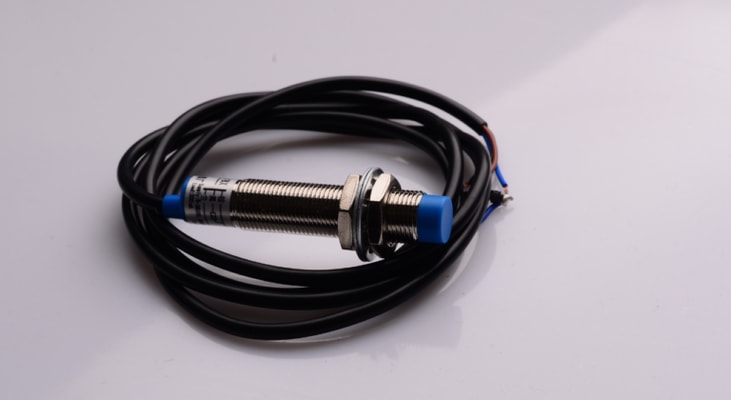
In the modern world, sensors are quite literally everywhere you see. Whether it’s the gyroscope in your phone detecting when you’ve lifted it so it can turn the screen on, or the TPMS in your car’s tires alerting you to low air pressure, sensors constantly translate the physical world into something machines can understand. A sensor, in the broadest term, is a device that connects the physical world to its digital counterpart. It responds to a specific measurand, such as distance, pressure, light, or temperature, to give a usable output. Otherwise, how else would a machine know the temperature of ambient air, or the weight of a package sitting on a scale without elaborate mechanical linkages? While thousands of sensors are used in everyday life, in automation the scope of sensors narrows considerably. On the factory floor, most sensing tasks boil down to one core question: Is something there, and if so, where? In this guide, we focus on the most common and widely used sensor types:...
Accuracy in terminology is very critical in industrial automation. In deterministic control networks, where fault, sequence, and timing handling are verifiable and predictable, Programmable Logic controllers operate these systems. The fundamental system architecture may be obscured, as many engineers often use the processors and CPUs interchangeably. As contemporary PLCs evolve to feature visualization technologies, integrated safety, distributed intelligence, and multicore CPUs, the distinction is essential. Faults may occur in cybersecurity, task configuration, redundancy planning, system design, and procurement due to a misunderstanding of the distinction between CPU and processor. This article explores the primary differences between CPUs and Processors. Featuring technical descriptions, architectural tasks, performance factors, maintenance implications, and future shifts in industrial control networks. Engineers can determine more precise design and functional decisions by...