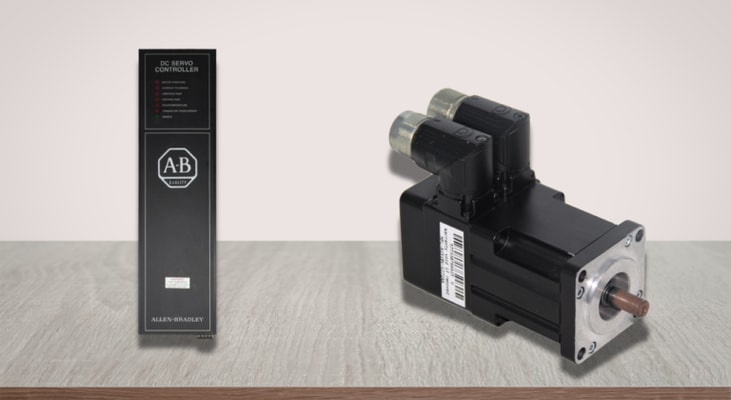
We found 317 posts about Drives & Motors from DO Supply, a global automation parts
reseller focused on hard-to-find and obsolete industrial automation products.
DC drives continue to play a crucial role in heavy industrial applications that need outstanding starting torque, accurate speed control, and quick dynamic response, even though AC variable frequency drives have significantly increased their market share. DC drive technology is still used in a number of industries, including material handling, elevator systems, crane operations, paper making, and metal processing. Performance capabilities, energy efficiency, hardware complexity, and long-term operating costs are all determined by the basic differences between regenerative and non-regenerative DC drives. This page offers a thorough technical comparison of these drives, backed by up-to-date performance measures and industry statistics. The operational quadrant capability represents the most fundamental distinction between these drive types. Source Regenerative PowerFlex DC Drives Non-regenerative drives are commonly one- or two-quadrant converters. A one-quadrant drive provides motoring...
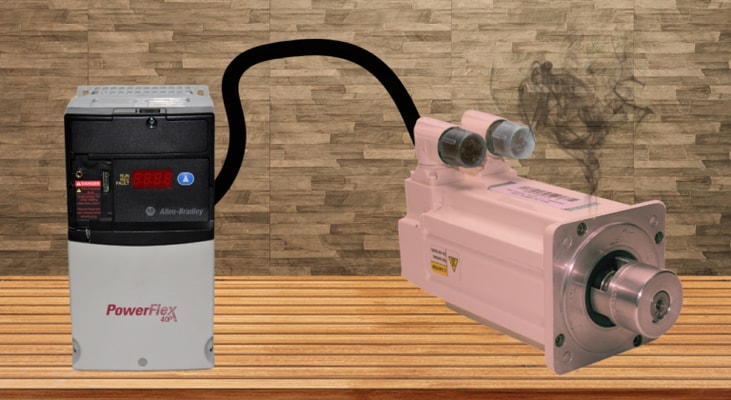
When it comes to installing motor drives, there are three different ways to do it: Exactly by the book to ensure maximum efficiency, the “yeah, that looks about right” way, and the wrong way. The by-the-book way will go exactly as you would expect. It’s the “about right” way that may lead to unforeseen struggles, such as a hot motor, when the smaller details are overlooked. Believe us, there is no shame in these installs, and if you’re wondering why your motors are getting hot after a VFD install, stick around to find out why. Heat is the leading cause of industrial motor failure. The 10-Degree Rule is a good baseline to calculate motor insulation degradation based on how hot the motor is running relative to its rated temperature: \-20C leads to 4x longer life -10C leads to 2x longer life +10C leads to 2x shorter life +20C leads to 4x shorter life Order Allen-Bradley PowerFlex 525 Drives Here Your motor will have an insulation class rating that indicates the maximum temperature to...
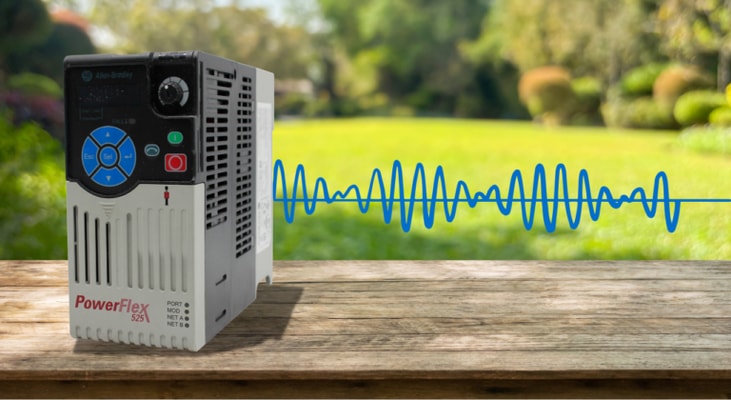
Modern-day electronics have become the new normal within industrial settings. Take a look up in a factory, and you may see rows of LED lights. Turn to the right, and a conveyor line powered by VFD-driven motors could be humming along, while to the left, a robotic arm may be sorting products for palletization. It’s incredibly easy to see this technology on the surface: you plug it in, set the parameters, and watch it go. The problem is that all of this equipment has to live on the same electrical system. Just as drinking dirty water would harm our bodies, electronics receiving dirty power could also show symptoms of their own illness, such as increased heating, lower life spans, and nuisance tripping. Harmonics are among the most common forms of dirty power and are produced by devices such as rectifiers, inverters, fast-switching devices, and more. These are your VFDs, variable power supplies, switch-mode power supplies, PWM-operated devices, and even EV chargers. Before getting into...
Variable Frequency Drives (VFDs) are widely used in modern industries to optimize process control, minimize power consumption, and extend equipment lifespan. The Allen-Bradley PowerFlex series stands out for providing high-performance motor control with precise torque control and simplified automation integration. However, VFD operations can induce damaging high-frequency stray currents and common-mode voltages on motor shafts. These high-frequency currents often discharge through the motor bearings, resulting in accelerated bearing wear and premature equipment failure. The destructive impact of VFD-induced high-frequency currents on motor bearings is a widely recognized engineering issue. Connecting standard AC motors to variable frequency drives (VFDs) like the PowerFlex drives exposes them to stray currents and high-frequency voltage spikes. When under pure sinusoidal utility power, destructive stray currents do not exist. Catastrophic mechanical failure and structural degradation...
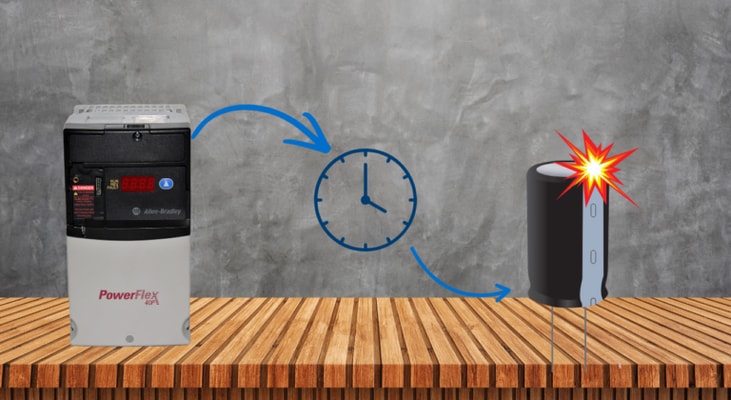
For many facilities, uptime is a priority when selecting which equipment to deploy in their line. Because of this, redundancy modules and spares are kept so that high-priority equipment and processes can be repaired with minimal downtime. As you can imagine, this is an effective technique when properly executed. Sometimes these processes are designed so well that they simply chug along for years and years without having to dust off the replacement in the supply cabinet. Drives that have been obtained for replacement now sit on the shelf waiting for the baton to be passed, and it can be years before it does, and plugging them in might just bring more issues. When it comes to storing drives, there is no official expiration date printed on the part, but guidelines for the amount of time a drive can sit without power. This time frame varies across manufacturers: Rockwell’s PowerFlex guidelines specify 2 years, while ABB and Eaton specify 1 year. This is because the electrolytic capacitors...
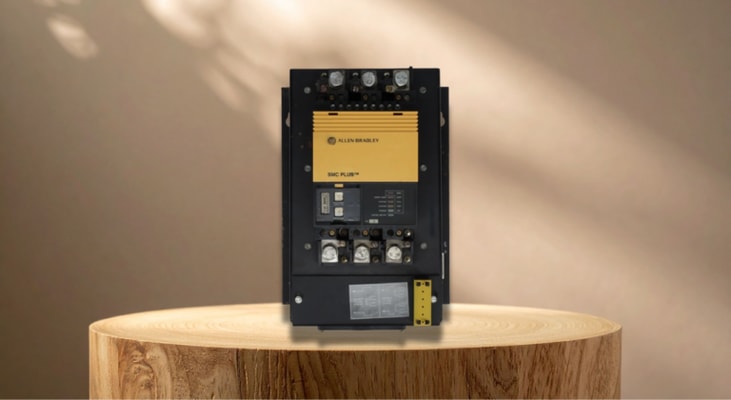
In the modern age, motor control isn’t as simple as it looks. There’s matching nameplate specifications, determining if the load you’re driving needs certain features like regeneration, or even figuring out if it’s worth futureproofing. With VFDs being so common today, it is easy to assume they are always the better answer. But that’s not always the case. Sometimes, less really is more. If the application only calls for smooth starting and stopping, a soft starter could be the cheapest, simplest, and most cost-effective choice. A soft starter, as the name implies, is a motor controller that gradually and smoothly increases a motor’s speed until its desired RPM, rather than slamming voltage into it all at once. This is a desired feature as its ability to reduce inrush current and limit peak electrical demand on motor start-up reduces mechanical stress on the system and prevents overcurrent scenarios. Source SMC Plus Soft Starters Here To achieve this, soft starters use thyristors, or...
When a plant experiences a planned shutdown, turnaround, holiday outage, or utility maintenance window, one or more PowerFlex drives fail within minutes or hours of re-energization. This is a distinct, recurrent pattern that maintenance engineers in the heavy industry can quickly identify. After years of trouble-free operation, the drive suddenly malfunctions, trips a breaker, or, in the worst situations, literally destroys an IGBT module. It is a foreseeable result of power electronics deteriorating when idle, contaminants and moisture building up when a drive isn’t producing heat, and a plant’s restart cycle interacting with both. The difference between considering every shutdown-related failure as a mystery and creating a restart strategy that stops it is an understanding of these mechanics. The internal parts of a PowerFlex drive are designed to operate continuously or almost continuously. Long-term proper operation of the DC bus electrolytic capacitors, IGBT gate driver boards...
When designing or making electrical installations, the first thoughts often turn to how much safety margin to build into the electrical design so it will withstand a certain amount of overcurrent during an emergency or surge. But when we install a VFD, the idea of putting an oversized one to build in a safety margin actually backfires. An oversized drive does not provide any safety margin — it decreases energy efficiency and motor protection while increasing harmonic distortion and costs. A good rule of thumb is that any drive should not be larger than twice the rating of the connected motor. Drive manufacturers go further and specify that the motor must carry a rating above 50% of the drive. Combining a 150 kW drive with an 11 kW motor gives only a 7.3% ratio. The issue comes from the large difference between the motor’s operating current and the VFD’s rated current range. A VFD measures the output current and uses it for motor control, torque estimation, and electronic overload...
DC Drive regen technology isn’t anything new. In fact, they’ve been around since the late 1800s and have been evolving to make industrial systems more efficient. In Rockwell Automation’s PowerFlex lineup, regeneration can be handled through several different architectures, including active front end systems, common-bus systems, regenerative DC drives, and medium-voltage regenerative drives. Today, this lineup extends its regenerative technology to the PowerFlex 755TR, PowerFlex 755TM, PowerFlex 755TL, PowerFlex 7000, PowerFlex DC , and the PowerFlex 700AFE. To understand how a PowerFlex drive handles regenerative loads, it’s best to start at the drive’s front end. In a traditional AC drive with a passive diode front end, incoming AC power is rectified into DC power before the drive inverts it back into controlled AC power for the motor. Under normal motoring operation, that power path is one-directional from the line, through the drive, and out to the motor. When the motor...
Safety is the foundation of hazard-free and reliable industrial applications. DC drives operate at hazardous current and voltage levels to regulate the field current and armature voltage, thereby precisely controlling motor speed, torque, and direction. Therefore, strict adherence to established electrical safety protocols such as proper grounding, isolation, and Lockout/Tagout (LOTO) procedures, as well as compliance with IEC 61800-5-1 standards, is essential in DC drive systems. It helps isolate dangerous voltages and minimize arc flash hazards, protecting both personnel and machinery from catastrophic electrical faults. This article provides a detailed technical analysis of the essential safety considerations for designing, operating, and maintaining DC drive systems. A DC drive system is an electronic motor controller designed to regulate the torque, speed, and rotational direction of a DC motor. It achieves this by actively modulating the current and voltage applied to the...
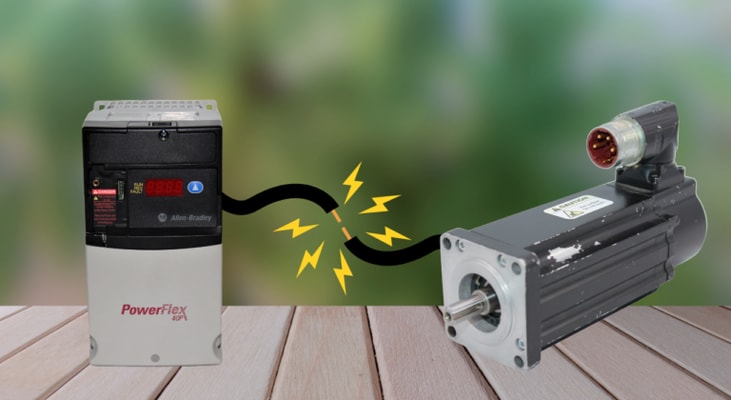
To the untrained eye, wiring a motor to an AC drive, more commonly known as a variable frequency drive, may seem like a simple job of plugging the motor in and routing the wiring to make it look clean. The length of the wires might not even be a concern, because in an ideal world with ideal resistance, it wouldn’t. The problem is that we live in a less-than-ideal world, and the rules of physics are nonnegotiable. Whether it’s traces on a PCB or wires during a motor install, the longer the connection point, the higher the resistance, heat buildup, and voltage drop. This matters more than you might expect when it comes to installing AC drives. Before getting into it, if you would like to familiarize yourself with how an AC drive works, check out this article here ! The inherent design of an AC drive is to output fast voltage pulses rather than a clean sine wave. Each time the AC drive switches, a voltage pulse travels down the motor cable to the motor. With a shorter cable, the pulse...
Conveyor systems serve as crucial circulatory networks in warehouses, airports, mining operations, food processing plants, and manufacturing industries. Well-designed conveyors drastically reduce manual material handling while improving operational efficiency and ensuring consistent output quality. Allen-Bradley PowerFlex drives are essential components of modern conveyor systems, whose performance relies heavily on precise control of the connected motors. PowerFlex drives utilize advanced control modes, including Sensorless Vector Control (SVC), Volts/Hertz (V/Hz), and TotalFORCE technology (available on the PowerFlex 755T series), to deliver high-precision regulation of motor speed and torque. This highly precise motor control enables smooth acceleration and deceleration of conveyor systems, significantly reducing wear and tear on conveyor belts, gearboxes, and bearings by minimizing mechanical shock. Selecting the correct PowerFlex drive helps minimize system downtime, enhance...
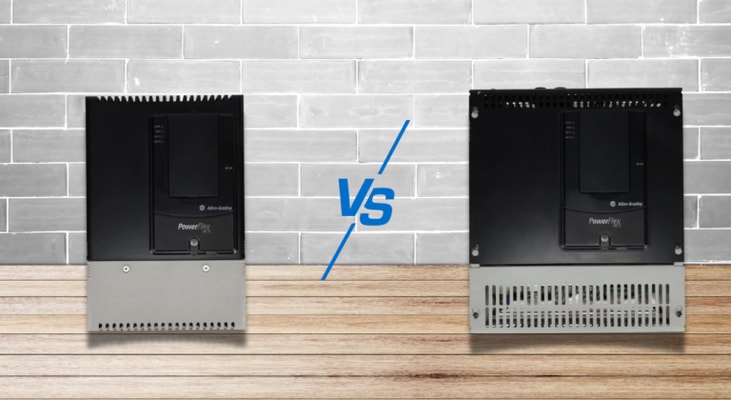
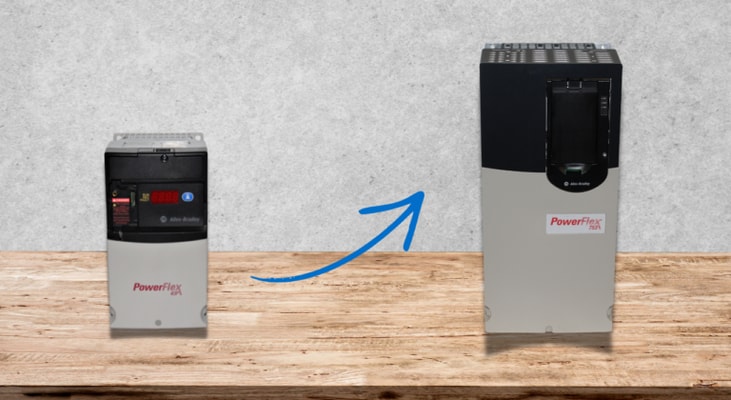
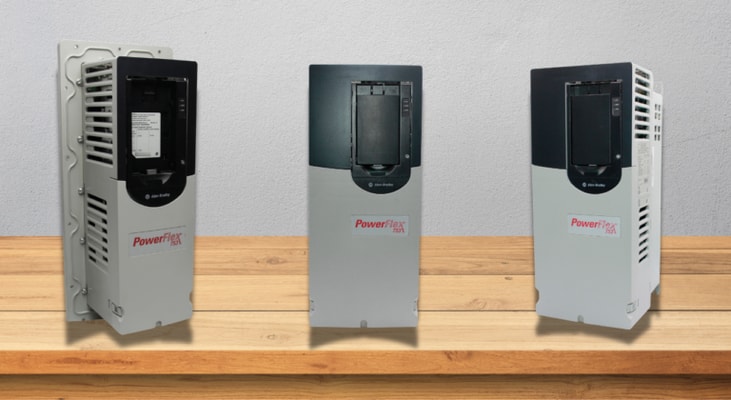
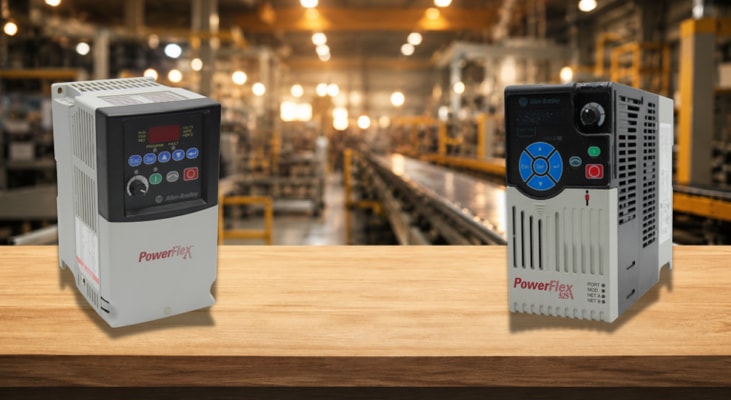
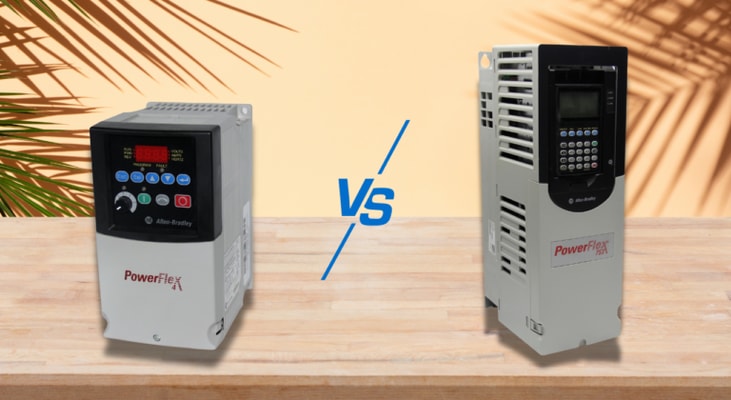
The PowerFlex product family from Rockwell Automation spans one of the broadest drive portfolios in industrial automation. Engineering the right selection from within that portfolio requires understanding precisely where Rockwell draws the line between its compact and full-size (architecture-class) drive categories, and what technical capabilities exist on each side of that line. PowerFlex drives are broadly categorized into compact-class and architecture-class: compact drives are smaller, cost-effective units for simpler applications, while architecture-class drives are high-performance, feature-rich units for demanding industrial requirements. Here, we will discuss some parameters for comparing the two types of drives. Source PowerFlex 755 Drives Here Rockwell Automation organizes the PowerFlex family into three tiers: compact (component-class), standard, and architecture-class. The compact tier encompasses the PowerFlex 4 , 40 , 523 , 525 , and 527 series. The architecture-class...
An AC drive is basically a device that lets you control how fast and how hard an AC motor runs. It does so by changing the frequency and voltage of the power supplied to the motor. And knowing the difference between a general-purpose AC Drive and a high-performance AC Drive really matters if you’re into modern industrial automation. General-purpose VFDs are widely used because they handle most industrial tasks. But there are times when you need something more powerful and precise; that’s where high-performance drives step in. If you’re an engineer or have to make purchasing decisions, you need to know how these two stack up before you spend a dime. Shop for Allen-Bradley PowerFlex 525 Drives Here A general-purpose AC Drive is designed to suit a wide range of settings, including factories, businesses, and full-scale industrial environments. They’re flexible, so people tend to use them almost everywhere. Maybe you work somewhere that needs a motor control system that’s ready to scale up...
DC motor systems remain deeply embedded in industrial infrastructure. Steel rolling mills, paper machines, mine hoists, crane drives, and extruders continue to operate on DC drives, where their precise torque-speed controllability justifies retention. Yet these systems carry a well-documented efficiency liability: energy losses distributed across electrical, magnetic, mechanical, and power conversion pathways that compound significantly at partial load. Regardless of the application, even small reductions in DC motor losses can yield significant gains in overall process efficiency, motor life, and cost-effectiveness. Understanding each loss mechanism at the parameter level and matching it to a specific DC drive mitigation strategy is the foundation of any credible energy optimization program in a DC-driven facility. Armature copper loss is the dominant electrical loss in any DC motor system. These losses are proportional to the square of armature current and are expressed as Ia²Ra...