How to Get the Most Out of the Kinetix 3 Without Overspending
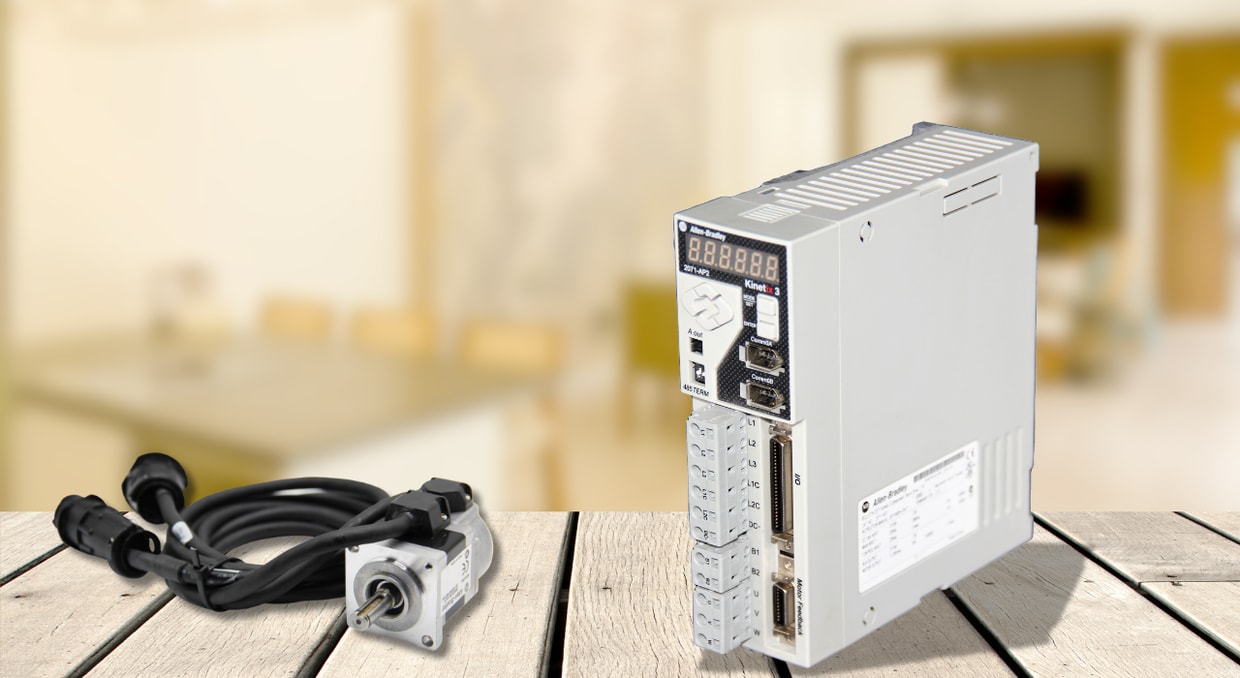
The Allen-Bradley Kinetix 3 (Bulletin 2071) is a series of component servo drives designed for simple, low-axis count industrial applications. These drives provide a cost-efficient motion control solution for applications with output power ranging from 50 to 1500 W and current ratings of 0.6 to 9.9 A rms. They can be integrated into a larger motion control system or utilized as stand-alone servo drives.
Kinetix 3 servo drives operate on either three-phase, dual-phase, or single-phase AC input power, typically 220 to 240 Volts AC. Standard power specifications of the Kinetix 3 servo drive series include:
- AC input voltage:170 to 264 Volts rms
- AC input frequency: 47 to 63 Hz
- Control power (input current): 0.1 Amps (nominal rms), 31 Amps (maximum inrush (0-pk))
- Continuous output current (rms): 0.61 to 9.90 Amps
- Control power (input AC voltage): 170 to 264 Volts rms
- Continuous output power: 50 Watts to 1.5 kilowatts
- Continuous output current (0-pk): 0.85 to 13.99 Amps
Available Kinetix 3 Drive Models:
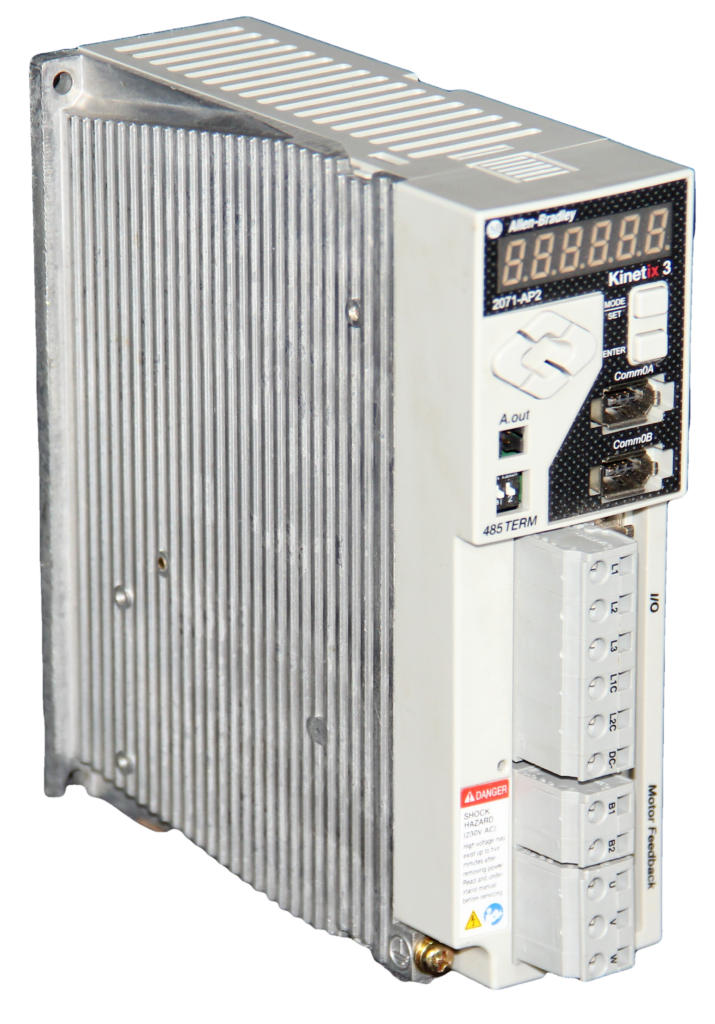
- 2071-AP0: single-phase, 240V AC rms input voltage, 0.85 A continuous current output (0-pk), 50W power output
- 2071-AP1: single-phase, 240V AC rms, 1.56 A (0-pk), 100W
- 2071-AP2: single-phase, 240V AC rms, 2.40 A (0-pk), 200W
- 2071-AP4: single-phase, 240V AC rms, 4.67 A (0-pk), 400W
- 2071-AP8: three-phase orsingle-phase, 240V AC rms, 7.07 A (0-pk), 800W
- 2071-A10: three-phase, 240V AC rms, 9.90 A (0-pk),1.0 kW
- 2071-A15: three-phase, 240V AC rms, 13.99 A (0-pk),1.5 kW
How to Get the Most Out of the Kinetix 3 Without Overspending
To get the most out of an Allen-Bradley Kinetix 3 servo drive while minimizing correlated costs, it’s essential to focus on efficient drive selection, optimal system configuration, and proper operation and maintenance. Here is how to do that:
Choose the Right Kinetix 3 Drive
The first step in selecting the right Kinetix 3 servo drive is carefully considering the type and power requirements of your application. Generally, the lower power ranges and compact size of the Kinetix 3 drive series make it ideal for a variety of light-duty motion control applications and smaller machines. Typical applications include:
- Semiconductor processing
- Medical manufacturing
- Indexing tables
- Laboratory automation equipment
- Solar panel tracking
- Intermittent seal/fill/form machines
- Electronics assembly
With the series offering a range of power options, choose a Kinetix 3 drive model that precisely matches your application’s power requirements to reduce system size and cost if your system is very predictable and stable. Otherwise, it’s a good idea to get a drive with 10-20% power headroom to account for any varying conditions. Essentially, the 50-1500W power range is suitable for the applications listed above. For applications with high axis counts and high-power requirements, high-performance Kinetix servo drives such as the Kinetix 6200, Kinetix 6500, and Kinetix 5700 can be a better alternative, but at a higher price point.
Ensure Motor Compatibility
The power rating of the selected Kinetix 3 servo drive should be compatible with the motor’s power requirements to achieve optimal performance, ensure safe operation, and prevent overheating. In addition, using a Kinetix 3 drive with insufficient current or voltage rating can cause the connected motor to stall or become completely non-functional, while exceeding the specified voltage and current ratings can damage both the servo drive and motor.
It is also important to ensure that the selected Kinetix 3 servo drive is mechanically compatible with your motor, in terms of shafts, couplings, and mounting interfaces. The motor’s feedback mechanism must also be compatible with the chosen servo drive and controller in use. The following Allen-Bradley motors are compatible with Kinetix 3 servo drives:
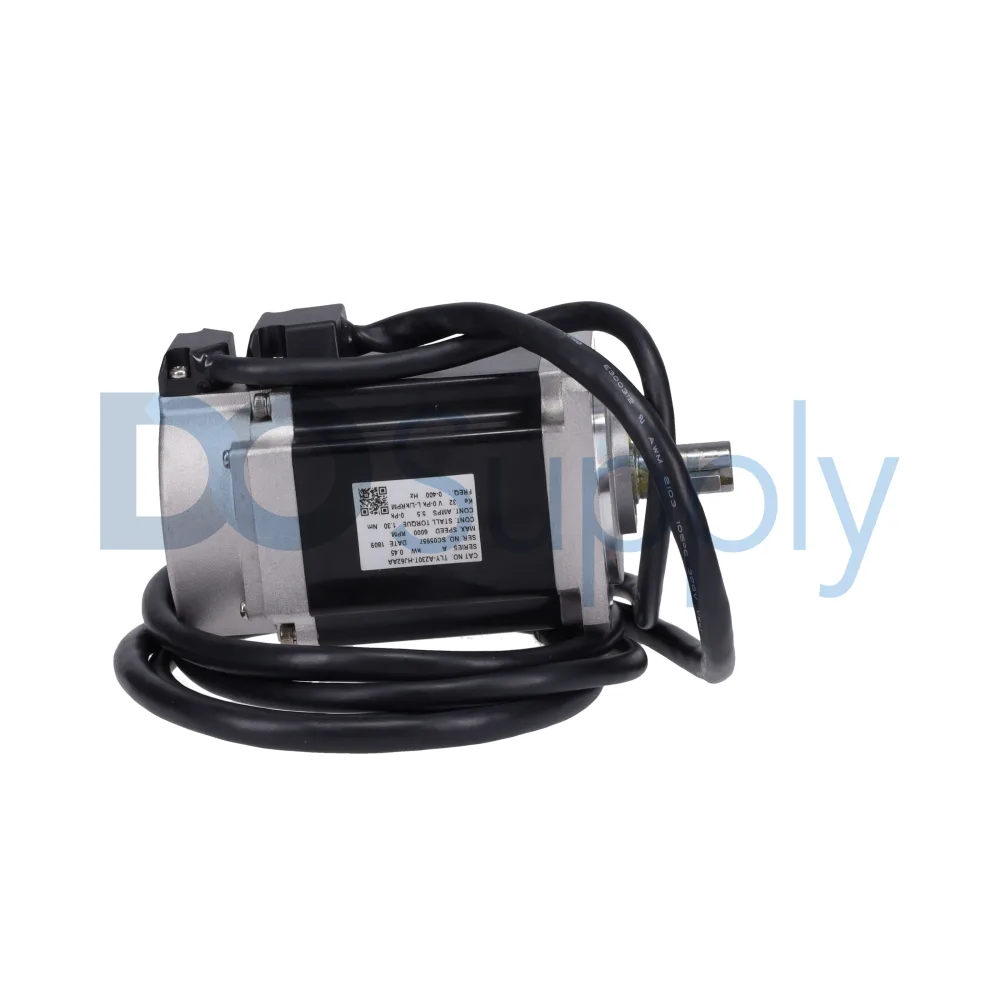
- Bulletin TLY Rotary Servo Motors: Kinetix 3 (200V-class) servo drives are compatible with Bulletin TLY low-inertia rotary servo motors, including TLY-A120x, TLY-A230x,TLY-A130x, TLY-A310M, TLY-A220x, and TLY-A2540P. Compatible TLY-Axxxx rotary servo motors are equipped with incremental or absolute high-resolution encoder feedback. These motors use standard, non-flex 2090-CPWM6DF-16AAxx (without brake) and2090-CPBM6DF-16AAxx (with brake) cables for power/brake connections. And the 2090-CFBM6DF-CBAAxx cables for feedback.
- Bulletin TL Rotary Servo Motors: Kinetix 3 (200V-class) servo drives can be used with Bulletin TL low-inertia rotary servo motors. These include TL-A120P, TL-A220P, TL-A130P, TL-A2540P, TL-A230P, and TL-A410M motors. The Bulletin TL-Axxx servo motors include high-resolution absolute encoder feedback and 11.8 in. (300 mm) cable extensions featuring rectangular connectors. They use 2090-DANPT-16Sxx power cables, 2090-DANBT-18Sxx brake cables, and 2090-DANFCT-Sxx cables for motor feedback.
- Kinetix LDC-Series Linear Servo Motors: These motors feature an iron core design characterized by high force density. They are used for precise, high-speed linear positioning.
- Kinetix LDL-Series Linear Servo Motors: They include an ironless design and are suitable for applications requiring exceedingly smooth motion, like printing or scanning.
Note: Kinetix 3 servo drives can be used with other 200V-class motors, provided the motors include Hall signals and incremental encoder feedback. These servo drives are also compatible with linear actuators, specifically the TL-Series electric cylinders, Kinetix LDAT (200V-class) integrated linear thrusters, and MP-Series direct-drive (200V-class) integrated linear stages.
Optimal Drive Configuration and Setup
Depending on the available power source (three-phase or single-phase), configure the power input of your Kinetix 3 drive accordingly to avoid configuration errors. Such errors tend to be severe abnormalities that usually lead to loss of motor control. It is also crucial to follow the provided wiring guidelines and installation instructions for safety purposes.
In addition, all Kinetix 3 drive models are designed with a high operating efficiency of 90%. As such, when configuring a Kinetix 3 servo drive, pay close attention to the specified voltage ranges, the PWM frequency (10 kHz), and the output current to ensure efficient energy utilization during operation.
Also, verify that the digital inputs of your Kinetix 3 drive are appropriately wired to ensure efficient drive operation and prevent potential issues. The control signals from your Kinetix 3 drive should also meet the control requirements of the connected servo motor/actuator. This incorporates signal types (e.g., digital or analog) and signal levels.
Effective Drive Utilization
Take advantage of the Kinetix 3 built-in features to achieve optimal system performance. These features include:
- RS-232/RS-485 Ports: These serial communication ports allow integration of Kinetix 3 drives with specific Allen-Bradley Micro800 (Micro850 and Micro830) or MicroLogix (MicroLogix 1400/1200/1500/1100) controllers. Using the listed MicroLogix controllers, Kinetix 3 users can execute basic motion control tasks with pulse-train outputs (PTO). Micro800 controllers with USB allow users to perform simple PLC-based motion control tasks with the Kinetix 3 servo drives.
- Modbus-RTU: Kinetix 3 drives support Modbus-RTU serial communications, allowing monitoring and basic control of drive parameters at runtime, enhancing system flexibility. Allen-Bradley MicroLogix 1400 and 1100 controllers can control Kinetix 3 drives with the Modbus-RTU feature, increasing drive functionality.
- Solid-State Motor Protection: The Kinetix 3 servo drives feature integral solid-state protection with predictive thermal memory to protect connected motors from overload and short-circuit damage. This internal protection, in combination with appropriate branch-circuit protection, makes the Kinetix 3 drives suitable for use in circuits that can deliver up to 100,000 Amps.
- Indexing Capabilities: Kinetix 3 drives feature an indexing mode that supports a maximum of 64 digital Input/Output points for precise motion control in indexing applications.
- Versatile Command Interfaces: Kinetix 3 servo drives can use Modbus-RTU, pulse train, and digital I/O control commands as needed, delivering flexible and cost-effective motion control.
Proactive Maintenance
Implement a proactive maintenance program to maximize the performance and service life of your Kinetix 3 drive system while reducing associated costs. The scheme should involve:
- Periodic Inspections: Regularly check your Kinetix 3 drive system for potential issues, such as faulty components, improper wiring, or excess load. This can help ensure optimal performance and prevent costly downtime.
- Reducing Electrical Interference: Ensure proper grounding, shield power cables as needed, and route feedback cables away from electrical noise sources.
- Addressing Drive Faults Promptly: Fault codes are addressed by taking appropriate corrective actions such as verifying encoder settings, checking for overcurrent conditions, and reducing excess motor loads.
- Prioritizing Preventive Maintenance: Addressing minor repairs and replacements proactively can help prevent major, costly system issues later on.
Final Thoughts
The Kinetix 3 platform is a very versatile example of Allen-Bradleys drive/VFD technology. These drives could be found in packaging stations, electronics assembly, and even solar tracking systems. While they are discontinued, aftermarket support for these drives remains strong, especially with our repair services. This wraps up a small, affordable package that can be good for entry-level systems, and in fact, we have an article here explaining just that. That said, you can shop with confidence on our site for Kinetix 3 drives, as we offer not only free ground shipping but also a 2-year warranty on all purchases. Visit our selection today, or even drop us an email or call to have our friendly customer service experts help out.
DO Supply Inc. makes no representations as to the completeness, validity, correctness, suitability, or accuracy of any information on this website and will not be liable for any delays, omissions, or errors in this information or any losses, injuries, or damages arising from its display or use. All the information on this website is provided on an "as-is" basis. It is the reader's responsibility to verify their own facts.