The Heart of CNC: Why the Spindle Motor Matters in Automation
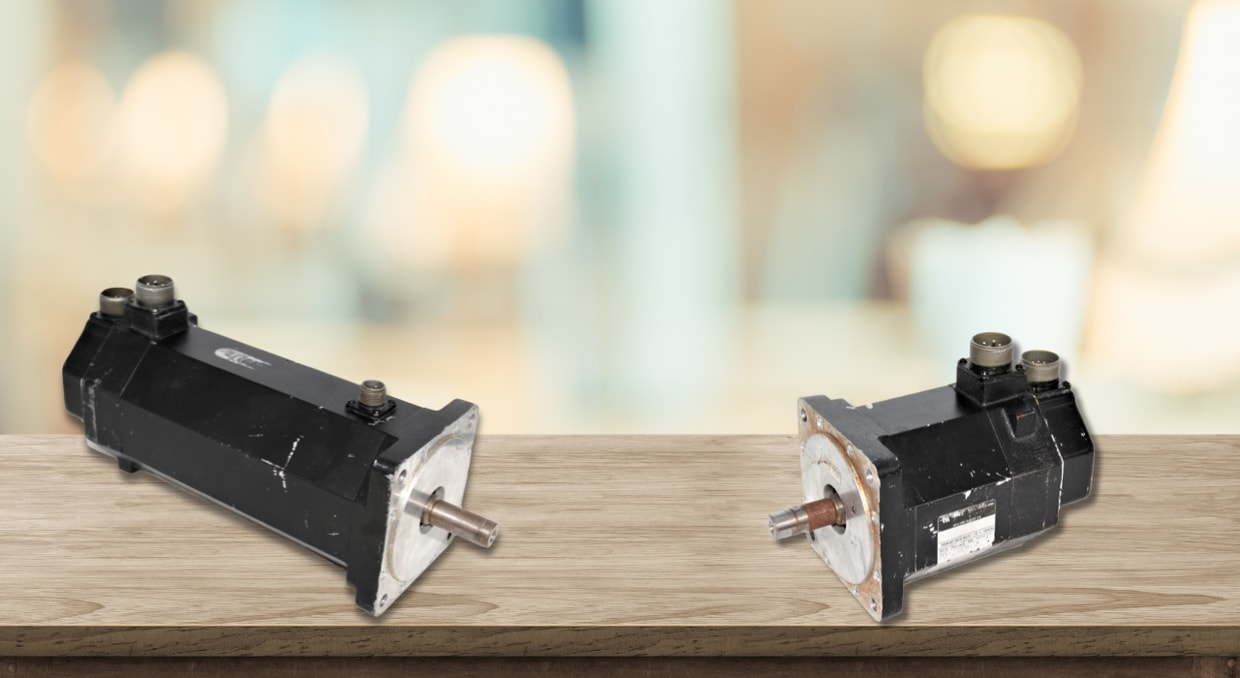
CNC is an incredible feat to reach in fabrication and the general industry. It brings unmatched precision and speed to products that demand tight tolerance or repetitive machining. While the software side is very impressive, the heart of the machine lies in the spindle motor. After all, it’s what brings the cutting tool to life, transforms a block of raw material into a finished part, and makes automation in machining more than programmed movements. But just what makes a good spindle motor, and more importantly, how does it bring a CNC machine from G-code to finished parts? Let’s find out!
What is a CNC Spindle?
At its simplest, the spindle is the carrier of the cutting tool. When you see a CNC machine boring a hole, milling a pocket, or cutting a contour, the spindle is what’s physically holding that tool in place and delivering the rotational motion needed to cut. Bearings inside the spindle assembly allow it to spin freely, while housings and supports keep it aligned and rigid.
But the spindle itself doesn’t generate its own motion. That’s where the spindle motor comes in. The spindle motor drives the spindle to rotate, giving it the power and speed needed to perform machining operations. Without the spindle motor, the spindle is just a static shaft; with the spindle motor, it becomes the centerpiece of machining automation.
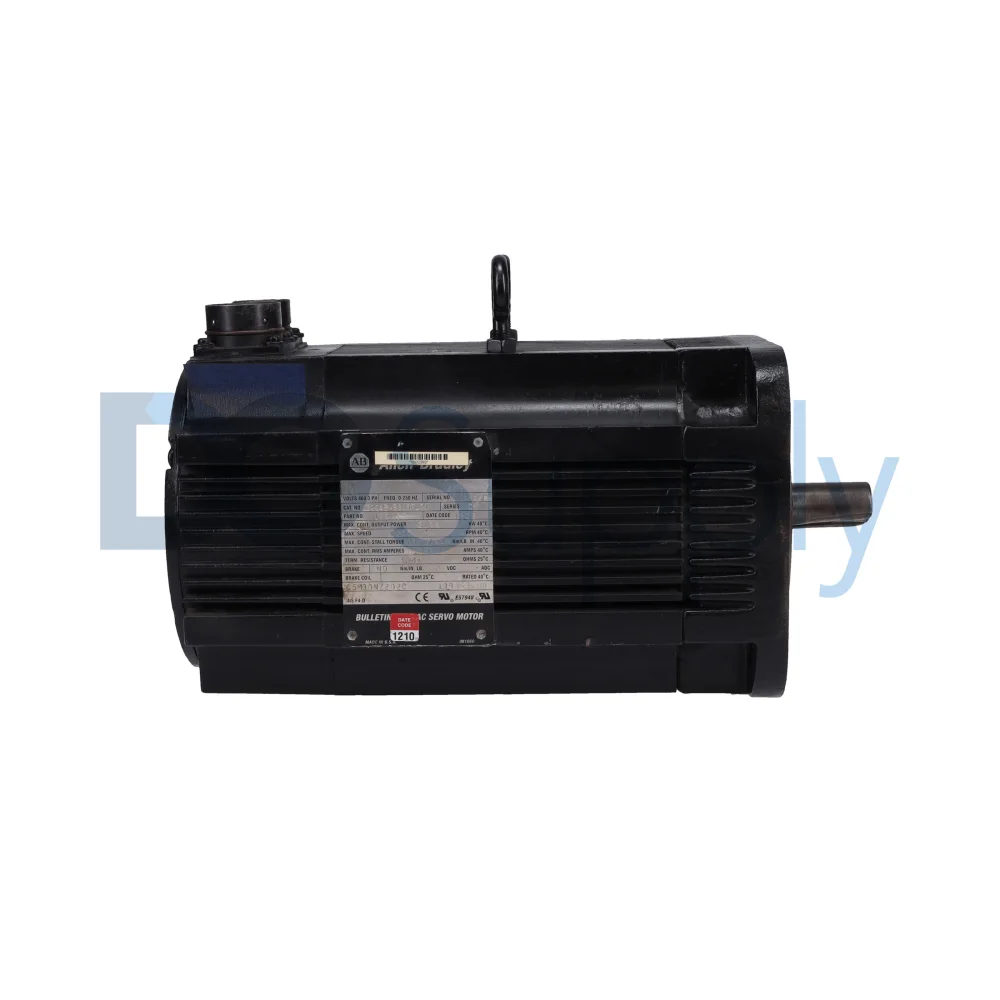
The Spindle Motor and Its Many Forms
As one might imagine, the spindle motor is what turns the spindle on a CNC machine. It gives the cutting tool its motion, speed, and strength, while the CNC controls handling, positioning, and movement. Without the spindle motor, the CNC machine would still be able to move in three axes, but it couldn’t cut a single chip.
Like everything in automation, there are different types of spindle motors to choose from that fit different needs. The most common examples are:
Stepper Spindle Motors
Stepper motors are typically brushless DC motors that are easy to control digitally, making each ‘step’ of the motor reliable and predictable. Each step corresponds to a specific angle of rotation, allowing for ultimate control over precision and speed. These motors are usually reserved for smaller machines, like hobby CNC routers, desktop mills, and engraving machines. They’re inexpensive, easy to control, and accurate.
Servo Spindle Motors
Servo motors are widely used in automation, from robotics to conveyor belts. They are usually AC-driven and come in many different horsepower and torque ratings. While stepper motors rely on discrete steps, servo motors use a feedback device like an encoder to maintain precision. An AC spindle motor can reach tens of thousands of RPM while maintaining smooth operation, making it ideal for milling, drilling, and precision cutting. With fewer maintenance requirements compared to older designs, AC spindle motors dominate in production environments.
Belt Drive Spindles
As the name suggests, this setup uses a belt to connect the spindle to the motor. This leads to quite a few benefits, such as vibration dampening, reduced noise, and versatile adjustments to torque and speed via pully ratios. These setups are also easier to service, making them common in cost-sensitive or general-purpose CNC machines.
Direct Drive Spindles
These are the complete opposite of belt-driven spindles, as they’re incorporated directly into the spindle assembly. This eliminates the need for extra gears or belts for operation, giving the direct-drive spindle motor excellent efficiency, reduced vibration, and faster response time.
Performance Factors That Matter
When it comes to CNC automation, not all spindle motors are created equal. Performance is the difference between a spindle motor that simply spins a tool and a spindle motor that drives reliable, high-quality machining. Several key factors define how well a spindle motor performs, and each one plays a direct role in productivity, accuracy, and uptime.
Speed (RPM)
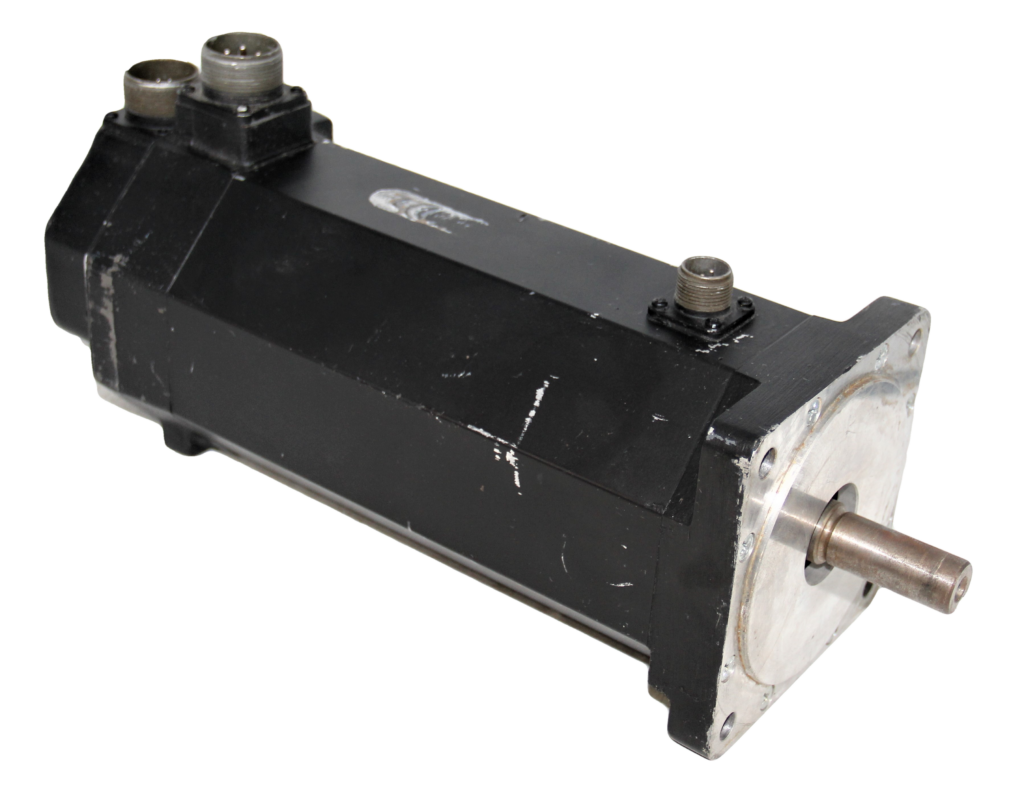
The speed of a spindle motor, measured in revolutions per minute, dictates how quickly the cutting tool rotates. High-speed spindle motors, capable of tens of thousands of RPM, excel at precision work like engraving, micro-milling, or machining aluminum. Lower-speed spindle motors with higher torque are better suited for heavy-duty steel or cast iron machining. Matching spindle motor speed to the material and process is critical for tool life and surface finish.
Torque
Torque is the twisting force a spindle motor delivers to the cutting tool. Without enough torque, the spindle motor stalls when cutting dense materials or making deep passes. A high-torque spindle motor keeps the tool moving steadily, preventing chatter and broken bits. In automation, torque is what ensures consistency across long production runs.
Power
Power combines torque and speed into the overall strength of the spindle motor. A higher-power spindle motor can handle tougher materials, larger tools, and longer duty cycles without strain. This makes power one of the most important specs for automation engineers who are choosing a spindle motor for production environments.
Cooling Systems
Spindle motors generate heat under continuous use, and keeping that heat under control is essential. Air-cooled spindle motors are simpler and work well in lighter applications, while liquid-cooled spindle motors provide steadier temperature control for demanding machining. Cooling directly affects how long a spindle motor can run without downtime. We could write an entire article about the differences between air and water cooling for spindle motors, but this is just a summary of the most popular methods.
Precision and Vibration Control
Finally, we have precision and vibration control. It doesn’t matter if you have the best motor or spindle combination; if there are unchecked vibrations in the system, it will ruin the quality of the part. Precision bearings, rigid housings, and balanced rotors all help a spindle motor run smoothly. The more stable the spindle motor, the better the surface finish and the longer the tool life.
Why the Spindle Motor Matters in Automation
In automation, every component of a CNC machine plays a role, but the spindle motor is the one that determines how effective the entire system really is. When you think about it, automation is all about repeatability, reliability, and speed, which all trace back to the qualities of the motor you pick. A spindle motor that can hold steady RPM under load ensures that each cut is identical to the last. That consistency is what allows automation to produce hundreds or thousands of identical parts without variation. If the spindle motor falters, even slightly, automation loses its advantage and scrap piles up.
Reliability is also a great factor to consider since downtime is to be avoided in an automated production line. A spindle motor that overheats, loses torque, or vibrates can cost hours of lost work. That’s why so much emphasis is placed on choosing a spindle motor built to withstand continuous duty, day after day.
All in all, buying a quality spindle motor to match your automation system is an investment that will pay dividends in reliability and repeatability.
Final Thoughts
A CNC machine is a huge step forward in a production line and pairs very well with automation and operators who can make the most of it. Though through the fancy computing, the part that truly makes the machine worth its cost is the spindle motor itself. After all, it determines the quality of the product being made.
We at DO Supply are your source for automation parts and accessories. We even carry Mitsubishi MDS spindle drives to power your automated CNC process. We also carry large brands like Allen-Bradley, Eaton, and GE. Our fantastic team is on standby to help you find anything else you might need. Give us a call or shoot us an email today!
DO Supply Inc. makes no representations as to the completeness, validity, correctness, suitability, or accuracy of any information on this website and will not be liable for any delays, omissions, or errors in this information or any losses, injuries, or damages arising from its display or use. All the information on this website is provided on an "as-is" basis. It is the reader's responsibility to verify their own facts.