Allen-Bradley Kinetix vs. PowerFlex: Which Drive System is Right for You?
In industrial automation, drive systems are critical components that help machines and equipment run smoothly and efficiently. Allen-Bradley, a Rockwell Automation brand, offers two popular drive systems, the Kinetix and PowerFlex drive systems. Each system has unique features and capabilities that make it suitable for different applications.
Allen-Bradley Kinetix drive system is a type of servo drive. It has a particular kind of servo drive that has become popular for its applications in robots, CNC machining, and automation in the industry. The technology behind servos has been extended through the development of servo drives, which are utilized to energize electric servomechanisms. Kinetix drive system uses advanced servo motor technology and feedback systems to provide precise control over the motion of industrial machines. It offers features such as rapid acceleration and deceleration, high torque output, and position feedback, which allow it to achieve high levels of speed and accuracy.
Allen-Bradley offers PowerFlex drive systems, which are an excellent substitute for servo drives due to the potential of energy savings yet being a great solution for industrial usage. It is a type of motor controller that adjusts the speed and torque of an electric motor by varying the frequency and voltage of the power supplied to the motor. VFDs are commonly used in industrial applications to control the speed of pumps, fans, and other types of machinery. The Allen-Bradley PowerFlex drive system is a versatile VFD that can handle various industrial applications. It offers several features, such as sensorless vector control, flexible speed control, and different communication options, allowing it to be integrated into complex systems.
Subsequently, both are frequently used in company operations and production procedures; it’s worthwhile to highlight some of their differences and the circumstances in which each is preferable.
To do so, we must first define VFDs and servo drives before contrasting their key distinctions.
Allen-Bradley Kinetix Drive System
The Allen-Bradley Kinetix drive system is a high-performance motion control solution designed for industrial applications that require precise control over the motion of machines. So, this drive system is ideal for applications such as robotics, packaging, printing, and CNC machines. It has an excellent servo system comprising a feedback tool, a control system, and an electric motor. In essence, a servo drive constitutes a component of a servo system that takes in a specific directive from a control system, boosts it, and conveys the resulting current to a servo motor integrated within the system. The motion produced by a servo motor is specific to the instruction it got. The instruction signal typically represents the intended position, torque, and other physical factors.
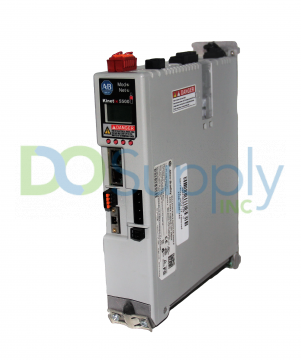
There is a sensor built inside the servo motor. It detects the motor’s current location and relays it across the servo drive. After receiving feedback, the servo drive analyses the motor record and positioning with the requested variables. In the event of any divergence from the specified instructions, the servo drive adjusts the voltage, frequency, or other relevant parameters to rectify the deviations. Initially, servo drives were created as independent parts, entirely distinct from the servomotor. Engineers and suppliers of servo systems have now integrated servo drives effectively into servo motors. These systems, also known as “integrated motor-drive systems,” are more convenient and compact since they incorporate both the drive unit and the motor. The system now has a cleaner appearance, is more compact in dimensions, and is simpler to set up thanks to the decreased total quantity of cables.
Features
To give accurate control over the movements of industrial equipment, the Kinetix drive system uses cutting-edge servo motor technology and feedback systems. It is a flexible solution for various applications since it provides single-axis, multi-axis, and independent control choices.
The Kinetix drive system’s capacity to provide high speed and precision is one of its primary characteristics. To accomplish accurate and repeatable motion control, it also offers strong torque production, quick acceleration and braking (deceleration), and position feedback. Camming, gearing, and coordinated motion control are some of its capabilities that make it the best choice for demanding applications.
The Kinetix drive system’s interoperability with several communication protocols, including EtherNet/IP, DeviceNet, and ControlNet. As a result, it offers a high level of flexibility and scalability, which can be quickly incorporated into current control systems.
Allen-Bradley PowerFlex Drive System
Controlling the speed and torque of electric motors is effective and dependable using the Allen-Bradley PowerFlex drive system. It is ideally suited for industrial applications that need energy-efficient operation and consistent performance. It offers a range of features and capabilities that make it ideal for applications such as conveyors, mixers, elevators, pumps, and fans.
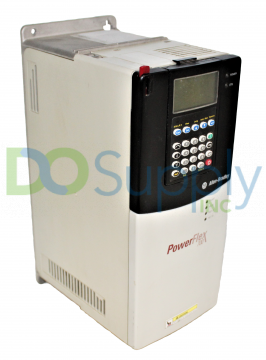
The Allen-Bradley PowerFlex drive system is a high-performance variable frequency drive (VFD) designed for efficient and reliable control over the speed and torque of electric motors. Although it serves as a motor controller, it operates differently than a servo drive; specifically, in collaboration with an electric motor, adjusting parameters like voltage and frequency delivered to the motor. It functions differently from a servo drive, even though VFD acts as a motor controller. The variable frequency drive is a motor controller that cooperates with an electric motor by adjusting the variables provided to the motor, such as voltage and frequency. It directly regulates the frequency and voltage supplied to the motor. In contrast, a servo drive requires an instruction signal to be sent to the motor to evaluate the actual and intended motor positions. The frequency of a motor in hertz (Hz) is a parameter directly linked to its rotational speed, commonly measured in revolutions per minute (RPM). The frequency in Hz is a factor that is directly connected to the motor’s speed (RPM). The rpm of the motor decreases with frequency reduction and vice versa. Because the VFD lets you adjust the voltage and frequency, it can be helpful when the motor isn’t required to operate at its maximum speed. Reduce the motor’s voltage and frequency to meet your demands if you do not need full speed. Additionally, this will prolong the motor’s life and prevent potential malfunctions.
Typically, the Allen-Bradley PowerFlex drive system is utilized to curtail energy consumption, diminishing the energy expenses associated with an electric motor. The ability to tightly manage processes has proven to be a strong suit of these motors, which are now utilized to regulate motors in anything from modest appliances to complex electronic systems.
Features
One of the critical features of the PowerFlex drive system is its ability to provide energy-efficient operation. It deals with advanced energy-saving features such as regenerative braking, which allows energy to be returned to the power grid during braking, and automatic tuning. This is a cause of optimization of motor control for maximum efficiency. To ensure the safety of operators and equipment, the PowerFlex drive system also offers advanced safety features, such as Safe Torque Off (STO) and Safe Speed Monitoring (SSM).
The PowerFlex drive system has excellent compatibility with a range of communication protocols, including EtherNet/IP, DeviceNet, PROFIBUS, and ControlNet. This allows it to be easily integrated into existing control systems. In this way, we achieve a degree of flexibility and scalability.
The PowerFlex drive system offers a wide range of power ratings, allowing for optimal performance in a variety of industrial applications. It also provides both standalone and coordinated drive control options for flexibility in system design and control. To control motor speed and torque precisely, the PowerFlex drive system offers advanced control functions, such as closed-loop control, adaptive tuning, and torque control.
Distinctions Between Kinetix Servo and PowerFlex VFD Drive Systems
The encoding device is the first significant difference between Kinetix Servo Drives and PowerFlex VFDs. While Servo Drives require an electrical commutation encoding device to function, a VFD works efficiently without one. Servo drives are employed to govern permanent magnet motors, while VFDs are utilized to regulate squirrel-cage-type motors. One benefit of permanent magnet motors is the incorporation of rare magnets into the rotor, generating a potent magnetic field and increasing torque. Compared with a motor with a squirrel cage, this torque offers the motor minimal inertia, enabling smooth acceleration and braking (deceleration).
Additionally, servo control devices are adaptable because they can easily operate with complicated paths, speeds, and parameter loads. Multi-axis movements may be produced through servo control systems, and the position can be held along intricate routes. The processing power of VFDs, when used with encoder inputs, is insufficient to achieve this. Although it’s nearly impossible to calculate complicated paths and various speeds using a VFD, this isn’t a significant drawback because AC motors aren’t appropriate for this use.
Servo Drives’ secure-control abilities are superior to VFDs’ as well. Unlike Servo Drives, VFD is better at lowering energy usage and extending the machine’s life. Various electric motor mechanisms typically experience significant improvements and energy savings when using a VFD. VFDs have incredible advantages since manufacturing electric motors uses 25% of all worldwide electrical energy. But as things currently stand, servo systems continue to be more common and used more frequently than VFD.
Similar to numerous engineering choices, there are no strict guidelines, and multiple instances exist where servo drives and VFDs possess capabilities that extend beyond their conventional functions. For example, owing to advancements in technology and the constant demand for enhanced features, it is now common to come across servo drives that can operate induction motors, with or without feedback. In a similar vein, many VFDs are capable of running induction motors having a feedback mechanism. An induction motor equipped with feedback is often called a Closed Loop Vector motor, abbreviated as CLV.
Modernization in Servo Drives and VFD Capabilities
Kinetix servo drives provide precise velocity or position control for permanent magnet motors, while PowerFlex VFDs adjust the frequency for velocity control in induction motors without feedback. Servo drives have feedback for precise motion paths, while VFDs can drive at a given speed for long durations but with less accuracy.
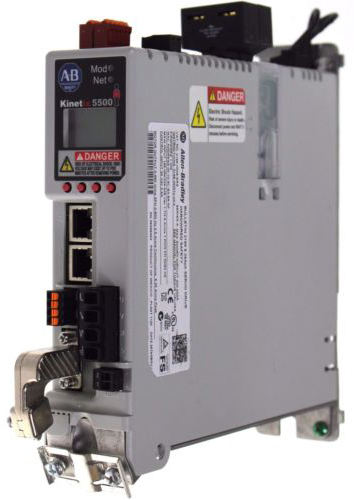
Similar to numerous engineering choices, there are no strict guidelines, and multiple instances exist where servo drives and VFDs possess capabilities that extend beyond their conventional functions. For instance, owing to advancements in technology and the constant demand for enhanced features, it is now common to come across servo drives that can operate induction motors, with or without feedback. In a similar vein, many VFDs are capable of running induction motors having a feedback mechanism. An induction motor equipped with feedback is often denoted as a Closed Loop Vector motor, abbreviated as CLV.
Consequently, there are instances when the capabilities of VDFs and servo drives overlap.
Choosing a Servo Drive vs. a VFD
When both can perform tasks related to driving motors for automation, it can be difficult to decide which of them to select depending on the requirements of the applications. Initially, we should go through the simple scenarios and then discuss what occurs when both of them are appropriate.
When synchronized motion is required across numerous angles in applications such as robot arms, servo drive is unquestionably the best option. Alternatively, servo drives and VFDs may be employed when swift acceleration and deceleration are necessary, such as with pick-and-place gantries. They may also be used when precise velocity control is required to cultivate a silicon ingot or when accurate sub-micrometer positioning is essential in semiconductor applications. VFDs are the preferred option for conveyor belts, hydraulic pumps, air blowers, and some electric vehicles where a specific speed is required, but precise control is not necessary.
Another instance is in velocity mode and position mode applications where the accuracy required is relatively lenient for a servo drive but feasible for a VFD.
Comparison of Features and Performance
When considering different systems or solutions, it is important to think about the characteristics that are necessary or desired. Understanding both the system’s required activities and the features or traits that would enhance the final product’s usability is necessary for this. Concentrating on these variables makes finding the best solution for a certain issue or application simpler. A more effective and efficient solution will be obtained by thoroughly analyzing the available possibilities and determining the necessary qualities.
Cost
Consider the expenses after you’ve whittled down your list of applicants based on performance. Since the servo motor accounts for a significant portion of the cost, servo systems usually cost more than VFD mechanisms. Permanent magnets are used by servo motors, which raises their production and cost of materials compared to induction motors. Furthermore, servo drives are frequently more expensive because they’re equipped with more capabilities than VFDs. Once you reach this stage, expenses and efficiency must be traded off.
Electric cars and electric transport are the other illustrations. Performance, power, and size are a few other factors we must cover in this situation. Applications for electric cars and electric transportation range from order fulfillment, in which robotics pull goods out of an inventory area and get them ready for logistics, to supporting robots in automated forklifts, hospitals, factory carriers that pull engines and automobiles, and huge machines that shift loads weighing several tonnes.
Efficiency
Because they cannot plug into a wall, many mobile applications depend on batteries. Efficiency transforms into a primary priority for system builders when batteries constitute the power supply. It’s because higher efficiency enables equipment to operate for a longer time during charges and boosts system uptime.
Remember that VFDs utilize induction motors, whereas servomotors employ permanent-magnetic motors. Servo systems have an edge when efficiency is required since permanent-magnetic drives are substantially effective compared to induction motors.
Size
The dimension of the parts begins to matter more for compact mobile applications mainly for two reasons. Firstly, smaller portions facilitate the integration of the components into the system developer’s design. Secondly, lighter parts lower the machine’s total weight by themselves. A lighter body requires less energy to move its mass, which improves acceleration and extends battery life. Similar to efficiency, servo drives have a distinct size advantage over VFDs. A servo motor tends to be less than a motor powered by induction power. The most recent servo designs have also been scaled down and improved for mobile use. Because of these factors, servos prevail when smaller diameters are required.
Power
For massive machines, power is a critical factor. While servo systems can be scaled up to several hundred kilowatts, induction systems can achieve megawatts. Consequently, as power demands escalate, servo systems become less feasible, and induction motors and VFDs emerge as more suitable alternatives. However, this shift typically happens at power levels far beyond those required for most applications.
Conclusion
Can we identify the best drive type with precision? That is a difficult question to answer because it depends on your requirements. Although Kinetix servo drives have extremely fast computation speeds and can accelerate or decelerate the motor’s speed quickly, the PowerFlex VFDs have energy-saving features that a lot of electrical systems require. Additionally, VFDs can increase the lifespan of machinery and offer extra safety from overvoltage, undervoltage, and phase protection.
To put matters in perspective, although VFDs are significantly better at delivering ideal performance and saving some energy, Servo Drives excel at calculations, keeping positions along complicated routes, and dealing with fluctuating loads and speed. So, PowerFlex VFDs are recommended for energy-intensive systems, while Kinetix servo drives are the better choice for those requiring more computational power.
DO Supply Inc. makes no representations as to the completeness, validity, correctness, suitability, or accuracy of any information on this website and will not be liable for any delays, omissions, or errors in this information or any losses, injuries, or damages arising from its display or use. All the information on this website is provided on an "as-is" basis. It is the reader's responsibility to verify their own facts.