The Allen Bradley Kinetix 3, 300 and 350 Compared Side-by-Side: Which is Best for You?
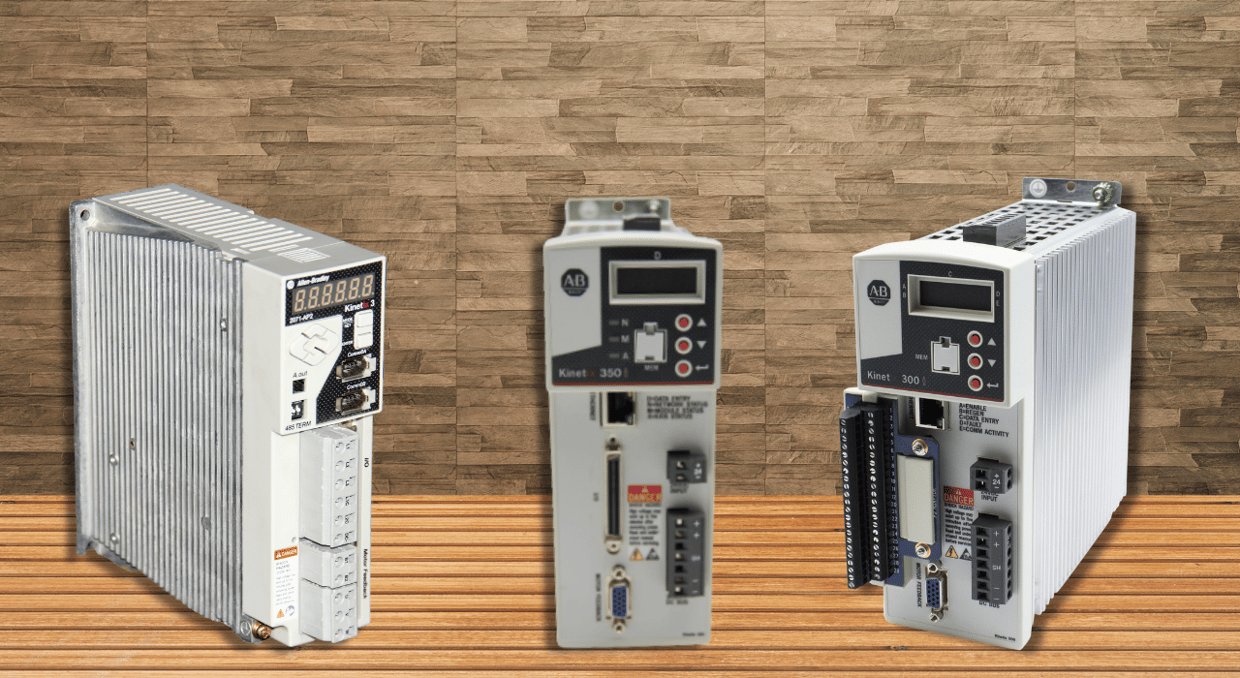
When choosing a servo drive for your automation system, it is essential to understand the key differences between available options. In this article, we compare the Allen Bradley Kinetix 3, 300, and 350 series, three popular choices known for their reliability and versatility. Each series caters to different industrial needs, from general-purpose applications to advanced, high-speed automation. We’ll break down their features, such as power range, safety capabilities, motor compatibility, and phase support, to help you determine which servo drive is best suited for your project’s specific requirements and operational demands.
Power Range
The Kinetix 3, 300, and 350 series include a diverse spectrum of power outputs, providing customers with a choice that caters to their specific application requirements. At 50 to 1500 Watts of output power and 0.6 to 9.9 Amps RMS of current capacity, the Kinetix 3 series can handle lower power needs. Smaller machines and light-duty activities are among the applications that benefit greatly from its precision control at lower power levels.
However, the 400-watt to 3-kilowatt power range offered by the Kinetix 300 and 350 series makes them appropriate for more demanding applications. These drives provide greater versatility and scalability for industrial applications such as material handling, automation systems, and packaging since they can handle jobs requiring medium to high power. For applications that require more motor output and control precision, the larger power capacity of the Kinetix 300 and 350 series makes them the better choice.
Input Voltage Range
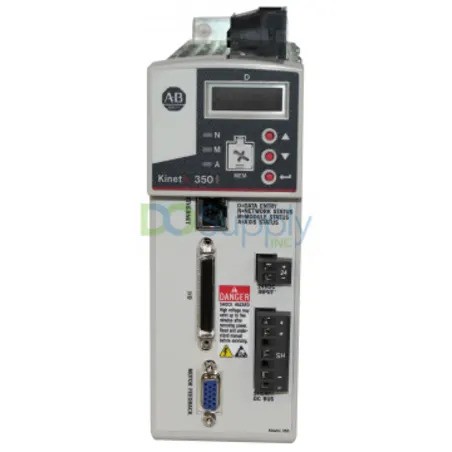
To meet a variety of industrial demands, the input voltage range varies greatly across the Kinetix 3, 300, and 350 series. Operating in the 220 to 240-volt AC range, the Kinetix 3 series is appropriate for low-power situations and applications requiring conventional voltage levels. Single, dual, and three-phase voltage phases are among the voltage phases it supports.
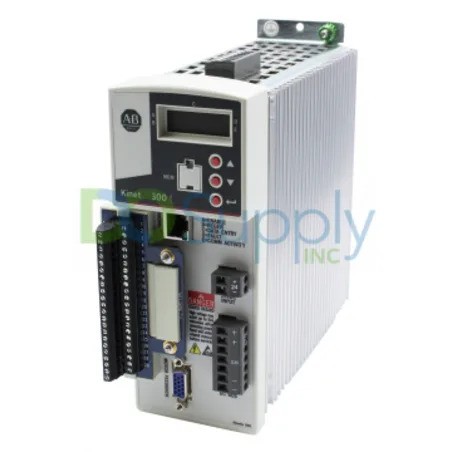
With an input voltage range of 115 to 240 Volts AC for single-phase operations and 230 to 480 Volts AC for three-phase operations, the Kinetix 300 series, in comparison, offers greater versatility. Its wider range increases its adaptability to more demanding applications by meeting low- and high-voltage needs.
Likewise, for single-phase systems, the Kinetix 350 series provides an input voltage range of 120 to 240 V AC, and for three-phase systems, 240 to 460 V AC. Because of its great scalability, the Kinetix 350 is a good choice for industrial applications requiring adjustable voltage input that varies from mid-to high-power.
Controller Compatibility
Controller compatibility is an important consideration when evaluating the Allen-Bradley Kinetix 3, 300, and 350 series since it directly affects integration inside automation systems. Because the Kinetix 3 series is compatible with both MicroLogix and SLC 500 controllers, it is a good option for smaller systems or older configurations. This combination offers low-power applications that don’t need sophisticated motion control capabilities straightforward yet dependable control.
Conversely, the Kinetix 300 series’ smooth integration with CompactLogix controllers improves its usefulness in mid-range systems. In applications with modest complexity, its interoperability with EtherNet/IP connectivity enables improved scalability and system integration.
Lastly, further interoperability is provided by the Kinetix 350 series, which supports both CompactLogix and ControlLogix controllers. This makes it the greatest choice for high-performance systems that need flexibility, scalability, and powerful motion control; it’s perfect for bigger, more intricate industrial situations.
Communication Network
When comparing the Kinetix 3, 300, and 350 series’ communication capabilities, it’s critical to comprehend how each drive functions in various network configurations. The Kinetix 3 series is best suited for small-scale applications where sophisticated network integration is not necessary.
The Kinetix 300 series, on the other hand, uses EtherNet/IP for standardized communication, allowing networked devices to communicate with one another seamlessly. It is therefore perfect for mid-range systems that need to function reliably and in a linked manner.
Similarly, the Kinetix 350 series prioritizes streamlined integration over EtherNet/IP. This characteristic makes it appropriate for high-performance industrial contexts by facilitating simple scaling and effective communication inside intricate, network-heavy systems.
Indexing Capabilities
Different Kinetix servo drive models offer varying degrees of flexibility and functionality when it comes to indexing. With up to 64 I/O points available for indexing, the Kinetix 3 Series gives a great deal of versatility in handling different indexing tasks. Applications requiring intricate indexing might benefit from this high point count as it offers fine-grained control and flexibility.
The Kinetix 300 Series, on the other hand, provides 32 indices and up to 5 index kinds. This configuration offers a flexible method of indexing that may be applied to various automated operations that call for different indexing settings. Its capacity to manage up to 32 indices makes it possible to include complex indexing techniques in automation procedures.
Like the 300 Series, the Kinetix 350 Series supports up to 32 indices and 5 index types. On the other hand, it streamlines indexing function setup and operation by combining this capacity with improved integration features. Because of this, it’s perfect for sophisticated applications that require great efficiency and simplicity of integration.
Safety Features
The Kinetix servo drives’ safety features are designed to satisfy a range of operating demands and industry standards.
In order to ensure that the drive can manage motor faults and avoid damage under overload circumstances, the Kinetix 3 Series contains motor overload protection that complies with UL 508C requirements. In general-purpose applications, this protection is necessary to guarantee operational dependability and safety.
The ISO 13849-1 PLd/SIL2 certified Safe Torque-Off (STO) function of the Kinetix 300 Series improves safety. This certification denotes sophisticated safety features that offer a strong defence against unintentional machine starts and guarantee safer operation in automated systems. Applications that demand strict safety precautions can especially benefit from the STO capability. Once more, UL 508C compliance and motor overload safety are the main features of the Kinetix 350 Series. The Kinetix 3 Series is consistent in its safety characteristics, providing dependable protection in fast-paced, effective applications while upholding safety regulations.
Motor Compatibility and Memory Features
The Kinetix servo drives’ motor compatibility and memory features accommodate many application situations and operating requirements.
A large variety of motors, both with and without thermistors, are supported by the Kinetix 3 Series. Because of its adaptability to different motor types, it may be used in a wide range of general-purpose applications. When control power is disconnected, the memory functions of the Kinetix 3 Series are lost, which may need manual reconfiguration in the case of a power outage.
On the other hand, servo motors and actuators from the TL and MP series are especially compatible with the Kinetix 300 and 350 series. For sophisticated automation activities, this targeted compatibility guarantees peak performance and smooth integration. With a memory module that facilitates automated device replacement, the Kinetix 300 Series improves operational dependability while decreasing downtime. Code reuse is a further benefit of the Kinetix 350 Series, which allows for quicker setup and commissioning for more efficient project deployment.
Typical Phase Support
Kinetix servo drives’ usual phase support varies, which influences how well they adapt to various power configurations. The most adaptable option is provided by the Kinetix 3 Series, which supports single-, dual-, and triple-phase setups. It can accommodate a variety of operating needs and is appropriate for a broad range of power systems and applications due to its extensive phase support.
Single-phase and three-phase setups are supported by the Kinetix 300 and 350 series. Even though it is not as adaptable as the Kinetix 3 Series, it is still sufficient for most industrial applications that need either three-phase or single-phase power. By concentrating on certain applications, their design is more efficiently executed and integrated into their respective operating settings.
Which one is best for you?
The Kinetix series that best fits your demands and project objectives will rely on these factors:
For general-purpose applications with a range of motor types and power needs, the Kinetix 3 Series provides flexible phase support and motor compatibility.
The Kinetix 300 Series is perfect for projects that need advanced automation with safety features like Safe Torque-Off and EtherNet/IP connection.
The Kinetix 350 Series may be the ideal option if your emphasis is on quick commissioning and highly efficient setups, particularly for ongoing projects, because of its simplified setup and code reuse.
Conclusion
In conclusion, depending on the needs of your system, the Allen Bradley Kinetix 3, 300, and 350 series provide unique benefits. The Kinetix 3 is perfect for general-purpose applications because of its wide phase support and motor flexibility. With features like memory modules, EtherNet/IP connection, and Safe Torque-Off, the Kinetix 300 is ideal for automated activities requiring a high level of safety. The Kinetix 350 is the ideal option for sophisticated, high-efficiency applications as it expands on the features of the 300 and provides faster commissioning with code reuse. In the end, the intricacy of your project, the requirements for safety, and your integration objectives will determine which series is best.
If you would like to learn more about these Kinetix drives, our team of specialists and sales representatives are here to help with any questions or concerns you may have with deciding which Kinetix drives are best for your workplace. Though if the Kinetix series isn’t what you’re after, feel free to check out our article on DC PowerFlex drives here.
DO Supply Inc. makes no representations as to the completeness, validity, correctness, suitability, or accuracy of any information on this website and will not be liable for any delays, omissions, or errors in this information or any losses, injuries, or damages arising from its display or use. All the information on this website is provided on an "as-is" basis. It is the reader's responsibility to verify their own facts.