The Role of Allen-Bradley PLCs in Smart Manufacturing
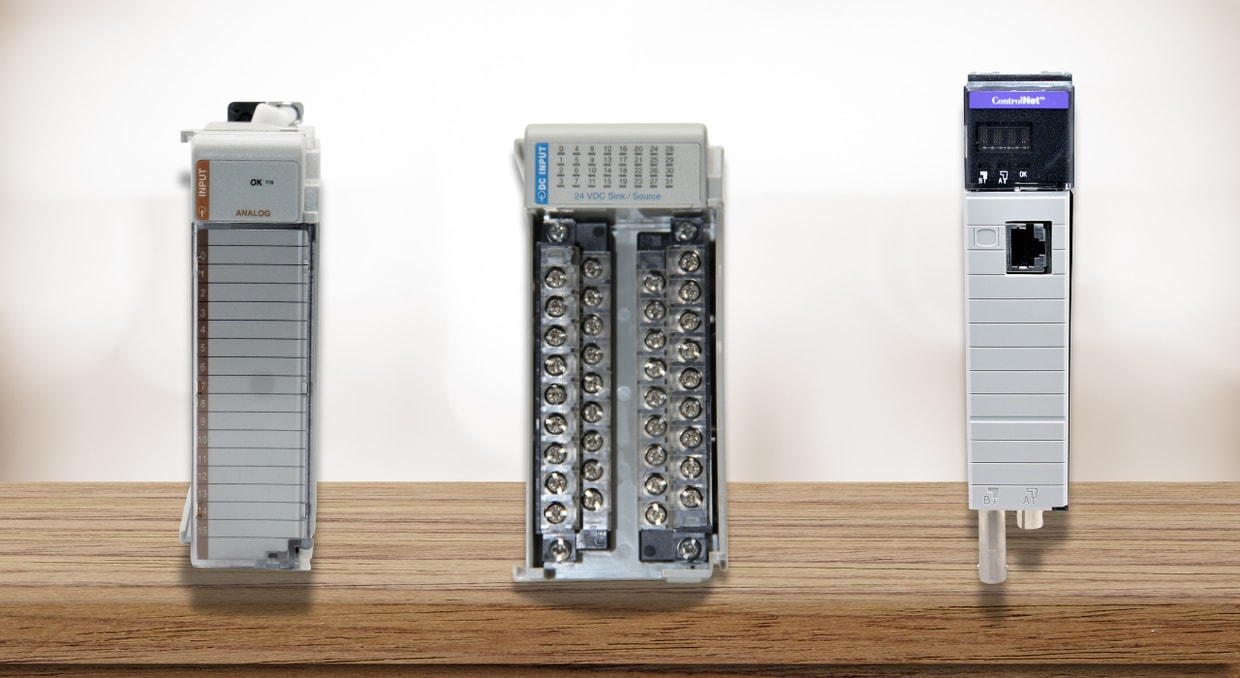
Smart Manufacturing integrates advanced technologies such as industrial automation, real-time monitoring, the Internet of Things, and data analytics to increase system efficiency. The main component of this smart manufacturing is programmable logic controllers. Among the different PLC brands, Allen-Bradley PLCs, manufactured by Rockwell, stand out as a solid overall choice.
These PLCs are the cornerstone of the modern manufacturing and development scenarios in industrial automation. They help systems reach maximum efficiency by enabling seamless control, data management, and real-time monitoring. Today, we will go over how Allen-Bradley PLCs accomplish this, their integration methods, and more.
An Overview of Allen-Bradley’s PLCs in Smart Manufacturing
Allen-Bradley PLCs are industrial controllers designed to control logic and manage input and output operations reliably, even in harsh operating environments, helping reduce downtime. In the context of Smart Manufacturing, these PLCs play a vital role as the central intelligence of automated systems, enabling real-time control, data exchange, and process optimization across connected devices.
Rockwell Automation offers a wide range of products, including the MicroLogix, CompactLogix, and ControlLogix series. Each family caters to different levels of complexity within industrial automation.
- MicroLogix Series: Cost-effective and compact controllers for smaller systems.
- ControlLogix Series: These are High-Level PLCs for bigger industrial and plant-wide systems.
- CompactLogix Series: These are Mid-range controllers for machine-level controlling and integration.
Architecture of PLCs
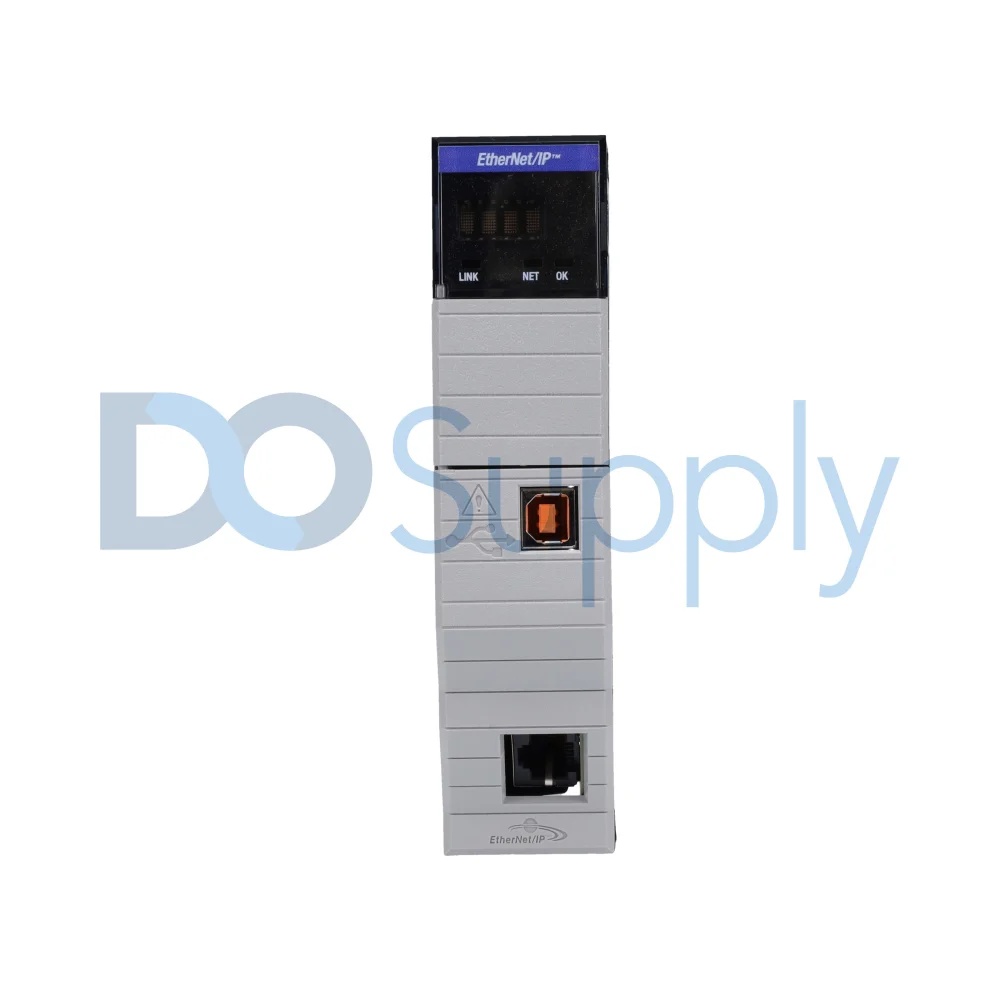
The architecture (hardware sizing) of Allen-Bradley PLCs is not very complicated. They help with configuration and expansion to meet different system requirements, such as building management or fire alarm systems. Within the framework of Smart Manufacturing, this modular design serves as a key enabler of flexibility, enabling manufacturers to integrate multiple devices, sensors, and control functions into a connected ecosystem that supports adaptive production, predictive maintenance, and efficient resource utilization.
The architecture of the Allen-Bradley PLCs includes:
- A CPU, which executes the control and ladder logic programs according to the specific system requirements.
- Memory, which stores the executable programs, device tags, attributes, setup files, and configuration files.
- A power Supply, which is responsible for providing power to the internal modules.
- I/O Modules, which help in establishing communication between the site devices (sensors and panels, etc.) and the PLC.
- Communication Modules, which help in developing connections through various types of protocols like TCP/IP, BACnet, Internet Protocol, DeviceNet, ControlNet protocols, etc.
- Chassis or Backplane, which provides a communication bus for modules for interconnections and a mechanical structure too.
This hardware design helps engineers add new I/O points, additional panels, interconnection ports, and new device types to their systems. For a deeper dive into these systems, we have an article going over bits, bytes, and baud rates here.
Communication Potocols
To keep a streamlined system, all components need to reliably communicate between each other. Picking the wrong communication module or protocol will lead to incompatibilities in the system. The most popular for Allen-Bradley PLCs are:
Ethernet/IP
Ethernet/IP is one of the most used protocols for Allen-Bradley PLCs in smart manufacturing. It works across different Ethernet networks, enabling data exchange between PLCs, HMIs, Panels, and various SCADA systems. Ethernet/IP supports both implicit (real-time IO) and explicit (text-based) communication.
ControlNet
In smart manufacturing, ControlNet provides deterministic and high-speed communication for time-critical applications. It is used for real-time control of distributed I/O and drives within process and discrete automation systems.
DeviceNet
DeviceNet uses a simple two-wire network to connect devices to PLCs. For smart manufacturing, it reduces wiring complexity and enables device-level understanding.
Other Protocols to be considered
Allen-Bradley PLCs also communicate via serial, Modbus TCP/IP, BACnet, and SNMP, enabling smooth integration with third-party devices.
Importance of Allen-Bradley PLCs in Smart Manufacturing
Smart manufacturing depends on fast, reliable decision-making at the machine level, and that responsibility falls squarely on the PLC. Allen-Bradley PLCs serve as the real-time control backbone of modern production systems, continuously reading sensor data, making logical decisions in milliseconds, and commanding motors, valves, robots, and actuators with precise timing. While enterprise systems handle long-term planning and analytics, the PLC is the device that directly turns physical inputs into physical action. Without that real-time control layer, automation, data visibility, and system coordination simply cannot function at an industrial scale. This is how Allen-Bradley achieved this:
Machine Control and Automation
Allen-Bradley PLCs help in both batch and continuous smart manufacturing operations. They execute controller logics to regulate machine behavior, ensuring consistency and precision. Integration with motion controllers, panels, and field devices enables coordinated, multi-axis automation essential for high-throughput manufacturing.
Data Acquisition and Analytics
PLCs continuously collect process data from field devices, analyze field-related attributes, and analyze attributes within the PLC. This data is transmitted to the field device control panels and simultaneously stored on cloud platforms for analysis. In this way, you can monitor trends, check device health, and control them.
Integration with Industrial IoT (IIoT)
Allen-Bradley PLCs are IIoT-ready, capable of connecting to various cloud servers and edge computing industrial systems. Using protocols such as MQTT or OPC UA facilitates bidirectional data flow between the control and monitoring hierarchies. This integration increases visibility, enabling data-driven decision-making at all levels of the operator.
Interoperability and Scalability
The Logix architecture of Allen-Bradley PLCs provides a single IDE for small-scale control to large-scale plant automation. With hardware and standardized software systems, the number of I/O points can be expanded without any hassle. This scalability is essential for adaptive manufacturing environments.
Safety and Compliance
Allen-Bradley’s PLCs integrate standard and safety control into one platform. These PLCs are in compliance with various global safety standards, such as IEC 61508 and ISO 13849-1, ensuring both operator and equipment protection without compromising smart manufacturing. Integration with safety I/O and devices provides a safety architecture for smart factories.
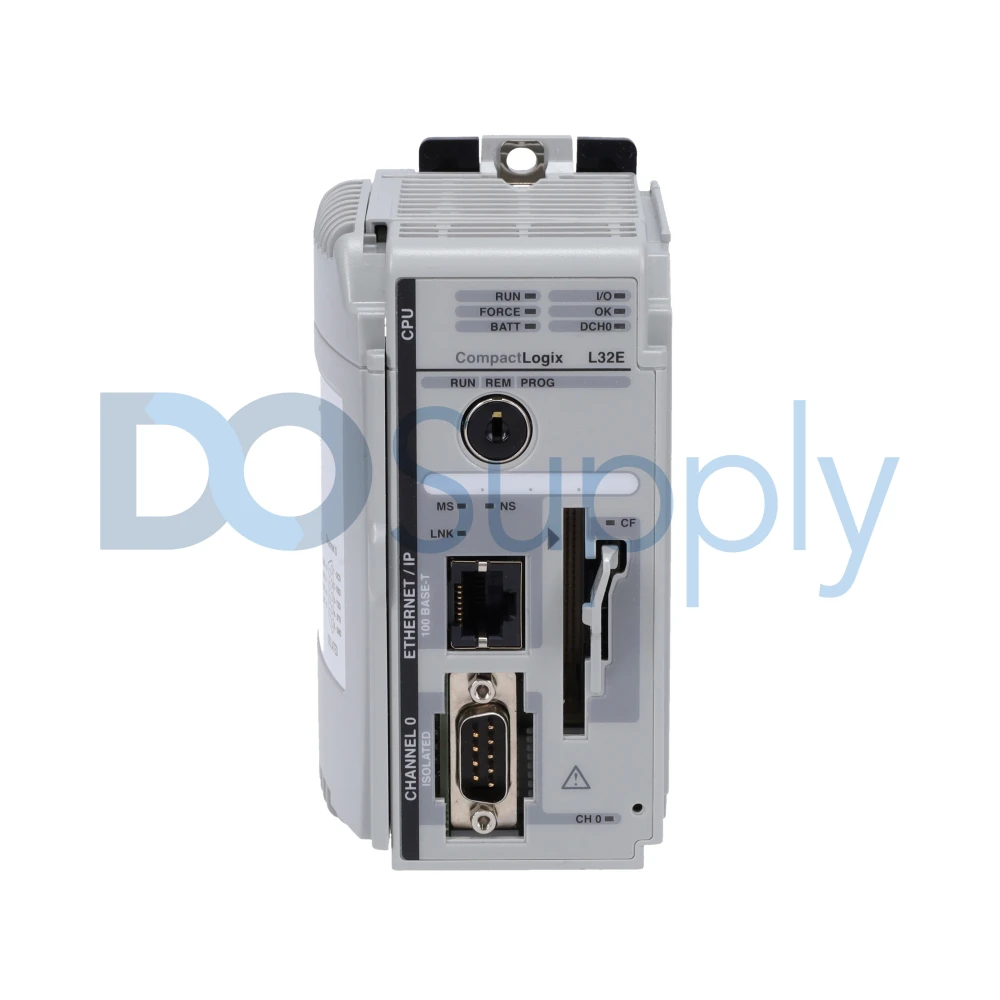
Integration with Rockwell Automation Ecosystem
Allen-Bradley PLCs form the central control component within Rockwell Automation’s Connected Enterprise framework. The ecosystem includes several complementary platforms:
Stratix Industrial Switches
Stratix switches, co-developed with Cisco, provide a secure network infrastructure for Ethernet/IP communication. They ensure deterministic performance, network segmentation, and cybersecurity for industrial networks.
Integration with Powerflex and Kinetix Systems
Allen-Bradley PLCs easily integrate with PowerFlex drive series and Kinetix servo systems to monitor motion parameters and drive control, enabling trend analysis and synchronized operations.
Final Thoughts
In conclusion, Allen-Bradley PLCs remain at the forefront of industrial automation and smart manufacturing. Their combination of robust hardware, advanced communication capabilities, integrated software environment, and seamless data connectivity enables manufacturers to achieve higher productivity, flexibility, and efficiency. Through continuous innovation and integration with emerging technologies, Allen-Bradley PLCs are redefining how industrial systems operate in the era of digital transformation.
For those who are in the market for new PLCs, you are in the right place. We at DO Supply sell a wide range of PLCs from popular brands like Allen-Bradley, Siemens, Mitsubishi, Omron, and more, with same-day shipping and a 2-year warranty. We also carry drives, motors, and accessories for your automation system. Come check us out today and see just what we could do for you!
DO Supply Inc. makes no representations as to the completeness, validity, correctness, suitability, or accuracy of any information on this website and will not be liable for any delays, omissions, or errors in this information or any losses, injuries, or damages arising from its display or use. All the information on this website is provided on an "as-is" basis. It is the reader's responsibility to verify their own facts.