PLC Manufacturers and Market Trends: What’s Driving Hardware Evolution
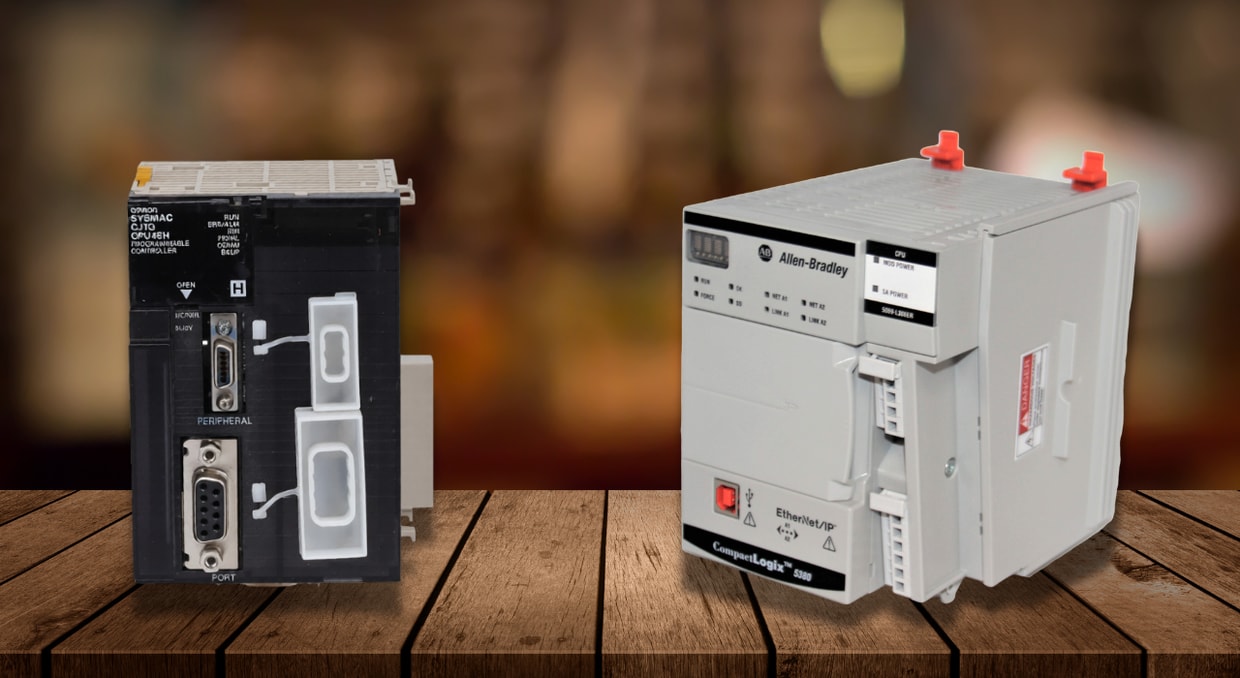
Programmable Logic Controllers continue to be the backbone of present-day industrial automation, providing deterministic, scalable, and reliable control across diverse sectors, such as chemical processing, oil & gas, pharmaceuticals, manufacturing, and water/waste treatment facilities. Originally designed to replace hard-wired relay logic systems, PLC technology has advanced into sophisticated embedded control platforms capable of handling advanced computational tasks, real-time data analytics, network communications, and predictive diagnostics. In response to the demands of digital transformation, industry 4.0 integration, and smart manufacturing, PLC manufacturers are continually developing robust PLCs with increased processing power, built-in safety options, advanced networking protocols, and integrated cybersecurity.
In essence, modern PLC hardware continues to bridge the gap between industrial-grade robustness and advanced computing, taking on complex, data-intensive automation tasks traditionally reserved for distributed control systems and industrial computers. Evaluating the prominent leaders, technological drivers, and emerging market trends in PLC manufacturing provides essential insights into how PLC hardware is evolving and shaping the future of industrial automation systems globally.
Industry-Leading PLC Manufacturers
Leading PLC manufacturers are shaping the global industrial automation landscape by providing industry-standard, state-of-the-art PLC hardware architectures, offering innovative compact/modular PLC designs with advanced features, high-speed processing capabilities, and reliable performance in harsh industrial environments. These industry leaders are heavily investing in advanced communication technologies, AI-driven control algorithms, and cybersecurity integration in PLCs to address the demands of modern industrial automation. They include:
- Siemens AG: Globally, Siemens AG continues to maintain its position as an industry-leading PLC manufacturer. It’s renowned for its robust and high-performance PLC hardware, the SIMATIC S7 PLC series, and cutting-edge, digitally-integrated software platforms. The SIMATIC S7 PLC series provides comprehensive automation functionalities for hybrid industrial applications, energy infrastructure, process automation, and discrete manufacturing. Its engineering strengths include robust diagnostic capabilities, high-speed CPU architecture, enhanced safety integration, and deterministic PROFINET communication.
- Rockwell Automation: Rockwell Automation dominates a significant share of the North American industrial automation market, largely driven by its Allen-Bradley ControlLogix and CompactLogix PLCs. These Logix controller platforms provide integrated motion capabilities as well as secure, high-performance, and scalable automation via EtherNet/IP networking; with the ControlLogix PLC series providing high-availability redundancy. Key engineering benefits of Allen-Bradley PLCs include SIL 3 integrated safety, ISA/IEC 62443-based cybersecurity compliance, hot-swappable I/O modules, and high-speed motion synchronization (CIP Motion). If you would like a deeper dive on the Allen-Bradley PLC families, we have a blog here for you!
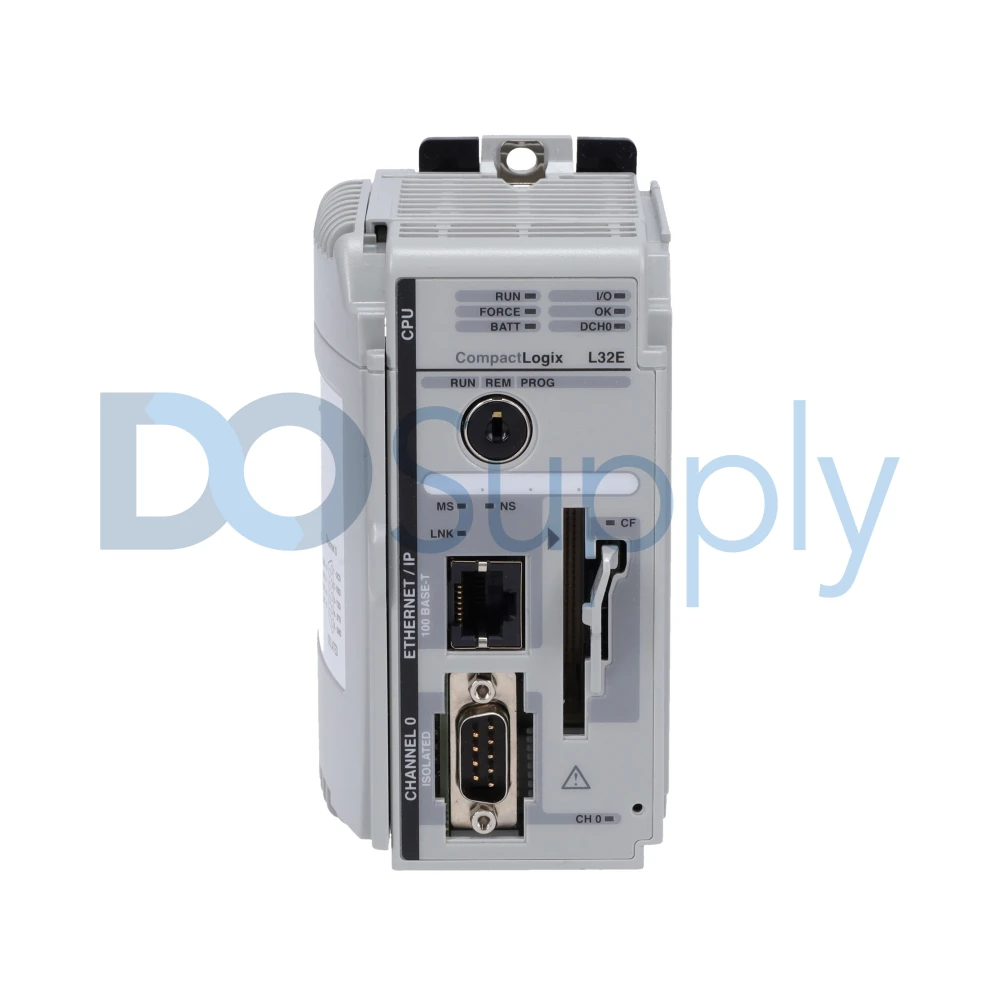
In addition, latest Allen-Bradley PLC models (such as CompactLogix 5480 and ControlLogix 5580) integrate edge computing functions, enabling data processing, machine vibration monitoring, and advanced data analytics directly within the PLC hardware. This helps PLC manufacturers optimize response times and reduce excessive network traffic in higher-level automation systems.
- Schneider Electric: This PLC manufacturer focuses on eco-friendly and energy-efficient automation solutions through its Modicon PLC portfolio. Its flagship Modicon M580 ePAC (Ethernet-enabled Programmable Automation Controller) combines the robust reliability of PLC platforms with high-speed Ethernet connectivity and the capabilities of distributed control systems for high-availability, secure, and IoT-enabled automation.
- Mitsubishi Electric: Mitsubishi Electric is a leading PLC manufacturer within the Asia-Pacific industrial automation market, providing reliable, compact, and energy-efficient PLC solutions. The company is highly recognized for its modular, high-performance MELSEC iQ-R PLC series. The MELSEC iQ-R series features a multi-processor architecture with the capability of handling high-speed information processing, motion control, and process automation tasks simultaneously. It incorporates high-speed CC-Link IE networking protocol that supports deterministic gigabit relay, allowing high-precision manufacturing, electronics assembly, and synchronized robotics. Mitsubishi PLC controllers are also popular due to their extensive diagnostic capabilities, advanced servo integration, high reliability, and compact design. They are widely used in semiconductor, automotive, and electronics manufacturing facilities that require operational consistency and precision.
- ABB Ltd: ABB is recognized as a leading PLC manufacturing due to its scalable, modular AC500 PLC series and its native integration of advanced robotics and DCS process control systems. The AC500 PLC series enables scalable, high-performance industrial automation architectures with high dependability, redundant networking, and integrated safety features. ABB also integrates PLC technology with industrial drives, distributed control systems, and robotics. ABB’s acquisition of B&R (Bernecker & Rainer Industrie-Elektronik) automation expanded the company’s capabilities in motion control, factory and machine automation, and open-architecture PLC technologies. Its PLC hardware innovations now leverage digital asset monitoring tools, energy optimization features, AI-driven software, and predictive maintenance algorithms.
- Other Key Players: Keyence, Emerson Electric, Delta Electronics, Bosch Rexroth, and Omron are also prominent PLC manufacturers. They all play a significant role in driving industry 4.0 innovation by integrating IoT, advanced analytics, and AI into smart manufacturing, enabling real-time monitoring, remote control, predictive maintenance, and enhanced productivity. For instance, Bosch Rexroth PLC hardware features real-time industrial networking protocols and open automation architectures, providing scalable solutions for logic, IoT-enabled, and motion control applications.
Delta Electronics provides cost-effective PLC solutions widely adopted in energy management applications and factory automation. Keyence features a comprehensive product line of compact PLCs with embedded inspection and sensing technologies, while Emerson (formerly GE Intelligent Platforms) PLC solutions remain a great choice in process industry automation. Intense competition among PLC manufacturers continues to drive exponential innovation in PLC hardware, resulting in high-performance, more robust, compact, and cost-effective PLC solutions.
Top Drivers of PLC Hardware Evolution
The technologies being deployed for modern industrial automation demand that PLCs evolve beyond basic relay logic replacements into intelligent, reliable, and secure edge devices. To support digital transformation, PLC manufacturers are continually developing PLC hardware solutions that balance robust, real-time deterministic performance with advanced data analytics, cloud connectivity, and extended service life. Top priorities in PLC hardware redesign include enhanced built-in cybersecurity, interoperability, increased processing power, enterprise connectivity, reliability, and scalability across process and manufacturing industries worldwide.
Industry 4.0 and Smart Manufacturing
Industrial 4.0 technologies require extensive interconnectivity between cloud analytics platforms, enterprise systems, and machines. This prompts PLC manufacturers to develop smart controllers with advanced networking capabilities and higher computational capacity. Modern PLC hardware generally incorporates expanded memory resources, multicore processors, and predictable Ethernet protocols like PROFINET, EtherNet/IP, MQTT, UA, and OPC. These technologies allow seamless communication between enterprise resource planning software, SCADA systems, robotic systems, PLC controllers, and sensors. Real-time synchronization enhances automated machine/process monitoring accuracy, motion control precision, and robotics coordination.
Key Industry 4.0 hardware features currently emphasized by PLC manufacturers include:
- High-speed industrial Ethernet communication featuring predictable latency
- Built-in diagnostic capability for deterministic maintenance
- AI-ready processing support for adaptive control and edge analytics
These features allow PLC platforms to function as centralized data hubs that support enhanced asset lifecycle management, digital twins, and smart factories. Standardized relay frameworks also function by improving scalability within multi-vendor automation ecosystems, easing system integration, and reducing commissioning challenges. Consequently, while they maintain the predictable control dependability needed in critical industrial settings, PLC manufacturers progressively prioritize data transparency and interoperability.
Edge Computing Integration
Edge computing significantly impacts PLC hardware design by supporting regional processing of information directly at the control layer. PLC manufacturers incorporate real-time functional system optimization, virtualization capabilities, expanded storage capabilities, and powerful CPUs to facilitate this architecture. Local processing of data reduces bandwidth usage, minimizes latency, and enables industrial platforms to function reliably even during cloud connectivity temporal unavailability. Applications such as adaptive process control, machine vision inspection, and predictive maintenance specifically profit from edge-enabled PLC hardware.
Typical edge-computing improvements incorporated by PLC manufacturers consist of:
- Multicore CPUs enabling parallel deterministic workloads
- Machine learning interference functionality and embedded analytics libraries
- Safe containerization for deploying industrial AI solutions
These innovations enable controllers to conduct real-time optimization, predictive analytics, and anomaly detection without external computing resources. To guarantee reliable edge analytics operation throughout distributed industrial automation networks, PLC manufacturers continuously enhance system resilience, computational density, and thermal efficiency as Industrial Internet of Things integration diversifies.
Compactness and Modular Design
Contemporary manufacturing environments require compact control hardware that expands cabinet space utilization while retaining expandability and processing power. PLC manufacturers create modular and micro-PLC platforms that combine flexible expansion capacity and dense I/O integration. Modular backplane designs allow engineers to integrate specialty I/O, motion control interfaces, or communication modules without replacing the controllers entirely. This scalability minimizes lifecycle replacement expenditure and enables phased automation upgrades.
Compact PLC architectures support distributed industrial automation by placing controllers closer to field devices, minimizing wiring complexity, and enhancing signal integrity. Maintenance and installation are simplified by Standardized mounting systems, hot swappable modules, and toll-free connectors. Thermal optimization methods ensure dependability despite minimized hardware footprints, including enhanced airflow designs and low-power chipsets. As a result, PLC manufacturers prioritize future compatible communication interfaces, easy maintenance access, and modular flexibility to accommodate evolving industrial automation needs.
Cybersecurity Requirements
Industrial control systems are prone to cyber threats due to enhanced IoT connectivity, which makes cybersecurity a critical hardware design requirement for PLC manufacturers. Modern PLC platforms incorporate encrypted firmware storage, hardware root-of-trust modules, secure boot processes, and authentication systems that have the capability to prevent code execution or unauthorized access. Secure protocol stacks and embedded firewalls safeguard industrial communications and also preserve deterministic functionality essential for real-time control utilization. Encryption grounded on hardware enables secure data transfer across cloud gateways, wireless networks, and industrial Ethernet.
Real-time monitoring features also help in detecting potential intrusion attempts, unauthorized configuration changes, and anomalies, while adherence to international industrial cybersecurity guidelines ensures consistent security across diverse automation systems. With the continuous evolution of cyber risks, PLC manufacturers are investing substantial resources in advanced encryption research, lifecycle firmware management, and supply-chain verification methods.
Sustainability and Energy Efficiency
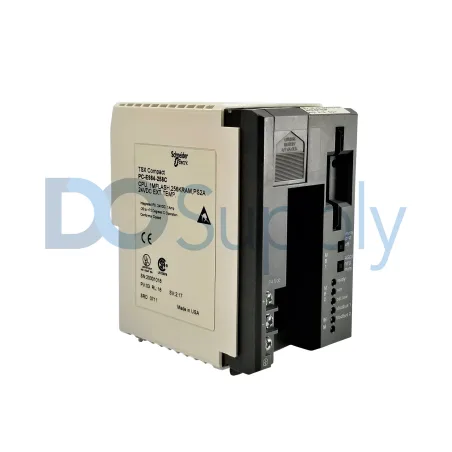
Crucial considerations in PLC hardware design include environmental sustainability and energy efficiency. PLC manufacturers are progressively developing controllers using dynamic clock scaling, low-power processors, and enhanced power management circuits that reduce energy consumption without compromising execution. Integrated energy tracking function by allowing facilities to monitor equipment usage, enhance operational loads, and identify inefficiencies.
Sustainable PLC designs also prioritize extended product lifecycles, minimized hazardous substances, and recyclable materials, reducing electronic waste. Overall energy performance is further improved by effective thermal management, hence reducing cooling needs in control cabinets. Integration with comprehensive energy management systems enables synchronized reactions to peak demand situations while also supporting carbon minimization initiatives and regulatory compliance. PLC manufacturers maintain industrial performance standards, cybersecurity, and reliability. They also align hardware design strategies with environmental requirements due to the rising global sustainability expectations
Current PLC Market Trends
The industrial automation sector is rapidly evolving, impacting PLC manufacturers’ product development strategies and priorities. Notable trends include:
- Virtual and Soft PLCs (vPLCs): The shift toward software-defined industrial automation is driven by virtual PLC platforms, such as the Siemens S7-1500V virtual PLCs. Virtual PLC technology separates control logic from physical proprietary hardware to run on control software, enabling deployment on cloud infrastructure, edge servers, or industrial PCs. This facilitates simulation-based commissioning, simplifies maintenance, and improves scalability. Real-time operating systems and optimized hypervisors maintain deterministic real-time performance.
- AI and Machine Learning Integration: Artificial intelligence integration enables PLC hardware to perform adaptive process optimization, anomaly detection, automated quality inspection, and deterministic maintenance. Embedded AI accelerators allow enhanced analytics directly at the controller position.
- Asia-Pacific Industrial Evolution: The rapid Asia-Pacific industrial expansion, driven by booming electronics, automotive, semiconductor, and renewable energy industries, continues to significantly fuel global PLC demand. This is encouraging PLC manufacturers to extend production facilities and technical support coverage within the Asia-Pacific region.
- IT/OT Convergence: PLCs progressively serve as bridges between enterprise IT systems and operational technology. Seamless integration with cloud analytics, ERP, and MES platforms facilitates improved efficiency, deterministic decision-making, and operational visibility of industrial automation systems.
Conclusion
PLC manufacturers remain critical drivers of innovative technologies for industrial automation. As manufacturing processes become smarter, more connected, and eco-friendly, PLC hardware is continually evolving to support energy optimization, artificial intelligence, edge computing, inbuilt cybersecurity features, and advanced networking protocols. Design and engineering enhancements ensure PLC controllers continue to be dependable while supporting progressive industrial automation requirements.
Future industrial automation systems will rely heavily on intelligent, scalable, and flexible PLC hardware architectures. Continued investment in scalable PLC designs, AI integration, open automation standards, and virtualization is defining the next generation of PLC platforms. As such, companies that are adopting these advanced PLC technologies are set to secure a competitive advantage in the long run, through enhanced cybersecurity, operational efficiency, and greater operational resilience.
If you are comparing PLC hardware for your next automation project, then understanding these trends is only the first step. The real performance comes when selecting equipment that aligns with your scalability and environmental requirements. At DO Supply, our team works directly with these platforms every day. Whether you’re upgrading an existing system or designing from the ground up, we can help you match the right PLC for the right project. So stop on by our site today and explore the many options we carry from brands you can trust.
DO Supply Inc. makes no representations as to the completeness, validity, correctness, suitability, or accuracy of any information on this website and will not be liable for any delays, omissions, or errors in this information or any losses, injuries, or damages arising from its display or use. All the information on this website is provided on an "as-is" basis. It is the reader's responsibility to verify their own facts.