Common MicroLogix Applications That Don’t Need a Bigger PLC
If you have ever felt the urge to overbuild a system, whether it be a car, a gaming pc, or on the industrial side of things, OEM systems or shop-mounted automated solutions, don’t worry, because we have all been there. The reality is that building to spec in industrial machines that aren’t likely to see upgrades or changes is okay. Not only will this save time and reduce complexity, but it will also save money, space, and wiring.
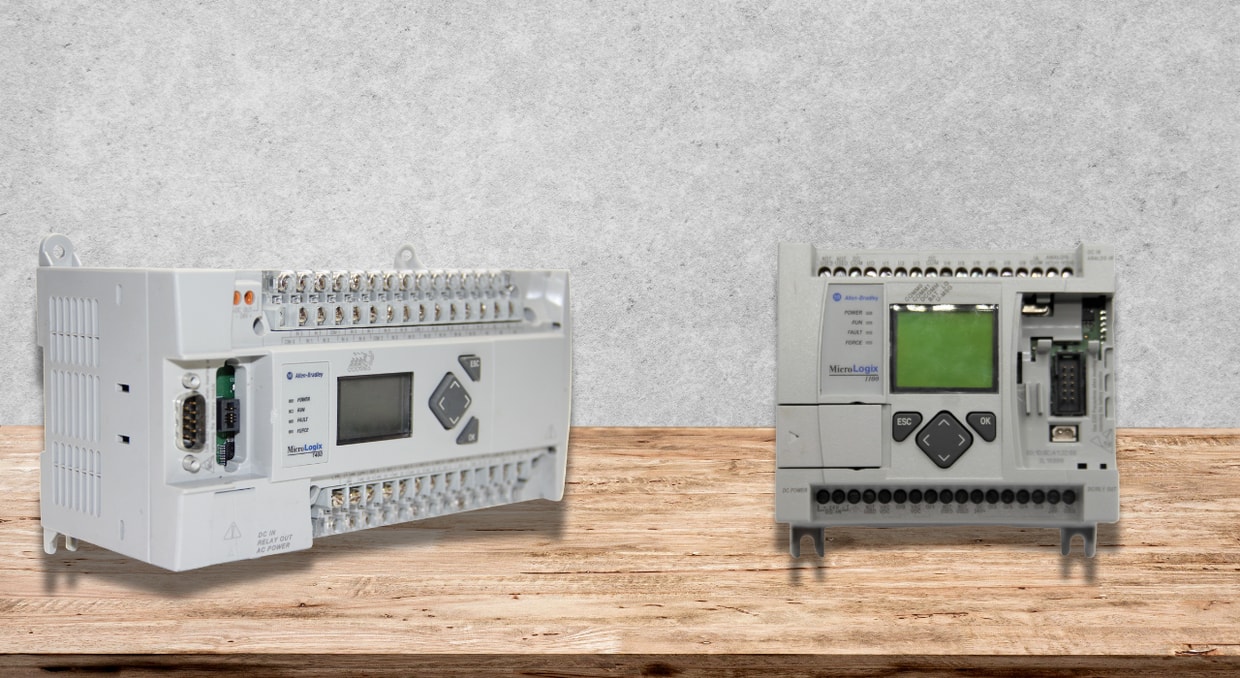
This is the philosophy that Allen-Bradley used to design its MicroLogix PLC lineup. Sure, the MicroLogix is considered a legacy system, but it is still used in numerous applications today. Today, we will go over where these PLCs fit and why their size may be all you need.
Packing Machines
First on the list is packing machines since they operate on simple, repeatable sequences. Because of the straightforward nature of this control logic, these machines rarely require the processing power or system architecture of a larger PLC platform.
A typical packaging machine might rely on components such as:
- Photoelectric sensors to detect product position
- Pneumatic cylinders for sealing, cutting, or pressing operations
- Conveyor motors to move products between stations
- Limit switches or proximity sensors for mechanism feedback
- Stack lights or alarms to indicate machine status
The PLC’s role is primarily to coordinate these actions in the correct order. For example, a small carton sealer might follow a sequence like this:
- Detect a carton entering the sealing station
- Stop the conveyor and confirm the carton position
- Activate the sealing mechanism
- Wait for a completion signal or timer
- Restart the conveyor and move the carton out
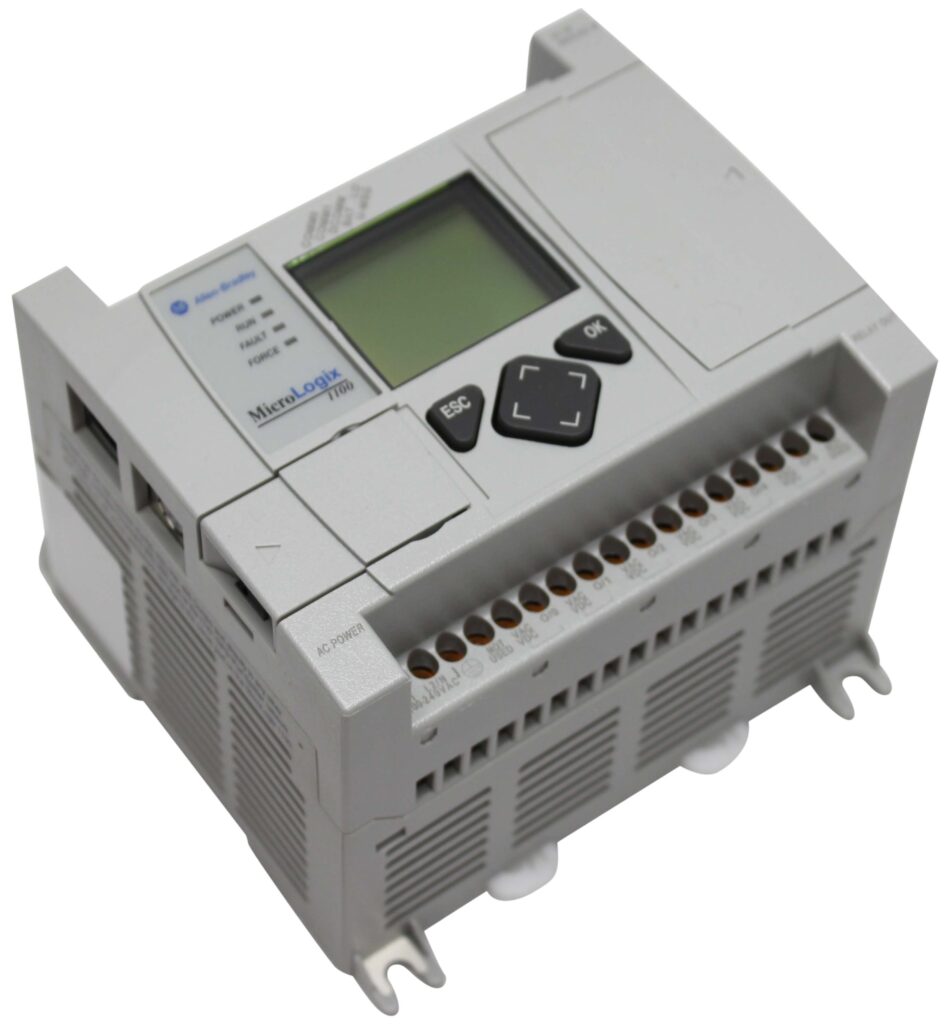
Usually, this type of logic relies on timers, counters, and sensors, all of which are within the capabilities of the MicroLogix family. Even Rockwell Automation frequently cites packaging as a typical application for these controllers, given the relatively modest I/O requirements and predictable control sequences, usually fit for the MicroLogix 1100, 1200, and 1400.
A multi-station packaging machine that includes conveyors, product inspection sensors, pneumatic actuators, and reject stations can easily grow beyond the capabilities of smaller MicroLogix models. In these situations, the MicroLogix 1500 provides the additional I/O capacity and processing performance needed to coordinate the entire machine.
Material Handling Systems
Next on the list is material handling, often used alongside packing machines. Many of these systems focus on moving products from one location to another while ensuring spacing, routing, and flow requirements are met.
Unlike large plant-wide conveyor systems, smaller material handling setups often operate as self-contained machines or localized conveyor zones, making the MicroLogix PLC a good fit. The control tasks are usually straightforward and involve coordinating motors, sensors, and diverter mechanisms.
Generally, material handling systems contain the following processes:
- Conveyor start and stop control
- Product detection using photoelectric sensors
- Jam detection and automatic shutdown logic
- Product counting or spacing control
- Diverter gates for routing products to different lines
In these systems, the PLC primarily ensures that products move safely and efficiently through the process. For example, a simple sequence might look like this:
- Detect product entering a conveyor zone
- Stop the upstream conveyor if the zone is occupied
- Monitor downstream sensors for available space
- Release the product once the path clears
- Update product counters or tracking logic
Controllers, such as the MicroLogix 1000, MicroLogix 1100, MicroLogix 1200, and MicroLogix 1400, are often used in these environments due to their flexible I/O expansion and communication options. The small footprint of these MicroLogix PLCs also helps to save space.
Water and Wastewater Plants
Wastewater treatment centers are often facilities we don’t think much about, yet they are detrimental to our daily lives. These large plants rely on predictable control tasks, such as pump operation and level monitoring, without the uncertainty of expansion.
Unlike large treatment plants that may require distributed control systems, smaller pump stations and utility systems typically operate as independent control panels. The PLC monitors process conditions and activates equipment when certain thresholds are reached. This makes it an ideal candidate for a MicroLogix-controlled system.
Usually, a wastewater treatment plant’s control system is responsible for:
- Pump start and stop control based on tank level
- Alternating pump operation to balance equipment wear
- Monitoring flow rates and pressure sensors
- Triggering alarms for overflow or equipment faults
- Communicating system status to a central monitoring system
The MicroLogix 1100 and the MicroLogix 1400 are both worthwhile investments, as they support remote monitoring and SCADA communications while keeping system costs down.
HVAC and Building Automation
HVAC and building automation systems are another area where compact PLCs, such as the MicroLogix family, can handle control requirements without requiring a larger controller platform. Many offices and industrial buildings rely on predictable control logic to monitor environmental conditions and operate equipment accordingly. After all, no one likes working in a hot and humid office.
Most HVAC systems you will see follow a predictable pattern: temperature sensors monitor conditions, fans circulate air through the building, and valves regulate heating or cooling water. The PLC is used to coordinate all those components to keep everything operating safely and at optimal levels.
A typical control sequence might look like this:
- A digital input from the building control system signals a call for cooling
- The PLC energizes a fan starter output to start the supply fan
- A differential pressure switch input confirms that airflow has been established
- If airflow is confirmed, the PLC allows the chilled water valve output to open
- An analog temperature input monitors the discharge air temperature
- The program adjusts the valve position or cycles the valve to maintain the temperature setpoint
- If airflow is lost or the temperature exceeds a safety limit, the PLC sets an alarm bit and shuts down the fan output
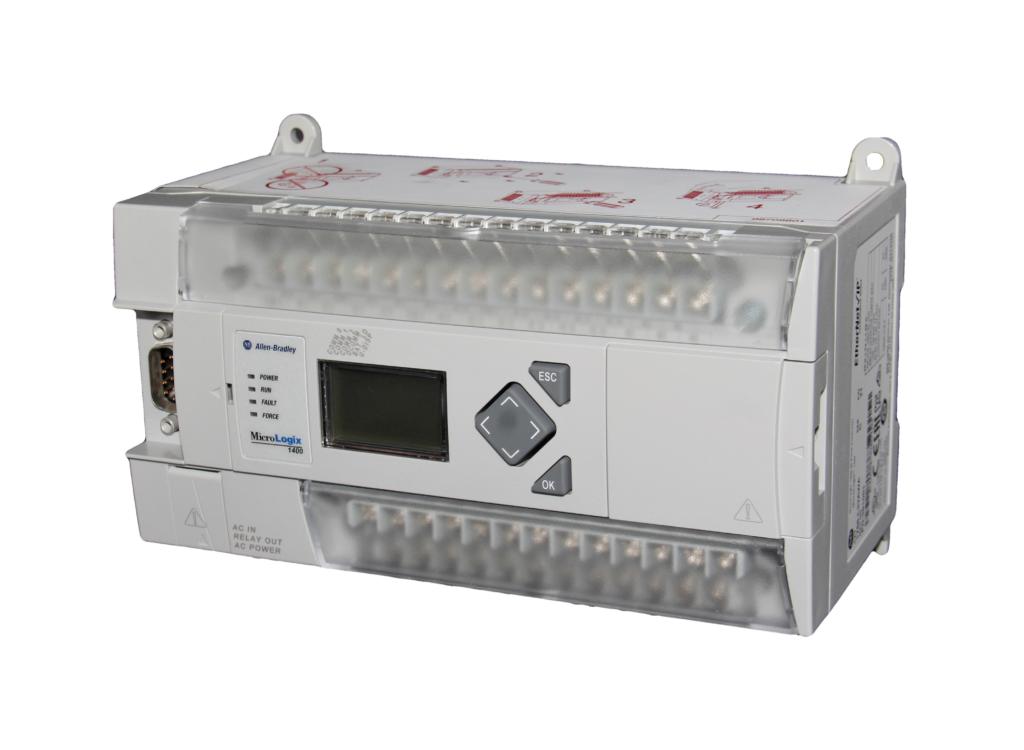
Controllers such as the MicroLogix 1100, MicroLogix 1200, and MicroLogix 1400 are often used in these installations because they provide analog inputs for temperature sensors and expandable I/O for additional monitoring points while maintaining a compact footprint.
Equipment With Growing I/O Requirements
While our other entries on this list primarily focused on stagnant processes that saw very little to no growth, MicroLogix controllers still can support (within reason) equipment that is set to expand in the future. These expansions could range from additional sensors, safety devices, and monitoring equipment as the machine evolves. What may have started as a relatively simple process could gradually grow into a much larger control system.
In these situations, a smaller MicroLogix controller might approach its I/O limits, but the MicroLogix 1500 also shines.
These growing processes can include:
- Production equipment that gains additional inspection sensors
- Packaging lines that add reject stations or verification devices
- Conveyor systems that expand to include additional zones
- Process equipment that incorporates more instrumentation over time
There could also be motors, added digital inputs, or additional analog signals for monitoring process conditions. The MicroLogix 1500 is well-suited for this role, as it supports significantly more expansion I/O than its counterparts. It’s based on a modular design that allows the operator to swap its chassis or CPU depending on the process, resulting in a controller with higher memory capacity and with the ability to manage larger machine-level control systems, all while operating on the familiar MicroLogix programming environment.
Final Thoughts
Selecting the right PLC for a system often comes down to understanding the application’s actual demands rather than assuming more power is always necessary. As seen with most of these examples, quite a bit of industrial machinery is designed to be simple and predictable, which is right where the MicroLogix controllers thrive. They were designed to handle straightforward tasks involving sequencing, sensor monitoring, and manageable I/O counts.
If your equipment falls into these categories or you find yourself looking for controllers to make them, sourcing reliable replacement hardware is essential to reducing downtime. We at DO Supply carry a large inventory of tested MicroLogix PLCs and compatible modules, all backed by our two-year warranty. If you’re unsure which controller might be best for your system, why not check out our selection guide here? It goes over each one, its specifications, and more suitable applications like these.
DO Supply Inc. makes no representations as to the completeness, validity, correctness, suitability, or accuracy of any information on this website and will not be liable for any delays, omissions, or errors in this information or any losses, injuries, or damages arising from its display or use. All the information on this website is provided on an "as-is" basis. It is the reader's responsibility to verify their own facts.