Pump Features for Soft Starts
A motor is the main component of any machine that performs some valuable function. In industry, high-power and high-torque motors are used to carry out various operations. These motors are either single-phase or three-phase AC motors. Motor drivers or motor starters are used to control the motor’s direction, switching, and speed. Industrial electric motors require high electric current during the acceleration phase due to high inertia load till they reach their nominal speed of operation. There are different types of motor starting mechanisms, which include a direct online, auto transformer, and star delta. Other than these, solid-state devices are also used to start motors, including soft starters and variable frequency drives (VFDs). This guide will focus on the soft start, its advantages over other practices, and its applications in the industry.
Soft Starter Method
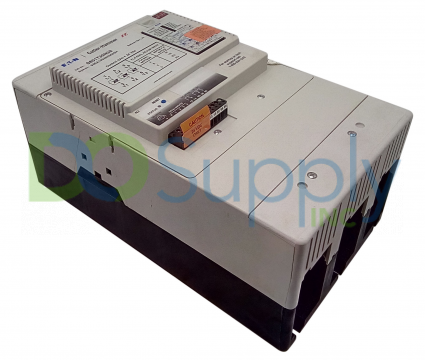
A three-phase soft starter is a circuit consisting of six TRIACs, which control the voltage applied to the motor. A single TRIAC is made of two Silicon Controlled Rectifiers (SCRs), or Thyristors joined in a back-to-back configuration. A Thyristor has three terminals, logic gate, anode, and cathode. The pulse signal at the logic gate allows the current to pass from the anode to the cathode. The power source is available at the anode, and the load is attached to the cathode. The gate pulses are controlled based on the ramp time, which controls the current supplied to the motor and then controls the amount of inrush current and gradually increases the torque. If the gate pulse is not applied, the load has no current supply.
The soft start can be compared with the Direct On Line (DOL) starting method. In DOL, the voltage and inrush current values are very high when power is applied to the motor. As a result, a high torque is also generated, which causes the motor to reach its optimal speed quickly. This results in various disadvantages, including causing damage to the motor, generating excess heat, and stressing various components of the electric supply system. In contrast, in soft start, the amount of applied voltage and current is gradually increased, which increases the torque smoothly. The motor takes some time to reach its optimal speed and protects the components from stressing out and getting damaged.
Choosing a Soft Starter
The industrial applications of the soft starter are numerous. Some of the important ones are industrial fans, pumps, compressors, conveyors, and mixers. Selecting a soft starter for your application is important, as it depends on various factors. The important selection parameters are discussed below.
1. Application Type and Load
The capacity of each machine varies depending on the application requirements. The motor torque/speed curve, locked rotor amps, motor nameplate full load amps, and HP rating are important to load specifications. So, the motor starter selection is made on the equipment specifications and load characteristics mainly. For example, if the application is based on a pump, such as a water pump, then the pump control function should be present in the motor starter. A pump control function reduces the risk of water hammering, which occurs at the start and stop of the water supply. Additionally, the phase reversal protection and underload functions will add safety to the pump.
In the case of a mixer, A soft start reduces the chances of causing mechanical damage to the mixer blades by gradually increasing the speed of the operation. Also, for load transportation equipment, the use of a soft start can smooth out the start and stop operations, resulting in the elimination of the drag due to inertia. More applications are discussed in detail in a later section.
2. Special Features
The load characteristics of the soft starter are essential, but some of the motor starter features are based on the process. A step power function can be considered a useful feature as some of the applications require a boost in power during the operation. The pulse start or jog option is beneficial in some types of mixers and extruders. During selection, the peak load conditions and any future upgrades or expansions should also be judged. The frequency of starting and stopping the operation should be studied, too, as some applications require it, and the frequent operation can cause a problem if the number of starts required per hour exceeds the limit of the soft starter.
3. Safety Features
The safety features should also be considered while selecting the soft starter for the application; this will greatly reduce the chances of malfunctioning and machine failure, ultimately protecting your investment. The safety features include over-voltage, over-current, phase reversal, phase loss, ground fault, and overload protections. The underload protection feature detects low currents and warns against any broken system components. Similarly, the phase reversal feature indicates the reverse connections of the motor. The enclosure of the soft starter is an important parameter for protecting the equipment against dust, water, or accidental shocks.
4. Operation Conditions
Environmental factors and conditions are not less important and should be properly evaluated for soft starter selection. This includes dealing with the surrounding temperature, operating temperature, storage temperature, humidity, shock, and vibrations that may disturb the operation. The equipment should be internationally certified at various standards for industrial usage.
Benefits of Using a Soft Starter for Pumps
There are several advantages to using a soft starter for pumps. The soft starter adds safety, protects the pump from electrical and mechanical wear, and increases the pump’s life. The soft starter avoids voltage and current spikes by reducing the starting current. The soft starters also ensure a reduction in maintenance costs and the safety of the pipework by reducing the chances of water hammering. More details are discussed next.
1. Reduced Risk of Water Hammering
When the water supply in a high-pressure line is turned On or Off, spikes in the pressure are observed in the water column. Due to the fast switching rate, the water is forced to rush in or stop at a fast speed. The water flowing at a higher speed holds a huge amount of energy, which is trapped inside the piping. The resulting pressure is released on the piping system, causing a striking sound in the pipes, which may result in damage to the system. The back pressure of the water can also damage the pump itself, which may then require maintenance. Water hammering is reduced by controlling the switching time of the water supply. The valves are controlled at a reasonable rate where the pressure does not increase inside the system and ensures the safety of the piping network.
2. Reduced Inrush Current
The inrush current is a very high current spike that occurs at the start of the pump to meet the high initial torque requirement. Soft starters reduce these spikes and protect the pump from electrical wear. When soft starters are used with pumps, the inrush current is estimated to be reduced by around 40%. This also saves electrical energy and safeguards the mechanical structures at the load side and the pump itself.
Soft Starter vs VFD
Soft starters are often compared to VFDs in features. So let’s see what benefits each of these techniques offer. We know that the motor starter ramps up the power to the motor by gradually increasing the current through a controlled pulse signal at the logic gate of the thyristor. A similar mechanism is activated while ramping down the motor current, or we can say that starting and stopping an electric motor through a soft starter are both smooth and similar processes. The construction and the working mechanism of the VFD are different. The VFD receives the AC power, converts it to DC, filters it out, and supplies the motor with frequency in Hertz, which controls its speed. The frequency derives the exact RPM of the running motor. The VFD can be used to ramp up and ramp down like soft starters, but their main function is to control the speed of the motor via frequency.
Three factors can help us decide if we need a VFD or a soft starter in our application. A soft starter can be used in applications requiring large inrush current, and speed control is not a concern. VFDs also have a lot more control features than soft starters, so the price of a VFD is higher than the soft starter. Also, the space required by the VFD is large than the soft starters.
Industrial Applications of the Soft Starter
It is very important to consider the behavior of the electric motor at the start while designing the application. The soft start method protects the system from undesired electrical and mechanical wear. Let’s understand the benefit of the soft start method by studying different industrial applications.
1. Centrifugal Fan
Fans make up almost 30% of industrial applications. The construction of large fans includes a big flywheel which is why the fans have a big moment of inertia and result in quite a long starting time. These centrifugal fans have belts attached to the motor. A direct start will provide a high starting torque to the fan from the motor, but the force will not transfer to the fan effectively, and there will be slippage. Frequent happenings will cause wear in the belts and the motor bearings, resulting in downtimes and maintenance costs. This problem can be solved by employing a soft starter. It can be used both in loaded and unloaded conditions. The gradual increase in the voltage increases the torque slowly, reduces the inrush current, and avoids belt slippage. The torque control feature will effectively transfer the torque from the motor to the fan. Soft starter features like underload protection and phase reversal will also increase the overall safety of the application. Also, a stop ramp is not recommended in this application, as the flywheels have a very high moment of inertia. One application of a centrifugal fan is a dust collector or an air scrubber. The fan pulls the air into the filters and throws it out after removing the dust particles.
2. Centrifugal Pump
Pumps also constitute around 40% of industrial applications. The types of pumps include centrifugal, screw, and piston. As discussed earlier, there is a huge chance of water hammering in the application of pumps. Turning the motor On or turning it Off quickly creates pressure surges inside the pipes. Suppose a pump is used in an application that requires frequent start and stop operations. In that case, the whole pump system will wear out quickly, leaving you at risk of a shutdown with a high maintenance cost. The use of a soft starter controls the voltage in the start sequence. It provides enough torque to the pump to accelerate and reach its optimal speed without generating current or torque peaks. During the stop sequence, the soft starter reduces the risks of water hammering. A soft starter with a torque control feature can eliminate the risk of water hammering. The underload protection feature can detect a dry-running pump, and the lock rotor function can detect a jammed pump.
3. Compressor
Compressors constitute around 10% of industrial applications. There are piston and screw types of compressors. Small compressors utilize piston types, where the load increases linearly with speed. In contrast, compressors with big airflow requirements make use of screw-type compressors. In such applications, the torque load increases with the square of the speed. Drive belts or tooth couplings are usually used between the motor and the compressor. The direct start exposes the machine parts to high stresses, belt slippage, and damage risks to the motor. Using a soft starter eliminates these issues and results in less risk of belt slippage, less stress on bearings and couplings, and increased endurance.
4. Conveyor Belt
Conveyor belts feature characteristics that include length and inclination, and these characteristics define the load requirements. They don’t usually require very high torque to start. But a direct start will cause slippage and mechanical stress to the exposed components, such as gearboxes and couplings, which will contribute to the wear of the system. A fluid coupling mechanism is used to reduce the torque being transferred initially, but this method requires a lot of maintenance and is also expensive. A soft starter provides the flexibility to adjust the torque required to move the conveyor belt using the setting feature. This reduces the chances of slippage, gearbox wear, and coupling wear. The phase reversal and overload protection mechanisms also help increase the safe operation of the conveyor belts.
5. Other Applications
Other industrial applications which require motor starters are crushers, mixers, stirrers, and mills. These machines have very big flywheels and require a heavy-duty start with no load applied. A direct start will result in a high inrush current and high mechanical stresses, which will wear away the integral machine parts and reduce their life. The soft starter can easily deal with the high torque requirements of the application while allowing for the safety of the operation and machine elements. As these applications include a big flywheel with a very high moment of inertia, a stop ramp is never recommended.
Compared to direct motor starters, the soft starter brings many safety features to the application, which ultimately protects the system’s mechanical and electrical parts and increases the lifespan. It also enhances the efficiency of the process by reducing downtime and maintenance costs. In short, soft starters make machines more intelligent, featureful, and safe.
DO Supply Inc. makes no representations as to the completeness, validity, correctness, suitability, or accuracy of any information on this website and will not be liable for any delays, omissions, or errors in this information or any losses, injuries, or damages arising from its display or use. All the information on this website is provided on an "as-is" basis. It is the reader's responsibility to verify their own facts.