Automation 101 for Beginners: Technologies
Automation is not a new concept and has been used for many years to help businesses improve efficiency, reduce human error, and increase production. Examples of early automation include the printing press, sewing machine, and assembly line for cars. Today, with advancements in technology, such as Robotic Process Automation, more tasks can be automated using digital bots within a company. As automation continues to evolve, it is becoming an increasingly important aspect of business operations. Understanding the basics of automation is crucial for companies looking to implement innovative solutions and enhance their workforce.
Essential Elements of an Automated System
Automation is the technology that enables tasks or processes to be completed without human involvement.
- To create an automated system, three main components are necessary:
- A source of power to drive the process and operate the system.
- A set of instructions that directs the process
- A control system that carries out the instructions.
The control system is implemented by combining a program of instructions with a control mechanism that executes the instructions. The power is required to drive the process and operate the program and control system. These three elements work together to create an automated system that can carry out tasks or processes without human intervention.
General Automation Technologies
The automation industry uses a variety of technologies to automate tasks and processes. Some of the leading technologies used in the automation industry include:
Robotics
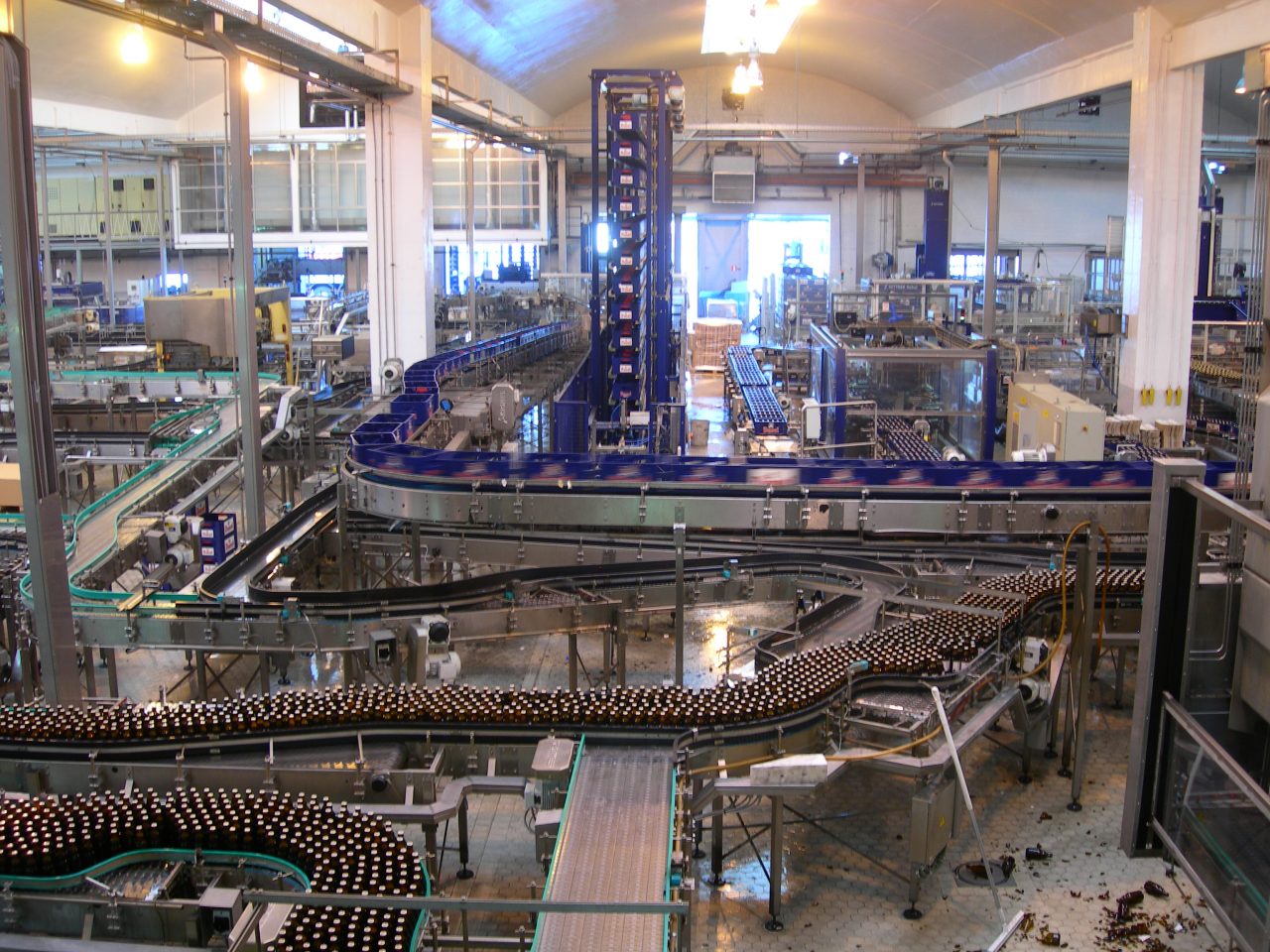
Robotics technology automates physical tasks, such as assembly, packaging, and material handling. Robotics is widely used in manufacturing, construction, and agriculture. Industrial automation and robotics use computers, control systems, and information technology to handle industrial processes and machinery, replacing manual labor and improving efficiency, speed, quality, and performance. Automated industrial applications range from manufacturing process assembly lines to surgery and space research. Early automated systems focused on increasing productivity, but this focus is now shifting to improved quality and flexibility in manufacturing.
Modern computerized systems are developing beyond mechanization with the addition of artificial and machine learning. Automation uses computer software, devices, or other technology to carry out tasks that a human would otherwise do. At the same time, Robotics is the area of engineering that uses multiple disciplines to design, build, program, and operate robots. Automation and robotics have areas where they cross, such as using robots to automate physical tasks. Not all automation uses physical robots, and not all areas of robotics are associated with automation.
Control Systems
Control systems technology controls and monitors automated processes, such as manufacturing and power generation. Industrial automation control systems integrate devices, machines, and equipment within the manufacturing plant to improve efficiency and performance.
These systems can also integrate with other aspects of the organization, such as compliance processes, supply chains, sales operations, R&D, and more. To enable these systems to function correctly, secure communication and data transfer infrastructure is required. Additionally, smart devices collect data through sensors on machines and equipment. The collected data is then processed through hardware, software, and communication solutions, which results in automatic actions such as controlling the level of production based on real-time data from sales and distribution channels.
Industrial automation control systems are essential in the automation industry as they help organizations streamline their operations, increase productivity, and make real-time data-based decisions.
Artificial Intelligence (AI) and Machine Learning (ML)
AI and ML technologies are used to automate decision-making and improve the overall performance of automated systems. These technologies are used in predictive maintenance, process optimization, and quality control applications. Artificial intelligence (AI) and machine learning (ML) are the manufacturing industry’s fundamental driving forces of change. They are enabling manufacturing to become more automated, bringing speed to efficiency and driving down the costs of goods. By combining the power of computer vision (CV) with AI, manufacturing throughput and quality can be significantly improved.
AI is also being used to deliver a new level of workplace safety. However, deploying AI solutions for industrial automation has been a challenge, as automation engineers in the manufacturing field still need to gain the expertise to develop practical AI algorithms. Advancements in edge AI processing have paved the way for today’s AI robots and will open up new possibilities for robots. As the need for automation in factories continues to grow, factories will increasingly turn to AI-powered machines to improve the efficiency of day-to-day processes, from innovative anomaly detection systems to autonomous robots and beyond.
Internet of Things (IoT)
IoT technology connects devices and machines to collect and analyze data. This technology is used in remote monitoring, asset tracking, and energy management applications. Industrial automation is the integration of devices, machines, and equipment within a manufacturing plant to reduce the need for human labor and improve efficiency, speed, quality, and performance. The goal is to fully map out the industrial process and understand sub-process relationships so machines can be assigned to work and automate specific tasks. Machine automation technology can work as fixed, programmable, or flexible applications.
The Internet of Things (IoT) plays a significant role in industrial automation by connecting intelligent devices and enabling automation across industries. The growth of IoT devices has been driven by the adoption of automation practices, with estimates predicting that by 2025, IoT device connections will exceed 38.6 billion. IoT and automation are closely linked as automation has given purpose to many IoT technologies, allowing for managing and adapting industrial devices through cloud computing and advanced data analytics.
Sensors and Actuators
In IoT, automation is enabled by connecting data to a machine. Sensors and actuators represent the two endpoints of the system. Sensors are the source of IoT data, and they work together with actuators to enable automation on an industrial scale. The added value of an IoT system lies in the intelligence it creates. Analyzing the data produced by sensors and actuators can provide valuable business insights over time. Driven by innovations in materials and nanotechnology, sensor technology is developing rapidly, resulting in increased accuracy, decreased size and cost, and the ability to measure or detect things that weren’t previously possible. Using various sensors in an IoT system is critical as different applications call for different ways of measuring the same thing.
The importance of accurate sensors in IoT cannot be overstated, as a single variable could trigger multiple actions. Sensors and actuators in IoT must work together reliably for the system to function correctly. Sensors and actuators are essential to the automation industry because they enable automation in IoT systems. Sensors act as the source of IoT data; they collect information and pass it to a control center where logic dictates the decision. Actuators take the electrical input and turn it into physical action. They are responsible for implementing the decisions made by the control center.
Together, sensors and actuators work in an interconnected way to create an automated system that can respond to environmental changes and make decisions based on that data. They allow the process and control of data in real-time and adjust the design accordingly. Using sensors and actuators in the automation industry makes it more efficient, reliable, and cost-effective. Additionally, the recent advancements in sensor technology, such as increased accuracy, decreased size and cost, and the ability to measure or detect things that weren’t previously possible, have made them more accessible and versatile for various industrial applications.
Programmable Logic Controllers (PLCs)
A Programmable Logic Controller (PLC) is a specialized computer designed for industrial control systems. It is built to withstand harsh industrial environments, such as extreme temperatures, vibrations, humidity, and electrical noise. PLCs are commonly used to control and monitor many sensors and actuators and have unique functional features such as sequential control, timers, and counters. They are different from regular computers in their extensive input/output arrangements.
PLCs are often called industrial PCs used in many industries to monitor and control production processes and building systems. They can be programmed to perform a sequence of events triggered by input stimuli, such as counted occurrences or time delays, and are low-cost compared to other microcontroller systems as the software component can be changed for different applications without needing to change the hardware. PLCs are microprocessor-based controllers with a programmable memory that stores instructions and implements functions such as sequencing, timing, logic, arithmetic, and counting.
PLCs (Programmable Logic Controllers) are essential in the automation industry for their high reliability, performance, and ability to withstand harsh industrial environments. They are easy to program and can be integrated with other systems, making them versatile and adaptable to different applications. PLCs are also cost-effective and can be connected to remote monitoring and control systems for remote monitoring and control of industrial processes. They control critical safety systems and can be used in various industries. PLCs are:
- The backbone of automation systems.
- Allowing for the automation of many processes.
- Increasing productivity and reducing the need for manual labor.
Supervisory Control and Data Acquisition (SCADA) Systems
SCADA (Supervisory Control and Data Acquisition) is software used to control and monitor industrial processes by gathering real-time data from remote locations. It gives organizations the tools to make data-driven decisions about their industrial processes. SCADA systems include both hardware and software components. SCADA systems are essential to the automation industry because they allow organizations to monitor and control industrial processes in real-time from remote locations. These systems gather data from sensors and actuators and provide organizations with the tools to make data-driven decisions about their industrial processes. The system also records and logs all events for reporting process status and issues and provides alarms when conditions become hazardous.
SCADA systems have various components: sensors, actuators, SCADA field controllers, supervisory computers, HMI software, and communication infrastructure. They are essential because they increase efficiency and productivity, enhance industrial automation, and ensure the safety and security of industrial processes.
Human-Machine Interface (HMI) Systems
Human-machine interfaces (HMIs) are user interfaces or dashboards that connect a person to a machine, system, or device. They allow operators and technicians to interact with and control automated systems by displaying real-time information and allowing commands input. They are similar to graphical user interfaces (GUIs). Still, they are more commonly used in industrial settings to visually display data, track production time and trends, oversee key performance indicators, monitor machine inputs and outputs, and more. HMIs can be built-in screens on machines, computer monitors, or tablets, and their purpose is to provide insight into mechanical performance and progress.
Human-machine interfaces (HMIs) are essential to the automation industry because they provide a way for operators and technicians to interact with and control automated systems. HMIs are typically used to display real-time information about the system’s status, such as machine status, alarms, and process variables, and to allow the operator to input commands to control the system. This increases efficiency, improved safety, and improved automation system monitoring. Additionally, HMIs can provide historical data and analytics, which can be used to improve the system’s performance over time.
Distributed Control Systems
Distributed control systems (DCS) are advanced digital systems that use multiple control loops throughout a factory, machine, or control area to improve safety, cost-effectiveness, and reliability. They are widely used in various industrial processes and consist of software and hardware components. DCS uses a decentralized control approach where each section of a machine has its dedicated controller, resulting in faster and more precise control of the process and increased productivity. The system also has multiple local controllers, which ensures that even if one controller fails, the other controllers can still operate, improving overall reliability.
DCS also provides real-time monitoring, historical data, and analytics that can improve the system’s performance over time, making it a valuable tool for industrial automation, allowing for increased productivity and efficiency. The simplicity of local installation also minimizes installation costs. DCS plays a crucial role in the automation industry by controlling industrial processes with enhanced efficiency, safety, and reliability.
Industrial Networking (Ethernet and Fieldbus)
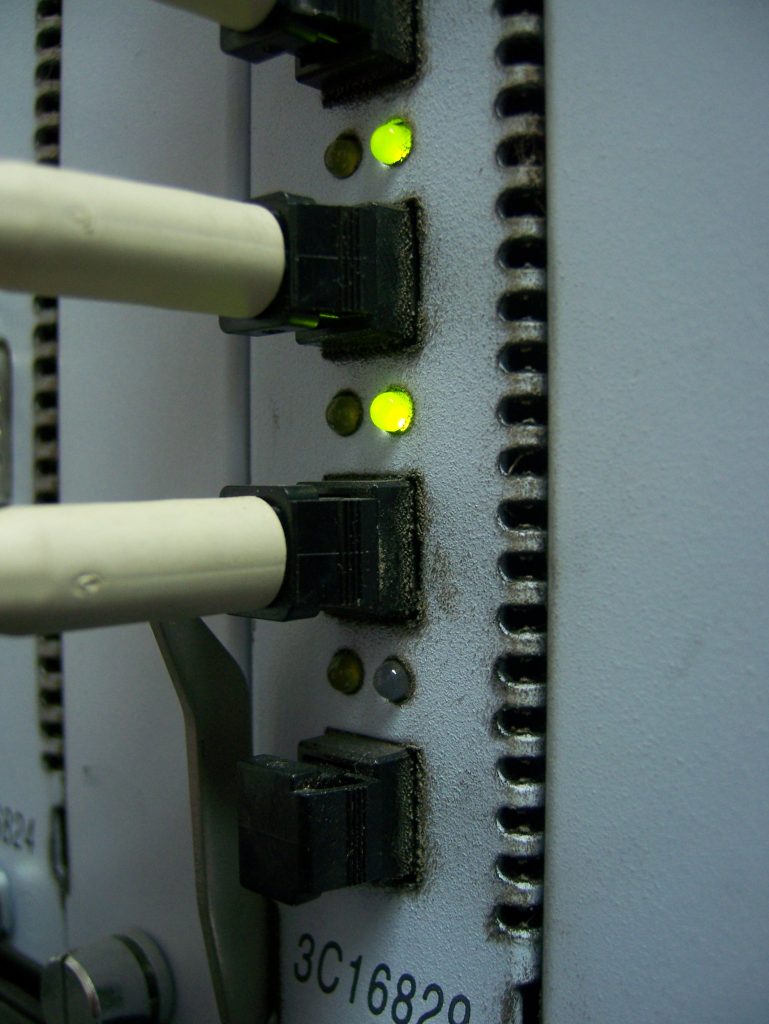
Fieldbus and Ethernet are two industrial networking technologies used in automation. According to a report by IMS Research, Fieldbus-based communications systems accounted for 75% of new industrial automation network connections in 2011, three times more than those using industrial Ethernet. However, the report also predicts that Ethernet will grow faster and become the dominant industrial networking technology within 10 to 15 years.
Fieldbus networks are typically used in process applications to connect instruments and analyzers to the central control system, such as a distributed control system (DCS), while device-level networks connect discrete devices such as sensors, switches, and motor starters to controllers, usually PLCs and PACs. While industrial Ethernet networks are likely to grow in popularity in the automation world, Fieldbus-based communications still have advantages in certain situations, such as being deterministic, more economical, having a straightforward installation requiring less wiring, ease of calibration of instruments, access to more data, easier troubleshooting, being less sensitive to electrical noise, having more physically robust connectors and components, being easier to transmit power over a network, and spanning longer distances without repeaters or switches.
Fieldbus and Ethernet networks provide different ways to connect and communicate between devices, instruments, and control systems in industrial environments. Fieldbus networks are beneficial for connecting field-level equipment.
In contrast, device-level networks like Ethernet help connect many devices and equipment to controllers and other networking devices. Ethernet networks are also more adaptable to new technologies and advancements, making them more likely to become the dominant industrial networking technology in the future. Fieldbus and Ethernet technologies are essential to the automation industry because they enable data transfer between devices and control systems, allowing for automation and control of industrial processes.
Automated Guided Vehicles (AGVs)
AGVs are used to transport materials and products within a facility. They are widely used in manufacturing, warehousing, and logistics. Automated Guided Vehicles (AGVs) are a form of automation technology that utilizes vehicles guided by various means, such as magnets, wires, or vision, to transport materials and goods within a facility. They are commonly used in manufacturing, warehouse, and logistics industries to improve efficiency, safety, and flexibility.
AGVs are known for their cost-effectiveness and ease of implementation, as they do not require extensive modifications to the facility and can be easily reprogrammed to adapt to changing workflows. They also provide benefits such as 24/7 operation, decreased utility costs, increased inventory efficiency, and reduced human error. When linked with warehouse execution systems or warehouse management systems, AGVs can also quickly and accurately track inventory, leading to more efficient ordering and stocking of materials.
Building Management Systems (BMS)
A Building Management System (BMS) or Building Automation and Control System (BACS) is a system that manages and monitors all building systems, including the electrical system, HVAC system, renewable energy production, electricity, and gas meters. The correct use of a BMS can reduce energy consumption by up to 30%. However, BMS offers other benefits beyond energy savings, such as improved comfort for building occupants, better facility management, and reduced environmental impact. BMS allows for real-time control of room temperature and other air quality indicators. Centralizing all information will enable assets to be better managed and monitored, which reduces reactive maintenance. Also, intelligent buildings are more sustainable and efficient than conventional ones, reducing the company’s environmental impact.
Building Management Systems (BMS) are essential to the automation industry because they provide a way to manage and monitor all building systems, including the electrical system, HVAC system, renewable energy production, and electricity and gas meters. BMS can reduce energy consumption by up to 30%, essential for cost savings, energy efficiency, and sustainability. BMS also improves the comfort of building occupants by allowing better control of room temperature and other air quality indicators in real time. Facility management is also enhanced as BMS centralizes all information, allowing assets to be better managed and monitored, which reduces reactive maintenance. Additionally, BMS can reduce the environmental impact of a building by making it more sustainable and efficient than conventional buildings. These features make BMS a valuable tool for building automation, allowing for increased energy efficiency, comfort, and sustainability.
Conclusion
All these technologies are essential to the automation industry as they help to improve efficiency, reduce costs, and increase productivity. They also make it possible for businesses to automate tasks that were previously considered too difficult or dangerous for humans to perform. Additionally, these technologies are constantly evolving, and companies in the automation industry must stay up-to-date with the latest developments to remain competitive.
DO Supply Inc. makes no representations as to the completeness, validity, correctness, suitability, or accuracy of any information on this website and will not be liable for any delays, omissions, or errors in this information or any losses, injuries, or damages arising from its display or use. All the information on this website is provided on an "as-is" basis. It is the reader's responsibility to verify their own facts.